Month: October 2016

Discovering Cuba with X Series

X-Photographer strip BLACK

By Daniel Malikyar

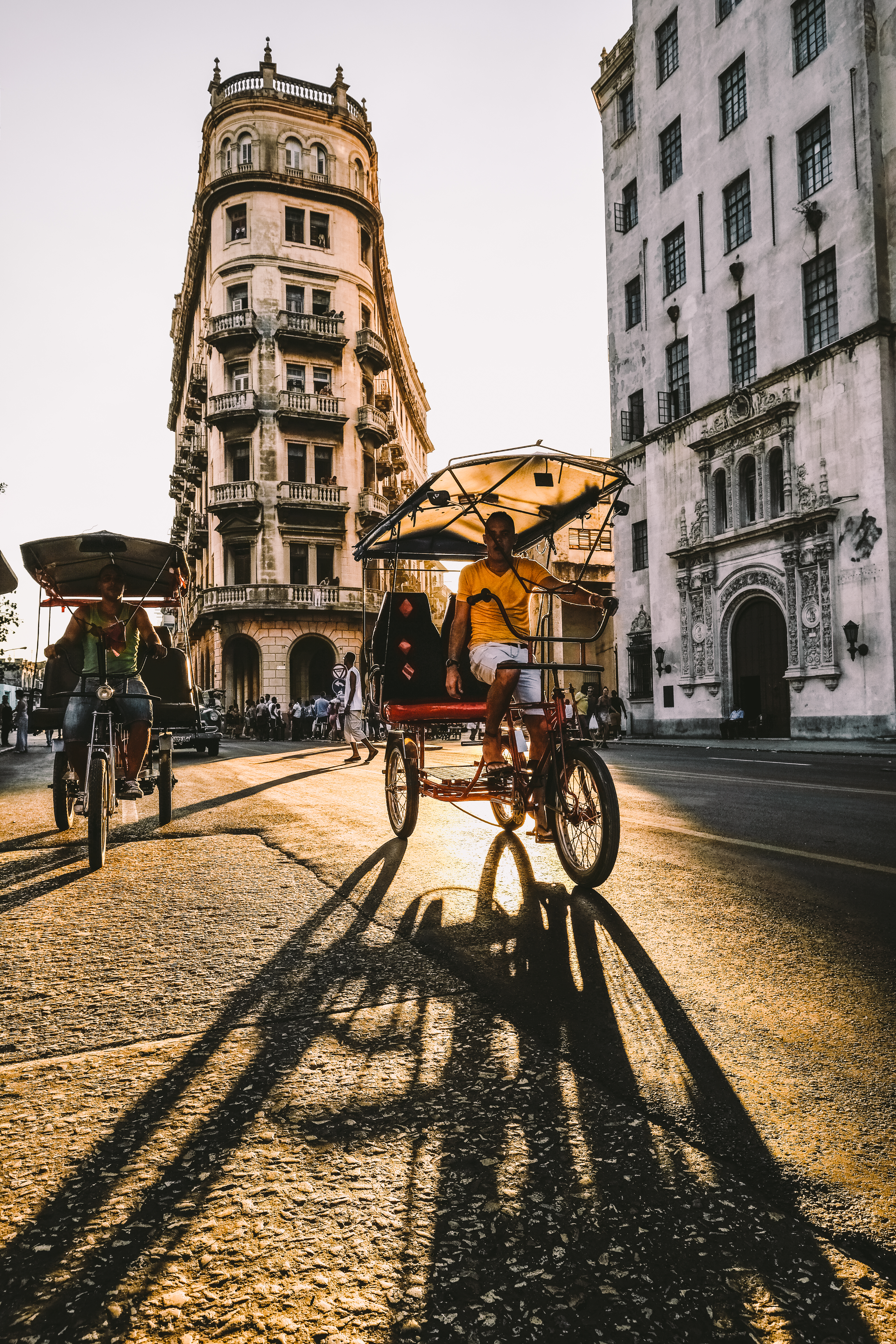
Wandering the streets of Havana felt like I had hopped in a time machine and turned the dial back 50 years. Avoiding tourist areas at all costs always provides an interesting experience, and we did all we could to experience the real side of the city each day.dscf1567My favorite part about Havana was the wide variety of subjects scattered throughout the city. It seemed as if every corner I turned there was something new, whether it was a Dalmatian contently sitting on a gritty front porch or a bike taxi that seemed to ride by just in time for perfect light, it seemed as if there was always something that caught my eye.dscf1810I particularly enjoyed shooting the neighborhoods that surrounded the capitol building, Capitolio. I did just about everything in my power to capture the lifestyle of the locals with this interesting structure in the background. From persuading locals two stories above to give us permission to shoot from their balconies, to running behind cars, to playing soccer with local kids to get their approval, I took all measures to capture various perspectives of the Capitolio with fresh subjects in the foreground on each occasion. Thankfully I had a wide variety of range of FUJINON glass to pair with my X-Pro2 and X-T1; the XF55-200mmF3.5-4.8 R LM OIS and XF10-24mmF4 R OIS were my go-to lenses for these photos.dscf8130Another one of my favorite locations in Cuba was Barrio Chino, or China Town. This area was very unique and boasted what I called the Cuban version of New York’s iconic Flat Iron building. I immediately loved this spot after catching an incredible golden hour that saw the sun light up the surrounding area of the building with a warm, glowing light that made for some of the best shots on my X-Pro2 XF10-24mmF4 combo from the trip.dscf1644One of the most noteworthy elements of Havana are the many random puddles that form throughout alleys that provided mirror-like reflections of the colorful cityscapes, classic cars, and great city vibes. The locals would stare at me in confusion when I would stop traffic to kneel down and use the tilt-screen on the X-T1 XF10-24mmF4 combo to capture perfect angles of the glassy puddle reflections.dscf1990As I was composing a reflection shot with my X-T1 on an overcast afternoon among a vibrant alleyway, my cousin called for me and told me I had to stop whatever I was doing and see how beautiful a baby was down the street. My first instinct was to continue to try and get my shot as that sounded a little off, but I got up and quickly walked around the block to catch the little girl and her father just before they were going to enter a home. The young dad had his daughter in his arms, and we she turned around she looked like something out of a National Geographic cover. I had never seen eyes like hers. They had a bright aqua tint of blue that could be seen from a block away. He kindly let me snap a few photographs, and I every time I looked into my electronic viewfinder of my X-Pro2 and I couldn’t believe how stunning this little girl’s features were. Cuba is full of surprises… this experience was a sure reminder of that.dscf1186I’ve never really been an advocate of guided tours under any circumstances. Cuba is one of those destinations that only has so much information that can be found online. In order to experience and capture it properly, you can’t really have a comfort zone. You have to be willing to put yourself out there with a positive and friendly vibe and hope for the best in most instances. We were even invited into a family gathering for drinks in a broken down backyard after approaching a couple locals in hopes of entering their compound to find something interesting to shoot. I lost count of the amount of complexes, homes, and lots we entered (all after asking what seemed like owners or tenants). These were the best memories, and provided some of the best perspectives that will be extremely difficult to replicate.dscf1189One hot afternoon the sunset was quickly approaching, and we were determined to find a rooftop vantage point to capture the moment the light brought warmth to the tattered cityscape of old Havana. After entering a building and passing by locals on each story, all with wide smiles of confusion but acceptance on their faces, we made it towards the top floor. When I looked down, there was the unique spiral staircase I had ever seen. I captured an organic image of the staircase with my X-Pro2 XF10-24mmF4 combo and we made for the roof. Unfortunately there are not very many tall buildings in Cuba; making it a bit difficult to get a great view of the sun setting on the water with the cityscape in the foreground. I completely forgot about the shot I had anticipated when several kids entered through the roof and showed us their pigeon traps, introducing us to some of their birds. I had never seen anything like this, and it really made me appreciate how a simple lifestyle brought joy to these kids. There were no iPads, no PlayStations, it was all about going out and having fun with the neighborhood kids like the old days.dscf1582Growing up, I’ve always loved the game of soccer. I’ve played my entire life, and jumped in on just about every pick up game we came across. Towards the later end of the afternoon we decided to check out a neighborhood called Citio just outside of Havana. Apparently this neighborhood was extremely dangerous for tourists, and upon entering all eyes were on us. After passing by a few young kids playing soccer, I hopped in passed the ball around with them. The ball they had might as well have been a rag… it was completely trashed and lopsided. I offered to buy the kids a new ball, and the look on these kids’ faces was something I’ll never forget… we walked almost 2 miles looking for a store that was open. Along the way, the kids seemed to know all the other youngsters in the area, and our group grew with every few blocks we walked. When we finally found a store with someone inside, we begged the tenant to open her store for us to buy the ball for the kids. My friend Joon and I each bought them a ball that were less than $20 USD each, but it may as well have been a brand new MacBook Pro for these kids. They couldn’t believe it and were so excited to get out and play with one another. Even though we skipped shooting for a couple hours, that was one of the best memories from our trip.dscf1381In conclusion, I highly recommend giving Cuba a visit before it becomes increasingly commercialized. Your experience in the country is up to you. I spent the majority of my time in Old Havana in hopes of capturing an unseen photo, and there are tons of interesting places to see. I was lucky enough to capture my experiences behind my FUJIFILM X Series gear, which never disappointed once. With all the impromptu moments, seconds of good light, and organic situations the X-Pro2 and X-T1 paired with a wide variety of FUJINON glass executed everything I could have asked for.

Announcement: Fujifilm X Series Cash Back (Australian Residents Only)

Australia strip BLACK

We are excited to announce our latest X Series Cash Back.

Featuring one of Fujifilm’s flagship cameras, the X-Pro2 at $300 cash back, with up to $300 cash back on selected XF lenses, there is plenty on offer.

Could you see yourself selling your current Digital SLR kit and joining the Fujifilm community? Many photographers have before, and now is the perfect opportunity.

Or are you an existing X Series user after a specific lens, then we encourage you to take up this offer? Let’s explore a few scenarios…

You might have been photographing with a Digital SLR for many years and recently you have heard a lot of talk about the Fujifilm X Series image quality and colour reproduction. You may even know a photography friend who keeps raving about the size and weight of their X Series camera when compared to their previous camera? Does this sound familiar?

We hear this scenario all the time online, across stores and when we are out and about meeting people it is not uncommon to hear how many photographers love their X Series cameras and lenses and how it has reignited their passion for photography. It makes us proud to do what we do, so today we are hoping to ignite the passion for many more by offering this fantastic cash back promotion.

fujifilm-x-series-cash-back

Let’s explore a classic example of what we hear about:

A photographer switches from a Digital SLR Kit to a Fujifilm X Series Kit.

Typically, enthusiasts or professionals may have approximately 2 to 3 lenses. These lenses normally consist of a wide angle, prime and telephoto, and ‘changing over’ can be an expensive exercise. Taking the current Fujifilm Cash Back offer into account might make this exercise the perfect time right now.

Replacing your existing Digital SLR kit and purchasing a Fujifilm X-Pro2, XF16-55mm (wide), XF56mmF1.2 (prime) and XF50-140mm (telephoto), you could save over a thousand dollars. $1100 cash back to be exact – that’s not too bad at all!

Whatever you decide, whether it’s a single lens or full Fujifilm kit, this promotion is sure to be a winner amongst many Australian photographers, so we encourage you to get in early.

For a full list of Cash Back terms and conditions visit our website here, and remember if you end up purchasing some gear at an authorised local X Series stockist then we would love to hear about it and see it!

Be sure to tag #fujifilmcashback across social media with a photo of your new purchase.

X-Thusiast Featured Photographer Laurie Davison: Chasing Waterfalls in Tasmania

Australia strip BLACK

remote-area-ne-tasmania

Remote Area, NE Tasmania” by Laurie Davison, taken with Fujifilm X-T1 + XF10-24mmF4

We are excited to introduce Laurie Davison as the next X-Thusiast featured photographer for October 2016.

Hailing from North West Tasmania, Laurie enjoys capturing the hidden depths of nature along the Western Tiers and Tarkine wilderness with his Fujifilm X-T1 and, more recently, X-T2.


Let’s start with the basics: Where is home? What are your hobbies? What inspires you from day to day?

My home is the North West of Tasmania. There, my hobbies include amateur radio, bushwalking and of course, photography. My inspiration mainly comes from the beauty of nature and adventurous bushwalks, especially rainforests, mountain streams and waterfalls.


How did you develop an interest in photography? How did you learn and develop your craft?

I have always had an interest in photography but it never really took off until after the workload eased off, so I honestly consider myself a novice, having only started with enthusiasm around four years ago.

My interest developed from the wish to record all the waterfalls my wife and I would visit on our bush walks. The learning basically came from experience, experimentation and the desire to improve the quality of shots. I would see photographs I liked taken by others (not necessarily well-known photographers), and I would try and emulate what I had seen. It was pretty rough for a while (still is at times), but over time, things improved and I’m still learning today without winging it quite so much.


Do you have a particular photographic style? If so, what would you consider that to be?

I wouldn’t call it a particular style, but I try and present my own interpretation of what I see. Although, over time, I have tried to emulate other styles and incorporate some of that into my photos. I still try and produce an end result that I am pleased with—one that is not necessarily tagged with fads of time. I like to try and keep it reasonably natural except where flowing water is involved … I prefer a longer exposure on waterfall shots.

liffey-falls-section

“Liffey Falls section” by Laurie Davison, taken with Fujifilm XT-1 + XF10-24mmF4


What’s your favourite location to shoot in Australia? What’s your favourite subject to shoot in general?

I really do have a mad affair with the Western Tiers and the Tarkine in Tasmania. In saying that, I also really appreciate anything along the eastern escarpment of the Great Dividing Range. My favourite subjects are without a doubt waterfalls of any size, shape and form.

Consider your favourite or most memorable Fujifilm photograph. Where was it taken, how was it shot and what does this photo mean to you?

I really don’t have a favourite, but the shots that mean the most to me are probably the shots that have been the hardest to obtain, such as remote areas that take a real effort to reach.

To me, it’s about the whole trip from start to finish, and there is something about looking at a photograph and recalling the complete journey.


What’s your favourite X Series camera? Why do you prefer that particular model?

The X-T2. I have the X-T1 as well, and it has taught me a lot, but the new X-T2 is like the X-T1 on steroids.
For years I lugged about a DSLR full-frame kit and to be honest, it’s not getting any easier as I get older, so that is why I looked at the lighter mirrorless systems. I tried a few and eventually settled on the Fujifilm system as I found myself more at ease with it. It’s more or less not much different to operating the familiar DSLR—not having to dive into menus all the time to change settings for me is a real plus. Those dials at your fingertips is the way it should be.


Which Fujinon lens(es) do you prefer?

I prefer the XF10-24mmF4, as it suits the environment I am usually in. Quite often I’m not in a situation where I can back up with a prime to fit it all in, and when I do have the room I can be flexible. It really fits in well and is my go-to lens 95 percent of the time.

lavender-fields-northern-tasmania

Lavender fields, Northern Tasmania” by Laurie Davison, taken with Fujifilm XT-1 + XF10-24mmF4

Could you describe your photographic workflow? Do you prefer any third-party, post-processing software, camera accessories or community networks to develop and share your work?

I try and keep the bulk of my workflow simple, confining it to using Lightroom with the odd time utilising the use of Photoshop CC. To me, it’s another steep learning curve at the moment as I have only started using the latter in recent months. If I have something special as a one-off to work on, then I will use CaptureOne as I find it and the Fujifilm RAW files work well together.


Do you have any additional final thoughts regarding Fujifilm X Series? Do you have any tips or advice you’d like to share for other photographers out there pursuing their craft?

I’m just glad that Fujifilm keeps updating our cameras with regular firmware improvements. Other cameras I have owned certainly didn’t see as regular updates and this possibly held them back a little. Now I know I have the latest in technology available.

As far as tips are concerned, the best I can offer is to learn as much about the camera you’re using as possible. Get to know it inside out. With the photography part itself, just do what you love and keep learning. Your passion will eventually show through in the results. Don’t be afraid to ask questions of the people you admire and look up to because most are only too willing to lend a hand. Most of all, have fun doing it.

cascades-on-the-western-tiers-1

“Cascades on the Western Tiers” by Laurie Davison, taken with Fujifilm XT-1 + XF10-24mmF4

To see more of Laurie’s work, you can follow him on Instagram at @ljdphotos.

If you, or someone you know in Australia, is interested in joining our X-Thusiast community, check out the full X-Thusiast Gallery and Submission details here.

Making room for zooms

Which XF zoom lenses are regulars in your gadget bag – and why?

dscf9020

You join me in the midst of a fascinating experiment. The kind folk at Fujifilm UK asked me to write a couple of blogs on which lenses you should you use for what subject, but I think that’s been done a few times already. So, as an alternative, I’m using the power of Lightroom to uncover which lenses I use the most and explain why. My last blog, which you can read here was all about my favourite primes, I was somewhat surprised to find which my most popular prime lens choice actually was. This time, I’m turning to my XF zoom options.

If you’re a Lightroom user and fancy trying this experiment yourself, it’s easy enough to do. Just select the Library Module and then in the Library Filter bar at the top, choose Metadata and you’ll be presented with a series of drop down menus that you can further refine. As with the primes, I’ve used a fair few of the XF zooms; all of them, in fact. But Lightroom showed that four stood out more than others and, as with my prime selection, there’s nothing saying that I’m putting the lenses to their optimum uses shooting what I do. From widest up, they were as follows:

1) XF10-24mmF4 R OIS

It’s no surprise that this is on my hot list as it’s such a versatile lens and – in the 10mm setting – reaches extremes that XF primes lenses currently can’t touch. Compact, lightweight and capable of outstandingly good results even in my hands, it’s a go-to lens for landscape and architecture photographers. Naturally, I’ve shot both of these subjects regularly with the XF10-24mm, but I’ve also pressed it into service when I’ve been overseas; it saw a lot of action on the streets of Rome and San Francisco, for example. Some may bemoan the F4 maximum aperture, but the addition of OIS cancels out any drop in light gathering capabilities and it’s often one of the first lenses in my gadget bag.

Find out more about the XF10-24mm lens here. 


2) XF18-55mmF2.8 R LM OIS

Surprised not to see the XF16-55mm? Yes, so was I, but although the wider and faster premium zoom was used, this more modestly sized optic saw many more frames rattled through it. Normally, I’d be reluctant to use a standard zoom lens to capture images, but the quality of this compact optic really is everything it’s cracked up to be. It’s a true all-rounder, too. As images below show, I’ve used it for a range of images from shooting on the street to shots of architecture and the optical image stabiliser gives low light confidence, too. In my opinion. No X Series user should be without this lens.

Find out more about the XF18-55mm lens here. 


3) XF50-140mmF2.8 R LM OIS WR

The zoom that thinks it’s a prime, the XF50-140mm is a real favourite for me. It can be used for some many different applications and, with the added versatility now offered by the 1.4x and 2x teleconverters, can be used to capture pretty much anything from sport to distant details. Before I did my Lightroom test, I would have thought my shots with this lens would be very portrait heavy but, in reality, I couldn’t have been more wrong – I’ve shot pretty much everything but portraits with it! Time to line up some models and redress the balance!

Find out more about the XF50-140mm lens here. 


4) XF100-400mmF4.5-5.6 R LM OIS WR

Much like the XF90mmF2 R LM WR which has become a recent favourite in prime lens terms, so too has this monster. It’s the lens that X Series users had been crying out for and although the mainstay of the lens’s capabilities are primarily sports and wildlife that I’m hopeless at, I’ve just modified my shooting and tried it on other subjects – including landscapes. Picture quality is tremendous and with the extra power from the compatible teleconverters, I can see why this lens has quickly become a favourite for many. Despite my having the XF16-55mm for longer, the XF100-400mm has seen many more frames!

Find out more about the XF100-400mm lens here. 


So, which one have I used most?

Again, I was a little surprised. I expected it to be the XF10-24mm, but Lightroom told me otherwise confirming the XF18-55mm as my most regularly used zoom. It’s no surprise, it’s a great little lens, but what this exercise does confirm is that my photography is largely working in rather tight parameters, lens-wise. I think I need to branch out a little more and see the world from a slightly wider (and more telephoto) viewpoint.

UNTETHERED: 2880

guest-blogger-strip-black

It’s our last night in Broken Hill and the heavens have opened up with severe weather conditions including floods and thunderstorms that ended a day of gale force winds. For a long time I’ve wanted to travel on an adventure, out into the Australian Outback, with my trusted camera in hand, for opportunities of the ‘not so ordinary’ photographs.


x-pro2-broken-hill-03-maya-sugiharto-2016-002

x-pro2-broken-hill-03-maya-sugiharto-2016-005


As a professional photographer, I began my career as a Nikon user, and I still am on one hand (excuse the pun), however I like being untethered. So taking my DSLR out on the road for trips like this one, felt like a burden – not because of its ability to take beautiful photographs, but because of the size and weight of it, and also because of how much it draws attention. It wasn’t until last year when I did Project 23 with Fujifilm Australia using the X100S, that the seed was planted; that’s when I realised the potential of the Fujifilm mirrorless camera. I always wanted to have a camera that was small enough in my hand, yet capable and rugged enough to handle all shooting situations, especially when I’m on the road. So began my journey to find the right ‘partner’ in the perfect camera world.


We had planned a four-day road trip in early October from Melbourne to Broken Hill and the NSW Outback Desert. When Fujifilm announced the release of the X-Pro2 at the beginning of this year, I had my keen eyes set on it. However timing wise, the X-T2 was just released at the same time I was ready to buy a new camera, and right before I was leaving for the Outback Road Trip. So my decision was very hard. Weighing up the latest X-T2 against the X-Pro2 was an extremely difficult and time-consuming exercise for me. I did a lot of research online, talked to photographers who use the X-T1 and even rented the X-Pro2 for one day to see how I felt with it. But on D-Day, it mostly came down to personal preference: durability; the hybrid viewfinder on the X-Pro2 vs. EVF only on the X-T2; and just how good the Fujifilm X-Pro2 felt ergonomically in my hands. So X-Pro2 it was.


x100s-broken-hill-04-aviva-minc-2016-dscf0057

x100s-broken-hill-01-aviva-minc-2016-dscf0009


We stayed in Broken Hill for 4 days (inclusive of our 2 x 11 hour drives from/to Melbourne each way). There’s so much to see along the way, a 9-hour drive that became 11-12 hours because of the amount of times we stopped to take photographs. Conditions wise, just in those four days, we went through flash floodings, mini cyclones, thunderstorms and gale force winds including red dust storms. I couldn’t just sit inside the car and feel protective or scared of ruining my new X-Pro2, as much as instinctively I wanted to. There will be battle scars that my camera will earn and I’m ok with that.


x100s-broken-hill-04-aviva-minc-2016-dscf0175

x-pro2-broken-hill-03-maya-sugiharto-2016-013


Whilst walking along a road outside of Broken Hill, during what they say is a normal windy Spring day, I was shooting in an actual red dust storm – with fine little pieces of dirt and dust blowing straight towards me, and my X-Pro2 was completely exposed. I spent the evening blowing the dirt out of the grooves of my Polarizing Filter, lens and buttons.


x100s-broken-hill-03-aviva-minc-2016-dscf0046

x-pro2-broken-hill-03-maya-sugiharto-2016-dscf0087


On other shoots, we were standing on top of a mine, exposed without protection, in pouring rain and gale force winds – on the day where we planned to do our long exposure night photography shoot. It’s about the adventure for me; so making the most of the opportunities, and capturing moments when they happen, is what I live for. So I have to get out there.


x-pro2-broken-hill-03-maya-sugiharto-2016-003

x-pro2-broken-hill-03-maya-sugiharto-2016-001


Fujifilm advertise their X-Pro2 and the XF35mm F2 R WR lens (which I also bought with my X-Pro2) as being Weather Resistant. Based on my experience, I can honestly say that the ‘army-like machine’s’ durability of the camera casing is definitely weather resistant, and no matter what I put it through on this ‘field test’ trip, it is exactly the sort of camera I can rely on, and take with me on all my adventures!


x100s-broken-hill-01-aviva-minc-2016-dscf0124

x100s-broken-hill-04-aviva-minc-2016-dscf0024


Our goal for the trip was to really see and experience the environment of the Aussie Outback – after all, it’s all about the journey, not the destination. A constant reminder our GPS announced throughout the trip was to ‘proceed to the route’. But we didn’t care because stopping along the way and going off the beaten track WAS the journey.


x100s-broken-hill-02-aviva-minc-2016-dscf0126


Broken Hill and Silverton (30-minute drive North West of Broken Hill) both have so many opportunities for photography, including the 270km stretch of uninhabited desert that lies between the drive from Wentworth to Broken Hill. It’s a pretty awesome landscape for all photographers. What I know from my own experience, in most cases, the best photographs come out of spontaneity. I am willing to admit that I am a huge planner – I like to make lists and plan my shots ahead of time and it always served me well. But on journeys such as this, I had to put my inner control freak aside, and just be in the moment.


x100s-broken-hill-02-aviva-minc-2016-dscf0204


These are some of the places we shot at whilst on this Outback Road Trip:


  1. Silver City Hwy – this is the Hwy you have to travel on when driving to Broken Hill from Wentworth. The terrain is barren, vast and rugged. Red earth, lots of lizards and nature along the road, and carcases of animals long gone. We saw the remains of what seemed to be a Dingo, with just the tail and claws, and the skeleton half buried in the red dust, just a little way off the side of the road.


x-pro2-broken-hill-03-maya-sugiharto-2016-010

x-pro2-broken-hill-03-maya-sugiharto-2016-011

x-pro2-broken-hill-03-maya-sugiharto-2016-012

x-pro2-broken-hill-03-maya-sugiharto-2016-008


  1. Palace Hotel – this is where Priscilla Queen of the Desert was filmed, and made famous in Broken Hill City Centre. They have an event in September called Broken Heel where they have a performing Drag Queen and re-enact the movie. The inside of the hotel has huge murals that are apparently great to see.


x100s-broken-hill-02-aviva-minc-2016-dscf0043


  1. Line of Lode Miners Memorial – this is literally just 5 minutes out of Broken Hill City Centre and has great views of Broken Hill City. We used this location for our long exposure night photography and storm photography. The altitude here and the front of views of the city make it a great place to take some amazing shots.


x100s-broken-hill-03-night-aviva-minc-2016-dscf0093

x-pro2-broken-hill-03-maya-sugiharto-2016-009


  1. Silverton Hotel – is in Silverton, which is a 30-minute drive North West of Broken Hill. The hotel is famous for being the film set of movies such as Mad Max and Razorback just to name a few.


x100s-broken-hill-02-aviva-minc-2016-dscf0241


  1. Silverton and its surrounds – if you want Ghost Town kind of Outback, then Silverton is an amazing place to get some arid photographs of the desert, along with a whole range of abandoned cars and buildings. It’s called a Ghost Town because of all the empty relics. We found it a bit spooky to be honest, but it had a real Aussie Outback feel, and the fact that it is used so often as movies sets, says it all about the opportunities it has for photographers too.


x100s-broken-hill-02-aviva-minc-2016-dscf0252


  1. Mundi Mundi Lookout – is just 10-minute out of Silverton, and has amazing views of the flat plains and desert-facing sunset, all the way to the horizon. We stayed out there and did our night and star photography from there because we could see all the way to the horizon. Amazing sunsets too. Word of warning, it can get crowded because tour buses come out there for sunset too, as well as many other people to watch the sunset. So if you like solitude, don’t go on weekends or school holidays. Also take insect repellent – the mosquitos out there bite really hard!


x-pro2-broken-hill-03-maya-sugiharto-2016-006

x100s-broken-hill-02-aviva-minc-2016-dscf0269

x-pro2-broken-hill-03-maya-sugiharto-2016-007


  1. Dirt Roads – there’s many dirt roads, and dried out river beds, outside of Broken Hill, and in particular just out of Silverton as well as the Living Sculptures turnoff, that are amazing opportunities to walk along, explore and take photographs.


x-pro2-broken-hill-03-maya-sugiharto-2016-004


  1. Living Desert Sculptures and Flora & Fauna Sanctuary – about 20-minute drive out of Broken Hill, this is yet another location where you get amazing views of the terrain and desert all the way to the horizon. Word of warning, don’t go out there when it’s windy, and make sure you purchase entrance fees ($6 pp as of October 2016) because the Rangers do come and check apparently.


x100s-broken-hill-03-aviva-minc-2016-dscf0077

x100s-broken-hill-03-aviva-minc-2016-dscf0082


  1. Brownes Shaft Mine & Lookout – is another location where you can get great night sky and star photography. It’s elevated on top of an old mine and the structure is great as a landmark around the night sky for some pretty great shots. The stars are awesome out there, the Milky Way so bright, especially when there is a no moon, which is what we had when we were on this trip.


x100s-broken-hill-03-aviva-minc-2016-dscf0021

x100s-broken-hill-03-aviva-minc-2016-dscf0035


  1. Tyrell Lake / Salt Lake – this is somewhere you can take a short detour off on your way to / from Broken Hill. Unfortunately, we had heavy rain and floods so the road was closed, and the photo we did get to take was out in pouring rain, so the salt wasn’t so colourful or visible. I think it would be a great place to visit in the dryer months.


x100s-broken-hill-01-aviva-minc-2016-dscf0074


  1. Brim Silos – again another place you can plan on your trip up / from Broken Hill, where an artist has painted portraits of farmers on one side of the silos in the wheat producing strip of Henty Hwy in Victoria. Their sheer size is just breathtaking.


x100s-broken-hill-04-aviva-minc-2016-dscf0262

x-pro2-broken-hill-03-maya-sugiharto-2016-014


And when you need to feed after a very long day out in the desert, we highly recommend Thyme On Argent for their pizzas (say hi to Jodie) and Bells Milk Bar for their heavenly milkshakes and sweets.


x100s-broken-hill-02-aviva-minc-2016-dscf0132


I pride myself of shooting RAW all the time but with Fujifilm cameras I shoot FINE (JPEG FINE that is). For some reason the JPEG that comes out of any Fujifilm camera that I’ve own (X-Pro2 and X100S) come out really nice and creamy. I don’t know what ‘spices’ and ‘ingredients’ they put in producing their JPEGs, but the colours come out really nice and just right.


My favourite would be Provia, Classic Chrome and of course Monochrome Film Simulation. You can view different JPEG Film Simulations of the Fujifilm X–Pro2 here for comparison.


Full disclaimer: I own these two cameras and this isn’t a technical review of the cameras on behalf of Fujifilm. But I’d like to share my first-hand experience of taking both my X-Pro2 and X100S on my ‘field test’ trip. Any locations I mentioned on this blog are purely my own recommendations – obviously you’ll need to do your own research and see whether it’s suitable for your own journey.


I’m so in love with my new Fujifilm X-Pro2, and know that I made the right decision. I’m wrapped and satisfied with how it withstood so much from this trip. We love travelling light, on adventures and road trips, and most of our luggage is usually photography or gadgetry equipment. These cameras will stay with me for a very long time.


See you all on our next Untethered Adventure!


x100s-broken-hill-04-aviva-minc-2016-dscf0191


The gear we used on this field test trip:


  1. Fujifilm X-Pro2 (Firmware 1.02)
  2. Fujifilm XF35mm F2 R WR (Firmware 1.01)
  3. Fujifilm X100S (Firmware 1.21)
  4. Peak Design Slide Lite Camera Strap
  5. Peak Design Cuff
  6. Peak Design Field Pouch
  7. Benro Tripod GC168TB1 (used with the X-Pro2)
  8. 3 Legged Thing Brian X1.1 with Evolution 1 with AirHed 1 (used with the X100S)
  9. Hahnel Combi TF with Cable release (used with the X-Pro2)
  10. HOYA Fusion UV Filter 43mm Thread (used on the XF35mm F2 R WR)
  11. HOYA Fusion Circular Polarizer Filter 43mm Thread (used on the XF35mm F2 R WR)
  12. Lexar Pro – 32GB SDXC Card – UHS 1 – 95MB/s – 633x – Class 10 (used on the X-Pro2)
  13. Lexar Platinum II – 16GB – SDHC Card – 100x – Class 6/10 (used on the X100S)
  14. iPhone 7
  15. Apple Macbook Pro 15” Retina Display
  16. Western Digital Passport Hard Drive 1TB
  17. Inmarsat Satellite Phone (yep, you’ve gotta be prepared!)


About the authors


Maya Sugiharto and Aviva Minc are Visual Storytellers. Photographers and Short Filmmakers based in Melbourne, Australia. They are the Co-Founders and Creative Directors behind Agent Morphe Design. They love to travel (with their cameras) on adventures and road trips, off the beaten tracks. To see more of their photos visit them on Facebook and Twitter or on their personal Instagram accounts.

Maya Sugiharto – @mayasugihartophotography

Avia Minc – @photographersassistant