Month: October 2016

How to capture an atmospheric Autumn

20151012_clumber_0119-edit-2

X-Photographer strip BLACK

By Chris Upton

Halloween, the time of ghosts, ghouls and bewitching conditions to create wonderful atmospheric autumnal images!

After a few summer months of long, warm days, harsh light and of course some rain (I am in the UK!) we are longing for misty mornings, low raking light and sunrise and sunset at sensible times of day. For many photographers, especially landscapers, autumn is simply the best time of the year.

So how do we make the most of these opportunities and capture some stunning images?

20160325_notts_0091

THE WEATHER

Well it all starts with the planning and we’ll begin with the weather. Keep an eye on the forecast and if you’re looking for a misty start ideally you need cool temperatures after a period of wet, mild weather with little or no wind. Check the sunrise time and be prepared to be on location at least 30 mins prior. When the sun pops up it starts to warm up the landscape and gradually burns off the mist. Depending upon the amount of mist it may take a while to clear so you may have an hour or more to capture your shots.

20150906_slovenia_0125-edit-edit

I use BBC Weather, Met Office and WeatherPro apps to check the forecast though it’s not foolproof and the conditions might not turn out as you were hoping for. In those circumstances it’s important to keep a positive view and think about the things you can shoot.

This was the case recently when I went down to the River Trent for what I hoped would be a misty sunrise. When I arrived it was thick mist and even when the sun came up it didn’t burn off. Walking along the bank I noticed the leaf, grass and reed details and decided to shoot some high key images. So although I didn’t get what I had expected I was pleasantly surprised by the results.

Whilst strong sunlight is best early and late, during the day bright overcast conditions with its soft lighting will enable you to capture the beautiful autumn colours without harsh shadows and excessive contrast. Take care to avoid large areas of bland blue or grey sky which add nothing to the image.

In certain circumstances the weather can be especially challenging. However “every cloud ….…” The fact is that “bad weather” can provide you with great opportunities to capture some unique shots as many photographers don’t venture out in inclement conditions. The benefit of much of the Fujifilm equipment is that it’s weather sealed (check yours) so as long as you can keep the front element dry you’re good to go! It’s a good idea to have an umbrella handy, though the ability to grow another hand would be extremely useful too! I recommend the Gustbuster umbrella which is large, robust and is tested to withstand winds of 55mph.

These next few shots were taken on an extremely challenging day in the Lake District. It was pouring with rain, visibility was poor and light levels were low. Despite sheltering under a large umbrella that flipped inside out twice (hence the Gustbuster purchase) it felt like a contest between me and the elements and I was determined to get some pictures.

20151111_lakes_0839-edit

This shot was also taken in pouring rain. The soft, diffused light and low contrast really suited a long exposure and providing you meter carefully to retain detail in the highlights you can get super images in these conditions.

20160423_cinque_1223-edit

EARLY & LATE

Usually the best times to shoot atmospheric landscapes is at the beginning and end of the day, that magical period when the sun is rising or setting but is still below the horizon giving a soft, warm light.

Mornings take more effort and you have to walk to your location in the dark but there are fewer people around and there is something special about witnessing the start of a new day especially when the conditions are just right. Plan to be at your location at least 45 minutes before sunrise. If you want to get a starburst effect as the sun pops over the horizon shoot at f16 or f22 but make sure your front element or filters are clean!

For sunset ensure you stay until at least 30 minutes after the sun has gone down because that’s the time when the sky is backlit with, hopefully, an amazing display of colour.

20160911_tallinn_0888-edit

20160930_nottm_0026-edit

Another benefit of shooting early or late is that usually the wind drops at these times enabling you to capture lovely reflections.

20151031_notts_0117-edit

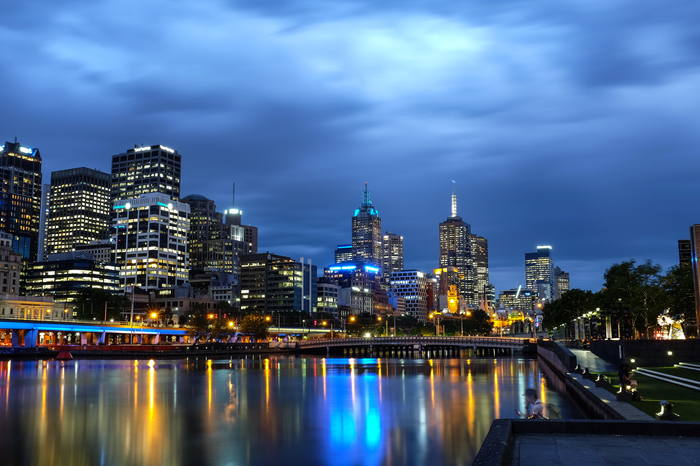
The blue hour is a great time for city shots but don’t stop then because city streets late at night can provide many other opportunities especially when it’s wet and the pavements reflect the vibrant artificial lights. Try converting to black and white to give a colder, more intimidating feel to the image.

LOCATION, LOCATION

Great autumn shots can be had all around the country in local parks, woods and by the rivers. However, in the UK, there are a few stunning locations such as Perthshire, Lake District, Thorp Perrow N. Yorks, Peak District, Clumber Park, Westonbirt Arboretum, Ashridge forest, and Stowe.

Rivers, canals, lakes and marshes all offer great potential for atmospheric misty shots. Look for some added interest like boats, jetties or rocks to aid your composition.

20161010_trent_0023-edit

Fields heavy with morning dew also produce mist. Add backlit trees and you have the recipe for some stunning pictures. Think about your viewpoint, try and find an elevated view so that you are above the mist.

Other great places for spooky, ethereal shots are graveyards!

Here are a couple of images I took in Edinburgh using the multiple exposure feature on my X-T1. When you set the drive dial to ME you shoot the first image as normal and the screen will then show you the image and ask if you are happy with it. If you are you get a faint overlay of your original image to help you superimpose with the second. Take that shot and your combined image shows on your screen. However if you’re not happy with the second shot you can delete that one, keeping the first, and then reshoot.

In these shots I took one image of the row of grave stones then the second shot was a close up of the inscription from one of the stones. If you’ve not tried this give it a go you can get some great effects!

20140805_edinburgh_0145-edit

20140805_edinburgh_0147

Why not also try the Advanced Modes for achieving some creative pictures? Many photographers bypass these but I would urge you to give them a try, the high key or soft focus mode are especially good for misty shots.

Of course the colour at this time of year can be amazing and forests and woods can provide countless opportunities with shafts of early morning light streaming through the trees illuminating the forest floor or feathering the light across branches laden with morning dew. Keep to the edges of the woods to get the best effects.

EQUIPMENT

The choice of lens can also have a dramatic effect on your image. I find that this time of year is ideal for using a longer lens which I use to compress perspective or isolate detail. Perfect for enhancing a misty scene adding drama and intrigue to your shot.

As the light is low at this time of year or day ensure that you use your lens hood to cut out any unwanted flare and again make sure your lens and filters are spotless.

_dsf1641-edit-2

20150906_slovenia_0087-edit

You will be amazed at the difference a Polarising filter makes to your autumn pictures, reducing glare and increasing colour saturation. A circular polariser allows you to fine tune the effect but take care not to overdo it especially if you have blue skies in your picture.

Other filters that are useful are Neutral Density filters in 3, 6 or 10 stops to extend the exposure time and 2 and 3 stop Neutral Density Graduated filters to control the dynamic range in your picture, usually darkening the sky or areas of water.

20151101_notts_0333-edit-edit

TECHNIQUE

In order to achieve the best quality files I prefer to shoot at low ISO (usually 200) and for a landscape will select f8 or f11 unless I want to intentionally reduce the depth of field.

Depth of field (the area of the picture that is acceptably sharp in front and behind the point of focus) is determined by focal length, aperture and focus point.

With a small aperture eg f11 and a wide angle lens eg 14mm focusing at 1m everything will be sharp from 47cm to infinity. There are various DOF apps you can use on your smartphone to ensure accuracy. Alternatively you can simply focus ⅓ into the scene and check your EVF, zooming in to assess sharpness.

Using the AF joystick on the X-Pro2 and X-T2 makes focus point selection a breeze and it’s another favourite feature of mine. Trying to use AF in mist is challenging to most cameras so I recommend switching to Manual focus. There are several different manual focus aids on Fuji cameras, I prefer focus peaking and set my highlights to Red, white highlights in mist might prove a little tricky!

Low ISO and small apertures usually mean a longish shutter speed which makes a tripod an essential part of my kit. But there are many other benefits to using a tripod not least that it slows you down so that you can search the frame carefully and fine tune your composition. Using Neutral Density Graduated filters is also much easier when your camera is tripod mounted. That said there are many people who prefer the freedom of shooting handheld and are happy to use wider apertures or higher ISO’s. There really is no right or wrong as long as you capture the image you’re looking for.

Although I have a cable release I prefer to use the 2 second timer unless I am using B (Bulb mode) for long exposures or want to capture a specific point in time ie waves.

For metering I will use Evaluative or Spot depending on the subject and the style I am looking for. Be aware that mist will fool your camera into underexposing resulting in dull, grey images. You will need to use your exposure compensation to increase the exposure by by around 1 stop though this may vary depending on the amount of mist in the shot. The live histogram on your camera will help you ensure the correct exposure, aim to expose more to the right without clipping the highlights.

One of my favourite features on the X-Pro2 and X-T2 is the front exposure compensation dial which you rotate to deliver up to 5 stops more or less exposure, once you have set the top dial to “C”.

20150926_france_1758-edit

20150920_france_2015-edit-edit

As I shoot in RAW I leave my White Balance set to Auto and then fine tune later in Lightroom if required. That said I find that my Fujifilm cameras deliver excellent white balance on auto. Just be aware that with mist your images may look a little cool. So if you are shooting JPEGS try Daylight setting or, if you want to really warm up those rich autumnal colours try Cloudy. Your Fuji camera may allow you to auto bracket the WB, you get three different settings from the same image!

Finally don’t forget to prepare yourself for your autumn shoot. It’s essential to be comfortable when standing around for long periods in the cold allowing you to concentrate on the images rather than trying to keep warm. Boots or wellies (with decent soles), down jacket, hat and gloves are essentials as are a flask and some energy bars. Oh and if you’re venturing out into the great outdoors on your own make sure you tell someone where you’re going. Most of the best locations have no mobile signal!

So I hope that this has given you some inspiration to wrap up, get out shooting and make the most of the best time of the year!

20160529_notts_0004-pano-edit

To see more of Chris’ work visit his website www.chrisuptonphotography.com

24 Hours in Yosemite

X-Photographer strip BLACK

By Bryan Minear

As I sat on a plane bound for San Francisco, staring down some 40,000 feet to the clouds passing underneath me, excitement and anticipation filled my soul. It was the beginning of a journey – an epic adventure creating unique images and memories. I hoped that this pilgrimage with fellow photographers would live up to my expectations, and further inspire me to follow my dreams.bm_7After being awake for 30 hours, we arrived at dusk. On the way into Yosemite, we stopped off at tunnel view. It was my first glimpse of California that wasn’t being hidden away by the night. The rock faces lit up underneath a sea of endless stars. In that moment, it all felt like a dream. I was now experiencing this miraculous destination that I had experienced so many times before through someone else’s eyes. We spent an hour shooting before heading to drop off our bags and get settled in our condo. At 4:30 AM, we were off to glacier point to prepare for our first sunrise.bm_5I stared into the face of half dome, brilliant and gleaming in front of me. In some ways, I was taking a photo that millions of people had taken before me – but at the same time, I took pause to remember that the beauty of photography is that each moment captured is infinite and unique in its own way.bm_2The sun began to glow, and I was able to catch the last few stars in the sky over half dome.  My X-Pro2 clicked away on a timelapse and my X-T2 shifted in my hand as I tried to find my perfect composition. I was awaiting the shot that I was planning on taking since the trip’s inception.

“First light over half dome” is something that I had wanted to see for myself since I knew Yosemite existed. My lens of choice for the perfect capture was the XF10-24mmF4 R OIS. It gave me the versatility I needed to grab a few shots at various focal lengths in order to choose my shot in post.

After a short and much-needed nap, we ventured down into the valley to see the golden light as it passed over us. Fall color was in full swing and there was a slight chill to the air, only further enhancing the experience. We found a spot along the Merced River with a beautiful view of half dome reflected in the water. Along a nearby boardwalk, we took in Yosemite Falls as it towered above us. The falls were not supposed to be running at this time of year, but luckily, a storm passed through the night before we arrived, giving the falls a second wind.bm_6I framed up a shot with a 10-stop ND and 3-stop ND Grad to get some cloud and water movement. Shooting long exposures during the day is one of my favorite things to do because it gives me some time to enjoy the scene around me. Oftentimes I get so caught up in getting the shot that I don’t “see” things for myself. The photos are the best way to relive the moment, sure. But it’s equally as important to live in the moment and enjoy your surroundings.bm_4As the light started to drop in the sky, I shifted into creative mode trying to make the absolute most of the light that I have left. I set up another timelapse in front of the half dome with my X-Pro2, and with my X-T2 and XF16mmF1.4 R WR attached, I began walking around finding different compositions to maximize my last few moments.bm_1Over the course of the next few days I experienced close to all that Yosemite and the surrounding area had to offer: Taft Point, the 7,503 ft lookout point, Tioga Pass, and the desert-laden Eastern Sierras that lie just outside of Yosemite proper. The trip was full of friendship, laughter, and best of all, amazing scenes to photograph.

X-Pro2 in Barcelona

016_derekclarkphoto-x-pro2
X-Photographer strip BLACK

By Derek Clark

My aim for a recent trip to Barcelona was to travel light. Last year I was in New York shooting jazz musicians for a book I’m working on and I had to carry a lot of kit. The Fuji gear was light, but I also had a laptop, flashes, light stands and a background too. But traveling light was a high priority for this trip to Barcelona.

I packed the X100T with the WCL-X100 (giving me the full-frame equivalent of 28mm & 35mm), plus the X-Pro2 with the 35mm f2 and the 18-55mm f2.8-f4 zoom. The zoom was the tough choice as I prefer primes, but I wanted to take something longer than the 35mm. The 56mm f1.2 was an option and I also considered the 16mm f1.4 because Barcelona has so much great architecture and I knew a really wide angle would be useful. But I had to be strict about travelling light and so opted for the 18-55mm. In the end, I probably shot 95% of the X-Pro2 pictures with the 35mm f2 and 95% of the X100T pictures with the WCL (so 50mm and 28mm in FF).

“I fell in love with the optical viewfinder all over again”

X-Pro2 & The 35mm f2

I have to say upfront that the X100T is probably my all time favourite camera, even though at this point it has been overtaken in performance by newer models. But it’s still a design masterpiece in my opinion that just begs to be held and used.

X100T & The WCL
X100T & The WCL

That said, I’m in love with the X-Pro2. The camera feels great in my hands, especially with the Gariz half case (Fuji half case also available). The performance is amazing and I’m still being surprised on a daily basis by how great the focus is (especially with moving subjects). Autofocus has reached new heights on mirrorless cameras and I can think of two major DSLR brands that could be an endangered species if they don’t wake up, see what’s going on and adapt quickly.


“The X-Pro2 takes things to another level”

X-Pro2 & The 35mm f2

Shooting on the streets of Barcelona was a blast! The X100T is my favourite street camera, but I have to say that the X-Pro2 did out-perform it and produced far more keepers. I’ve always been happy with the image quality on the X Series cameras, more than happy in fact. But the X-Pro2 takes things to another level wth the 24 megapixel X-Trans III sensor giving a welcome increase in resolution. But I’m glad to say it is without doubt the same Fuji look and feel, which is more important than megapixels!

X-Pro2 & The 35mm f2

Film Simulations have always been a big part of the X Series cameras. A while back Fuji gave us Classic Chrome, which was unexpected, free, and became an overnight success. I use it most of the time and love it. These are my settings for Classic Chrome.

-1 Highlight tone
+2 Shadow Tone
+3 Colour
-3 Noise Reduction
+2 Sharpness

unnamed-1
X-Pro2 & The 35mm f2

But when light gets low I find this can be a little harsh and the shadows can get blocked up, so I reduce the Shadow Tone setting to -1 or even 0. Sometime I’ll switch over to Provia as it’s a good general all rounder and much more forgiving.

I don’t often use Velvia (too saturated for me), but I found myself quickly switching to it when photographing rooftops against an orange Barcelona sunset.

X100T & The WCL
X100T & The WCL

Another film simulation fanfare came along with the X-Pro2 in the shape of Acros. The original black and white film simulations were pretty good, but I didn’t shoot a lot with them unless I was in RAW+JPEG to have the option of the colour version later.

I just preferred to do my B&W conversions in Lightroom or Silver Efex Pro. But with Acros I find myself wanting to shoot in-camera B&W a lot. In fact I have to force myself to switch out of it again.

X-Pro2 & The 35mm f2

X Series cameras have always had the option of bracketing three film simulations at a time, but I wish we could shoot two at a time with our own recipe of Highlights, Shadows, NR, Colour and Sharpness baked in, but without the delay of bracketing (where you can see the processing in the viewfinder). Classic Chrome and Acros…ahh. But I digress.

X-Pro2 & The 35mm f2 (Acros)

Acros is beautiful, especially with a bit of highlight & shadow tweaking. There’s a grain in Acros files that just gives the pictures a timeless documentary look, and that’s without using the grain feature of the X-Pro2. On the subject of the in-camera grain feature. The two settings of light and heavy are great, but the same again with larger grain would be nice too!

I like high contrast black and whites, so my settings for Acros are:

-1 Highlight tone
+3 Shadow Tone
-3 Noise Reduction
+2 Sharpness

Don’t worry if you like to see tons of detail in the shadows, because Acros can do low contrast B&W too, plus you still have the option of adding a red, green, or yellow filter as well (I mostly use Red).


Derek explores the Acros mode further in ‘Jazz With Fuji’s Acros & The X-Pro2 – SOOC

The Hybrid viewfinder is now an Advanced Multi-Hybrid Viewfinder, similar to the X100T’s where you can have a tiny screen in the bottom right corner (as an option) that shows a zoomed area of the focus point to assist with manual focus. I use this now and again and it works really well.

X-Pro2 & The 35mm f2

I fell in love with the optical viewfinder all over again on this trip. I wear glasses, but peer over the top of them when looking through the viewfinder (I’m so happy to see a built in diopter on the X-Pro2), so I can’t get my eye right up close. With the OVF I can see the frame lines and some space around them which allows me to see what’s about to enter my picture.

With the EVF I need to move my eye around, looking at the corners of the frame individually, but there isn’t always time to do that. Plus the Harsh sunshine of Barcelona can make it hard to see the EVF because your eyes are adjusted for the brightness, which makes it hard to see if your exposure is ok. That’s when I like to dial in my exposure 100% manually and switch to the optical viewfinder. It’s not as big as the X100T’s OVF, but it’s still big and bright and the frame lines are easy to see. Using the OVF just feels more old school and I like that!
X100T
X100T

‘My Menu’ is another great feature that allows you to store frequently used menu items on a single page. The best part of this is that it pops up as soon as you press the Menu/OK button. Sometimes it’s the simplest things that make all the difference!

X-Pro2 & The 35mm f2

Fuji have took a great camera like the X-Pro1 and improved everything that needed improving. Then they added all the best bits from the other X-Series cameras and threw in a few features that we didn’t even know we needed. The fairies then sprinkled just the right amount of magic dust and hey presto – The X-Pro2. It’s an absolute joy to use!

X-Pro2 & The 35mm f2

I now have a dilemma. Do I upgrade my two X-T1’s for two X-T2’s or sell them both and buy another X-Pro2? But while I’m thinking about that one, Fuji – how about a 24mp X100 with identical features and an identical button layout as the X-Pro2.


To see more of Derek’s work, click here. 


Flight of the Swans

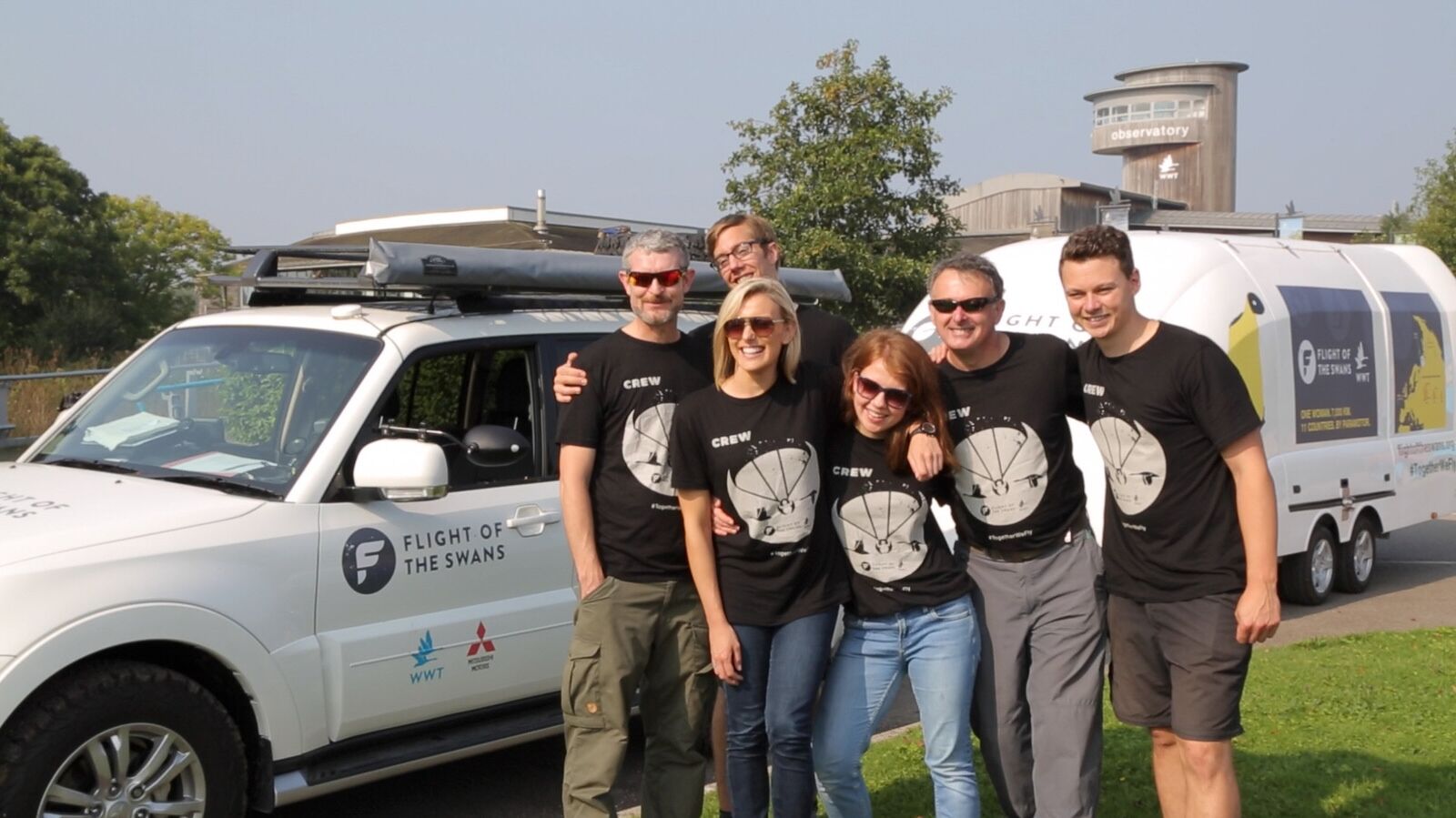
Fujifilm is honoured to be sponsor to “flight of the Swans” expedition

‘Flight of the Swans’ is a mission that connects wildlife, wetlands and people; from the wilderness of  the arctic tundra all the way to Slimbridge, UK. One woman, 7.000 km, 11 countries, by Paramotor glider; a daring bid to fly with one of nature’s great migrations on a quest to save Bewick’s swans.

The movie puts a totally new spin on migration with an epic 7,000km journey by Paramotor glider from the Bewick’s Swans arctic breeding grounds back to the UK.

Sacha Dench and the expedition team will be flying the Bewick’s entire flyway, often at altitudes as low as 100m on a voyage that lasts as long as ten weeks; providing a birds eye view on the challenges facing these critically endangered birds. Once they’ve safely navigated the vast Russian tundra – and its polar bears – Sacha and the team will continue to track the swans’ progress through Finland, Estonia, Latvia, Lithuania, Poland, Germany, Denmark, Netherlands, Belgium and France.

5 Tips for Low Light Photography

Australia strip BLACK

As the sunsets and the moonrises, the approach for a good photo shifts. Low light photography requires you to think differently to compensate for the lack of available light and colour. But when you know how to use low light as an advantage, it opens up a new style, and a new time of day, for you to explore with your art.

Try the following five tips for low light photography.

mel-burns-at-night-taken-by-kristoferus-andriono

“Mel burns at night” taken by Kristoferus Andriono (@kristoferus) – Fujifilm X100S

Make use of your tripod.


With such little light available, you most often need to work with slow shutter speeds. The long lapse in the open shutter means you almost always need your tripod to stabilise your equipment, especially for exposures longer than a second. Tripods are especially useful when capturing star stacks or light trails from automotive traffic. Even when you use your tripod, you may decide to use an external remote release or the camera’s timer to begin your shot and limit detectable shake.


Explore your camera’s aperture priority mode.


Photographing in Aperture Priority (A) when the light is low will allow you to manually control the cameras aperture settings ensuring you get the best shot when photographing handheld. To obtain this result all you need to do is select Aperture Priority and change the lenses aperture to the largest F Stop – ie F1.2. The result of this will be a faster shutter speed that’s automatically selected, and in most cases, will leads to a shutter speed faster than 1/60 second allowing you to capture the photo without a tripod, handheld.

sydney-celebrates-taken-by-daniel-karjadi

“Sydney Celebrates” taken by Daniel Karjadi (dkarjadi) – Fujifilm X-E2 + 35mmF1.4


Play with light trails.


Rather than lament the lack of light, use what little luminosity you have and give it time to tell a story. Capture light trails, whether the course of stars over several hours using multiple shots or the path of car headlights over several seconds. You want to control your camera’s aperture and shutter speed for this type of shot.


Find stark skies with little light pollution.


Much of night time photography includes the outdoor sky in its grandeur. If it is a starlit sky you want, make sure you shoot from a rural area. An urban setting emanates too much light pollution because of skyscrapers, streetlights and other signs that remain bright through the night. Make the drive to shoot stars from a setting that shows their beauty.

the-milky-way-taken-by-michael-davison

The Milky Way taken by Michael Davison (@michaeldavidsonphotography) – Fujifilm X-T1 + XF18-55mm


Climb high, explore your city and your ISO.


Not every night shot relies on a rural setting, though. You can take incredible shots of the city skyline or alleyways in the late-night hours. Most photographers rely on ground-level shots of city’s buildings and monuments, but you can think differently. Get up high and explore areas assessable to the public. See how the city appears from a balcony or rooftop and play with your ISO to obtain a suitable shutter speed for the lighting conditions.


With the right use of your photography equipment and a creative approach to limited light, you can take excellent photos no matter what the conditions.


Do you have any low light photographs captured using your X Series camera? Post a URL link of your online photo in the comments below and tell us a bit about the image – we would love to see them!

90mm vs 50-140mm vs 100-400mm – Size doesn’t matter

DSCF7402

X-Photographer strip BLACK

By John Rourke

As a Motorsport Photographer and the Director of Adrenal Media, the Official Photographic Agency for the FIA World Endurance Championships and the European Le Mans Series, I spend a lot of my time shooting at many different race circuits around the world. a lot of these race tracks we have to cover are big! And I mean BIG!

This means we need big glass to cover the distance from the edge of the track to the car. Circuits vary massively in width, with many of the race tracks having large run-off areas or fencing to keep the car within certain boundaries of the track. These also keep us photographers safe and out of trouble… Mostly!

While it’s always great to be safe, the drawback is that we are kept further from the action than we would like to be. To compensate this we use big glass.

Fujifilm answered our prayers when they introduced the Fujinon XF50-140mm with the 1.4x tele-converter and then when they brought the XF100-400mm into the mix as well – This brings us in line with DSLR photographic ranges. I also use my favourite lens, the Fujinon 90mm F2. This lens has a place at the track too and should not be ruled out. All three of the lenses are not only perfect for the racetrack but are also exceptional in the pit lane.


The XF90mm

Okay, Okay, I admit the 90mm has limitations on the track itself but for those places where you can get closer, the F2 aperture provides a stunning shot. I also like the 90mm for the environmental images. For example the car with track included so the viewer will know which circuit the car was racing at. This is an important image in our ‘shot list’ as part of the race week narrative.

XF90mm
Taken on the XF90mm

In the pit lane the 90mm is mind blowing. For pit lane portraits, detailed shots and subject isolation, such as a car standing on its own in the pit lane, the F2 aperture helps pull the eye through the frame to tell the story. This lens replaced my 135mm F2 when I switched over from the DSLR system of old. However, I really wish it was able to take the 1.4 converter like the old 135 could. This would be my only negative thing I can find on this lens. I frequently use this lens for effect, isolation and arty images.

Taken on the XF90mm
Taken on the XF90mm

Find out more about the XF90mm lens here.


The XF50-140mm

The XF50-140mm is my workhorse, if you could buy only one lens… oh, okay you really do need that 18mm F2 in your life too! That and a 50-140 you can shoot anything! Well, okay get the the 1.4 converter as well then you really can shoot anything – so anyway I digress and the shopping list grows.

The 50-140 or 75-210 equivalent is for everything! Stunning at f2.8 with an awesome image stabiliser to go with it. The pull on this lens is great on the track and in the pit lane night and day. You can attach a 1.4x converter and you then have a 70-196mm F4 lens that you can carry in a coat pocket giving you a total range of 75-297mm in a 35mm equivalent that’s money well spent if you ask me. This lens is really fast focusing, the camera can react quickly to oncoming and passing cars and pitlane action, this is my go to for track and pitlane.

“I would not leave the media suite without this on one of my cameras.”

DSCF7665
Taken on the XF50-140mm

JRT28276
Taken on the XF50-140mm

JRT28469
Taken on the XF50-140mm

Find out more about the XF50-140mm lens here.


The XF100-400mm

Then you have the XF100-400mm, well what can I say? This is all manners of Boom Shakalaka! This lens on the track is just mind-blowingly sharp. The money shot for me has to be a few cars fighting on the corner for a lead or ‘battle shot’ as we call it. Many photographers shoot catalog style at the track, that’s one car per frame, for me it’s boring! Thankfully our clients tend to think so too. We love battle pictures, they really show the dynamics of the race, the tension, drama and emotion…this is the lens for that!

DSCF7531
Taken on the XF100-400mm

DSCF7503
Taken on the XF100-400mm

Even if you have a 50-140mm already, don’t worry you will still want a 100-400mm in your life for sure…. This lens will pick out details in the heat – the shimmer around the cars and in the sharpest of action details. Images shot at the 400mm end have a gorgeous bokeh and lens compression that really helps to isolate any subject matter whatever the distance.

DSCF7390
Taken on the XF100-400mm with XF1.4x Teleconverter

When I first got the lens I thought I would struggle with the f4.5 to f5.6 aperture, but now I’m used to it I can use the lens all day long. It will even take the 1.4 converter, this takes the equivalent 150-600mm focal length, with the 1.4x to 840mm that’s pretty awesome if you ask me in such a compact lens.

I have used this lens a lot since I got it and even in the pit lane the versatility of this lens makes it worth buying. Shooting through pitlane clutter to pick out details and action is so easy and stunning.

Find out more about the XF100-400mm lens here.


As you can see the differences are clear enough but all are usable in motorsport. It’s really just down to personal preference of the individual, to which one you use and the style of image you require, if you have any one of these lenses you could easily walk away with some epic shots from the day.

To see more of John’s work please visit:

line break image