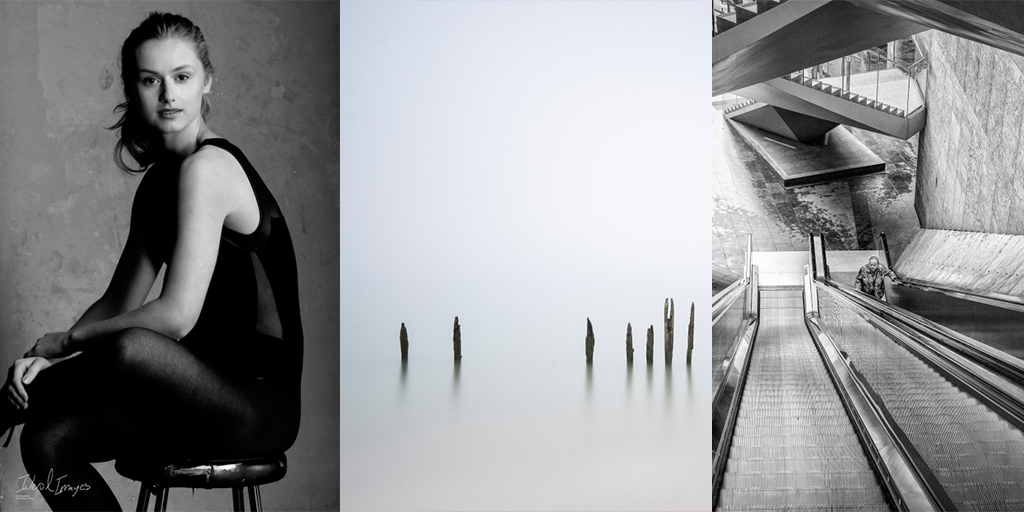
#streetphotography

X-Thusiast Featured Photographer Andrey Moisseyev

Our June X-Thusiast hails from South Australia and captures beaches, sunsets, street photography and more. Learn more about the diverse photography from Andrey Moisseyev, and get his advice for pursuing photography as your passion.


Can you tell us a bit about yourself and where you are from?


My name is Andrey Moisseyev and, yes, I realise my surname might be a tongue twister. I live in Adelaide and capture everything touching my life in the surrounding area. South Australia is a very beautiful state with great beaches, amazing sunsets and picturesque hills. My daily work is in information communication technology (ICT) within the city but photography is my passion, ensuring I carry a camera almost every day in order to find new angles and perspectives on life. My work has been used by such brands as SA Tourism Commission, Woolworths, Jetstar, Hahn, Mother’s Choice, different local councils, etc. I’ve also been published in Australian and international car magazines, calendars and local newspapers.


How did you develop an interest in photography using Fujifilm equipment?

My interest in photography began at twelve when I took pictures for a short time but I was obliged to take a hiatus. I returned to photography at 26 after I grew dissatisfied with my simple 6MP point-and-shoot, and upgraded to a decent DSLR to capture higher-quality images of my family.


The results and sense of satisfaction thereafter led me to the realisation that photography would be my lifelong passion. All the while, my artistic eye, studio and technique expanded and improved, along with the range of equipment. Finally, I concluded that I needed to acquire something more compact that would easily fit into my backpack while maintaining an excellent image quality.

Fujifilm X-T2 with XF18-135mmF3.5-5.6 R LM OIS WR – F13 – 30 seconds – ISO 200


Last year, I started to look for a camera that would meet all my expectations. I considered many brands before an email from my local camera shop arrived announcing the release of the Fujifilm X-T2 in Australia. I visited the shop and bumped into a Fujifilm representative demonstrating the camera in-store. I spent an hour or so talking to him whilst testing the camera. A few days later, I became a happy owner of the X-T2 with an XF18-135mm kit lens. Since then I have seldom been without this camera.


How would you describe your photography style and strategy?


I’m still settling on a style but it is definitely within the spectrum of Velvia colours. Most of my subjects are cars, architecture and landscapes but I prefer not to box myself into a single genre, as my interests are wide: portraits, still life, street, macro, etc. Also, I shoot a lot for micro stocks, another reason to buy a compact camera that needs to be easily portable while still offering a resolution of at least 24 MP.


What inspires your photography?


I’m forever trying to improve myself in the field and learn new techniques. I follow other photographers through social networks and online art galleries and analyse how and why they are taking their pictures. In addition, the beauty, sheer scope and energetic light of Australian nature drives me onward to capture the ever-expanding horizons of our universe.

Fujifilm X-T2 with XF18-135mmF3.5-5.6 R LM OIS WR – F8 – 10 seconds – ISO 200


Where are your favourite places to take photos and do you prefer a certain type of light?


I found myself shooting a lot of sunsets. Here in SA, we have the most beautiful sunsets viewed from the beaches with jetties. I also like night city views and I discovered that my X-T2 is very good at taking night and long-exposure photos. As for the quality of light, it is always different and one simply needs to be prepared to capture the right moment.

Fujifilm X-T2 with XF18-135mmF3.5-5.6 R LM OIS WR – F6.4 – 1/250 second – ISO 200


What is your favourite memory from a photography session?


I have many and it’s hard to remember all but the most recent, which was from our trip to Hahndorf, South Australia, where I was capturing the autumn colours of the village. After I uploaded a few pictures on Facebook, one of the photos went viral and was shared more than 30,000 times and viewed by more than 100,000 people in just a couple of weeks.

Fujifilm X-T2 with XF27mmF2.8 – F7.1 – 1/250 second – ISO 200


Can you tell us what is your favourite Fujifilm camera and why?


Presently, I only own the Fujifilm X-T2 and am delighted with it. It is very compact, weather-sealed and has good build quality along with a perfect resolution for now. I also appreciate how it manages noise. I particularly enjoy the tilting screen feature, which allows me to get down very low or above my head. I’m keen to experiment with the GFX 50S when funds permit.


Which Fujinon lens or lenses do you prefer to use with your Fujifilm camera and why?


As I was striving for portability and universality, I’m happy with the XF18-135mm; however, recently I purchased the XF27mmF2.8 pancake lens, reducing my camera footprint to the point it fits into my pocket — which is great! Going forward, I plan to acquire the XF100-400mmF4.5-5.6, XF56mmF1.2 and XF23mmF1.4, and hope I won’t have to wait too long for this to happen.


What sort of workflow do you use in your photography? Do you shoot in RAW or JPEG?


I shoot both. The X-T2 has two SD card slots and I set it up to write RAW into one and JPG into the other — it is very handy. After copying files to my PC I do a backup onto another hard drive straight away. I always use Adobe Lightroom to process RAW files and Photoshop for editing.

Fujifilm X-T2 with XF18-135mmF3.5-5.6 R LM OIS WR – F5 – 1/250 second – ISO 200


Do you have any technical tips you’d like to share? Perhaps suggestions on the best lighting, shutter speed, white balance, aperture, ISO, etc.? Other preferences?


My technical tip is for RAW conversion in Lightroom to sharpen my photos, which I was very happy with. Following extensive experimentation, I achieved the desired result. In Develop module, Details tab for XF18-135mm lens, I use the following settings: Sharpening 70-80

Radius 1.2-1.3

Detail 5

Masking 30

After this — in Camera Calibration — I switch to profile “Camera Velvia/VIVID.”


Do you have advice for new photographers or the next potential X-Thusiast?


Give it a go and never give up! Life is short and there is only one moment, which will never be repeated. It is the present — capture it! If you like to take pictures, just do it regardless of the opinions of another. I guarantee that a Fujifilm camera is the perfect tool with which to accomplish this.


To see more of Andrey’s work, check out his Instagram page.


If you or someone you know in Australia is interested in joining our X-Thusiast community, check out the full X-Thusiast Gallery and submission details here.

Through a Photographer’s Eye: Jared Morgan

Welcome to the Second Series of Through a Photographer’s Eye. In this series, we continue to learn about Australian photographers and how they use X Series Cameras to photograph their world around them. Our second interview in Series Two is with Cairns, Queensland-based photographer, Jared Morgan.


When you first started out pursuing photography did you consider Fujifilm equipment and can you let us know why you use the gear now?


My only real experience with Fujifilm before the Fujifilm X-T10 and Fujifilm X-T2 was probably around 2006. If I remember correctly I had a Fujifilm FinePix S5500 bridge camera. I think it was a 4 Megapixel camera. They were a pretty good travel camera for the time. This camera did some hard travelling through Thailand, Cambodia and Vietnam after I purchased it.


The camera was also pushed into service as the camera I took in 2011 when I rode my motorcycle on a three-month trip around Australia. However, that trip eventually saw its demise, and it retired from active service!


I then went down a somewhat traditional route many photographers have gone down. I decided I liked the ergonomics of Nikon DSLR cameras and have used a Nikon DSLR system for several years. My interest for re-entering the Fujifilm world was I was looking for a lightweight travel system. I purchased the Fujifilm X-T10, XF18-55mmF2.8-4, XF55-200mmF3.5-4.8 and rented the XF10-24mmF4 for a personal trip to Japan in late 2016.


On my last few days in Japan, I purchased the Fujifilm X-T2. This was when I seriously considered the Fujifilm system for everyday professional use. I have been slowly but surely building up my Fujifilm inventory of equipment and introducing it to my professional work as my Nikon gear slowly phased out.

One of my first efforts exploring the Fujifilm X-T10 before Japan. Looking back at Cairns (Australia) over Trinity Inlet.

Fujifilm X-T10 with XF18-55mmF2.8-4 – 18mm – F13 – 20sec – ISO200


Do you have a favourite photo you have captured using Fujifilm equipment? Can you tell us the story behind the image?


I think my favourite photo so far with the Fujifilm system is a photograph I simply call “Takayama”. This photograph was taken with the Fujifilm X-T10 in Takayama, Japan. I had travelled to Japan in November of 2016 and was still getting to know the Fujifilm X-T10 on the fly a little bit.


I tend to walk a lot when I travel, I have always been a bit of a wanderer, (I think it’s a great way to get to know the places you visit). I had planned to walk to Hida Folk Village in Takayama in the morning which is located about 5 kilometres from the town. Well, as plans go, sometimes things don’t go as expected. I had been out quite late doing some night photography and ended up sleeping in. After getting organised, I walked outside to the most amazing mist or fog that had enveloped Takayama. I grabbed the nearest taxi and high-tailed it! It turned out to be great timing; I had still arrived early enough that the crowds were minimal and I had about twenty minutes of the mist rolling down off and surrounding the hills before the sun rose enough and the magic evaporated.


This is just one of many shots taken that morning in great haste! It may not be the most technically proficient photo, but I still smile when I think of that time in Takayama. Hopefully, I captured something of what it was like.

Takayama – Fujifilm X-T10 with XF18-55mmF2.8-4 – 18mm – F8 – 1/200sec – ISO200


We noticed you enjoy night photography, what sort of settings do you mainly use when photographing with your Fujifilm X-T2?


Night photography is something I very much enjoy. I consider myself a generalist at this stage in my photography career, but if I had to choose something I would prefer to do it would be out exploring in the dark with a camera.


I have always gravitated to night photography. Partly that’s just who I am, I am quite happy alone and exploring, and partly the technical challenge of finding light when there appears to be none. I have always been fascinated by the fact that mundane places can be very different, even spectacular when viewed through the filter of the darkness.


As for settings, it is rare for me to do much over a 30-second exposure. I find with the style of night photography I do there is usually enough in a 30-second exposure to make an image. I recently completed a small series of local waterfalls at night time. Almost all were taken with 30-second exposures, and occasionally multiple exposures blended together.


I found both the Fujifilm X-T10 and X-T2 easily the best cameras I have used for their ease of night photography. The Electronic View Finder has changed the way I shoot at night. I can compose in almost complete darkness and not have to take several high ISO shots to check my composition. This has most definitely kept my time spent ‘fiddling in the dark’ around to a minimum.

Takayama Swan – Fujifilm X-T10 with XF18-55mmF2.8-4 – 31mm – 1/100sec – ISO200


Jared, as a part time professional photographer what do you see being the biggest hurdle in establishing yourself as a full-time professional?


I think the main hurdle to becoming a full-time professional photographer for me is a somewhat complicated question! Firstly, the decision to become full-time must be examined.


I see advantages in not relying on photography as my main source of income. I have a reliable stream of income from my current employment and, I see the benefit in remaining a part-time photographer and reducing my hours spent in my ‘day job’.


By not constantly being under pressure to source income from my photography, I feel I have much more control and can be a bit pickier in what and when I shoot. I also feel this allows me more freedom to explore my interests in photography and allows me to be more creative. I have learnt that this journey as a photographer is somewhat out of my control at this time. I am happy and willing to some extent to let the fortunes of fate decide what is in store for my photographic career.


Just a short time ago I would never have dreamed of an opportunity like appearing in this series by Fujifilm, and am more curious than ever to see where and what I end up doing in photography be that in a full or part-time capacity.

Crystal Cascades Cairns – Fujifilm X-T2 with XF18-55mmF2.8-4 – 39mm – F11 – 30sec – ISO200


Recently you travelled to Japan with the Fujifilm X-T10 and three XF lenses. How did you find the Fujifilm X Series system when travelling?


The catalyst for looking at the Fujifilm system for me was largely an issue of weight. I had travelled to Europe in 2015, and like many photographers who travel, I suspect I tend to travel with a bit too much gear in fear of losing “the shot”!


I started looking at compact systems for travel but I also definitely did not want to sacrifice image quality and capability. This is how I ended up researching the Fujifilm cameras initially. I was going to Japan in November of 2016 for a solo photography trip and decided on the Fujifilm X-T10, XF18-55mmF2.8-4, XF55-200mmF3.5-4.8 and I rented the XF10-24mmF4. I weighed my gear that I took to Europe and Japan recently to compare the weight savings of now using Fujifilm. The Fujifilm gear I now travel with is about half that of my other equipment! So, safe to say that part of my requirements was achieved – absolutely!


As I do enjoy night photography, safety is always a concern as well. Although this is not really an issue in Japan, the smaller less obtrusive gear does allow me somewhat to be less conspicuous and not necessarily look like I am carrying lots of expensive camera gear around.


I have also discovered that people photography or street photography is much more enjoyable with the Fujifilm. People don’t seem to be as concerned when they notice they may be being photographed with a smaller camera than a traditional DSLR type camera, so definitely a good system for street photographers I think.


Overall, I have found I am much more likely to nearly always have a camera on me now, and the Fujifilm X-T2 is just such a pleasure to use. I found no drawbacks with the Fujifilm system when it comes to travelling, and am looking forward to returning to Japan with my Fujifilm X-T2 in December.

Shibuya Crossing – Tokyo Japan – Fujifilm X-T10 with XF10-24mmF4 – 10mm – F4 – 1/5sec – ISO200


While you were in Japan, you purchased the Fujifilm X-T2. Tell us in a few sentences what you are most excited about exploring on this camera?


The Fujifilm X-T2 was a turning point for me. This camera made me realise the potential of the Fujifilm cameras to be used professionally and was largely responsible for me to start switching to Fujifilm full time and not just as a travel camera.


The latest features to be introduced via the recent firmware update that were of most interest to me were the ability to change ISO on the front dial, longer exposure times when in bulb mode and smaller focus points available. I have also been making use of the voice memo function to make a few notes on location while shooting. I am slowly starting to explore video as well so I will be spending a fair amount of time exploring the Fujifilm X-T2’s video capabilities in the coming months.

Old Man Kyoto – Fujifilm X-T10 with XF18-55mmF2.8-4 – 55mm – F5.6 – 1/500sec – ISO800

Kyoto Reflections – Fujifilm X-T10 with XF18-55mmF2.8-4 – 55mm – F5.6 – 1/500 – ISO800


When photographing in your hometown of Cairns, Australia how do you find people react to you using Fujifilm equipment? Do you notice any differences from changing over from a Digital SLR?


It has been very interesting seeing people’s reactions to the Fujifilm cameras. There are the people who are fascinated by the manual dials and many older people comment on the similarity of the Fujifilm cameras to the old film cameras they grew up with.


There is something special about the look of the cameras. They are a very tactile camera, and you just want to touch them! Then there are the “photographers” who can’t possibly even begin to understand that it’s not a Nikon or Canon, and will explain at length why brand x is better. I usually am happy to explain the benefits of the Fujifilm as I see them. I am more and more happy just to nod and smile and let the results speak for themselves!


The main differences I have noticed is obviously the reduction in weight. Also, I just want to use the camera more. I sometimes just pick the camera up so I can enjoy holding it…the X factor perhaps.

Trinity Inlet (Cairns Australia) – Fujifilm X-T10 – XF18-55mmF2.8-4 – 35mm – F14 – 13sec – ISO200


If you have some advice for someone starting out in photography what would it be?


My advice for someone starting out in photography would be to really learn the basic stuff like composition, colour, exposure, etc. Once you have the basics really sorted, you will be able to make the creative ideas you have in your head.


Vision and creativity are of course important, but if you don’t understand how to make it happen, it’s not of much use. I think being good at one will often make you better at the other. Secondly, don’t try and force a particular style. Your own style will develop naturally over time. Don’t follow the latest trends just because something may be popular right now. Develop YOUR photography style.


Don’t think the journey ends, never stop learning. Study other photographers, try new techniques and explore your ideas. Remember you will fail, learn from your failures. Lastly, always remember you make your images not the latest gadget!

Kyoto Gion District – Fujifilm X-T10 with XF10-24mmF4 – 10mm – F22 – 45sec – ISO200


To view more of Jared’s work visit his website or follow him on Instagram, Twitter or Facebook.

Other interviews in this series

Through a Photographer’s Eye: Rhys Tattersall

Through a Photographer’s Eye: Rhys Tattersall

Welcome to the Second Series of Through a Photographer’s Eye. In this series, we continue to learn about Australian photographers and how they use X Series Cameras to photograph their world around them. Our first interview in Series Two is with Sydney based photographer, Rhys Tattersall.

Rhys, tell us about you and what you most like about photography and video?

I am 22 years old and currently working retail. What I like most about photography and video is it allows me to be creative, it’s a means of expression when I’m not at work or home, I love being able to tell a story through my work.

You recently visited Japan with the Fujifilm X-Pro2, XF56mmF1.2 and XF16-55mmF2.8, was the gear well suited for travelling?

What lens did mainly use for photography and how did the camera perform in the snow?

Yeah, it was a great trip, and the gear worked superbly! The overall weight of the X-Pro2 body with the two lenses was great. The gear was very light, and it easily fit into my camera bag, which made it easy to do full day trips, I was thankful I didn’t get a sore back. I had the XF16-55mmF2.8 on most of the time because it was a versatile focal length for video and those split decision moments for a photo opportunity. The weather sealed body and lenses acted perfectly when it was snowing and raining.

What are your impressions on Fujifilm as a brand compared to others you may have used previously?

Fujifilm is a great brand that makes affordable products of a high quality. Although, I feel with great products they offer they could advertise and reach out to customers a lot better than they are doing so. Their social media is growing which is a great sign, but I feel they aren’t doing everything they can be to show off the amazing products they have on hand.

What’s been the most engaged photo you captured using the Fujifilm X-Pro2? Can you tell us the story behind the image?

At this point, it would be the photo I took of my mate walking ahead of me in a snow storm at Nozawa Onsen. We were on our way back from town to our Ryokan (a traditional Japanese inn), and it was lightly snowing at the time of leaving the restaurant. A few minutes later, the snow began to come down sideways – there was lots of it! Adrian happened to be walking ahead of me, and I wanted to capture the snow falling, so I switched to manual focus and pulled it back until I saw the most snow in focus. I was using the XF16-55mmF2.8 and shot the photo at 1/250 shutter speed combined with an aperture of F2.8 at ISO 200.

If you have some advice for someone starting out in photography what would it be?

Don’t get caught up on the gear side of things. I learned using film and an old analogue camera. Photography being an art in a sense means there is no wrong way of doing things, only how you perceive it and portray it. Don’t be a copycat, find your own style.

We noticed you used the Fujifilm X-Pro2 to film a video in Tokyo. What video settings, pre and post processing, did you use to achieve the look?

The video settings I used were 1080p at 60fps (frames per second) which is Full HD. Although in saying that, when recording video, you want to make sure your shutter speed is close to as possible to double the fps (in this case, 60fps means I will want to keep my shutter speed at 1/120). Doing this will keep the video nice and smooth and allow for great slow motion in post. Post processing wise, I used Premiere Pro and edited with sequence settings at 24fps, which helped create smooth, realistic slow motion.

[youtube https://www.youtube.com/watch?v=OI_Uq3KCSa8&w=640&h=360%5D

Have you used the Fujifilm X-Pro2 at night? How did it perform and was there any noticeable noise or artefacts in the photos?

Yes, Particularly with fireworks in Nozawa Onsen and the street lights of Tokyo! The Fujifilm X-Pro2 was great, its low light capabilities were very surprising and showed little to no noise artefacts. I was able to still get photos at a decent shutter speed when hand holding in low light scenarios.

What improvements would you like to see on a future X Series camera?

That’s a hard one, as settings seem to differ in each model. I think if the Fujifilm X-Pro2 and the Fujifilm X-T2 had the same software it would enable the X-Pro2 specifically to become more versatile. I think we are coming into an age where it’s common to have so many features in one product, opposed to having many different products with roughly the same features. If Fujifilm allowed the software and some hardware components to be utilised across all X Series Cameras, I feel it would be a good improvement to a future model.

To view more of Rhys’s work visit his Instagram profile or subscribe to his YouTube channel.

X-Pro2 in Barcelona

016_derekclarkphoto-x-pro2
X-Photographer strip BLACK

By Derek Clark

My aim for a recent trip to Barcelona was to travel light. Last year I was in New York shooting jazz musicians for a book I’m working on and I had to carry a lot of kit. The Fuji gear was light, but I also had a laptop, flashes, light stands and a background too. But traveling light was a high priority for this trip to Barcelona.

I packed the X100T with the WCL-X100 (giving me the full-frame equivalent of 28mm & 35mm), plus the X-Pro2 with the 35mm f2 and the 18-55mm f2.8-f4 zoom. The zoom was the tough choice as I prefer primes, but I wanted to take something longer than the 35mm. The 56mm f1.2 was an option and I also considered the 16mm f1.4 because Barcelona has so much great architecture and I knew a really wide angle would be useful. But I had to be strict about travelling light and so opted for the 18-55mm. In the end, I probably shot 95% of the X-Pro2 pictures with the 35mm f2 and 95% of the X100T pictures with the WCL (so 50mm and 28mm in FF).

“I fell in love with the optical viewfinder all over again”

X-Pro2 & The 35mm f2

I have to say upfront that the X100T is probably my all time favourite camera, even though at this point it has been overtaken in performance by newer models. But it’s still a design masterpiece in my opinion that just begs to be held and used.

X100T & The WCL
X100T & The WCL

That said, I’m in love with the X-Pro2. The camera feels great in my hands, especially with the Gariz half case (Fuji half case also available). The performance is amazing and I’m still being surprised on a daily basis by how great the focus is (especially with moving subjects). Autofocus has reached new heights on mirrorless cameras and I can think of two major DSLR brands that could be an endangered species if they don’t wake up, see what’s going on and adapt quickly.


“The X-Pro2 takes things to another level”

X-Pro2 & The 35mm f2

Shooting on the streets of Barcelona was a blast! The X100T is my favourite street camera, but I have to say that the X-Pro2 did out-perform it and produced far more keepers. I’ve always been happy with the image quality on the X Series cameras, more than happy in fact. But the X-Pro2 takes things to another level wth the 24 megapixel X-Trans III sensor giving a welcome increase in resolution. But I’m glad to say it is without doubt the same Fuji look and feel, which is more important than megapixels!

X-Pro2 & The 35mm f2

Film Simulations have always been a big part of the X Series cameras. A while back Fuji gave us Classic Chrome, which was unexpected, free, and became an overnight success. I use it most of the time and love it. These are my settings for Classic Chrome.

-1 Highlight tone
+2 Shadow Tone
+3 Colour
-3 Noise Reduction
+2 Sharpness

unnamed-1
X-Pro2 & The 35mm f2

But when light gets low I find this can be a little harsh and the shadows can get blocked up, so I reduce the Shadow Tone setting to -1 or even 0. Sometime I’ll switch over to Provia as it’s a good general all rounder and much more forgiving.

I don’t often use Velvia (too saturated for me), but I found myself quickly switching to it when photographing rooftops against an orange Barcelona sunset.

X100T & The WCL
X100T & The WCL

Another film simulation fanfare came along with the X-Pro2 in the shape of Acros. The original black and white film simulations were pretty good, but I didn’t shoot a lot with them unless I was in RAW+JPEG to have the option of the colour version later.

I just preferred to do my B&W conversions in Lightroom or Silver Efex Pro. But with Acros I find myself wanting to shoot in-camera B&W a lot. In fact I have to force myself to switch out of it again.

X-Pro2 & The 35mm f2

X Series cameras have always had the option of bracketing three film simulations at a time, but I wish we could shoot two at a time with our own recipe of Highlights, Shadows, NR, Colour and Sharpness baked in, but without the delay of bracketing (where you can see the processing in the viewfinder). Classic Chrome and Acros…ahh. But I digress.

X-Pro2 & The 35mm f2 (Acros)

Acros is beautiful, especially with a bit of highlight & shadow tweaking. There’s a grain in Acros files that just gives the pictures a timeless documentary look, and that’s without using the grain feature of the X-Pro2. On the subject of the in-camera grain feature. The two settings of light and heavy are great, but the same again with larger grain would be nice too!

I like high contrast black and whites, so my settings for Acros are:

-1 Highlight tone
+3 Shadow Tone
-3 Noise Reduction
+2 Sharpness

Don’t worry if you like to see tons of detail in the shadows, because Acros can do low contrast B&W too, plus you still have the option of adding a red, green, or yellow filter as well (I mostly use Red).


Derek explores the Acros mode further in ‘Jazz With Fuji’s Acros & The X-Pro2 – SOOC

The Hybrid viewfinder is now an Advanced Multi-Hybrid Viewfinder, similar to the X100T’s where you can have a tiny screen in the bottom right corner (as an option) that shows a zoomed area of the focus point to assist with manual focus. I use this now and again and it works really well.

X-Pro2 & The 35mm f2

I fell in love with the optical viewfinder all over again on this trip. I wear glasses, but peer over the top of them when looking through the viewfinder (I’m so happy to see a built in diopter on the X-Pro2), so I can’t get my eye right up close. With the OVF I can see the frame lines and some space around them which allows me to see what’s about to enter my picture.

With the EVF I need to move my eye around, looking at the corners of the frame individually, but there isn’t always time to do that. Plus the Harsh sunshine of Barcelona can make it hard to see the EVF because your eyes are adjusted for the brightness, which makes it hard to see if your exposure is ok. That’s when I like to dial in my exposure 100% manually and switch to the optical viewfinder. It’s not as big as the X100T’s OVF, but it’s still big and bright and the frame lines are easy to see. Using the OVF just feels more old school and I like that!
X100T
X100T

‘My Menu’ is another great feature that allows you to store frequently used menu items on a single page. The best part of this is that it pops up as soon as you press the Menu/OK button. Sometimes it’s the simplest things that make all the difference!

X-Pro2 & The 35mm f2

Fuji have took a great camera like the X-Pro1 and improved everything that needed improving. Then they added all the best bits from the other X-Series cameras and threw in a few features that we didn’t even know we needed. The fairies then sprinkled just the right amount of magic dust and hey presto – The X-Pro2. It’s an absolute joy to use!

X-Pro2 & The 35mm f2

I now have a dilemma. Do I upgrade my two X-T1’s for two X-T2’s or sell them both and buy another X-Pro2? But while I’m thinking about that one, Fuji – how about a 24mp X100 with identical features and an identical button layout as the X-Pro2.


To see more of Derek’s work, click here. 


Help! I don’t know whether to buy and X100T or an X70.

By Kevin Mullins

KevinMullins-Headshot-200x200When I first received the Fujifilm X70 I looked at it and thought…….hmmmm.  Then I scratched my head and glanced sideways at my X100T which was looking back at me with suspicion and concern.

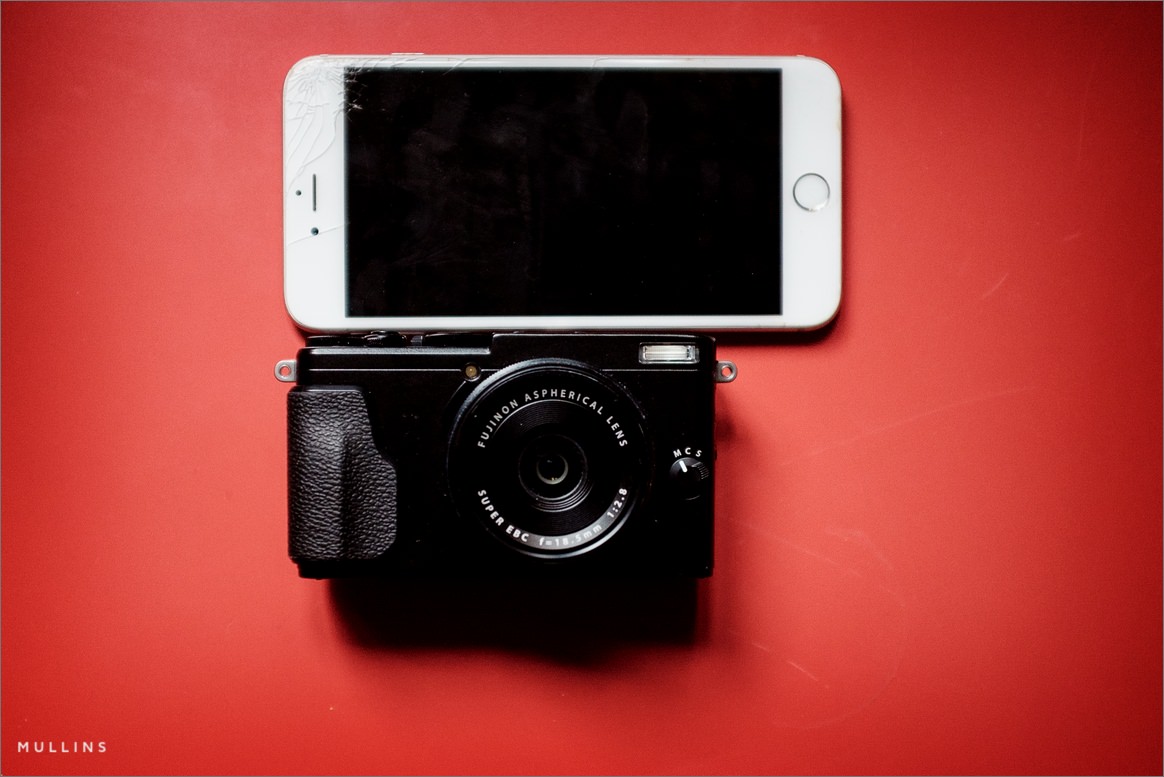
I have to admit that I also had suspicion and concern when I first picked up the X70.  It’s teeny.  In terms of length and width it’s almost a third smaller than my mobile phone.

My X100T, on the other hand, is larger.

So I challenged myself to see if size really does matter and, more importantly, does the X70 live up to its big brother X100T when it comes down to image making.

fuji-x70-review-1-2

Brief Differences and Similarities between the X70 and X100T

This isn’t a review of either camera but it makes sense for me to point out the fundamental differences, and similarities between the two cameras.

Both cameras share the same 16-megapixel APS-C X-Trans II sensor but that, possibly, is where the similarities end.

We already know about the size difference, but really the biggest differences are the interface to shooting and the lens and so I will concentrate on these during this post.


“Beat the fear of Street photography by allowing people to come to you, instead of you to them.
Then just… Click.
No pressure.


The Lenses

The X100T has an excellent 23mm F2.0 lens.  Way back when I was shooting DSLR, my preferred focal length was 35mm (full frame equivalent), and actually it still is.

I LOVE the lens on the X100T and this is one of the critical changes because if you also LOVE the lens on the X100T, you need to know that the lens on the X70 is different.

The lens on the X70 is a slower F2.8 but wider 18.5 mm focal length or 28mm (35mm equivalent).

So straight away, we can see that the X100T is going to be better at low light shooting, albeit marginally.

However, the size and weight of the X70 means we can shoot at slower shutter speeds to mitigate this to a certain extent (depending on the subject matter of course).

For me, I love that 35mm FF focal length and I’m getting used to the slightly wider view from the X70.

cheltenham-festival-2016-7

Taking Pictures

I instinctively lifted the X70 to my eye when I first got it out of the box.  Big mistake as there is no viewfinder in the camera (you can purchase an external viewfinder attachment that slots into the hotshoe).

For me, the reason I never really gelled with the Fujifilm X-M1 was because of the lack of viewfinder.  But then the X-M1 was bigger…..and didn’t have the X-Trans II Sensor.

I’ll give it a try I thought.

And you know what, I have learnt to really like the LCD shooting experience of the X70.  I’m not a hundred percent convinced I wouldn’t prefer a viewfinder as at least an option, but obviously one of the reasons this camera is so small is because of the removal of the viewfinder.

Instead of the traditional way of shooting, in the X70, you have a remarkably versatile tilting screen, which even tilts vertically above the camera to allow you to take “selfies”.

When shooting with the X100T I have to use the viewfinder, or shoot from the hip using a zone focus technique.

I can still use zone focusing with the X70 of course, but the benefit of the flip down screen is plain to see.  Additionally, the X70 implements some neat touch screen features where you can use your finger to very quickly touch, focus & shoot.

That’s a great advantage when out on the street shooting.


“I adore elderly people holding hands and I strive to look for pictures like that.
Pretty much, I just want to be like that with my wife when I’m elderly too.”


Which camera would I use?

This is the question I’ve been asking myself a lot.  When would I use one over the other?  And I actually sat down and came up with a list of scenarios where I would use either the X100T or the X70.

In really low light I’m going to need the X100T.  I don’t use flash, and I find that I use the Optical Viewfinder on the X100T a lot when shooting in low light.

For that reason, and also because of the build and form factor, the X100T will remain one of my primary cameras as a wedding photographer.

However, the X70 really comes into its own when I pick up a camera to go and shoot street photography.

In fact, for me, its superseded all other cameras in the range when it comes to shooting on the street.

I like to get in close and I like to observe and prepare to shoot.  Unless I need to use different lenses (for example, I may use a MF lens on the X-Pro2 or X-T10 for rapid zone focusing and shooting), the X70 is an ideal camera for shooting on the street.

The fact that you don’t even have to press the shutter button is a marvellous thing in itself and lends the camera perfectly to candid street shooting.

The X70 isn’t going to replace my X100T, but at the same time, my X100T will be a lot less active for my personal and street photography work.


“These images below were shot using Auto Focus, at F2.8 without the flip screen down.
Simply pointing and shooting from the hip.
One handed (as the other was occupied with Guinness at the time).”


To see more of Kevin’s inspirational images, click here.


Buy an X-Pro2, win a workshop with an X-Photographer

Pretty simple right?

If you buy an X-Pro2 and register the warranty on our website before the 8th April 2016, you could win a place on one of our fantastic workshops.

Image by Dave Kai PiperDSCF4552-Edit-

1st May – Portrait workshop with Dave Kai Piper – (4 delegates)

Location: Amersham Studios

Being a photography lecturer, Adobe Community Pro and Fujifilm X-Photographer, Dave Kai-Piper will take you on an exciting journey into portrait photography.

His workshop starts off with a conversation with each participant discussing individual goals for the day alongside a group objective. As part of the morning set-up you will have a look at some iconic images from influential photographers. Then he will break down what makes those images work & talk about how different lighting types can create moods and styles. You will learn how to build on simple lighting styles like Butterfly lighting, Split lighting and Rembrandt lighting and then put them into practice using live demonstrations with a stunning model.
Once your objectives are set, you will jump into the studio full of the newest WiFi controllable Broncolor lighting to put your new Fujifilm X-Pro 2 through its paces. You will look at ways to shape, control and create that perfect image. Within this workshop you will also learn the best way to communicate and pose your subject to get the best from your model.

Whether you have spent a lot of time in the studio using lighting or have never used additive / flash lighting in your photography before, each attendee will leave the workshop with a broader knowledge of various techniques from lighting your subject, creating a scene and directing your model.


Matt-Hart

4th May – Street workshop with Matt Hart – (4 delegates)

Location: Liverpool

Spend the day with Street, Event and X-Photographer Matt Hart in this candid street photography workshop. It is here that Matt will give you an insight into the way he works and how to shoot his style of street photography.

He will show you how to anticipate and capture decisive moments, how to be invisible in public spaces to get the best images and how to to develop confidence shooting street photography. He will show you the best places in Liverpool to capture great street images – so in the future you can come back and have another go!

Matt’s workshops are always fun, informative and relaxed whilst at the same time challenging and have been designed to stretch your imagination.


Winchelsea-1

7th May – Landscape workshop with Paul Sanders – (4 delegates)

Location: Dungeoness and surrounding areas

Your day will be spent with Fujifilm X photographer and landscape artist Paul Sanders, he will help you develop your own way of seeing the landscape to create images that resonate with how you feel about the location.

Paul’s specialty is long exposure photography, he will take through a natural and easy to follow workflow that enables you to get to grips with the technical side of this style of photography. He will have some Neutral Density filters and graduated filters for you to use on the day. Filtration is one of the key aspects of landscape photography, it allows you to control contrast, mood and exposure time. Paul will explain all of the pros and cons of using filters and the different types of filters available.

The day will be split into two sessions – one at Dungeness and the other at Winchelsea beach.

Dungeness is the only classified desert area in the UK, its flat bleak landscape has inspired photographers, artist, writers and filmmakers for many years. The beach is a detritus of fishing boats and fleet. The decaying hulls of boats are left on the shingle, nets, huts and machinery make this a photographers dream location. Paul will explain that landscape photography isn’t always about the big vista but also lies within the details and the abstract he will guide you around the area so that you don’t miss anything.

Winchelsea Beach is a long exposure dream, lines of decaying groynes stretch along the beach. These make the perfect subjects for getting to grips with the minimalist style that long exposure work generates. Paul will also pay special attention to composition and exposure time to create beautifully minimal images.


Register your X-Pro2 warranty here


Terms
  • Only X-Pro2 cameras purchased from Authorised UK Dealers are eligible to win.
  • Each workshop has 4 spaces available.
  • Winners will be notified by the 13th April.
  • Prizes are not transferable and does not cover the cost of travel and accommodation.
  • Lunch and refreshments will be provided