#streetphotography

Capturing Dance Choreography in Cuba

By Mickael Marso Riviere

Mickael Marso Riviere is a Bboy (break dancer), creative director and choreographer. Being a keen photographer, Mickael enjoys shooting his choreography work, as well as travel photography in locations where his work takes him. In this article he shares his images and experiences using his Fujifilm kit on a recent trip to Cuba. Read More

Through a Photographer’s Eye: Athol Hill

Welcome to the Second Series of Through a Photographer’s Eye. In this series, we continue to learn about Australian photographers and how they use X Series Cameras to photograph their world around them. Our ninth interview in Series Two is with Melbourne based photographer, Athol Hill.


Athol, you go by the name of ‘The Overrated Photographer’ online, can you tell us why and how you got started in photography?


I picked the name because of the keyboard warriors on the internet. I wanted a website where I could document my photographic journey and calling myself “The Overrated Photographer” seemed like a humorous way to eliminate the trolls.


Photography was a lazy start for me. I did most people did; I bought a DSLR and left it on auto or used the scene modes. I thought that photography was a talent you were born with. I’d hear people say a photographer had a good eye and I assumed I didn’t have it.

Fujifilm X-T2 – XF50-140mmF2.8 R LM OIS WR – 1/1400 second – F4 – ISO 200


My real introduction to photography came when I was kitesurfing regularly, and there weren’t many people taking photos of kitesurfers. I went through the process of learning the manual settings of my camera and over time, I started to realise that the “photography eye” was something you developed through experience and skill.

With the arrival of my children, my extreme sports photography opportunities dried up. This forced me to extend out to unfamiliar genres to keep myself taking photos, namely environmental portraits, family and street/abstract.

Fujifilm X-T2 – XF35mmF2 R WR – 1/4700 second – F2 – ISO 200


What do you most enjoy about photography and how have Fujifilm X Series cameras impacted the way you shoot?


Photography is my artistic and creative release. I’ve used to feel I had the artistic capacity of a brick because I lacked the ability to do the conventional arts (painting, drawing and sculpting). When I discovered photography it was the realisation that I found my creative art.

Fujifilm X-T2 – XF50-140mmF2.8 R LM OIS WR – 1/5800 second – F2.8 – ISO 200


Prior to moving to Fujifilm, I had bought into the propaganda machine that told us we “need” full frame cameras to create good photos. Fujifilm has given me an appreciation for how small my gear is and yet, I have lost absolutely nothing from an image quality perspective. My photographs look better than they did before and my bag weighs half of what it did.


I also think that photography is an ongoing learning process and EVF’s offer more opportunity for improvement because we’ve gone from imagining the photo to seeing them immediately.

Fujifilm X-T2 – XF35mmF2 R WR – 1/250 second – F8 – ISO 200


If we were to look into your camera bag what Fujifilm X Series equipment would we find?


I have a broad set of gear that I choose from depending on type of photography I am doing. That includes:

X-T2

X-E2S

X100T

XF23mmF2

XF35mmF2

XF60mmF2.4

XF90mmF2

XF16-55mmF2.8

XF50-140mmF2.8

Fujifilm X-T2 – XF16-55mmF2.8 R LM WR – 1/250 second – F3.6 – ISO 400


What’s your favourite photo you’ve captured using the XF90mmF2, can you tell us the story behind the image?


My favourites will always come out of family due to the emotional attachment. My favourite is the one of my youngest daughter in a superhero mask, not because of the technical merit of the photograph or the composition, but simply because it epitomises the way children are. They’re about imagination, having fun and enjoying the moment. We forget that as adults and children help remind us.

Fujifilm X-T2 – XF50-140mmF2.8 R LM OIS WR – 1/900 second – F2.8 – ISO 1600


What photography genre do you prefer to shoot and why do you enjoy it?


Some people find a single genre and stay with it. I found this challenging because I appreciate different sides from each genres.


I’ve always loved extreme sports because the athletes inspire me. I enjoy watching people push their boundaries further and when people see a camera out, the “show off” side of their ego makes an appearance. The challenge with a family is finding the time to get out regularly, so more recently my preference now is environmental/child portraits and street/abstract, simply because of the accessibility.

Environmental/child portraits offer more opportunity to convey emotion whilst street, offers a broad variety of subjects and forces you to think outside the box.


Fujifilm X-T2 – XF90mmF2 R LM WR – 1/1000 second – F2 – ISO 1250


Can you mention where you might find your inspiration on any given day before you go out and shoot?


Finding inspiration with extreme sports is easier (when you have time) because I actively participate. I can look out the window and if there is wind, I’ll head to the beach for kitesurfing and take some photos before or after the session.

Fujifilm X-T2 – XF90mmF2 R LM WR – 1/110 second – F2 – ISO 200


For other genres it’s a little harder, and you have to push yourself outside your comfort zone. I try to carry a camera everywhere with me. That was part of the reason for getting the X100T, it offers accessibility and small size without compromising quality.


How do you find the Fujifilm X-T2 performs when reacting to something happening quickly before you? Does it get the job done and what’s the image quality like?


Pre-children, I used to think photographing sports was the peak of AF challenges, but I’d say photographing kids is far more challenging to AF system. With most sports, you have a defined path the object or person is moving in so that makes it predictable to large degree. A skater goes up in the air, does a trick and you know where he is going to go and when he will do it. Kids on the other hand will do what they want, when they want, and how they want, and there is no warning. The challenge becomes two-fold, keeping the lens on them and having the AF keep up. For these scenarios, I find the AF system in the X-T2 is remarkable. There are very few photos where the AF hasn’t done its job, it’s normally my inability to move the camera quickly enough that’s the problem.


Fujifilm X-T2 – XF90mmF2 R LM WR – 1/320 second – F2.8 – ISO 2000


I also think having full AF capability on the rear tilt screen is an advantage because it allows you to get low without having to lie down. There are no DSLR’s that offer comparable AF in liveview and in some situations, like a skate park, you can’t lie down or you are in the path of skaters. You must be on the move, getting out of the way quickly.


If you could see Fujifilm develop a future XF lens that doesn’t exist what would it be and what would you photograph with it?


A part of me that is still tied to extreme sports and for that reason, it happens to be one of lenses on the roadmap for 2018, namely the wide angle zoom. The wide angle zoom is something I’ve been waiting for. It’s not because I don’t like the 10-24mmF4, but primarily for weather resistance. When you shoot wide in water sports, you are generally close enough to be hit by the spray. I typically use a rain hood, but if something does happen, you want the environmental sealing for peace of mind.

Fujifilm X-T2 – XF16-55mmF2.8 R LM WR – 1/1250 second – F2.8 – ISO 6400


If you have some advice for someone starting out in photography what would it be? 


Don’t become despondent about the number of good photographs you get when you start out. Novices often have a flawed perception about photography because they’ll see the 50 perfect wedding photographs in an album, not the 400 that didn’t make the cut. They aren’t aware that a studio photographer might take 100 photographs to get that one perfect shot. There are very few perfect first shot photographs, that is reality of photography. In time, your success rates will improve and you’ll have a higher percentage of keepers, but it’s a journey fraught with learnings and failure.

Fujifilm X-T2 – XF35mmF2 R WR – 1/250 second – F8 – ISO 200


It’s also important to find a medium that allows you to get constructive criticism. It’s great to post a photo on Facebook or Instagram and get 50 likes, and don’t stop that because the endorphins help keep your enthusiasm going. The challenge is 50 likes on Facebook won’t teach you how to make a good photo into a great photo, or a great photo into a spectacular photo and that’s the key to your progression. Don’t be scared of constructive criticism; we all started somewhere and making mistakes is a natural part of learning. Every mistake is an opportunity to do it better next time.

Fujifilm X-T2 – XF35mmF2 R WR – 1/350 second – F16 – ISO 200


To view more Athol’s work visit his website or follow him on Instagram, Twitter or Flickr.

Other interviews in this series

Through a Photographer’s Eye: Rhys Tattersall

Through a Photographer’s Eye: Jared Morgan

Through a Photographer’s Eye: Tony Gardiner

Through a Photographer’s Eye: Greg Cromie

Through a Photographer’s Eye: Clèment Breuille

Through a Photographer’s Eye: Bhagiraj Sivagnanasundaram

Through a Photographer’s Eye: Joe Allam

Through a Photographer’s Eye: Chelsey Elliott


X-Thusiast Featured Photographer Mark Loader

Our latest X-Thusiast photographer brings an inspiring approach to photographing his subjects. Learn how Mark Loader adds mood and emotion to his images, and be inspired.


Can you tell us a bit about yourself and where you are from?


My name is Mark Loader and I’m from Perth Western Australia. I currently live in the southern suburbs between Perth and Fremantle. I’m married with three children. You can see my work on Instagram under the name Ranford Stealth.


How did you develop an interest in photography using Fujifilm equipment?


I only took up photography eight years ago (January 2009) after a lifetime of interest, so better late than never! I used DSLRs for the first few years and I still have those but rarely take them out now. I first discovered the X100 and was struck with its usability and IQ. The old-style shutter speed and aperture controls seemed so much more intuitive to me even though I wasn’t active with film SLRs. This naturally progressed to the interchangeable lens models, which I use constantly today.

Fujifilm X-E1 with XF18-55mmF2.8-4 R LM OIS – F14 – 1/250 second – ISO 250


How would you describe your photography style and strategy?


I was lucky in that my good friend Rob Miller is a pro and has mentored me. He impressed upon me the importance of an image’s background and its relationship to the subject. I mostly take portraits and I found this invaluable to my growth as a photographer. So it’s background first always. I try to get as much mood and emotion in a portrait as I can and I put relationship preeminent in my shoots. I like to know my subject. Finding great available light and playing with shadows affects my work as well. Shadows are to light what silence is to sound in music. They go hand in hand.


What inspires your photography?


My subjects of course, and the work of other photographers like W. Eugene Smith and Dan Winters. Locations often suggest ideas depending on the light and time of day.


Where are your favourite places to take photos and do you prefer a certain type of light?


I prefer cityscapes … alleys, lanes, doorways, etc. But I’m always open to new ideas and places.

Fujifilm X-T1 with XF565mmF1.2 R – F5.6 – 1/250 second – ISO 250


What is your favourite memory from a photography session?


A few years ago I went out with a friend (it was about the fourth time I’d shot with her) and we went from about 11am to 5pm (with breaks). Everything clicked that day; she became my muse, and I went home believing I had something to say as a photographer.


Can you tell us what’s your favourite Fujifilm camera to use and why?


Mostly the X-T1, great workhorse and the live preview is wonderful. I always shoot manual so that helps with fine-tuning the exposure. I also use the X-Pro1 and X-E1 … I get attached!

Fujifilm X100 at 23mm – F8 – 1/250 second – ISO 250


Which Fujinon lens or lenses do you prefer to use with your Fujifilm camera and why?


For portraiture I love the XF56mmF1.2. The XF35mmF1.4 is a great all-rounder and the XF23mmF2 for street and it was a great asset for shooting bridal prep indoors at my friend’s wedding last November. I’m a bit stunned by the XF16mmF1.4 at the moment, a surprising choice for me considering I used to think the 35mm was ultra wide! The XF18-55mmF2.8-4 is so much more than a “kit” lens.


What sort of workflow do you use in your photography? Do you shoot in RAW or JPEG?


For portraits, I shoot RAW and JPEG, but usually just the latter for street. I edit in LR5 and Nik. Each picture presents a different mood and challenge so I don’t have too many default presets.

Fujifilm X-Pro1 with XF56mmF1.2 R – F2.8 – 1/250 second – ISO 400


Do you have any technical tips you’d like to share? Perhaps suggestions on the best lighting, shutter speed, white balance, aperture, ISO, etc? Other preferences?


Learn the basics, sunny 16 rule, subject/background relationship, rule of thirds, Fibonacci’s principle. Getting it right in camera is a great discipline to adopt from the get go. Anyone who simply says “fix it in Photoshop” should be hunted down and dealt with severely! As should be those who say to ignore the rules. To that I say: Fine, break the rules if you want but do it for a reason, not out of ignorance. My photographic education really started when the camera was no longer an obstacle.


Do you have advice for new photographers or the next potential X-Thusiast?


Be passionate. If you are not then photography may not be for you. That’s ok. Buy books, go for long walks looking for possible locations and where and when the great light hits it. Find a mentor if you can. If not buy “Road To Seeing” by Dan Winters before it’s out of print. Actually grab that book come what may, it’s a mentorship in itself. Find out who the top shooters are in your preferred genres and learn about them. And from them. Lastly, browse some photography quotes. You may find a gem or two in there to live by….”What’s the use of a great depth of field if there is not an adequate depth of feeling?” (W. Eugene Smith)…so be like Nike, fellow togs, and just DO it!

Fujifilm X-Pro1 with XF35mmF1.4 R – F2 – 1/250 second – ISO 500


If you or someone you know in Australia is interested in joining our X-Thusiast community, check out the full X-Thusiast Gallery and submission details here.


Through a Photographer’s Eye: Bhagiraj Sivagnanasundaram

Welcome to the Second Series of Through a Photographer’s Eye. In this series, we continue to learn about Australian photographers and how they use X Series Cameras to photograph their world around them. Our sixth interview in Series Two is with Sydney based photographer, Bhagiraj Sivagnanasundaram.

Bhagiraj, can you tell us a bit about yourself and how you got started in photography?

I’m a wanderer often travelling between two worlds, one as a Doctor in a busy Emergency Department, another as a photographer. 
There should be a starting point to any kind of passion. For us photographers, it’s mostly another photographer or a photo that pushes us to start exploring the world. For me, it was the photos taken by my cousin brother when I was just five or six years old. The small chicks under the monsoon mushrooms in Sri Lanka, the beautiful flowers and of course the photos of myself in different attires, sometimes as a fashionista and occasionally as a native hunter wearing just a leaf where appropriate. Those were the old film days which provoked the craving for the looks of films even though I hardly used a film camera – one strong point that made me fall in love with Fujifilm and its film simulations.

Fujifilm X-T2 with XF10-24mmF4 R OIS – 1/15 second – F4.5 – ISO 400

The journey began with a small point and shoot ten years back; I went through different phases of bridge cameras, DSLRs and now have finally settled on Fujifilm X Series. Luckily I had early recognition of my work as some of them ended up in few magazines and some won awards. Slowly the passion to Travel started, and now I proudly call myself as a Travel & Documentary photographer even though occasionally I try other genres of photography out of curiosity.


We noticed travel and documentary photography form an important part of your portfolio.
 Can you tell us why?

Travel and documentary photography is something that challenges me. It’s highly unpredictable; scenes won’t wait for me, so I have to be at the right spot at the right time. I have to handle people with all types of personalities, and most importantly our world is rapidly evolving. We don’t see half as much of what our grandparents saw, and our grandkids won’t see much of what we see today. This reality constantly pushes me towards Travel and Photography.

Fujifilm X-T2 with XF35mmF2 R WR – 1/20 second – F2 – ISO 500

My inspirations are from famous travel and documentary photographers, and I follow the passion of those travellers who witnessed the various cultures, people, lifestyle and stunning destinations. However, art should be unique, and I try my best to maintain my way of the journey. I explore my way of expressing my inner feelings of witnessing a moment, let it be a happy event or something bad, either way, I make sure it will be remembered forever for what it is and I share it with my audience.

It is not only about a process of making an infinite physical memory of my travels. It is also a medium that connects me to a lonely Shepard in a cold Himalayan region with whom I shared a hot coffee or with a cliff diver in a rural village in Sri Lanka who asked me to take a good picture of him doing the stunt, risking his life.

Fujifilm X-T2 with XF10-24mmF4 R OIS – 1/500 second – F9 – ISO 250

Each moment I encounter has an unexplored history behind it. When explored, these moments become so important that they carry an experience of that fraction of a second. I become the portal connecting two unknown worlds, and the tool is my camera, from the artisans of Fujifilm. The fraction of a second that I encountered will never repeat, but it will resonate forever through my photographs.


What are your thoughts on editing an image by removing a distracting object from the scene? Do you change the scene in post processing or is your preferred capturing method SOOC (Straight Out Of Camera) with much editing?

I do not modify the scene, but I create the image to represent the actual scene as much as possible. We are getting a little bit technical here. As we know human eyes have higher dynamic range than any of the consumer cameras ever produced. So it becomes essential to process the photos to a certain level, so they match the original dynamic range of the scenes.

Fujifilm X-T2 with XF10-24mmF4 R OIS – 0.6 seconds – F16 – ISO 100

Over the course of a decade, I have used three different brands, and I have found Fujifilm is different to them. The mix of colours, shadows, and highlights are more artistic with this Japanese brand. When combined with stunning film simulations it just brings back my childhood memories, and it is one of the most important factors that opted me to do the big jump to the Fujifilm X Series territory. When used correctly the film simulations have some strange good emotions in them which I cannot explain, but I love them. Sometimes you don’t know why you love something, but it’s the best thing you can ever do.

SOOC has never been my method until I discovered Fujifilm. It is also one important reason I switched to the brand. With Fujifilm, all I have to do is a very basic editing for few a seconds or a couple of minutes, and sometimes I do nothing to the images at all.

One would argue that using film simulations is similar to digital manipulations. However being the photographer we should decide on what is the most important message we are conveying through our photographs. We should decide whether to give weight to the shadows, highlights or colours. Simulations help us to achieve them- I’m not talking about digital filters here.

Fujifilm X-T2 with XF10-24mmF4 R OIS – 1/100 second – F8 – ISO 100

Depending on the genres of photography the use of simulations or post processing differ. For example, travel photographs can be a bit exaggerated replica of the reality in a more promotional way of a destination, while most of my documentary photographs undergo very little processing or none. A travel image with a stray dog or a light post with wires visible on the street could give a negative feeling to the viewer which is unwanted, where the same scene in a documentary (more towards photojournalism) photograph will work entirely differently. I mostly avoid those scenes for a travel picture than spending hours removing it in Photoshop. This is where the composition comes into the picture; I think it is the most ethical means of removing a distracting object from the picture or changing the distractor into a helper and I’m a very strong supporter of compositions. It is the most important thing for me in photography. One wise man once said, “Photography is an art of exclusions”.


You recently travelled to Sri Lanka with the XF10-24mmF4 and XF90mmF2. How did you find the XF10-24mmF4 lens for travel photography? Did the lens meet your expectations?


I never used such wide angle range. The minimum I have used previously was a 24mm (35mm equivalent). I was never keen on landscapes. Most of my landscapes were the backdrops of the environmental portraits. The Fujifilm XF10-24mmF4 was the first lens of its kind for me, and the intention was to capture more landscapes.

Fujifilm X-E2S with XF10-24mmF4 R OIS – 1/500 second – F4 – ISO 400

In the field, it was far beyond that, the use of it in creating beautiful compositions of day to day Sri Lankan life was impressive. The lens remained on one of the camera bodies for the rest of the trip because of its versatility. I no longer see the wide angle lens reserved mostly for landscapes. Of course, there will be issues with distortion. However, I worry more about the moment than the technical aspects of capturing it. You don’t need to switch to Fujifilm for this lens, it doesn’t mean it is inferior to any other branded wide angles, but if you are into Fujifilm, then this is one lens you should have.

Both the XF10-24mmF4 and XF90mmF2 were loaned products from Fujifilm Australia. When I returned the gear, I made sure those are the next two lenses I will acquire.


How did the portraits you captured using the XF90mmF2 differ from the lens you used previously? Where there any differences in quality, sharpness and autofocus speeds?

I would like to answer it differently. Could the XF90mmF2 truly replace the legendary lens I already used before making the switch to Fujifilm? The answer is, yes by all means! In reality, the Fujifilm XF90mmF2 almost equals the 35mm equivalent focal length of 135mm. It’s a specialised focal length with specific uses, particularly with portraitures. So many hardcore lens reviewers have already concluded that it is one of the best lenses in the current market.
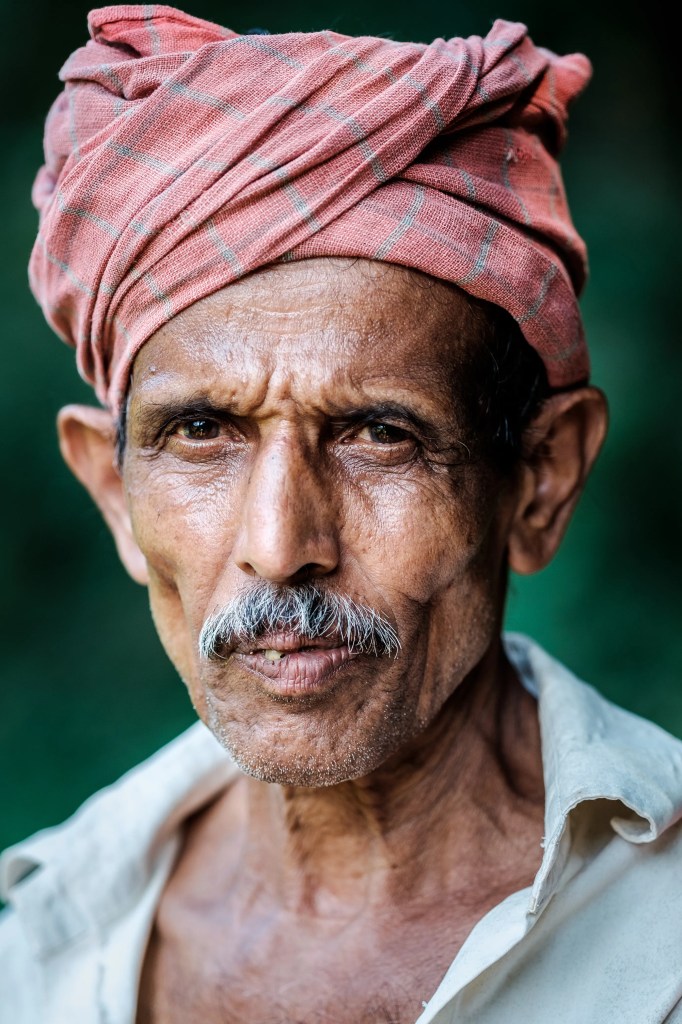
Fujifilm X-E2S with X90mmF2 R LM WR – 1/400 second – F2 – ISO 320

The autofocus speed is super fast that I hardly missed any shots and it maintains its speed in low light – my favourite type of lighting situation. The sharpness is equally incredible, and corner sharpness is well maintained at any aperture. The beautiful bokeh, particularly at F2, works amazingly well when compared to other 135mm lenses from other brands. With the excellent contrast, colour rendition, weather resistant sealing, lesser weight than counterparts, there’s nothing more I need other than just to keep shooting with this beauty. It’s an instant boost to the confidence level in image making.


If someone was travelling to Sri Lanka, based on your experience what camera and lens configuration would you recommend they take?

Sri Lanka is a small tropical Island. In a matter of few hours, you will be on a misty mountain or a rain forest from a beach. Depending on the places and the season you visit the selection of camera gear will vary. In general, it is advisable to carry weather resistant lenses and cameras as most of the beautiful natural habitats in the country are water based. Also, the island has friendly people, rich traditions and festivals. So you will need lenses that can be wide opened (in aperture) and good at focusing in low light. It is also a land of leopards, elephants and the mighty blue whales. It’s one of the best places on earth to witness these giants. So you will need a good telephoto lens if you decide to take photos of them.

Fujifilm X-E2S with XF55-200mmF3.5-4.8 R LM OIS – 1/4000 second – F5 – ISO 200

I would like to summarise the gear recommendation that will work for any travel and documentary photographer anywhere in the world.


Body Recommendations:

Main Camera – The Fujifilm X-T2.
Backup Camera – The Fujifilm X-T20.

Lens Recommendations:

The lenses listed below are the ones I carried.

Fujinon XF 18-55mmF2.8-4 R LM OIS
Fujinon XF55-200mmF3.5-4.8 R LM OIS
Fujinon XF35mmF2 R WR
Fujinon XF10-24mmF4 R OIS
Fujinon XF90mmF2 R LM WR (I’m comfortable with this focal length, but some people prefer Fujifilm XF56mmF1.2 R)
Optional – Fujifilm XF100-400mmF4.5-5.6 R LM OIS WR (If you are serious about wildlife photography).


Do you have a favourite image you captured on your trip? What was the story behind the shot?

My favourite image was from a remote village in Sri Lanka nestled among the large mountains ranges. It has a rich history dating back to many centuries. The village is abundant with beauty, and it was only recently received widespread attention from tourists after a few local films were shot in the location. Over very few years the village transformed dramatically, and now it’s a popular holiday hub for many tourists. Many villagers who relied primarily on paddy fields and other traditional lifestyle jobs are now into tourism as it gives more financial stability in the modern economy. Even though methods are implemented for sustainable tourism the rate at which tourism grows is a major threat to the centuries-old traditions of the village.

Fujifilm X-T2 with XF10-24mmF4 R OIS – 1/100 second – F16 – ISO 200

I wanted to capture the essence of the community, and during a stroll, I saw a villager visiting his paddy field surrounded by dark foliages and huts built for tourists – a familiar scene throughout the village.

The whole scene was like an arena – the field is the village, the dark foliage from the mountains and the huts surrounding it portrayed how tourism was slowly penetrating into the heart of the village. The man was both the victim and witness of this event. It was like there was a spotlight turned on to an important event in that village which will change its future forever.


When you look at a scene what is the most important thing you try and capture? Does composition play an important part of your photography?


Most of the times it is about how unique the image is. In the current world, almost all of us have a camera of some sort, from smartphones to the high-end medium formats. So many photographs are made of the same subject each second. Once I visited the Taj Mahal in India, and I tried to go as early as possible before sunrise, and I was among the handful of photographers at that time, and in few minutes there are hundreds of people with cameras. So it means most of them are going to take photographs of the same place at the same time and my worry is how can I stand out from that crowd while retaining the true meaning of the scenes I encountered.

This is where composition becomes important. For me, it is the most important part of a photograph. How you place and connect the elements of a scene into a photo will decide how the picture will connect with the audience. Naturally, I’m inclined towards better compositions in my images. The actual scene may look dull, could have bad weather, etc, but still one can come out with a good image if the composition is different and unique – often turning those negative factors into positives.

Fujifilm X-T2 with XF10-24mmF4 R OIS – 1/500 second – F4.5 – ISO 400

Just because a sunset looks beautiful or a shadow from a person in a city looks mysterious doesn’t mean they will make a great photograph unless they connect well with their surroundings and tell a story together which makes the audience have inner discussions about the image. Occasionally the story can come from just the subject alone like in close up portraits, but most of the time it’s something that evolves around the subject and its environment. So, we should be vigilant on how we are going to present the whole thing to the audience.


If you have some advice for someone starting out in photography what would it be?

Learn how to be a tough critic of your images. You can book a trip for a few thousand, buy the most expensive photography gear to take to your exotic location, but at the end of the day in the hotel room; you should be brave enough to delete most of those images which you think are not the best. You shouldn’t reflect on the amount of effort you put in to get those shots.

Fujifilm X-T2 with XF55-200mmF3.5-4.8 R LM OIS – 1/25 second – F16 – ISO 200

There is a difference between ‘creating’ images and ‘taking/capturing’ images. Photography is an art; we have to be the creators of the art. Perfection needs experience, and even with the best experience, it’s highly doubtful that anyone would become just perfect in image making, but keep fighting for it. Cherish the better pictures that you make today and compare these to the ones you shot last week and keep going. Keep connecting well with fellow photographers and share knowledge. Remember, it is not about the destination, but more about the journey. Good Luck!


To view more Bhagiraj’s work visit his websiteblog or Facebook Page. You can also follow him on Instagram.

Other interviews in this series

Through a Photographer’s Eye: Rhys Tattersall

Through a Photographer’s Eye: Jared Morgan

Through a Photographer’s Eye: Tony Gardiner

Through a Photographer’s Eye: Greg Cromie

Through a Photographer’s Eye: Clèment Breuille
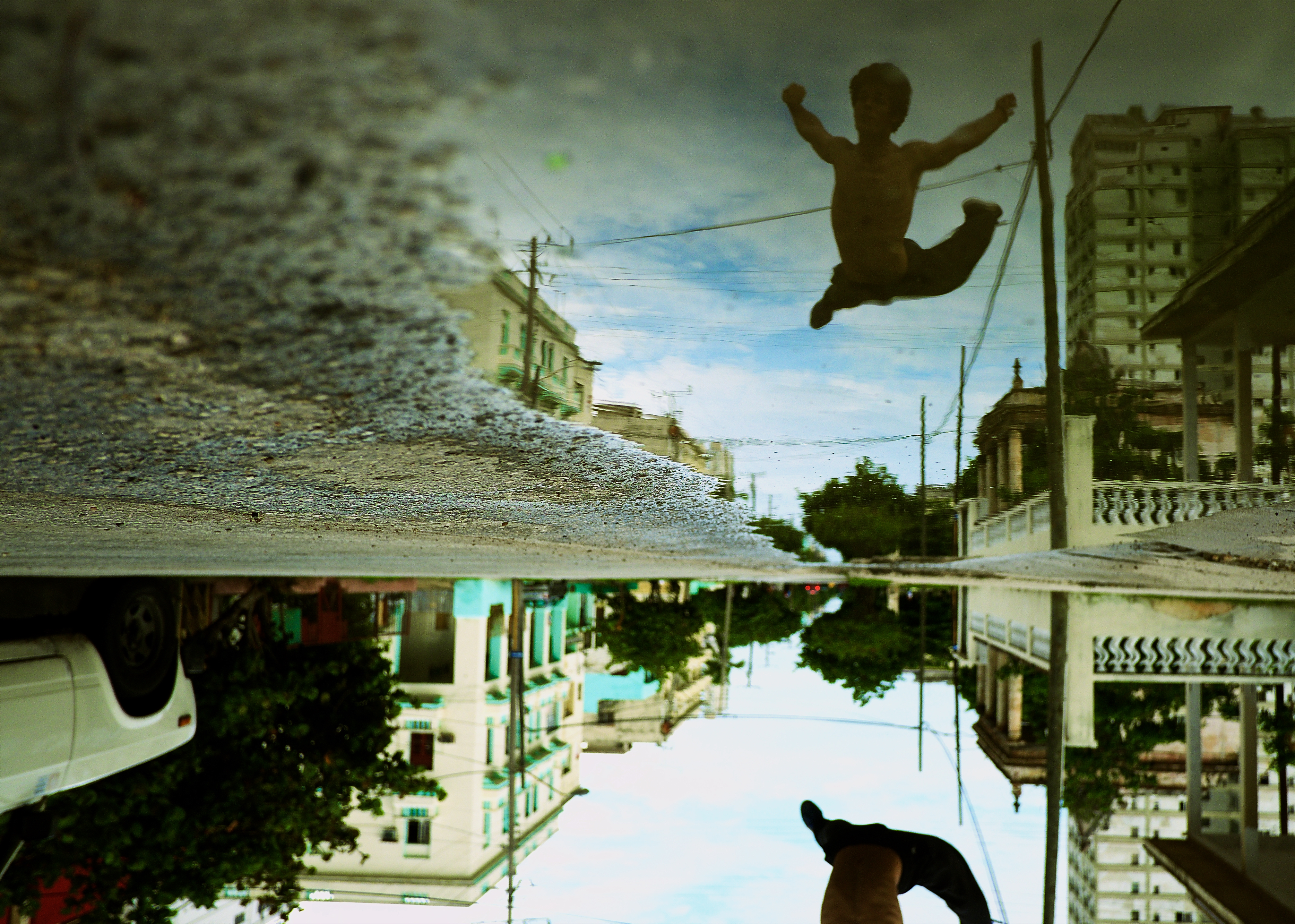
Through a Photographer’s Eye: Greg Cromie

Welcome to the Second Series of Through a Photographer’s Eye. In this series, we continue to learn about Australian photographers and how they use X Series Cameras to photograph their world around them. Our fourth interview in Series Two is with Melbourne based photographer, Greg Cromie.

Greg, tell us a bit about your photography journey and how you ended up choosing street photography as your main genre?

I studied film photography in art school however once I graduated I did not pursue it any further.  It was 20 years later, in 2013, that I was encouraged to take up photography again. My wife had just passed away and I used street photography as a way to get out and face the world.  Through street photography I was able to see that the world and life went on. From behind the safety of my camera I captured life and love and happiness and every other emotion without feeling like it would swamp me in my raw state. A bit like snorkelling on a reef. I almost felt invisible and unaffected by what I was seeing. My street photography journey has been a tremendous part of dealing with my grief, reconnecting with the world and expressing myself through my images. It was, and still is, a form of therapy for me.

Queen Victorian Market – Fujifilm X-T2 with XF35mmF1.4 – 35mm – ISO 1000 – F2 – 1/1000 second


You mentioned you jumped from the X100 to the X-T1 and more recently to the Fujifilm X-T2. What made you want to upgrade your X Series camera?

When I picked up the original X100 I was instantly intrigued by the Fujifilm X Series. The image quality and the way that the Fujifilm X System renders images was just amazing and very unique. I prefer shooting with primes and having interchangeable lenses so it was not long before I sold all my DSLR gear and bought the Fujifilm X-T1 with the XF23mmF1.4 and the XF16mmF1.4. I loved the build quality of the Fujifilm X Series products. To have the manual controls so accessible on the camera allowed me complete creative control. It reminded me of my film photography days and the joy of creating a photo.

I took my Fujifilm X-T1 with me wherever I went – including two trips to Japan. It is such a compact and light kit that I could take my camera with a prime lens everywhere and hardly even notice it was in my bag. When the Fujifilm X-T2 launched I was quick to get my hands on one. Such a significant upgrade in capabilities from the X-T1 to the X-T2. The X-T1 had taught me the joy of controlling light and time to create images. The X-T2 has allowed me to master my photography and take it to the next level.

Melbourne Man – Fujifilm X-T2 with XF18mmF2 – 18mm – ISO 3200 – F2 – 1/640 second


There’s a lot of emotion that unveils itself on the street, can you share the photo you’ve captured with the most impact and tell us a bit about what you were feeling when you captured it?

On my last trip to Japan, I took a Shinkansen from Kyoto to Hiroshima on the International Day of Peace. Such a humbling and highly emotional experience. On August 6, 1945, 80,000 people were immediately killed when the first deployed atomic weapon was unleashed by the United States. 6,000 degrees Celsius. 90 percent of the city destroyed. Tens of thousands later died due to radiation exposure and disease. Nothing like it had ever been experienced before nor since.

Converging on Hiroshima were school groups, survivors and the families of victims visiting the site to perhaps share in hope that the world never had to visit such devastation and loss again. This shot was taken outside the building now known as the Atomic Bomb Dome – the exact location over which the atomic bomb detonated. The building is a shell of twisted steel and even melted concrete and bricks. This class of students with their matching yellow hats were all listening attentively and respectfully to their teacher.  I could not understand what was being said but the implied lesson was clear.

I think my own personal experience with loss and grief was awoken that day as I could all too clearly understand losing so much. But I was equally encouraged by the composure of the Japanese people and their ability to endure the worst of the worst and still prosper.

Hiroshima Education – Fujifilm X-T1 with XF50-140mmF2.8 – 140mm – ISO 200 – F2.8 – 1/500 second


What are the sorts of subjects you look for on the street and do you prefer a particular focal length to capture them?

I find my style of street photography to be an organic process. I prefer to capture images that tell some sort of story of the human experience. Where are we? What are the political and social considerations of the time and how does this subject interact with those? Is there tension or joy or stillness in the subject’s emotional experience? How are others impacting the scene or the experience of the subject? How is the subject impacting others? I will stroll though a location with camera in hand while my eyes scan the scene looking for the alignment of all these factors and much more. My preferred focal length for shooting street is 23mm. Something about this length allows me to capture a subject but also enough of the surrounding scene to suggest or tell the story.

Dayelsford Entertainer – Fujifilm X-T2 with XF23mmF2 – 23mm – ISO 400 – F2.8 – 1/1000 second


What’s it like owning the F2 trinity? Which lens out of the three do you prefer to use and can you show us your favourite photo captured with it?

With the recent release of the XF50mmF2 I was able to complete the F2 trinity of Fujifilm lenses. I prefer to shoot with primes so now that I have the XF23mmF2, XF35mmF2 and the XF50mmF2 I feel like my street kit (and my travel kit) is complete. The 23mm gives me the subject within the scene and allows for both to tell the story. The 35mm allows me to isolate the subject more but still allow for background and foreground elements to play a small part.  The 50mm gives me greater reach to capture the subject in isolation. To pull the subject out of the scene without disrupting it.

With my X-T2 and these three lenses I can carry my kit in a messenger bag and hardly notice the weight. When paired with the X-T2 each of these lenses are sharp and super quick on the auto focus. Plus, this makes my whole kit weather resistant. My favourite of these three lenses changes as they are all exceptional lenses. At the moment my ‘new’ favourite is the XF50mmF2 probably because it is the newest and there is so much enjoyment to be had with a new focal length. I look forward to taking only the F2 trinity with me to Japan again later this year.

Coffee Capital – Fujifilm X-T2 with XF23mmF2 – 23mm – ISO 1600 – F2 – 1/250 second

Here I am – Fujifilm X-T2 with XF35mmF2 – 35mm – ISO 400 – F5 – 1/250 second

Head – Fujifilm X-T2 with XF50mmF2 – 50mm – ISO 200 – F4 – 1/250 second


If you have some advice for someone starting out in photography what would it be?

A lot of people seem to have a fear about how to use their new gear. I see a lot of questions appear on forums from new photographers saying that they have camera X and lens Y and they want advice on the best settings to shoot something straight forward. This is so unnecessary as unlike in the film days, digital cameras give us limitless opportunity for trial and error. Your only real obstacle is how long your battery will last or how much your SD card can hold.

Be brave and take lots and lots of photos. If you are using a camera like one from the Fujifilm X Series, then set the Aperture and ISO to A (Auto) and just experiment with the Shutter Speed manually for a day or two. At the end of your shoot review your images and take note of the ones that you love and the ones you hate. What settings did you use? The next day, just use ISO on manual to see how this changes your images. Carry your camera everywhere and shoot everything. Don’t be afraid to experiment with your camera. As long as there is a hint of light, you can make an image.

Kyoto Couple – Fujifilm X-T1 with XF23mmF1.4 – 23mm – ISO 200 – F1.4 – 1/1000 second


Your passion for street photography has recently taken you to Japan for a second time, how did you find photographing people on the streets compared to Australia? Did you prefer a particular lens over another?

I have always had an affinity with Japanese culture so to be able to travel there was a big item on my bucket list. The first trip was to Tokyo and I stayed in Shibuya. What a crazy and amazing experience that was. A very youth centric area in the heart of the biggest and most densely populated city on the planet. The second time I travelled to Osaka, Kyoto and Hiroshima.

Doing street photography in Japan is incredible. Such diverse cities with backdrops that range from hyper-futuristic ‘Bladerunner’ style scenes in Tokyo to the still and sacred spaces that house the traditional temples and shrines in Kyoto. One day I was photographing in Shibuya at the scramble crossing, where thousands of people cross a giant zebra-crossing every few minutes. The next I was in the Tsukiji Central Fish Market photographing fish mongers carving giant tuna. On both trips to Japan I took my X-T1 and predominantly used the XF16mmF1.4 and XF23mmF1.4 lenses. I swapped between these two quite a bit and on days or nights when it was raining I stuck with the XF16mmF1.4 due to its weather resistance. They are both very versatile lenses and can be used for street, landscape and architecture.

Fish Monger – Fujifilm X-T1 with XF16mmF1.4 – 16mm – ISO 5000 – F2.2 – 1/500 second

Prayer – Fujifilm X-T1 with XF23mmF1.4 – 23mm – ISO 800 – F2.2 – 1/125 second


Based on your experience what would you like to see included on a future X Series camera?

When I first purchased the X-T1 I knew I was using such an incredible camera. The build quality, aesthetics, ergonomics and overall capabilities of the camera were amazing. My wish list for improvements was non-existent as the system was meeting all my needs at the time. Then the X-T2 was developed and Fujifilm managed to deliver a greater photography experience by adding features that I didn’t even know I wanted or needed. Superior sensor and processor, dual SD card slots and I find the AF toggle stick such a great addition for street photography. The quality and capabilities of this camera has also allowed me to start my own photography business and offer a broader range of photographic services. Conceptually an X-T3 could include improved battery durability and a performance boost system without the need for the additional battery grip to make it worthwhile. One of my favourite features of the Fujifilm X System is the film simulations. Further film simulations would be a fantastic addition.

Ice Cream Girl – Fujifilm X-T2 with XF35mmF1.4R – 35mm – ISO 800 – F2 – 1/2000 second


To view more of Greg’s work visit his web landing page that links to all of his social media profiles.

Other interviews in this series

Through a Photographer’s Eye: Rhys Tattersall

Through a Photographer’s Eye: Jared Morgan

Through a Photographer’s Eye: Tony Gardiner


10 Tips to Capture Natural Wedding Photographs

10 Tips to Capture Natural Wedding Photographs

10 Tips to Capture Natural Wedding Photographs

By Kristian Leven

Kristian Leven

For the past seven years I’ve photographed weddings in an unobtrusive way, preferring the day’s event’s to unfold naturally in front of me rather than coordinating anything. This style has been derived from my love of documentary and street photography, which I shoot outside of weddings as much as possible. Doing so has given me a fresh perspective on the work I’m producing, and I often use what I’ve learnt shooting street photography with me on a wedding day. Here are ten things I’ve learnt about taking better wedding photographs, and how I applied them to a wedding I shot on the FUJIFILM XT-2 last month. Read More