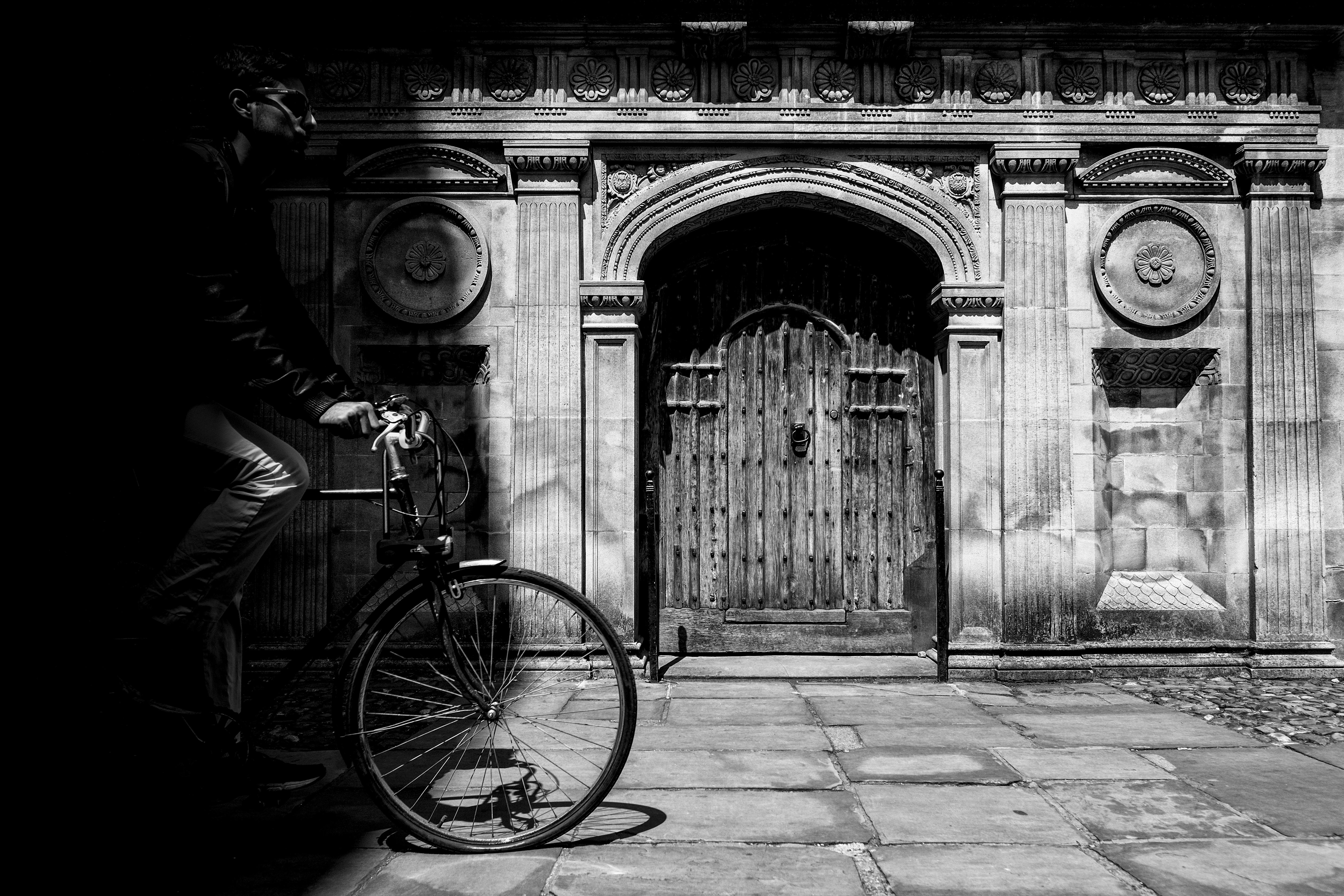
#streetphotography

Take A Different View: Fashion Photography Re-imagined

By Alexander Bather

I was always one of those people who would count down the minutes until it turned 5:30pm, but now I watch the clock counting down the minutes until my next photography assignment.
I enjoy the uncertainty of the job, as it could be anywhere in the world, photographing any subject and may have some unusual requirements thrown in for good measure. What is certain however, is that I will get to meet and create art with some interesting characters. Read More

Shoot with a Zoom Lens in These 7 Photography Instances

Some photographers decry use of the zoom lens and insist that you work with a prime whenever possible. There is no replacement for getting close to your subject for a sharper angle and a frame-filling view, this contingent will argue, and they are partly right. Yet there are many instances when it is appropriate, and even ideal, to shoot with a zoom.


Here are just seven of the photography moments that will give you reason to turn to your zoom lens.


Fill the frame from far away.


The first and most obvious use for your zoom is to fill your frame in moments when you do not have access to physically approach your subject. If you are attending an arts performance or sporting event and lack access to the stage or field, your zoom helps you obtain a shot focused on your person of interest.

Image by Pete Bridgwood


Pack light, especially on the road, with your zoom.


If you are traveling, then you cannot be bogged down with all of the prime lenses needed for various shots. Carry a zoom instead of multiple primes and enjoy the ease of flying and touring with your lightweight kit.

Image by Patricia Davidson


Capture the quick-moving subject.


Do you want to take action shots of sprinting athletes or charging animals? These subjects are usually distant from you and are moving fast through your frame. Your zoom lens lets you set up a shot from several metres away and establish your composition by anticipating when the subject will jolt through the frame.


Get raw, candid shots.


Sometimes the best shots are those you get when your subject is unaware of the camera and you can capture them in their natural, unposed state. Your zoom lens can help you achieve this raw, candid photo by taking them from farther away.


Compress your foreground and background.


Bring your foreground and background together. Not every shot benefits from visible depth of field between the objects nearest and farthest from your camera. With your zoom, you can establish a telephoto effect, making all objects in your frame appear flatter in their depth.


Image by Jamison Ford


Bring the crowd together, and feature a favourite.


Street photography of crowds is an especially good time for you to create the telephoto effect with your zoom. The many people in your shot will appear even more huddled because of flattened depth. Experiment with compositions that focus on the entire group and others that highlight one face.

Image by Brian Li


Flatter your profile subjects.


Portrait photography may not seem like the most obvious use for a zoom. But with your zoom you have the option to distance yourself from your subject, giving him or her comfortable space, and get a close shot. It also prevents unfavourable angles, like enlarged noses and chins, from being created when you shoot too close with a prime lens.


Of course your zoom is never an excuse for laziness, as some of the prime lens purists fear. Whenever possible, be an agile artist who crouches, slides and approaches to get the perfect angle for the moment.


Are you looking for a Fujifilm camera but aren’t sure which one to purchase? Our buying guide helps you determine which one will work best for your photography needs.

Take A Different View: Capturing the Everyday Life as a Street Photographer

By Matt Hart

Take a Different View

I spend most of my days teaching people how to see the streets with fresh eyes. Helping photographers to see the world around them through a lens in a more unique way. I spend my free time exploring the streets of our cities looking for a different view of the world around us and trying to find something unique or different.

Street photography is not just taking photos of people in the street. There is so much more to it than that, and the FUJIFILM X-Pro2 helps me to carry out my work in a much more unobtrusive way.

The trinity of a great street shot is Light, Composition and Moment, but add to that emotional impact and a great subject and you have a killer shot.

Creating an image without the use of Photoshop, just looking to find something different and exciting is very addictive. You don’t find it every day but when you do it’s just a magical moment you want to share.

I am constantly on the lookout for great light. We know photography is all about great light so I tend to spend my time hunting down locations with the perfect light quality and shape. Some areas and cities are laid out to allow light to hit the streets and create great shapes but some hide the light most of the day with narrow streets all facing the wrong direction.

With street photography, it’s hard to compose an image immediately but you can look for an amazing street or area with good lighting and wait for an interesting subject to come in to the frame. You should never get caught up with the look or style of a subject. It’s better to look for right light and scene and start the composition process, keeping an eye out for how people look in the light and shadows as they come in to the frame. With practice, you know what shapes and styles to look for in the subjects around you.

The decisive moment is a rare thing, but you can improve your chances by looking for the obvious. If you stand next to great light someone will walk in to it, if you stand next to a puddle someone will walk in it or jump over it. Just make sure a car does not drive through it and soak you!

A great subject, as I have said, is not always what you think. It’s all about the shape, the context and the look. After all photography is all about communication so you need to be able to find a subject that communicates to your or your viewer.

We would all love to be able to get emotional impact in to our images and this is the hardest part of all. People do not display emotion in public as much as they used to, so looking for a kiss or a smile is quite a rare thing in some cities or towns. It does not have to be a happy emotion, it could be fear, horror or fright. Anything that creates some form of emotion in the viewer. Remember, though, everyone is different so try and treat people how you would like to be treated yourselves.

I am a candid street photographer and like to shoot the scene when the subject is unaware. The rangefinder style of the X-Pro2 helps me enormously with this task. I am a right eye shooter so it’s great to be able to shoot with both eyes open. With the camera only covering a small portion of my face, it means not having my nose squashed in to the rear screen!

Quite a few people prefer the Optical Viewfinder in the X-Pro2 but I really prefer to use the Electronic Viewfinder with the histogram and the level switched on in the menu. I prefer to keep both eyes on what is going on around me and shoot from the hip most of the time. When I do use the viewfinder, I want very fast feedback of the scene. I want to know the camera is focused level and the exposure is correct. The X-Pro2 is a nice oblong shape which means that, at a glance, you can check the camera is straight without having to hold it to the eye. I do this by just looking along its edges and lining it up with straight edges on buildings. If you can’t find a straight edge turn on the electronic level and use the rear screen to level the shot.

I set the X-Pro2 up to make my life easy out on the streets and use the Auto ISO setting and, in Auto ISO 1, I set my camera to Default Sensitivity 200 max and 6400 min sensitivity. I set the Shutter Speed to 1/320 secs or above most of the year. This gives me the exposure I need for a sharp image without having to mess about with the camera all the time.

If I do need to make any changes with the exposure triangle on the outside of the camera I can just up the shutter speed using the exposure dials on the top of the camera, or close or open the aperture at will with the aperture ring around the lens (available on most XF lenses). I normally shoot between f4-f8 in the summer and f1.4-f4 in the winter in the UK.

I use single servo centre point focusing to shoot anything standing still and continues focus to shoot anything moving mostly with evaluative metering. Sometimes, in awkward light, I will switch to spot metering and just adjust with exposure compensation dial.

I shoot mainly with the wonderful set of Fujifilm F2 lenses; the XF23mmF2, XF35mmF2 and XF50mmF2 all fit nicely in a little pouch in my bag. I still love the XF90mmF2 and the XF16mmF1.4 but over the last few weeks I have just wanted to carry less in my bag.

I have shot most cities in the UK now so I know what lenses work for each city so tend to pack what I need.

I only shoot street with prime lenses and tend to go out with two camera bodies – a wide lens on one body and a telephoto lens on the other. This enables me to capture something right under my nose or on the other side of the street without having to run around like a mad thing. Once you get used to a prime you can move and shoot so much faster and capture the shot you were after, instead of wasting time trying to frame your subject by zooming.

Sometimes we see the same things repeatedly but it’s how we shoot it that makes the difference. When the everyday becomes the norm, we need to break out of the crowd and start to look at things in a different way. You can walk the same street for 10 years and the next time you turn the corner there it is a great big puddle!

Sometimes you have to wait a long time to get an image that is different and sometimes it happens 10 times in a day. I walked up and down my local railway station bridge looking at the nice yellow handrails for over 10 years before the light and subject position was good enough to lift my camera to my eye to take the shot.

Keeping your eyes open and looking all around you at all times if key. As long as your camera is set up and ready, you should be able to capture most moments.

It’s all about learning to see and taking your time; being in the right place at the right time.

There is nothing more relaxing than a day out with your camera in one of our great cities. Spending an afternoon looking for something different among the chaos, the hustle and bustle, whilst enjoying good coffee with your friends as you try to capture a different view.


More from Matt Hart

Website: http://www.matthewhartphotography.com/

Blog: https://matthewhartphotography.wordpress.com/

Facebook: https://www.facebook.com/matthewhartphotography/

Twitter: https://twitter.com/matt6t6

Instagram: https://www.instagram.com/matt6t6/


More about FUJIFILM X-Pro2

Taking performance to new heights, the FUJIFILM X-Pro2 offers the world’s only Hybrid Multi Viewfinder and features a brand new 24MP X-Trans III sensor.

The FUJIFILM X-Pro2 boasts a Hybrid Viewfinder capable of instantly switching between optical and electronic finders, plus an updated image sensor and processor, which dramatically improve image quality. By combining these features with the ultra-high image quality of FUJINON X-Mount lenses and the color reproduction technology accumulated through more than 80 years as a photographic film manufacturer, the FUJIFILM X-Pro2 delivers the best ever results from an X-series camera.


[youtube=https://www.youtube.com/watch?v=AHFdXA4Y6lI]

Through a Photographer’s Eye: Johny Spencer

Welcome to the Third Series of Through a Photographer’s Eye. In this series, we continue to learn about Australian photographers and how they use X Series Cameras to photograph their world around them. Our first interview in Series Three is with New South Wales based photographer, Johny Spencer.

Johny, can you tell us about yourself and what photography means to you?


I’m a full-time landscape and nature photographer for the National Parks service here in Australia and have been working for them for 17 years.


Photography to me is all about the moments, memories and experiences that happen as part of your photography journey. The photos themselves are just a bonus that I get to use to inspire and motivate others to push their creative boundaries.

Fujifilm X-Pro2 – XF10-24mmF4 R OIS – 10mm – 1/60 second – F16 – ISO 200


You recently reviewed the Fujifilm X-Pro2 after taking it abroad to the US on a 5000 km road trip. Can you share with us what you thought about the camera from a travel and landscape photography perspective?


I shot this camera exclusively on this trip, I put it through its paces, in every type of environmental condition possible from wet, cold snow forests, to dry hot, dusty deserts. I really liked the feel of it in hand; overall it felt solid.


I was so surprised of the detail in the pictures! I usually shoot with a camera containing a 40MP plus sensor, and I found the 24MP sensor of the X-PRO2 surprising incredible. The dynamic range of the camera was also outstanding for the sensor size.


In all, I think the X-PRO2 makes a good all around camera for both landscape and travel. I can see this being a great camera for street photography with the hybrid viewfinder.

Fujifilm X-Pro2 – XF55-200mmF3.5-4.8 R LM OIS – 200mm – 1/125 second – F5.6 – ISO 500


In your opinion what was the best photo, you captured in the US using the Fujifilm X-Pro2? What was the story behind the image and how did you set up the shot?


I know it’s a bit obvious but Horseshoe Bend was incredible, it’s one of those places you can’t fully understand how grand it is until you visit it.

Fujifilm X-Pro2 – XF10-24mmF4 R OIS – 10mm – 1/8 second – F8 – ISO 200


I got there for sunset, and it was packed with people everywhere, the light wasn’t that good, so I decided to revisit the location for sunrise the next morning.


The decision to reshoot worked out perfectly as there were fewer people. I had heaps of options to get the perfect spot to photography the bend. I was hoping for that magnet-pinky light that happens when you shoot away from the setting or rising sun.


The camera was locked down on a tripod, with the two-second timer turned on in order not to cause any camera shake when pressing the shutter button. I focused one-third into the scene at F8, so the whole scene was in focus. The ISO was set too low to avoid any noise issues. The lingering cloud was in the perfect spot for a photo, in the end, it was just a waiting game to see what the light was going to do.


Minutes later that first light glow started and boom! The pink tones were perfect, I fired the shutter and just adjusted the shutter speed to get the exposure right. I was able to capture the rising sun perfectly thanks to the dynamic range the camera offered.


It was a great experience one of those places that you will never forget in a hurry.


If you have some advice for someone starting out in photography what would it be?


Shoot what you love and love what you shoot. When you’re obsessed with the thing you like, in my case photography, it will keep you shooting even when you get stuck on the technical stuff.


Your passion for the subject will push your creativity and help you overcome any challenge you face in your photography journey.

Fujifilm X-Pro2 – XF10-24mmF4 R OIS – 10mm – 1/4 second – F8 – ISO 250


What processing workflow do you use when importing images from the Fujifilm X-Pro2? Do you have an example you can show us?


I’m a huge fan of Adobe Lightroom, I just find the photo management and processing work perfectly with my brain.


In fact in my day job working for National Parks I have to process several thousand images a month, so it’s critical for me to have a killer efficient post processing workflow.

Fujifilm X-Pro2 – XF55-200mmF3.5-4.8 R LM OIS – 156.10mm – 1/125 second – F8 – ISO 400

Fujifilm X-Pro2 – XF10-24mmF4 R OIS – 10mm – 1/125 second – F8 – ISO 400


Here’s a quick video showing how I edit multiple Fujifilm RAW files quickly using Lightroom. By the way, I’ll be using my Ultimate Lightroom Workflow, something I developed to make post-processing super easy and fast.


Did you find the Fujifilm Camera Remote App useful when travelling on the road when it came to transferring your images to your phone? Could you provide some feedback on how the app could be improved?


I’m a huge fan of the app. It made it so easy to just share images straight from the camera to my phone so that I could share on social and with friends. I was surprised how easy it was to setup and use, and I bet it’s one of those little features not many people know about that really make a camera fun to use.

Fujifilm X-Pro2 – XF10-24mmF4 R OIS – 21.90mm – 1/640 second – F5.6 – ISO 500 – HDR


What lenses did you take with the X-Pro2? Was there a particular Fujinon lens that stood out regarding versatility and quality for landscape photography?


My favourite lens was, of course, the super wide XF10-24mmF4. I found it sharp for edge to edge and the coupled with the X-PRO2 the image quality was stellar. I wouldn’t hesitate to recommend it to any landscape photographer.

Fujifilm X-Pro2 – XF10-24mmF4 R OIS – 10mm – 1/60 second – F8 – ISO 200


I also love the fact it’s an F4 lens! Have you ever tried to hike with the F2.8 lens in your pack? They are usually super heavy! You don’t need the fastest lens for landscapes and F4 is a good compromise between speed and weight.

Fujifilm X-Pro2 – XF10-24mmF4 R OIS – 10mm – 1/30 second – F8 – ISO 200


You have previously used a range of different camera brands for landscape photography. In your opinion how does Fujifilm’s image quality stack up against the rest?


Like I said before the image quality of those X-Trans CMOS sensors is unbelievably sharp and provides much clarity. It’s more than enough for any landscape photographer.

Fujifilm X-Pro2 – XF55-200mmF3.5-4.8 R LM OIS – 60.70mm – 1/250 second – F8 – ISO 200


If you would like to see more of Johny’s photography then visit his website or follow him on Facebook, Twitter, Instagram, Google+ or YouTube.


X-Thusiast Featured Photographer Simone Cheung

This month, our featured X-Thusiast photographer is bringing social responsibility to the forefront. Her photos from locations around the world incorporate nostalgia and people’s interactions with one another, and are both intriguing and inspiring works of art.


Can you tell us a bit about yourself and where you are from?


My name is Simone Cheung and I live in Sydney. Largely self-taught, I’ve always had an interest in photography since I was young when I used to take my parents film camera around and take endless photos.


How did you develop an interest in photography using Fujifilm equipment?


I love travelling and street photography, and I hated lugging around my heavy, bulky SLR. I wanted to downsize my kit without compromising quality and the Fujifilm X-T1 did just that. And let’s be honest, it also makes me look less like a dork photographer!


Barber Shop: Split, Croatia. Fujifilm X-T1 + XF14mmF2.8


How would you describe your photography style and strategy?


Photography has always been a way for me to combine my big passions in life — travel and promoting social responsibility, human rights and social equality. As a result, I do a lot of street photography to show that every single person regardless of gender, ethnicity, religion or social status has that magical moment just waiting to be captured.


I enjoy photo documentary and bringing out those social issues through my photography. I have been a volunteer photographer with various not-for-profit organisations including Oxfam, Global Sisters, Women’s March on Sydney and others.


What inspires your photography?


“Goya” in Urdu means the suspension of disbelief that occurs in good storytelling. That is what my photography is all about — capturing those simple, ordinary moments in a special way where goya occurs; where the “as if” feels like reality.


Night Swim: Sydney, Australia. Fujifilm X-T1 + XF23mmF1.4


Where are your favourite places to take photos and do you prefer a certain type of light to photograph in?


The beauty of street photography and photo documentary is that you can find a stunning image anywhere, at any time, in any light. The premise of a lot of my images is that even though they are taken in different places at different times around the world, people’s interaction with light is the same, highlighting that we are in fact “more alike than unalike,” in the words of Maya Angelou.


Looking through my own photos, I tend to be drawn toward scenes of nostalgia, of places past, lives lived and the glories that used to be. I tend to love photographing in abandoned sites and old shopfronts, and also shooting at night.


What is your favourite memory from a photography session?


I was recently lucky enough to do a workshop with Andrew Quilty, who is one of my favourite photo journalists. We spent the afternoon on the Manly ferry and the Corso where I was able to watch Andrew in his element and learn from him.


Set Fire to the Rain: Port Vila, Vanuatu. Fujifilm X-T1 + XF23mmF1.4


Can you tell us what your favourite Fujifilm camera to use is and why?


I have only tried my XT-1 and I love it. It fits snugly in my hands and I love the manual dials and just the overall feel of it. Because it is so compact, I take it with me everywhere and my husband no longer has to carry my camera gear anymore when we travel!


Which Fujinon lens or lenses do you prefer to use with your Fujifilm camera and why?


I love all of them! I have the XF14mmF2.8, XF23mmF1.4 and XF56mmF1.2 and they are all fantastic. I particularly love the XF56mmF1.2 as it gives nice creamy portraits and is also great for low light.


Instant Photos: Budapest, Hungary. Fujifilm X-T1 + XF14mmF2.8


What sort of workflow do you use in your photography? Do you shoot in RAW or JPEG?


I shoot in RAW and I process everything in Lightroom. I am not very good at editing, so I usually only make minor adjustments such as contrast, exposure, etc. I also love the Wi-Fi function of the X-T1 so I can upload straight onto my phone and share on social media. This is particularly handy when I’m travelling.


Do you have any technical tips you’d like to share? Perhaps suggestions on the best lighting, shutter speed, white balance, aperture or ISO? Other preferences?


The main advice is that there is no one magic setting. The more you shoot, the more you will understand what each function does and the impact on your image. Eventually, you will know what settings to use in what environment with only minor tweaking. I tend to shoot very wide apertures to isolate my subjects, which is particularly important in street photography.


Schlafwagen: Budapest, Hungary. Fujifilm X-T1 + XF14mmF2.8


Do you have advice for new photographers or the next potential X-Thusiast?


I spent many years taking photos (some good, some bad) until I found what my style was. I still experiment a lot with techniques and try to learn and draw inspiration from others. Your gear is only one part of being a photographer; your eyes are the other part.


In the shadow: Tumbarumba, Australia. Fujifilm X-T1 + XF23mmF1.4


Anything else?


I think we need to raise the visibility of women street photographers. When I try to look for inspirational women street photographers, I notice that there are significantly fewer women in street photography than men. Maybe there are less, or maybe they are less visible in the sense that they don’t submit to collectives as much or they don’t receive as much exposure, but we should definitely start celebrating them more.

To view more of Simone’s work visit her website or follow her on Instagram or Facebook.

Interested in becoming our next featured X-Thusiast photographer? Check out our full X-Thusiast Gallery and submission details.