#streetphotography

Tutorial: Street photography

w360_6415757_tutorialbannerfordotmailerToday I’m going to take you through some of the advice given to me by UK wedding photographer Kevin Mullins. Kevin’s approach to candid wedding photography translates precisely into his street photography style. 

What makes a good “street” shot?

The three key factors that make a good street image are;

  • good light
  • good composition
  • interesting subject

Get all three and you have a great shot. Two of them can result in a good shot. If you can only have one, make sure it’s the interesting subject

Assignment 1 – Shoot with a theme

Start by simply shooting how you want, but with a theme. Try the theme “angles”. When I took this shot below, it was a nice sunny-but-cool day in Cambridge so there were plenty of things to choose from. Look for good light, some sort of interesting subject, and carefully consider the complete composition.

The bright sun meant that to me, the ‘angles’ would need to come from shadows. This guy caught my eye because he was using his phone before getting on his bike. I wondered who he was contacting, or whether he was just checking a map. About 20 mins later we saw a cyclist nearly get taken out by a car so I wonder now if he was sending a ritual “goodbye, just in case” message. X-T1; XF18-55 @ 35; 1/640 sec; f/5.6; ISO 200
The bright sun meant that to me, the ‘angles’ would need to come from shadows. This guy caught my eye because he was using his phone one last time before getting on his bike. I wondered who he was contacting, or whether he was just checking a map. About 20 mins later we saw a cyclist nearly get taken out by a car so I wonder now if he was sending a ritual “goodbye, just in case” message. X-T1; XF18-55 @ 35; 1/640 sec; f/5.6; ISO 200

Assignment 2 – Frame your subject

Try to use people to frame shots of other people. Pair up with another photographer and go hunting interesting shots together. Use your partner to help provide a frame for the shot. The theme of “angles” was dropped but otherwise everything applied; light, composition, something of interest that tells a story.

Although personally I find the arm in the foreground a bit distracting, it does give a bit more depth to the image and the bright blue of this guy’s jacket and the sign pull your attention away from the frame  . X-T1; XF18-55 @ 35; 1/200 sec; f/5.6; ISO 200
Although personally I find the arm in the foreground a bit distracting, it does give a bit more depth to the image and the bright blue of this guy’s jacket and the sign pull your attention away from the frame . X-T1; XF18-55 @ 35; 1/200 sec; f/5.6; ISO 200
I like this one because the conversation is framed by the arm on the left, and also the stranger on the right. X-T1; XF18-55 @ 55; 1/200 sec; f/5.6; ISO 200
This last one failed the assignment in that it wasn’t framed by a person in the foreground. However, I like it because of the way the light fell on the faces of the people having the conversation. Nice light and begins to tell a story about a meeting in public. X-T1; XF18-55 @ 35; 1/200 sec; f/5.6; ISO 200

Assignment 3 – Spot Metering

The next thing to try is pre-focusing and spot metering. Put your cameras into spot metering and manual focus mode and stand facing a place where people would “break the light”. In other words, pedestrians and cyclists would travel from the bright sunshine, into the shade, or vice-versa. Use the “AF-L” button to pre-focus on the ground where we wanted them to be when we shot and then simply time them right to shoot them just as they cross from the light into the shadow. The camera will adjust for the exposure according to light on the subject, rather than the total light in the scene.

On the X100T, X-T1, X-T10 and X-Pro2 there is a setting that allows you to link the spot metering with the AF box. Activating this allows you to choose the point in your composition to expose for. On cameras without this function the spot metering will only occur in the middle of the frame so you may be slightly limited in your composition.

This shot was actually taken by Kevin himself using his X100T; 1/320 sec; f/16; ISO 640

Assignment 4 – Zone focusing

Get close to your ‘subjects’. Getting close obviously means more chance of affecting the resulting image so it’s key to try to appear like you are not taking photographs. The main reason people need to really see what they are shooting is to make sure you are focusing on the right thing.

Guy working on a market stall. Bikes were everywhere in Cambridge. X-T1; XF18-55 @ 55; 1/90 sec; f/11; ISO 400

Keep your camera in Manual Focus mode, select a nice small (big number) aperture value and then used the focus distance indicator on the screen of the camera to understand where the range of acceptable focus would be.

Focus on the ground a few metres in front of you. Your next challenge is to get in close to people and inconspicuously shoot them getting on with their life. Continuous shooting is also very handy here as it allows you to shoot a few frames, especially good if your subject is moving through your zone focus area.

Assignment 5 – Turn invisible

There is now no need to hold the camera up to your eye so all of your shooting can be at waist level, looking down onto the tilting LCD screen (if your camera has one) to check the overall composition. After a while you will be able to simply look around and be confident that you’re going to capture the interesting subject without them knowing, therefore not influencing or changing the subject, but merely documenting what is going on around you.

Not many people "at work" seemed to really be working.  Zone focussed and shot from the hip with X-T1; XF18-55mm @ 35mm; 1/64 sec;   f/13;   ISO 1000
Not many people “at work” seemed to really be working. Zone focused and shot from the hip with X-T1; XF18-55mm @ 35mm; 1/64 sec; f/13; ISO 1000
One of my last images as we were about to lose the sun completely. This is the only guy who looked like he was working, although I question his choice of office. X-T1; XF18-55 @ 55; 1/125 sec; f/16; ISO 1250
One of my last images as we were about to lose the sun completely. This is one of the few guys who looked like they were actually working, although I question his choice of office. X-T1; XF18-55 @ 55; 1/125 sec; f/16; ISO 1250

Summary

  • The three keys to a good street image are; good light, good composition, interesting subject. All three of these results in a great shot. Two of them can result in a good shot. If you can only have one, it has to be the interesting subject
  • Shoot with a theme. This will make you consider your shot more carefully and not just fill your card.
  • Try to frame your subjects with parts of the background, or even make your own frame by using other photographers
  • Setting your camera on full auto with Spot metering allows you to ignore the exposure settings and let you worry about looking for a good shot
  • Zone focusing allows you to not worry about accurate focus, but rather understand that if a subject is within a certain “zone” in front of your lens, it’ll be sharp and in focus
  • Tiltable LCD screens allow you to shoot at waist level and still see the frame. The camera remote app takes this one step further and you look like you are just using your phone while actually shooting people with the camera hanging around your neck.

Keep practicing, hope for something interesting to unfold in front of your eyes and be ready with your camera when it does. Hopefully these techniques will help you get a great shot without anyone even knowing you were there!

8 shots with the Fuji X-T10 & XF27mm pancake lens

By Kevin Mullins

Last week I purchased a Fuji X-T10 as I wanted something a little smaller than the X-T1, but with interchangeable lens options, for my street photography.

Although the camera has been out for a while, I’d never actually used one until my one arrived. But as soon as I got the camera I immediately knew it was going to become my 27mm pancake lens camera option.

The 27mm is a lens I love to bits.  It’s also a lens I’ve lost twice and I’m now on my third XF27mm lens and I suppose it’s a testament to just how small this lens is that I keep losing them!

I won’t be using the X-T10 as a wedding camera; for me, it’s not quite at the level I need for me to be comfortable shooting weddings with it.

However, it will likely be one of my backup cameras for weddings and it will definitely be a camera I take on my street photography trips out.

It really is a very discreet camera.  Couple it with something like the 27mm lens and you can really just blend in and behave like anybody else with a small point & shoot camera.

These are just a few processed snaps from a day I spent in Southampton running one of my street photography workshops.

“I’m a huge fan of the 27mm lens and I think I’ve found the perfect compliment for it in the X-T10.”

I’ve recently been using a prototype of the new Camslinger Streetomatic which is an upgrade to the version I’ve been quite comfortable with for a while.  The new bag is PERFECT for street photography. The clasp is better and yet it’s still possible to quickly remove the camera with one hand and start shooting.  I used it with the X-T10 and 27mm lens.  I had plenty of room for two spare lenses, my wallet, phone and notebook etc.

1
Fuji X-T10 / XF27mm 1/4,000 f/5.6 ISO 200
2
Fuji X-T10 / XF27mm 1/1,700 f/7.1 ISO 400
Fuji X-T10 / XF27mm 1/1,800 f/7.1 ISO 200
Fuji X-T10 / XF27mm 1/350 f/8 ISO 400
Fuji X-T10 / XF27mm 1/420 f/10 ISO 200
Fuji X-T10 / XF27mm 1/4,000 f/2.8 ISO 200
7
Fuji X-T10 / XF27mm 1/4,000 f/2.8 ISO 200
Fuji X-T10 / XF27mm 1/150 f/3.6 ISO 200

About Kevin

KevinMullins-Headshot-200x200Kevin Mullins is a Wiltshire-based award winning wedding photographer who specialises in telling stories, through pictures, of weddings. The style of wedding photography he uses is known as documentary wedding photography, or reportage wedding photography and he is passionate about photographing weddings authentically, sympathetically and responsibly.

Visit Kevin’s website for more inspirational and educational posts


London Fashion Week with the Fujifilm X100T

Fuji LFW blog FB size (27 of 33)

By Sinbad Phgura

The guys at Fujifilm asked me to put something together for fashion week, in the past I have shot for a few different designers & the principal sponsor of the event when it was held at the Natural History Museam & the opulent ‘Somerset House’.

This year it all moved into the heart of the West End, where the streets are the real stage!

“Fashion may come and go, But Soho’s always got Style”

Fuji LFW blog FB size (10 of 33) Fuji LFW blog FB size (16 of 33) Fuji LFW blog FB size (25 of 33) Fuji LFW blog FB size (28 of 33) Fuji LFW blog FB size (30 of 33) Fuji LFW blog FB size (33 of 33)

Learn more

All of these images were shot on the Fujifilm X100T

See more of Sinbad’s work

http://www.sinbadphgura.com
http://www.facebook.com/sinbadphguraphotography
http://www.instagram.com/sinbadphgura

Making the switch – Why these three professional photographers choose Fujifilm X

T_39-1Recently we teamed up with Amateur Photographer (AP) to create an experience day for 60 of their lucky readers.

While we were there we interviewed our three guest speakers and asked them all to tell own story as to how they made the switch to Fujifilm. Check out what made Damien Lovegrove, Matt Hart and Paul Sanders switch to the Fujifilm system, and also what has made them stay using it.


damien2bDamien Lovegrove

Portrait & lighting guru Damien Lovegrove talks about how he made the switch to the Fujifilm system and how using the smaller system helps him connect more with his subject. Can you guess which Fujifilm camera first caught his eye?

To see more of Damien’s work, click here.

https://www.youtube.com/watch?v=h-fQ-vclAZo


matt hartMatt Hart

Street & event photographer Matt Hart tells his system switching story and praises the benefits of using the Fujifilm cameras; from the exposure previewing LCD screen, to the discrete ergonomics and quality of the final imagery.

To see more of Matt’s work, click here.

https://www.youtube.com/watch?v=Okc-WE3BLvQ


paul-avatarPaul Sanders

Former Picture Editor of The Times Paul Sanders explains how DSLRs created a barrier between him and the landscape and how using the smaller Fujifilm system brought back his passion for shooting. Not only that, he also shares some excellent philosophy to shooting pictures.

To see more of Paul’s work, click here.

https://www.youtube.com/watch?v=tOX5I7B542k


The day itself was a perfect opportunity for Amateur Photographer readers to get hands-on with the Fujifilm X system and to learn from our very own Fujifilm X-Photographers. Throughout the day, multiple workshop sessions were held, allowing the experienced professionals to pass on their photographic tips & tricks covering long exposure landscapes, single light portraiture to the in-the-moment street photography.

To read more about the day, please visit AP’s website.

A journey to Marrakesh

9. DSCF5376 mercato medina - sitoby Jesper Storgaard Jensen

About me

Jesper Storgaard Jensen bwI’m Danish, born in 1964, and have been living in Rome since 1997. I have always loved writing and at a certain point, after my arrival in Rome, I started to collaborate with magazines producing travel articles. It was from this that the Danish Daily wanted to publish a travel article of mine from an Italian island. Unfortunately the PR-photos were of a too poor quality. In other words, I had to do the photos myself. This is when I purchased my first ever 5-mega-pixel camera. That was back in 2003, and since then, my interest in photography has been steadily increasing. I had been working for the Danish Embassy in Rome for ten years, but in 2009 I took the jump to become a full time freelance journalist and photographer shooting travel, culture, food & wine and interviews. Everything with my own imagery.

The journey to Marrakesh

We – a total of eight persons – were doing a 7 day on-the-road-trip round Morocco, two days of which were spent in Marrakesh. As I needed to travel light, I packed only my Fuji gear – Fuji X-E2, the 18-55mm kit lens and the 35 mm lens for portraits & food. I must say that I find this a excellent combination and the overall weight is significantly reduced compared to DSLR gear.

7. DSCF5387 medina - sito

Travelling in a country with a completely different culture to my own I wanted to play it safe. So I asked most people if I could take their photo, especially regarding portraits, which I guess is quite obvious. There were occasions where some scenes were too good to miss, and in these circumstances I fired from the hip, looking elsewhere.

6. DSCF5536 Amir Marrakech - sito

5. DSCF5591 street portrait marrakech sito

8. DSCF5345 pink all over - sito

Generally speaking, Marrakesh is a very photogenic location. There are so many varied situations, so wonderfully exotic, with such incredible faces, emotions, the colours, the textures. Everything seems to be calling you to be immortalized.

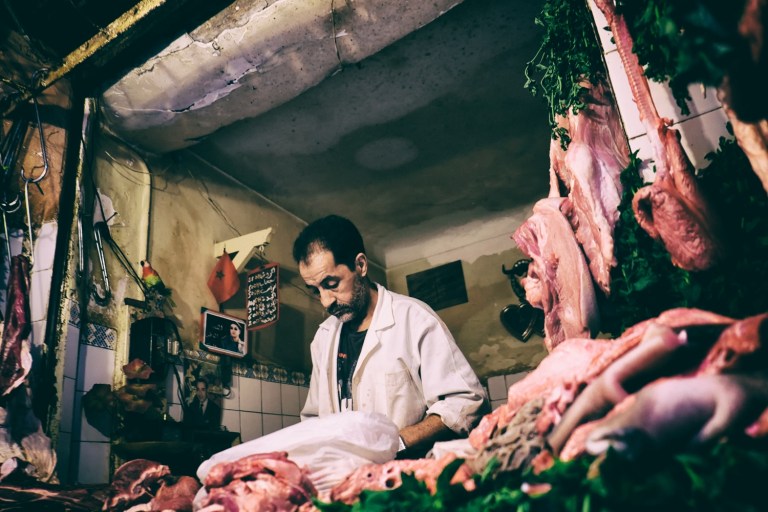
3. DSCF5470 butcher marrakech - medina

11. DSCF5408 medina nr. 2 - sito

2. DSCF5480 man with hat - sito

1. DSCF5566 medina - sito

Future projects

Aside from my daily work, I like to have detailed, lengthy photographic projects and I’ll soon be leaving Rome for my summer holidays. I’ll be driving through the south of Italy to the island of Pantelleria, south of Sicily. During that month of holiday I’m planning on doing a project called “People I met”, taking portraits of people I’d casually meet during that month. On a long term basis, I’m working on a project where I’ll be photographing different kinds of Roman artisans in their working environments. This project will be continuing into 2016.

Contact

Web
Instagram
500 px
Picfair

Official X-Photographer’s site – Galleries updated!

So here’s some exciting news, the official X-Photographers website has been updated!

Six of our UK X-Photographer’s have seen further images added to their current galleries to bring even more beauty to the site. So relax, grab a cuppa and take a moment to discover some stunning new works of art within the Fuji realms.

Damien Lovegrove

damien lovegroveDamien Lovegrove left his role as a cameraman and lighting director at the BBC back in 1998 after 14 successful years to create the renowned Lovegrove Weddings partnership with his wife Julie. Together they shot over 400 top weddings for discerning clients worldwide. In 2008 Damien turned his hand to shooting beauty and portraiture and has since amassed a dedicated following for his distinctive art. Damien now divides his time between teaching the next generation of photographers and photographing personal projects. His book Chloe-Jasmine Whichello is highly regarded as a portrait style guide and his website galleries have over 2000 images to browse through among the 30 categories.

Described as a living legend, Damien is on a roll with the best of his work yet to come.

View Gallery

damien

David Cleland

david clelandDavid Cleland is a landscape and reportage photographer based in Belfast, Northern Ireland.
He is best known for his landscape and documentary photography which has featured in a number of photographic exhibitions. His solo exhibition, an exploration of the decay of a 400-year evacuated mill received critical acclaim. David also teaches film and animation applying the rules of still photography to the art of moving image.
David’s work has been accepted by Getty Images and been published in a number of national publications and used in numerous book covers.
David has written for a number of publications on the importance of photography in education and also produced tutorials and papers on a range of photography techniques.

View Gallery

david cleland

Jeff Carter

jeff carterMacLean Photographic was founded in 1996 and takes its name from owner Jeff Carter’s full name – Jeffrey Stuart MacLean Carter.
With over 20 years experience in several fields, including commercial, sport, landscape, travel and photo-journalism, Jeff Carter is based in Dunbar, near Edinburgh in Scotland. However he travels the world with his work in the motorsport and automotive industry and is constantly on the lookout for that next great image to capture.

As well as providing photographic services to editorial and commercial clients, MacLean Photographic runs a number of Photographic Workshops and Tours for individual or small groups of photographers of all abilities in and around East Lothian.

View Gallery

Around the track in Belgium

Kevin Mullins

kevin mullinsKevin is pure documentary wedding photographer. He started shooting weddings professionally in 2008 and since then has photographed weddings right across the UK and Europe. Shooting in a documentary style he strives to tell the story of the wedding through photojournalism, rather than “traditional” contrived wedding photography.

View Gallery

kevin mullins

Kerry Hendry

kerry hendryKerry is an award winning fine art equestrian photographer, shooting commissions across the UK and worldwide. Her work has also been published in a number of UK and international magazines, websites and blogs. Kerry was also the first female UK photographer to be named as a Fuji X-Photographer, joining a group of brand ambassadors worldwide.

View Gallery

Kerry Hendry

Matt Hart

matt hartMatt is a black & white street and event Photographer based in Liverpool, England.
His journey through photography has been over 40 years mostly using film. He still shoots film, but most recently he prefers the freedom and flexibility of the digital medium striving to retain the integrity of the original image.
Annual projects have helped him to focus on his personal development within the industry, constantly challenging his own ideas and concepts and forcing him to learn new skills. In 2013 he carried out a Year of Black and White project, this made him rethink his whole style and camera system.
Matt’s stock images have been used in advertising all over the world, his work has also been published in many books and magazines, including many photography magazines.
Matt runs Street Photography workshops and courses around Liverpool and other UK cities passing on his tricks and techniques in Street Photography and processing in black and white.

View Gallery

matt hart