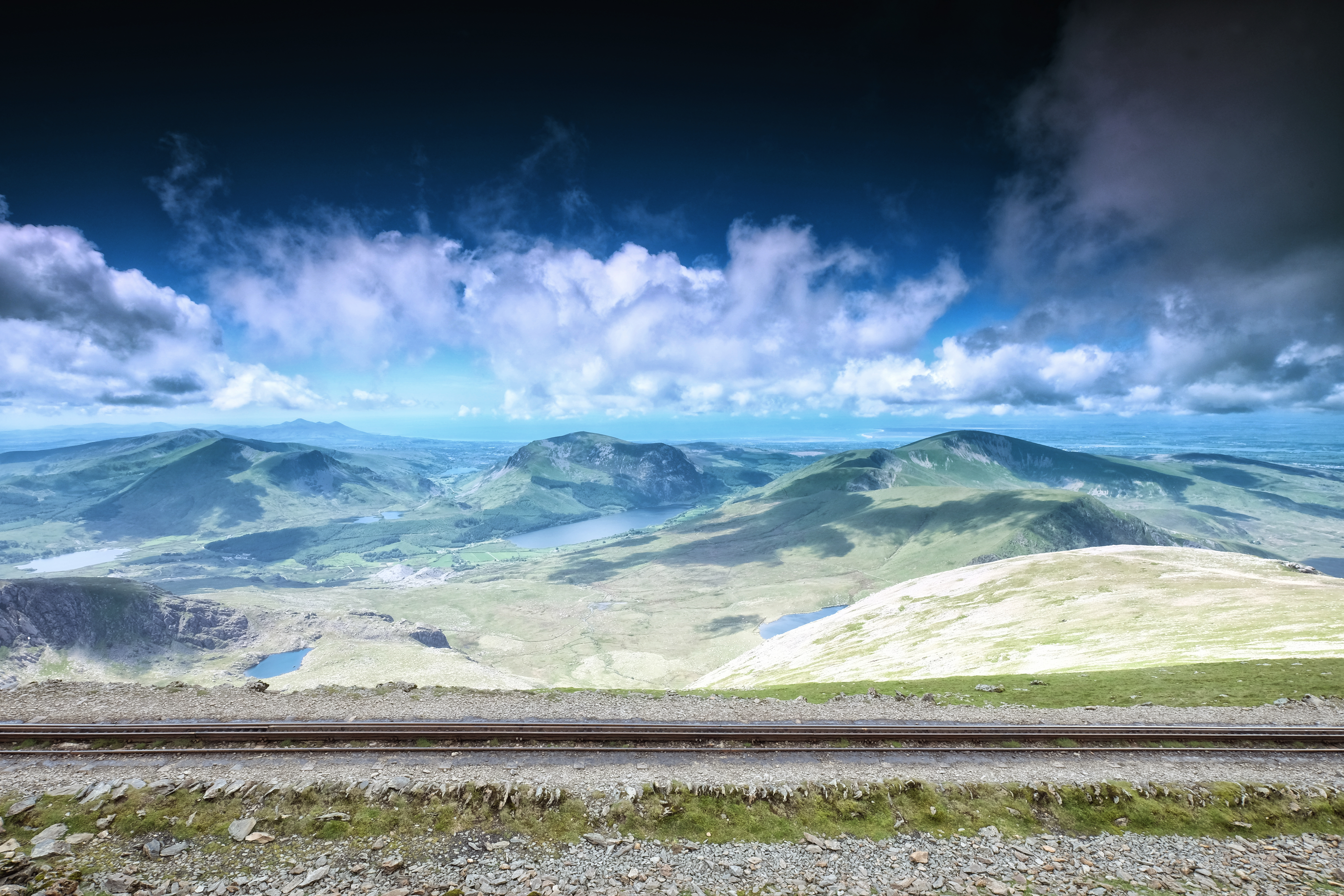
landscape

Why do I love the XF18-135mm lens? Composition.

Good day everyone, I will have to call this a mini-blog as normally I ramble on for ages and bombard you with images – who knows, maybe I still will 😉

1504372_10154010549280534_5836271885610257265_oAs you may or may not know I’m an amateur photographer who loves to try out new types of photography – I’m sure this is not to different from many of you out there. When I first started out with photography I was educated that the more zoom you had the better. So when I was given the X100 for the first time I was quite baffled as to how to work a fixed prime lens. I felt restricted and puzzled as to why I would want one. Of course once I looked at the pictures from it, I was sold and this opened my eyes to the real aspects of what makes a great camera. The images were crisp, clear and full of vibrant colour, all I had to get used to was zooming without a telephoto lens – AKA the Hokey Cokey. Once I got this down though, there was no stopping me, I was out with my original X-E1 and 35mm prime lens and I loved every minute of it!

This leads me to the XF18-135mm. This time I had the promise of excellent image quality but with that lovely versatility of a zoom lens. When I first clicked it into position on the camera body and fired up the camera I was taken back by just how much I could see or not see depending on the focal length. It was something that took me back to the olde days of me using a camera, I was VERY excited to get out and use this new kit.

I decided upon a location in the local area that always seems to make a good picture, this being the Stevington Windmill. I looked at when the sun was going to set and got there about 50 minutes earlier to allow time for running across fields, fumbling with tripods and such like. Once I got a good position near to the windmill I shot this image.

TFST0106 - Copy
Focal Length: 49mm – f/5.6 – ISO200

I shot this image at the slightly wider-side of the lens to open up the landscape a bit – this to me gives a very peaceful feel to the shot. Compositionally (is that really a word?) I have dedicated two thirds of the frame to the sky as it is a sunset after all, and I think this really helps the landscape silhouette ‘POP-OUT’ from the skyline.

This next shot I really wanted to focus on the windmill and give a more intense feel. To do this I have used the lens at a longer focal length as this has a very clever effect on the composition. The more you zoom towards a subject, the more the background and foreground are compressed together. So this in turn pulls the Sun closer to the windmill and vice-versa. Not only that, but it also reduces the angle of view – cutting out all the peripheral stuff we perhaps don’t want in our shot.

As a side note – To get the composition I wanted using more zoom, I did have to move further back to accommodate the extra focal length. Basically this means I had to run like crazy across a field and keep checking to see if the composition was right as every moment I wasted meant the sun was getting lower and would soon disappear behind the hillside.

TFST0109
Focal Length: 98.6mm – f/7.1 – ISO200

These next two shots show this compression effect quite well I feel. It really brings the background closer to the foreground making for a more intense composition that would not have been possible with my 35mm prime lens.

And in case you were wondering, this is my better-half with her camera at her side relaxing whilst I’m running about like a madman saying things like “That’s great, just don’t move. Pretend I’m not here..” which was all great fun. Photography should be fun and if you can get your friends and family involved, so much the better.

TFST0092 TFST0089

Here’s a playful shot of some hot air balloons in the distance. I framed it up so that they sat on the furthest third of the frame to sweep your eyes across the beauty of the landscape. Because of the compression effect (pulling the background and foreground together) I could give the hot air balloons a bit more presence in the shot, especially when you consider the real distance between the main tree and the hot air balloons.

TFST0083

I really hope this inspires you to go out and have a play with your camera, shoot a sunset, bring a friend, mix up your compositions and most of all have fun. When you do all that great pictures will naturally follow.

P.S: Seems I managed to get a good ramble and bombardment of images in after all 😉


Aspire and Fujifilm – Becoming a Storyteller with the X-Pro1 and X-T1

For those who don’t know, Aspire Photography are based in the Lake District. Set amongst the beautiful and dramatic landscape, along a windy road and built within converted stable yard, you have to walk over an old cattle grid to enter. This may not sound like a very poetic or creative start, but hang on a mo. As you walk over the cattle grid something really rather magical happens. You can’t see it, you can’t smell or taste it, but you can feel it. It’s as though invisible fairies are perched on the gates and sprinkle you with fairy dust as you walk into the entrance.

You may be thinking that I’ve had a bit too much to drink, or perhaps been out in the sun for too long, but bear with me.

Aspire Photography (rather, multi-award winning Aspire Photography) are a very special group of photography trainers, running courses for all different levels throughout the year. They specialise in styled shoots and empowering photographers to understand how they can become better photographers, and how to run a successful photography business. They also have a strong, but by no means exclusive, female engagement. It’s not just down to things looking pretty, or sets being styled to the most amazing standard. What Aspire teach is that it’s a totally safe environment to ask questions, to challenge your limits and to play – to really play with photographic techniques and leave with a portfolio of new images and a fresh outlook on your personal style of photography.

5

One of the reasons we wanted to engage with the Aspire “tribe” is because the X-Series of CSC cameras has really connected with female photographers – they love how light the system is, the amazing image quality and the damage limitation the price point has on their business expenditure.

The day started with Kerry Hendry, our first UK female photographer, talking us through her journey from Nikon to Fujifilm. Why did she decide to make the switch? What did it mean to her style of photography? We then move on to the technical aspects of the X-T1, X-Pro1 and lens line-up. There’s a mixture of attendees. Some are curious and open to the idea of the X-Series and others are already X converts but want to know how to get more out of their camera.

6After lunch the real fun begins, and I mean the opportunity to play! Three models have been dressed to embrace the Midsummer’s Night Theme and amazing stages of beautiful woodland fantasy scenery were created to make an amazing photographic landscape. Everyone was encouraged to interact with the models, to capture stunning still images that would demonstrate the creative capabilities of the camera and to have fun. The images from the day, from all the attendees were stunning.
I interviewed both Kerry and Catherine to understand their view of the day:

Why Fuji?

Kerry Hendry – Love The Image

Going back to using Fuji has been a remarkably natural progression for me.  I shot grainy Fuji film as a teenager and fell in love with the Fuji way right back then.

I am the one who misses the smell of film in the fridge!  More recently I’d gotten drawn into the whole ‘bigger is better’ perception – and that’s all it is, a perception – and it just didn’t feel right.  I was looking to find my photographic mojo again – and bought a Fuji X-E2 and one kit lens, and I’ve not looked back.

I adore the unique image quality the Fuji’s produce, after all, quality is still the primary influencer.  The smaller, lighter system gives allows me to feel free again – to try new things, to capture landscapes without 10kg of kit in my bag.  Travelling light in any respect is liberating – and for me, using Fuji kit has made me excited about photography again, given me new inspiration – and it also seems to bring a smile to my face.

I’ve worked with Aspire for almost a decade, in a marketing capacity and as a photographer – the Aspire way really does change your life!

The team teaches you to look at your strengths, concerns, opportunities, your creative ‘wish list’ and so many other aspects of becoming a better photographer – whether that’s as a hobby or with the aim to going pro.  And then of course, they help you achieve these goals.

On the Aspire/Fuji courses we leave the every day aspects of life – pressures, distractions and worries – at the Aspire gate.

Once you drive onto the estate it’s all about freedom to express your creativity within – while learning and developing too.

On the Fuji days of course we talk kit – and there’s the opportunity for guests to try and of the cameras and lenses they like – including all the latest releases.

Many courses will talk theory, but there’s no better way that putting what you learn, or new things you want to try, straight into practice on a professionally styled shoot.

It’s the perfect opportunity to capture amazing images for your portfolio, or simply immerse yourself in a friendly, explorative environment in which to learn.

Think gorgeous models, magical styling, likeminded new friends to work with, technical expertise to quiz – and of course Fuji freedom & fun!

Catherine –

Aspire Photography Training designs educational programs that teach and inform whilst inspiring those to push the boundaries of their photography.

We train those that have a keen interest in photography and those who are passionate about photography.  Whether you are a hobbyist or seasoned professional we have a range of courses to suit all.  We have been a significant influencer on some of the best businesses in the UK.  Education is at the core of all we do.

We believe the Fujifilm X-Pro1 range will revolutionise the perception of what a professional photographer should look like and already is essential gear for a professional to have over their shoulder. Women and men alike are leaping to change over to the X range, all for differing reasons.  We have witnessed photographers reach out to the X-range to seek sheer quality of the product, we also have seen many photographers change to the X-range to liberate themselves from an overweight camera bag, enabling them to deal with any scenario with ease. The Fuji X-Pro1 is high on Aspire’s agenda, we will be giving this camera and system a great deal of conversation, time and training space. The X range is making it’s mark with the professional photographers who are at the coal face of weddings, commercial and portrait shoots, mainly due to the freedom given and the sheer level of technical ability it gives them on a daily basis.

Aspire Photography Training is all about looking ahead, liberating and thinking out of the box.  In fact we don’t even have a box, just a broad and open mind to all the possibilities photography can give you when you choose to think creativity.

The next Aspire and Fujifilm workshop takes place on Wed 20th Aug, in the Lake District.

All images by Kerry Hendry at Love the Image.


Fujifilm X Magazine issue 6 is now available for your reading pleasure

It’s that time again. A new Fujifilm X Magazine issue is ready to your reading and viewing pleasure.

Interview with Merhdad Samak-Abedi

This issue features an interview with pro photographer Merhdad Samak-Adebi who travels the world as part of his job (working for a German airline) and therefore is lucky enough to get the opportunity to shoot his passion – landscape photography.

Take a walk around Varese, near Milan 

This issue’s “X Marks The Spot” features some fantastic street photography by Italian photographer Emanuele Toscano in and around Varese, Italy.

Be inspired

Issue 6 also contains the other usual features; “What to Shoot Now” provides you with inspiration on what subjects to shoot during the summer holiday months, “Get more from your X series” takes a look at bracketing functions that feature on most Fujifilm X cameras and the “Exhibition” shows a fantastic array of colourful images, plus the stories behind them, shot by our readers.

Competition time

issue6-comp
Fujifilm X Magazine competition – win a Fujifilm XQ1 underwater kit

And finally, you could win a fantastic XQ1 underwater kit in our competition. For a chance to win, send us your best holiday shot. More details in the magazine itself!


Download the Fujifilm X Magazine now!

Capturing Croyde and Lundy Island with the XF10-24mm & X-E2 combo

Follow Dale as he takes a journey round Devon’s beautiful Croyde Bay & Lundy Island.

As you may or may not know the XF35mm is my ‘everyday’ lens but when it comes to landscape photography the XF10-24mm is my next ‘must-have’ lens. I used to use the XF14mm lens – which by the way is superb, but I’ve realised that I just cannot get enough of that ultra-wide 10mm setting.

I have only been delving into the landscape photography world of late and am still very much finding my feet. When looking back through my landscapes I have noticed that I clearly love the slightly stranger viewpoints, mainly from a wide-angle, ground-up perspective. It may be that the world is just more interesting down there!?

DEVN0154
Focal Length: 10mm (XF10-24mm) – ISO200 – f/4.5 – 1/950 – Ilfracombe Harbour

I like trying to ‘add a little epic’ to my landscapes. The way I have found myself doing this is to locate a small object, whether it be a footprint, a rock etc and get it right up close to the lens. This distorts its perspective and makes it a real important part to the composition. It’s very easy to miss the small details in a beautiful view, so doing this can really shake-up the images and give a new feel to your photography.

DEVN0064
Focal Length: 10mm (XF10-24mm) – ISO200 – f/4 – 1/950 – Lundy Island

We’ve always been told practice makes perfect right? Well, I don’t know if it makes ‘perfect’ but it certainly helps with repetition. I find that the more I shoot, the more I know how a shot is going to turn out before I’ve even turned the camera on. It can give great insight as to whether I should get set up for a shot or move on to a new area / viewpoint.

DEVN0116
XF35mm – ISO200 – f/4 – 1/2900 – Lundy Island – Had to sneak my XF35mm lens into this blog somewhere! 😉

In an effort to create better landscape images I have been using the Rule of Thirds more and more consciously. Across the board this has rewarded me with more “That’s a keeper!” shots.

In addition to this, I’ve been thinking more carefully about where to ‘put’ the horizon line. I usually just ponder which is more interesting – the sky or the foreground? If the sky is more interesting it takes up two thirds of the image and vice versa. I thought the scene below had a more interesting foreground to shoot, so the foreground takes prominence.

DEVN0033
Focal Length: 10mm (XF10-24mm) – ISO200 – f/11 – 1/420 – Ilfracombe Harbour

On the opposite side of things, I found this sky (below) to be more dramatic and I loved how the church had an on-the-edge-of-the-world feel to it. So, I gave the sky two thirds of the frame and the church the lesser attention to increase this on-the-edge-of-the-world theme. I post-processed this one to give it a more matte-like / painted finish.

DEVN01212
XF35mm – ISO200 – f/11 – 1/420 – Lundy Island

The XF10-24mm isn’t just for landscape either, it worked perfectly inside the Lundy Island lighthouse to capture the whole winding staircase – which on a different note, was very steep!

DEVN0096
Focal Length: 10mm (XF10-24mm) – ISO6400 – f/4 – 1/56 – Lundy Island

Sunsets, anyone?

The next few images are some of the best I could get while shooting in the ‘golden hour‘. It’s not an area I have had great amounts of experience with, but, I wanted to share a few tips that could save you some stress as I found out the hard way.

Firstly, give yourself lots of time to get to the location you are going to shoot. Set up and relax way before the sun has started setting. Otherwise, you may find yourself fumbling with ND grad filters and tripods like I was.

I always thought a sunset was a peaceful, enjoyable thing, but when you are trying to shoot it the sun seems to set faster than you can say Usain Bolt!

DEVN0163
Focal Length: 18mm (XF10-24mm) – ISO200 – f/9 – 1/38 – Croyde Bay

The second piece of advice is to know where the sun is going to set. One night I literally found myself running across a beach. I had the camera attached to a tripod while dangerously navigating slippery rocks pools and small sand holes that the kids had dug during the day! I must say though it was some of the most exciting photography I have done in a long time.

DEVN0170
Focal Length: 24mm (XF10-24mm) – ISO200 – f/8 – 1/60 – Croyde Bay

On the bright side, the running down the beach to capture the sunset actually made a picture in itself. Again, emphasising the foreground subject by getting on my hands and knees to put the lens right up close. DEVN0176

I hope you have enjoyed taking my very short tour of some truly photogenic places. Here are some other shots I captured from the trip away that you may like. Any questions, feel free to leave a comment below.

Happy Shooting

Dale

‘Coming round the mountain’ with Dale and his X-E2.

Who doesn’t love a little adventure from time to time? 

My adventure begins with simplest of texts: “Fancy coming to Wales for a week, for free?” sent from my Mum on a weekday morning. Well who could pass on an opportunity like that? I hadn’t done a great deal of landscape photography and knew that this was a great chance to up my skills in this area.

I mentioned my trip to a few colleagues and they suggested I grab some ND Graduated filters to give me more control over the exposure of sky and land. I had never used an ND Filter before, but was excited to give them a go. I knew I couldn’t afford anything decent so I simply bought some £15 (delivered) ND filters with holders on Ebay.

So a few weeks later, fully prepared with all the bits and bobs (tripod, batteries, etc) we set off. I had only been to Wales once as a kid and didn’t remember it that well. All I knew was that I would see LOTS of sheep. Here was a little snap I caught and loved of one of the first sheep I saw there.

Blowing raspberries?

After settling into our holiday home, we planned out the week ahead. This included going into the underground mines, climbing Snowdon, visiting Anglesey and other holiday-type locations.

Destination number one had to be Snowdon as the weather forecast was looking good and we wanted the best visability when we made it to the top. My Fiancée and I decided to take the Snowdon Ranger path as it was recommended as beautiful and not too difficult.

Here are some of the shots going up the mountainside.

WALE0712
ISO 200 – f/7.1 – 1/105 – XF10-24mm
WALE0724
ISO 200 – f/6.4 – 1/120 – XF10-24mm
WALE0788
ISO 200 – f/11 – 1/100 – XF10-24mm

You may notice that the sky has that slight layered darkness to it, that is the ND grad filters. They help darken the sky area so the whole picture can be exposed correctly. Without them the sky would have been bright white and the colours would’ve been washed out. One problem I did face with the ND filters was that because they were cheap, they had a tendency to give a magenta colour cast on the image. To combat the issue, I used Photoshop to target problem areas using a Solid fill layer set to overlay and then picked a more suitable colour.

Once we made it to the top we saw the train that runs alongside the Llanberis path. A beautiful train though it was, I am glad we walked up for the sense of achievement and also the train did seem rather old and clunky! Made for a great snap though.

WALE0744
ISO 200 – f/9 – 1/90 – XF10-24mm
WALE0769
ISO 200 – f/6.4 – 1/750 – XF10-24mm

Here is the view from the very top. I boosted the colours a bit in Photoshop but it really was that clear and that beautiful. I highly recommend taking a visit if you can.
WALE0737

Now I love visiting Castles, something about the history and the medieval era interest me somewhat. So it is not surprising that we had to take a trip to the recommended – Conwy Castle. Unfortunately I didn’t get many good shots of the castle itself as I would have wanted to take them from the sea as a landscape shot and we didn’t come in from that side. However, it did give me an excellent viewpoint to trial the ‘Miniature’ mode on the camera. Here are some of the shots taken from the top.

WALE0488
ISO 200 – f/5.6 – 1/125 – XF56mm
WALE0496
ISO 200 – f/2.5 – 1/750 – XF56mm
WALE0490
ISO 200 – f/4 – 1/180 – XF56mm

One of my favourite days out had to be travelling round Anglesey. It was my turn to drive out of the family and I must say it was truly excellent. The roads were full of interest with their twists & turns, cliff edges and mountainous surroundings and the views were simply picturesque – everywhere. I remember I kept saying “We will get a picture here on the way back”, I said that about 20 times as pretty much every corner I turned there was another shot waiting to be taken.

One of the first places we stopped was a little place on the coast that I cannot remember the name due to it being “Oh that looks nice, let’s stop here for a minute and take some snaps”. A couple of hours later we were still there enjoying the views and wandering along the coastline.

Here are a few shots from this ‘unknown’ location using the ND grad filters again.

WALE0613
ISO 200 – f/4 – 1/800 – XF10-24mm
WALE0637
ISO 200 – f/4 – 1/1800 – XF10-24mm
WALE0650
ISO 200 – f/9 – 1/120 – XF10-24mm
WALE0623
ISO 200 – f/5 – 1/600 – XF10-24mm
WALE0644
ISO 200 – f/6.4 – 1/90 – XF10-24mm

Once we had eaten some lunch here we knew it was time to move on to get the ‘necessary’ holiday ice-cream’ from a beach nearby, we chose the beautiful Beaumaris Pier in Anglesey (shot below).

WALE0559
Pier at Beaumaris – Anglesey

We also visited some other piers and beaches on the day. Here are two shots that I was really lucky to find. The first image is of a pier, my feet/shoes were pretty soaked after this one as the sea water was coming up from under the wooden beams! I have post-processed this image firstly into black and white and then colourised it with a blue tone to add to the drama of the shot.

WALE0841
ISO 200 – f/9 – 1/250 – XF10-24mm

The second image was shot on a pier that had this impressive looking building attached, I just loved the look in black and white with all the lines created in the flooring. Again using the ND grad filter to pull some contrast into the sky.

WALE0831
ISO 200 – f/4 – 1/550 – XF10-24mm

The final part of the day was to track down a good lighthouse image. I found the best one near to us to be South Stack Lighthouse. It was pretty difficult to find and quite a walk to it but it was well worth the effort. As mentioned previously in this blog the ND grad filters gave a magenta cast to all my images. With this particular image I didn’t filter much of it out as I loved the colour with this composition.

WALE0681

I have come to the end of my mini adventure and I hope you enjoyed being a part of it. Hopefully it will inspire you to go out and venture among these beautiful landscapes and just have fun.

Dale Young


Holidaying with an X100S

When I was lad, the family holiday was one of only two annual outings for dad’s camera. No prizes for guessing the other. It was packed in its ever ready case, along with a 36 exposure roll of Kodachrome ready for two weeks on the British coast; typically Cornwall or Norfolk. For the life of me, I can’t remember what the camera was, but it had exposure settings around the lens, an ASA dial I could never work out how to turn and manual film advance. If I was lucky, I was allowed to wind it on to the next frame after each shot. Sometimes I even got to take a picture.

I got the chance to shoot the odd landscape. ISO 200, 1/110sec at f/11

It seemed like a fiendishly complex piece of equipment which, of course, it wasn’t. The lens was fixed, there was no flash and the viewfinder was essentially just a small window with a piece of coloured glass in it. But that camera helped make photography special. I found myself thinking about dad’s camera just a few weeks ago when I was away with my own family in the Cotswolds. As a complete break from the norm, I’d opted to take just one camera – the Fujifilm X100S – to capture our five day stay. Although I was confident it would deliver great shots, I felt nervous travelling so light. I usually have to forsake taking essential items of clothing just to ensure I’ve got all the requisite camera gear, but this time I was bold and left the hefty gadget bag at home, desperately trying to be upbeat about my minimalist choice.

Clever cows and calves in the Cotswolds… ISO 200, 1/240sec at f/2

For the first 24 hours, I thought I’d make the biggest mistake of my photographic life. When I was taking pictures I wanted a longer zoom, an off-camera flash, a tripod, anything other than what I actually had. But then I realised I was just approaching my recording of the holiday in completely the wrong way, and rather than wishing the X100S was something it wasn’t, I started playing to its strengths. Talk about a lightbulb moment.

Accept the X100S for what it is and your photography changes. Not close enough to the subject? Walk towards it. Too close? Take a step back. Can’t get the framing you want? Walk around until you find a better angle. And, best of all, can’t get exactly the shot you want? Don’t worry, just leave it, a better picture opportunity will be right along shortly. This all sounds like a very ‘free love’ approach to picture taking but I can assure you that after using the X100S on holiday I didn’t come home harbouring an unhealthy obsession for cheesecloth or guitar strumming.

Great colours from the X-Trans sensor. ISO 400, 1/220sec at f/4

Modern photographers can be lazy. Zoom lenses (Fujinon ones included) are so wonderfully sharp these days and exposure systems so scarily accurate that having to put in some effort to find a good shot can seem too much like hard work. But the X100S rewards those who put in that effort. The fixed lens is every bit as good as you’ve read in all the other blogs before this one and the X-Trans sensor delivers supreme quality images – I never had any qualms simply upping the ISO to get the shots I wanted. Sure, it’s not perfect, but show me a camera that is. In the case of the X100S I found that the focusing does hunt a little and I’d like to see another programmable function button, but these are minor asides in a majorly good performance.

X100S: Holiday pictures to make you smile! ISO 320, 1/10sec at f/4

The shots you see here aren’t supposed to be works of art, they’re a record of our holiday and that makes them special. They’re also different to any other holiday photographs I’ve ever taken; fewer landscapes, more people and some miscellaneous bits and bobs that remind me of a great few days with the people that matter most to me. And that’s all because of the Fujifilm X100S.