Travel

REVIEW: 10mm to 560mm – the pulling power of Fujinon lenses

BY JEFF CARTER – X-PHOTOGRAPHER

jeff carterIn June last year I did a blog on the pulling power of the then current line up of Fujinon XF lenses from 10mm up to 200mm.

Since then Fujifilm have added a 1.4x converter and the XF100-400mm f4.5/5.6 to the line up. With just four zooms and a 1.4x converter the pulling power of the Fujinon line up is now 10mm to 560mm or 15mm to 840mm in full frame terms, which is more than enough for most photographers needs.

My current four lens zoom line up is as follows –

XF10-24mm f4R OIS
XF16-55mm f2.8R LM WR
XF50-140mm f2.8R LM OIS WR
XF100-400mm f4.5/5.6R LM OIS WR

The 1.4x converter fits on the two longest lenses taking them to 70-196mm and 140-560mm respectively but with the loss of one stop on each – f4 across the full range of the 50-140mm and f8 at 560mm.

It is difficult to visualise in your head the zoom range so I fitted each lens in turn to the X-T1, which was fitted to a Manfrotto tripod, and shot the same scene, the lighthouse at Barns Ness near Dunbar.

Here are the shots starting at 10mm and ending with 560mm.

Fujinon XF10-24mm f4 @ 10mm
Fujinon XF16-55mm f2.8@ 16mm
Fujinon XF10-24mm f4 @ 24mm
Fujinon XF50-140mm f2.8 @ 50mm
Fujinon XF16-55mm f2.8 @ 55mm
Fujinon XF100-400mm f4.5 5.6 @ 100mm
Fujinon XF50-140mm f2.8 @ 140mm
Fujinon XF100-400mm f4.5 5.6 @ 400mm
Fujinon XF100-400mm f4.5 5.6 + 1.4x converter @ 560mm

These images were used in the #5YearsofXSeries event on the 15th of Jan 2016, to see the video, click HERE

As you can see the quality of the XF lenses is the same throughout the zoom range and the reach of the Fujinon lenses available for the X-Series now has been extended so you stand further away and still fill the frame with your subject.

The new XF100-400mm is perfect for sport and wildlife and is also useful for landscapes. You can read my review of the new Fujinon superzoom HERE.

X-Photographer’s Spotlight – Chris Upton

Tell us about yourself and what got you into photography? How did you develop your style in photography?

20150718_chris_0042I am a photographer based in Nottinghamshire, UK with a passion for Travel, Landscape and Social Documentary photography.

My love of photography started in my teens when I used the camera to record walking and climbing trips around the UK but especially in the Peak District and Lake District. As my knowledge developed and results improved, the emphasis changed from less walking to more photography. In those days I was shooting 35mm slide film and enjoyed processing my own black & white prints in my darkroom at home. As with many other photographers the shift to digital helped to improve my photography and it’s certainly more comfortable processing images in the digital whiteroom!

Over the years I have been fortunate to travel widely and consequently this has become my favourite genre of photography. I find it an amazing experience to observe and photograph a variety of cultures, people and landscapes, and hope that through my photographs I can bring a little of this to the viewer and inspire others to experience the beauty and diversity of the world for themselves.

20150817_derbys_0072-HDR-Edit

Why did you choose Fujifilm cameras?

Having used a DSLR system since their launch I had always hankered after a small rangefinder style camera that I felt would offer more freedom and enjoyment in my photography. When the Fuji X-E1 was launched I bought one straight away thinking it would complement my DSLR and would be a great walk around camera. As soon as I got the camera I was smitten. It was so lovely to use, it felt just right, it was intuitive and it made me want to take pictures. The only area where I needed reassurance was image quality, could an APSC sensor really match my full frame DSLR? Well I should have had no concerns. The combination of camera and stunning Fujifilm XF lenses delivered superb results and there was a further revelation, jpegs! I hadn’t shot jpegs for a long time but when I saw the results I was amazed. They were sharp, the colour rendition was spot on and the overall feel of the image was beautiful, almost film like in their appearance. I bought a couple more lenses, the XF10-24 and the XF55-200 and the brilliant Fuji X-T1, and this opened up more creative opportunities. I started to use the Fuji kit more and more, no longer was it a back up to the big, heavy DSLR. It had earned its stripes and I loved the combination of a smaller, lighter, robust system that was so intuitive and simply a joy to use. Today the DSLR system sits in the cupboard waiting for the inevitable ebay listing as the Fuji accompanies me everywhere at home and abroad.

20140428_untitled_0206

What & who inspires you?

I love great pictures whatever the subject matter and as a travel photographer you have to be pretty adept at different genres as you will be shooting architecture, people, landscape, detail, street and many other subjects in the quest to capture the spirit of the place. Therefore I have many sources of inspiration. I marvel at the landscape work of Charlie Waite who seems to capture scenes at their absolute best with sublime composition and feeling. David Noton, Elia Locardi, Ric Sammon and Steve McCurry are among my favourite travel photographers and Art Wolfe’s images combine the best of nature and travel with fine art. Sebastio Salgado has to be there for his amazing documentary and people pictures. I just think it’s important to open your eyes to the world out there and draw inspiration from as many sources as possible.

20150925_france_1522v1

Do you have any tips or tricks you could share with us?

Without doubt the number one priority with Travel photography is planning. We don’t have unlimited time or budget when travelling so we have to make use of every moment. That means understanding key locations, viewpoints, weather conditions, sunrise & sunset times and direction and any local factors such as opening & closing times. The internet is an invaluable resource for this and I will check out tourism websites, Google images, flickr and 500px. You will find some stunning images of your locations that you should use as a starting point. Of course you will want to shoot the iconic views of famous locations but when you have those in the bag look for something different, put your stamp on the place. You will be surprised that it’s so often those images that give you the most satisfaction.

20150427_lancs_0100

The majority of my images are taken using a tripod. Now whilst some photographers regard a tripod as an unnecessary evil there are many good reasons to use a tripod other than just avoiding camera shake. Sure there are times when I shoot handheld but using a tripod slows you down and makes you think more carefully about your subject, enabling more precise composition. It also helps makes the use of gradual neutral density filters easier with more accurate positioning.  Creative opportunities are also opened up by using longer shutter speeds in daylight, including the use of ND filters, to capture movement. But of course it’s the ability to capture the best light of the day at sunrise and sunset that make the tripod an invaluable part of any travel photographers kit.

20150906_slovenia_0078-Edit

I love photographing people, but for many the prospect of approaching a stranger and asking to take their picture is a real challenge and that’s why some take the easier route of a long lens grab shot. Whilst there is certainly a place for the candid approach I have found that taking pictures with permission yields far better results. So I would urge you to pluck up the courage and try to make that connection with your subject. I always try and learn a few words in the local language which, even if I get wrong, usually results in smiles and breaks the ice, creating a perfect start for your people photography. Check your equipment before you approach your subject including lens selection, aperture, battery life and frames remaining on your memory card. Also once you have permission don’t just take one shot and move on. Shoot a few images, move around and work with your subject. Resist the temptation to keep chimping your screen but use it to show your subject the results, this works really well with children and of course thank the person when you’ve finished.

20150310_cuba_5049-Edit-2

What’s next for you?

I have just completed a major Social Documentary project on the closure of Thoresby Colliery, the last pit in Nottinghamshire. Being such a significant event in the county’s industrial and social history I was keen to produce an enduring record of the colliery and to share the images with as wide an audience as possible. So I am delighted to have produced a major touring exhibition which opens in Mansfield, Nottinghamshire and runs until 27th February and have also published a book, “Thoresby The End Of The Mine”. Full details of both can be found on my website www.chrisuptonphotography.com  So in the short term I am busy publicising and promoting but I am also looking forward to a few trips abroad including Venice, India and Andalucia.

Thoresby Colliery
Thoresby Colliery
Thoresby Colliery
Thoresby Colliery

Contact info

Website 

Twitter

Facebook

Instagram


Lightweight landscape photography with a reportage head

_DSF0091

By CAMILLE MCMILLAN

Epic mountains.
Granite walls clung to by a finger…
Night sleeping in a hammock hung by Carabiners on a vertical 500m drops.
Scaling a waterfall turned to ice in -10 conditions, Ice axes, crampons.
The north face of the Eiger.
Base jumping.
No, no thanks, not for me…

I live in and love the mountains, the French Pyrenees. I am very happy to climb , walk and explore, but when the need for Carabiners and ropes happen, that’s when I take another route. I’m not an Alpinist, this makes me a lightweight, and as I’m a lightweight I wish to carry lightweight kit. No “Landscape photographers bad back” for me.

_DSF2980

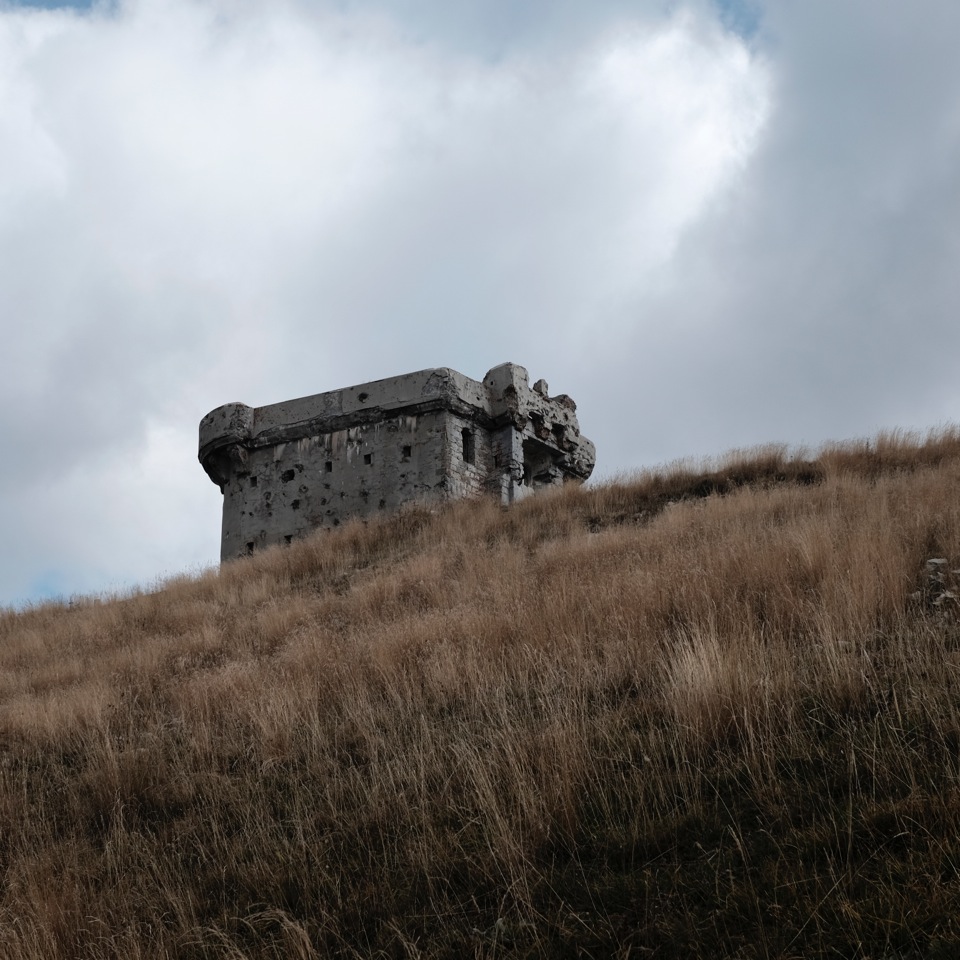
Recently I took a trip to the other side of France, the Alpes-Maritimes, tracing the old border of France and Italy. A border that shifted with the end of WW2. The old border line in the Alpes-Maritimes are on ridges, peaks or cols, sometimes on the road, but mostly the car can only get you so far, then its hiking.

I approach landscape photography with a reportage head. I am not the kind of photographer that has the patients or time to hang around at a location, ponder, wait for the light, pause for dusk or sleep out all night for dawn. Maybe I’m not a proper landscape photographer, maybe I just lack the patience, I am however very much interested in narrative, the Journey.

_DSF4794

When on my journey, I see something, I stop and take a picture and move on. Hopefully the light is good on the subject at that moment. I’m much more about the story. That’s where the X100T is so good. I see the work I’m doing now as a journal, making notes. Maybe some day I could return with more equipment (a tripod ) maybe even camp out the night , but only with light kit, keeping the no humping kit bad back rule.

I shoot jpegs now (I spoke about in my last entry) and I’m right back to my early E6 (transparency film) days, I bracket. A few years ago I would have scoffed at the idea of bracketing and would have been horrified that I am shooting jpegs.

The f-stop bracketing with the X100T is great, 1/3rd of a stop work really well. This is not ‘in camera ‘ processing for a bracket, its a true 3 exposure event. I struggled with this at first as I would start to move looking for the next picture before the 3rd shot had fired. I am learning to be patient.

For me its important to know which in film simulation to use and not just shoot with the very seductive Classic Crome or the old school landscape photographers favourite Velvia (Even if you can shoot it at 800 ASA !) You can bracket film simulation modes with the X100T, and it is a one exposure event. Film simulation bracketing is a very good learning tool on how the different film simulations will look in different lights, however you can not Film simulation bracket and f-stop bracket at the same time. In my opinion, the characteristics of the film stock very much influences how the story is read. I make the decision which film simulation to use on a project and keep it that way. Sometimes the film simulation I have chosen is not the best for the light in a situation, but I feel the continuity of the colour and tonal range is of an over riding importance. Okay, you can call me old school.

_DSF0094

I’m not the photographer that enjoys the capture one / light-room / photoshop part of photography. I just want to get the image correct in camera and then print it. The dream is to send it to the printer from in the field…

I should however invest in an ND grad filter, Seven 5 by Lee filter probably and the WCL-X100 wide conversion lens, a pro ipad and a carbon tripod.

I’m searching for perfection in camera and escape the tyranny of post production.


See more of Camille’s work

Follow Camille McMillan on Twitter


Learn more and buy now

Click here to find retailers selling the Fujifilm X100T

Lightning Photography 101

BY BEN CHERRY
Ben Cherry Lightning-4
Witnessing a lightning storm can be frightening, but it can also be energising, certainly to photographers. The thrill of capturing lightning in a frame is like nectar to a photographer’s calling. Before we get consumed by this exciting subject it is important to remember that lightning storms can be extremely dangerous so please take suitable precautions when around a lightning storm; photographing lightning is great but it is not worth putting yourself in danger.

Lightning occurs all around the world, at different frequencies and strengths. I’ve been lucky enough experience a good few lightning storms, with my most memorable occurring in the tropics. But this isn’t to say that you can’t get great lightning shots wherever you are, all you need is some knowhow and then the lightning! Here is a brief 101 of lightning photography to get you started.

“It’s all about the light”

Like a flashgun, lightning is over in but a moment, and like flash if it is the predominant (or only) light source then it acts rather like its own shutter speed.
When using a flash at night for example, you might set the power output of the flash and then move to the camera settings. Generally speaking you turn the shutter speed to the maximum flash sync speed and then use ISO & aperture settings to compensate for the power of the flash. If it is too bright you increase the aperture and/or drop the ISO, if it is too dark then you do the opposite; much the same applies to lightning photography.
The intensity of the light from lightning is affected by two things:
The first is the power of the lightning: if it is a particularly large strike then if you’re set up for some previous strikes that weren’t as powerful, it’s more than likely the lightning will have blown out your highlights in the image.

The second thing to affect the light intensity is the distance between you and the lightning itself. Generally, lightning storms are large storm clouds which means that the lightning can be very close by one moment and then many miles away the next. These fluctuations in light can’t really be predicted but it is something to be aware of, and even to account for by increasing your aperture by a stop more than required to save your highlights.

Ben Cherry Lightning-3

Composition 

Lightning is spectacular by itself but sometimes a scene can be made all the more special by being aware of your surroundings and looking for things that could add to the moment.
If you’re lucky enough to have something of interest in the foreground then see if you can add this to the electric scene. If there is still some ambient light around then you should be able to illuminate the foreground via your long exposure. If not, then illuminate using a torch or flash. This simple addition to the frame can help to better portray the scene. However bear in mind that you want to photograph as much of the lightning as possible so a sky-dominant frame will help to ensure this.
Ben Cherry Lightning-9

Intervalometer

Built into many of the X-Series cameras, an intervalometer allows you take a set number of photos with pre-determined intervals between each shot, this is set by the photographer and can be between 1 second to 24 hours. This is very helpful for lightning photography as you can set the camera to take a series of 30 second exposures (or less if this is overexposed) and sooner or later you’ll capture a lightning strike within one of those frames.
Ben Cherry Lightning-7

Be patient 

The curse of photographing lightning is you can never guarantee where or when it will strike so you should always be prepared to wait a while for a good shot!  At the same time though, be aware of where the storm is moving to and adjust your composition if it is moving out of frame.
Ben Cherry Lightning-5

Shoot RAW

This really can make all the difference! Because the exposure changes so frequently due to the intensity of the lightning, you cannot always achieve the perfect exposure 100% of the time. A RAW file records so much information compared to a JPEG that you can recover many more files which have the highlights blown out according to the histogram.

Daytime

If you come across a lightning storm during the daytime my method is to set up the aperture and ISO to the most light-demanding settings possible (e.g. F22 ISO 200) and then simply use the intervalometer to repeat the suitable shutter speed. It can produce some interesting results.
Ben Cherry Lightning
Let us know if you’ve caught any lightning photos using the hashtag #fujilightning
Ben Cherry Lightning-2

Ben CherryA little about Ben – Ben is an environmental photojournalist, zoologist and Fujifilm X-Photographer. His passion is showing the beauty and fragility of the natural world. Find more of his work at:

Backpacking India with Danny Fernandez

By Danny Fernandez
Varanasi blog (25 of 56)
During the first half of 2014, I decided to pack my bags, say goodbye to what I knew as ‘life’ and spend 3 months traveling around Northern India. This blog is to share my journey with you. All my images were shot on the FUJIFILM X100S and processed in Lightroom.

Varanasi, or ‘the holy city of India‘ sits on the banks of the river Ganges, in Uttar Pradesh. Varanasi (or Banaras) is known for being the most spiritual part of India, and this is reflected by the amount of devotees attending various religious ceremonies every day. Some Hindus believe that death at Varanasi brings salvation. It became my home for 6 weeks, and this is my experience of it.

Varanasi blog (47 of 56)

My entire trip was somewhat based around a 6 week stay volunteering in Varanasi. Allow me to backtrack for a moment and explain:

A year before arriving in India I was going through a bit of a rough time, and decided that I needed something to focus on; something new, exciting and adventurous. It had been 5 years since I had last strapped on my backpack and been for a ‘big trip’. As I had always wanted to visit India, and always wanted to volunteer, I began googling ‘volunteering in India’. After getting over the shock of the extortionate price asked by many charities to volunteer, I added in the keyword ‘Free’ to my Google search. After reading through a few posts, I found an article titled ‘top 1o places to volunteer for free, in India’ (or something along those lines). At last I found a company called Fairmail. In a nutshell, Fairmail works with children from disadvantaged backgrounds, trains them in photography, encourages them to explore their creativity and take photos which are in turn made into greeting cards and sold worldwide. The children receive a percentage of the sales, which pays for their education, housing, medical etc.

I applied to become a volunteer there, and joined the 12 month waiting list.

Fast forward 12 months and I step off an 18 hr train journey tired and hungry (I had forgotten to bring snacks so had bought some spicy bombay mix which served me as lunch, dinner and breakfast).

I was met by Dhiraj, a former student and one of the managers of Fairmail Varanasi. As we were driving to my guesthouse, the first thing which hit me was the apparent lack of any kind of road rules. I had felt the same way when I first arrived in Delhi, but this was next level when it came to driving. The roads were a mess of rickshaws, excrement, bikes, potholes and goats.

It took quite a few days to adapt to the pace of Varanasi. I remember constantly being on edge as I walked around during the first few days, as at any one time you could: Get charged by a cow/get run down by a car, motorbike or rickshaw. This was mixed with the constant loud noise of the traffic,  the ceaseless bombardment of flies, and the heat (which reached a scorching 47°C while I was there. Let that settle in for a moment. Forty seven degrees). Varanasi is not the place to go and relax.

Varanasi blog (51 of 56)

I’m aware that I may be sounding negative, but for all the stresses and difficulties faced, there were many moments of beauty.

The city sits on the banks of the ‘holy river’ – the Ganga. Each morning devotees awake early to bathe in the river and each night, Aarti is performed, where priests perform music while burning incense in front of the eyes of hundreds of followers. It is truly a beautiful sight.

Varanasi blog (23 of 56)

Varanasi blog (26 of 56)

Varanasi blog (9 of 56)

varanasi extra (1 of 1)

The first 3 weeks of my stay were spent in a guest house in Assi Ghat (Ghats are essentially temples, which line the Ganges river). During my last 3 weeks, I decided to move into the Fairmail office, in Nagwa (a village to the south of the Ghats). My experience here was great, as it allowed me to glimpse into the lives of those living in this area. As I was living in the office, I was also able to spend much more time with my students of Fairmail.

Varanasi extra sadhu (1 of 1)

varanasi extra1 (4 of 10)

Varanasi blog (52 of 56)

varanasi extra1 (2 of 10)

Varanasi blog (2 of 56)
Varanasi blog (6 of 56)

Varanasi blog (4 of 56)

Varanasi blog (19 of 56)

Varanasi blog (16 of 56)

Varanasi blog (21 of 56)

Varanasi blog (28 of 56)

Varanasi blog (6 of 7)

Varanasi blog (34 of 56)

Varanasi blog (37 of 56)

Varanasi blog (38 of 56)

Varanasi blog (53 of 56)

varanasi extra1 (3 of 10)

My experience volunteering at Fairmail was also excellent. Alongside other volunteers, we taught the students lots of useful tips for taking better photos. One thing which I contributed was the use of flash photography in their work.

Varanasi blog (5 of 7)

The locals rightfully say “Full power, 24 hours”. Truer words have never been spoken.

Varanasi blog (4 of 7)

Varanasi blog (3 of 7)

Varanasi blog (1 of 7)

Varanasi blog (55 of 56)

Varanasi blog (54 of 56)

Varanasi blog (50 of 56)

Varanasi blog (43 of 56)

Varanasi blog (40 of 56)

Varanasi blog (41 of 56)

Varanasi blog (39 of 56)

Varanasi blog (33 of 56)

Varanasi blog (36 of 56)

Varanasi blog (12 of 56)

Varanasi blog (7 of 56)

Varanasi blog (3 of 56)

varanasi extra1 (10 of 10)

varanasi extra1 (9 of 10)

varanasi extra1 (8 of 10)

varanasi extra1 (1 of 10)

I highly recommend a visit to Varanasi for anyone visiting India. Be prepared for a total bombardment of all your senses, but once you adapt to the pace of life, you might learn to love it.

See more of my work here.


Iceland, a most curious island – Part 2

Part 2 of Danny Fernandez’ Icelandic adventure; it will inspire, teach and make you want to visit this beautiful country. If you missed part one, read it here.


By Danny Fernandez

The Highlights

The overall highlight (sorry if this is cheating) was the nature itself. The country is very varied in what it has to offer, and the scenery changes dramatically. You could start the day in rolling green hills, cross the icy snout of a glacier and pass moss covered lava fields in the space of a few hours. There are so many waterfalls, ranging from mighty to tiny. At one moment my girlfriend and I counted 25 waterfalls on the mountain facing us. I would consider it a good day if I saw just one waterfall, but on some days we probably saw more than 100.
Iceland Fuji blog Danny Fernandez Photography (2 of 35)
Iceland Fuji blog Danny Fernandez Photography (22 of 35)
Iceland Fuji blog Danny Fernandez Photography (17 of 35)
Iceland Fuji blog Danny Fernandez Photography (24 of 35)
Iceland Fuji blog Danny Fernandez Photography (11 of 35)
Iceland Fuji blog Danny Fernandez Photography (28 of 35)
Iceland Fuji blog Danny Fernandez Photography (33 of 35)

I kinda of fell in love with the Icelandic horses. They are such beautiful creatures. They all seem to be very tame and friendly. At almost every chance, I would stop the car to get photos of them. I was desperate to get beautiful backlit photos during the golden hour, but unfortunately, that opportunity never arose.

There is no more sagacious animal than the Icelandic horse. He is stopped by neither snow, nor storm, nor impassable roads, nor rocks, glaciers, or anything. He is courageous, sober, and surefooted. He never makes a false step, never shies. If there is a river or fjord to cross (and we shall meet with many) you will see him plunge in at once, just as if he were amphibious, and gain the opposite bank.
— Jules Verne, A Journey to the Center of the Earth

Iceland Fuji blog Danny Fernandez Photography (3 of 35)
Iceland Fuji blog Danny Fernandez Photography (4 of 35)
Iceland Fuji blog Danny Fernandez Photography (5 of 35)

Due to the geothermal activity, there are many natural hot springs and pools. We visited Seljavallalaug (one of the oldest outdoor pools in Iceland, built is 1923), which was spectacular. The pool is set in a picturesque valley next to a river. It takes a short trek to arrive there, but it is definitely worth visiting. Prepare to bathe in algae filled water as the pool is cleaned just once each summer.

Iceland Fuji blog Danny Fernandez Photography (9 of 35)
Iceland Fuji blog Danny Fernandez Photography (10 of 35)

On the second night of the trip, we were fortunate enough to witness the northern lights in Vik. This was an incredible experience. As I had only seen photos/time lapses of northern lights, I was surprised at how they move and dance across the sky. At times they were like the final whisps of a flame, in an attempt to stay alive, at other times they appeared to explode in the sky, spreading in all directions. The last scene of the spectacle looked like ten people flashing torches on the clouds, illuminating them as if the gods were having a party.

Iceland Fuji blog Danny Fernandez Photography (12 of 35)

Skógafoss is one of the biggest waterfallls in Iceland (being 25m wide and 60m tall). We visited early in the morning and there was a rainbow fixed at the base of the waterfall. There is a walk which you can do to the top, which is well worth it. However, I thought the most impressive views were from the base.

Iceland Fuji blog Danny Fernandez Photography (14 of 35)

About 9km from Skógafoss is a wreckage of an US Navy airplane which crashed in November 1973 (fortunately no one died). The remains of the plane can be found on Sólheimasandur black sand beach. Arriving to the location was a little difficult (without a 4×4) and we had to walk a few kms across a barren landscape to get there. We were blessed with sunny weather and really enjoyed exploring the wreckage (you can go inside it, which is a little eerie).

Iceland Fuji blog Danny Fernandez Photography (16 of 35)

Jökulsárlón is a glacial lake where huge chunks of ice break off the Breiðamerkurjökull glacier and enter the Atlantic ocean. This place was phenomenal. We arrived just before sunset, and watched the sky turn red (contrasting the deep blues of the ice) as a thick mist rolled over the glacier and onto the lake. There were seals swimming in the water.

Iceland Fuji blog Danny Fernandez Photography (18 of 35)

A short walk from Jökulsárlón is an area known as ‘Icy Beach’, which is where the lake actually meets the Atlantic. The lake and the ocean push huge lumps of ice around and many of them get washed up on the black volcanic sand. We spent a night and the following morning here and the icy sculptures are forever changing shape and being replaced.

Iceland Fuji blog Danny Fernandez Photography (19 of 35)
Iceland Fuji blog Danny Fernandez Photography (20 of 35)

I love the Eastern Fjords and we spent 2 days driving along them. The fjords are so vast, beautiful and peaceful. I think these were extra special to me as I had never seen a Fjord before. There is one town called Seyðisfjörður (population 665) which I particularly loved. It seems to have a strong artistic community there, with some galleries, public sculptures and beautiful walks. It’s the kind of place that makes me want to rent my flat out and spend a summer there.

Iceland Fuji blog Danny Fernandez Photography (37)
Iceland Fuji blog Danny Fernandez Photography (26 of 35)

We went whale watching in Húsavík, an extremely pretty fishing town. There are many species of whales and dolphin which visit the bay, and we were fortunate enough to have a humpback whale swimming around and under our boat for around 15 minutes. It was the closest I’ve ever been to a whale and was a very memorable experience (freezing cold though!).

Iceland Fuji blog Danny Fernandez Photography (29 of 35)
Iceland Fuji blog Danny Fernandez Photography (30 of 35)
Iceland Fuji blog Danny Fernandez Photography (31 of 35)

Akureyri is Iceland’s second largest urban area as is located in the North of the island. When we drove into the city we were taken aback by seeing so many cars and people. We had come from days of driving through almost unpopulated landscapes and passing perhaps 10/20 people a day, to a city with traffic (albeit not much).

Our trip began and ended in Reykjavik. We spent out first and final 4 days there. Reykjavik is a very nice city, and we particularly enjoyed the many cute cafes. We didn’t experience the nightlife which is it renowned for, but heard it’s very good. I was really impressed by Harpa, a beautiful mirrored concert hall, and Hallgrimskirkja, a modernistic cathedral in centre of the city. We also enjoyed walking along the old fishing harbour and exploring the beautiful botanical gardens (with a nice little cafe in the middle of the gardens).

Iceland Fuji blog Danny Fernandez Photography (1 of 35)

Other general observations.

The country is extremely sparsely populated. According to Wiki ‘it has a population of 329,100 and an area of 103,000 km2 (40,000 sq mi), making it the most sparsely populated country in Europe.’ Bearing in mind that more than two-thirds of the population live in Reykjavik, when you leave the capital city, it’s gets very, very lonely.

Iceland Fuji blog Danny Fernandez Photography (13 of 35)

I got the impression that nature seems to be the highest priority. It appears as if no river were diverted, or mountainside cut into, in order to accommodate humans. There seems to be a harmonious balance of humans living alongside the beautiful virgin nature of the country.

Iceland Fuji blog Danny Fernandez Photography (32 of 35)

Being a witness to the untouched landscapes of Iceland was a unique experience: being able to see what the world may once have been like, before humans came and messed things up.

Iceland seems to be a good model for other countries:

‘Consistently rated the most peaceable of all countries in the world by the Global Peace Index, Iceland has reduced its military expenditure to zero, has no armed forces, and has reduced the inequality gap between rich and poor.’ -Scilla Elworthy

The Icelandic people are very jolly and most of their surnames end in ‘son’.

The names of places are mostly unpronounceable.“Eyjafjallajökull”. ‘Nuff said.

There are sheep everywhere (there are many more sheep than people). They often run across the road so you have to be very careful as you drive.

No one uses cash. In fact I only saw cash twice in 16 days. You can pay for everything by card.

Because of the lack of people, it was great to get out of the car and observe the silence.

Iceland Fuji blog Danny Fernandez Photography (7 of 35)

Driving along, you can see many huge boulders that have fallen down the sides of mountains. These things can be huge – easily large enough to smash through a house or destroy a car.

Everything is very expensive (at least compared to Barcelona, where I live).

They eat all parts of animals (the least appetising being boiled sheep’s head and ram’s testicles). In Iceland, I was happy to be a vegetarian.

They have their own type of yoghurt (but it’s not actually a yoghurt) called Skyr, and it’s delicious.

There were many more obese people that I expected (which could be explained by their love of hotdogs and coca-cola). I didn’t see any vikings.

They seem to like good coffee and have many cute cafes with good cakes (at least in the cities).
Iceland Fuji blog Danny Fernandez Photography (15 of 35)
Iceland Fuji blog Danny Fernandez Photography (6 of 35)
Iceland Fuji blog Danny Fernandez Photography (8 of 35)
Iceland Fuji blog Danny Fernandez Photography (23 of 35)
Iceland Fuji blog Danny Fernandez Photography (27 of 35)

What’s next?

On the way back from Iceland we had to stop over for a few hours in Oslo. Flying over Norway made me want to visit! The older I get, the more I realise my love for nature (perhaps as I’ve always lived in cities). I love forests and lakes and Norway seems to be full of them. I definitely want to experience the northern lights again, and they can be seen there.

Reflections on the trip.

I couldn’t give a higher recommendation than to visit Iceland, and think everyone should see it in their lives. It is unlike anywhere I have ever seen, and the beauty of the place is breathtaking. We were extremely lucky with the weather (it was sunny most days of our trip) and this made a huge difference to our experience. I would recommend visiting in the summer, but I imagine it would be equally as beautiful (but in a different way) during the winter (plus you would see the northern lights in the winter). It is an expensive trip, but it’s one which I will never, ever forget.


To see more images from Danny’s trip to Iceland, please click here.