From the moment I truly began to pursue photography, I strived to distinguish my work from the millions of images flooding digital media across the world. In doing so, I’ve always been an advocate of doing whatever it takes to get the shot. Whether that means hiking a treacherous mountainside all night to capture the beauty of first light from an unseen perspective, or hanging from an abandoned bridge 2,000 feet above the ground, capturing timeless moments are what I live for. Through my experiences, I have learned that photography is a key factor in the difference between being alive, and actually living. Abiding by this principle, I set out on road trip from Los Angeles to Seattle accompanied by two talented friends and an arsenal of Fujifilm X Series gear.We left LA for Oregon on a Tuesday afternoon, and after a brutal sleepless 16-hour road trip, we made it to our first destination – Abiqua Falls. Fortunately our car for the trip was a 4WD Jeep, and allowed us to take the mile long off-road path to the trailhead for the falls. With tattered sneakers accompanied by a light rainfall, I ventured through Oregon’s lush landscape for my first time. The abundance of massive trees and greenery were like nothing I had ever seen before. The hike down to the river was pretty intimidating, and required you to scale down a lengthy and steep hillside that was only accessible by a rope tied to an old tree at the top. I went first, and discovered that the last hundred meters of the slippery, muddy terrain had no support rope. After my first step I went down with no control, and slid for about a hundred feet, ruining my clothes and scratching up my hands in the process. Nevertheless, we all made it down eventually and hiked alongside the river to our destination. I had never seen Abiqua Falls, so when we turned the corner that revealed it’s jaw-dropping beauty I was in awe.The picturesque landscape was surreal, and I immediately began planning out the perspectives I wanted to capture in order to do it justice. What I didn’t realize was how difficult the blistering backwash from the water crashing to the surface made it to snap a photograph without drenching the camera lens. The remarkable durability and weather-resistance of the X-T1 matched by the speed, precision, and quality of the XF10-24mmF4 R OIS conquered the conditions, and allowed me to capture my experience before the backwash fogged up the lens. From Abiqua, we drove through the countryside to two of Oregon’s most iconic waterfalls, Multnomah and Latourell. These two were conveniently located very close to one another, and neither required a difficult hike to get to. Their overwhelming size was a humbling reminder of the power of Mother Nature, and gave me a challenge to capture them true to scale. Running on no sleep in almost 48 hours, we left the falls and enjoyed the hospitality of a friend and Oregon local, who took us to a famous Portland brewery before getting a couple hours of rest to continue on our photographic journey.Several hours of sleep, a warm shower, and a cup of coffee later we were on the road again… this time headed towards Washington. We got up before sunrise to capture first light from the Rowena Crest. The dynamic range on the X-T1 did Rowena justice by capturing all the tones and colors of the current season. After a brief session at Rowena, we drove straight to Olympic National Park. We encountered wildlife along the way, including a bear and bison. It was my first time seeing such large animals up close, and thanks to compact size of the X-T1 I was able to take it out of my pocket in time to capture the moment. Olympic National Park had otherworldly nature-filled roads whose cinematic foregrounds looked like something out of Planet of the Apes. With the help of the XF16mmF1.4 R WR lens, I was able to capture the detail of the nature before me.After exploring through Olympic, we returned to the hospitality of a friend’s home in Seattle, anxious for the adventures that were to come the next day. After a few more hours of sleep we set off to catch the infamous abandoned railroad known as Vance Creek Bridge for sunrise. Vance Creek is very dangerous if you’re not careful, and trespassers of the area are given a hefty fine if caught by authorities. This didn’t stop us; we were determined to get to the bridge and get our shots as quickly as possible. Running on minimal sleep, the excitement of visiting Vance eliminated any sense of fatigue and gave us motivation to get through the hike to find one of the most amazing abandoned locations I had ever seen. I cautiously maneuvered all the way across the bridge, and after documenting every angle I could, I hung my body off the edge of the bridge to capture the vertigo-induced lookdown perspective that is seen throughout most of my travels.This image gives me a sense of conquering that location, and I strategically waited until I was done shooting to make my mark with the widest lens of my kit, the XF10-24mm. After leaving Vance Creek without any issues, we headed back to Seattle to take on the skies of the city in an R44 helicopter with Classic Helicopters. While I’ve had helicopter shoots across several cities in many different conditions, it was my first time shooting in harsh light, and in an unfamiliar city. Nevertheless the X-T1 and XF10-24mm combo proved their worth, showcasing the very impressive speed and accuracy of the auto-focus feature. About an hour after the flight concluded, the sun had set, signifying the end to an amazing few days spent with friends shooting in new environments with an awesome camera system. We returned to our friend’s house to catch some sleep before we set off on a 20 hour road trip back to Los Angeles.
In addition to my Pacific Northwest road trip, I also had the pleasure of shooting with Fujifilm X Series gear this past December in the winter wonderland that is Alberta, Canada. The camera withstood unbearably low temperatures, snow, and everything in between. I even hung my body out of the car at 100kmh in -20 degree weather to capture a symmetrical road shot during sunset on the way home from our final day, which consisted of a trip to Yoho National Park to capture a direct vantage point of an endless blue river. Although my winter hat flew of my head and my face turned bright red from the extreme temperature and heavy wind, the camera gear had no issues withstanding the harsh conditions and delivering excellent quality images.
In conclusion, the most valuable aspect of traveling for me has always been capturing my experiences. In doing so, I’m able to make my memories timeless and share them with the world. With the help of Fujifilm’s cutting edge X-T1 system and expansive Fujinon XF lens lineup, I was able to document my recent travels throughout Alberta, Canada and the Pacific Northwest. The durability of this mirrorless camera is incredible. The compact size and endless internal capabilities of the X-T1 also set it apart from any camera I’ve used before. One of my favorite design aspects is the moveable LCD; this made it much easier to shoot reflections and difficult perspectives that cannot be seen through a viewfinder. The XF lenses are also very impressive. Their power and design compliment the body by providing lightning-fast images of excellent quality, color and sharpness. The auto-focus feature is also remarkably consistent and accurate across all subjects, and allowed me to make the most of every rare photo opportunity Mother Nature presented along these two trips. I’m very grateful for the opportunity to work with Fujifilm’s X Series gear, and I highly recommend it to all photographers looking to take their work to the next level with a conveniently sized, sleekly designed system.
I was born in Margate, Kent on the south east coast of England on the 5th July 1990. I grew up about 40 minutes south of Margate in a small seaside town called Deal.
Growing up in the south east of England, there isn’t much to do unless you like being outside. Being a teenager, I wanted to either be in front of a TV sleeping the days away or out skateboarding. When I turned 13, my dad brought me my first camera and I took around with me everywhere. I mostly concentrated on the boats, beaches and surrounding farm land.
I moved to London in 2010, where I started working at a magazine as an intern for 3 months. Once my internship had ended I was quite lost as to what to do next. After networking around the city I fell into a PR job which kept me occupied for 3/4 years working with some big names in music, sports, movies & television. At some point I thought this would be a job for life but I slowly grew away from it and followed my dreams in photography and writing. Over the past 2 years, my life and career has had its ups and downs like most people, but things have recently really take a turn for the better with a few different ambitious projects.
So what do I think about the X-A2 for my style of photography?
When I first picked up this camera my instant thoughts were how lightweight and compact it is. Using the XC16-50MM kit lens it has fed me with everything I need.
With my style of photography I like to be as close to my subject as possible and to paint a scene of what’s happening around me. The Fujifilm X-A2 helps me capture those moments.
Broadway, Brooklyn. NY
Once I started learning how to use the settings to their full capability, I found myself shooting at night, which was something I never used to do. The SR+ setting and High ISO settings really help capture what we as humans can see during the darker hours of the day, if not better than what we see. The end results from this camera are so good it is a shame to edit or tweak images.
Doyers Street, Chinatown. NY
During my time thus far with this camera, I have begun to edit less and take more photos that I am proud of. With the 175º tilting screen, shooting buildings and streets at interesting angles has never been easier. The resolution of the screen makes you want to take more and more images.
Myrtle Avenue, Brooklyn. NY
Times Square, NY
Woodland Hills, Los Angeles. CA
This camera is like having a little lightweight best friend around your neck that is never going to disappoint. It maybe even teach you a few things along the way.
Balmaha, Loch Lomond. Scotland
So far I have travelled to Glasgow, New York, London, Los Angeles and have never left the house without my camera. On all of these trips and locations the X-A2 makes me proud to be a photographer and proud to be using a Fuji camera.
Processed with VSCOcam with hb2 preset
Pell Street, Chinatown. NY
To follow Brad’s photographic adventure, please visit his social channels below:
Courtesy of Chris Jackson/Getty Images. All rights reserved
Courtesy of Chris Jackson/Getty Images. All rights reserved
Courtesy of Chris Jackson/Getty Images. All rights reserved
Working alongside Sentebale, the Lesotho Photo Project developed from an idea to bring photography to the vulnerable children of Lesotho, through the medium of workshops, lessons and classes ran by Getty Images photographer, Chris Jackson, using Fujifilm instax cameras and instant film.
“For the last eight years or so I’ve been regularly travelling out to the remote South African Mountain Kingdom of Lesotho to document the work of Sentabale, a Charity that was founded over 10 years ago by Prince Harry alongside Prince Seeiso of Lesotho.
“Sentebale simply means ‘forget me not’ in the the local Sesotho language. The charity focuses its work on the vulnerable children of what can be a harsh and unforgiving country – Lesotho has been ravaged by HIV/ AIDS, suffering from the second highest rate in the world. This has left an orphaned generation in desperate need of support, education and medicine.”
“Documenting numerous visits by Prince Harry over the years has been a real privilege. I’ve also spent time capturing the work of the charity, their partners and umbrella projects.
“Over the years I have grown to know the children and staff in Lesotho well and it made me keen to get involved in more depth. I’ve always noticed the positive effect that the process of taking a photo has on the children. It’s almost therapeutic, the universal language of the still image has always been a means by which I am able to break down boundaries and create and immediate connection with the children I am photographing. On previous visits I have also noticed in many of the orphanages the children love creating montages on the wall of their friends and staff.”
Courtesy of Chris Jackson/Getty Images. All rights reserved
Courtesy of Chris Jackson/Getty Images. All rights reserved
Courtesy of Chris Jackson/Getty Images. All rights reserved
Courtesy of Chris Jackson/Getty Images. All rights reserved
“As in many of the counties I’ve been to around the world, the kids love looking at the digital image on the back of the camera and the pleasure I get from taking it becomes a shared joy with many of the subjects I captured. It was to this end that I contacted Fuji who kindly gave me some brightly coloured Instax 8 cameras as well as a set of digital bridge cameras to take out to Lesotho with a view to giving the children an opportunity to get involved in photography sessions. I was sure that photography was a tool that would enable the children to, not only be creative, but strengthen many of the important messages Sentebale are keen to reinforce.”
The children took part in photography lessons, with their images printing and developing instantly on Fujifilm instax cameras. A large photography wall was created in the shape of the official Sentebale flower, using the children‘s instax prints and they were encouraged to express their thoughts and feelings through their images.
Courtesy of Chris Jackson/Getty Images. All rights reserved
Courtesy of Chris Jackson/Getty Images. All rights reserved
Courtesy of Chris Jackson/Getty Images. All rights reserved
“Much of the money raised by Sentebale over the last few years has gone towards an incredible, multi-functional facility – The Mamohato Children’s Centre, designed to provide emotional, psychological and medical support to the children. Based on sacred land donated by the King outside the capital, Maseru, the centre is used to run week-long ‘Network Camps’ for vulnerable and HIV positive children. Education, health awareness and above all fun are key for the children who visit. It was here that I was lucky enough to be given permission to start running photography sessions for the children. With over 10 camps a year and up to 100 children in each camp it was a chance for many of this disadvantaged children of Lesotho to get involved in the magic of photography.”
Courtesy of Chris Jackson/Getty Images. All rights reserved
Courtesy of Chris Jackson/Getty Images. All rights reserved
Courtesy of Chris Jackson/Getty Images. All rights reserved
“I headed out to Lesotho to begin the project armed with sacks of dressing up gear, a number of massively overweight bags containing the cameras and a huge amount of AA batteries! The thing that concerned me the most was getting the film to Africa safely and it took a lot of negotiating to get the packs of instant film around the numerous X-ray machines (which can affect it). One bag went AWOL in Dubai en-route and it was a huge sense of relief that I arrived at the Mamohato Centre 28 hours after leaving Heathrow jelagged, stressed but with all the cameras in one piece!”
Courtesy of Chris Jackson/Getty Images. All rights reserved
Courtesy of Chris Jackson/Getty Images. All rights reserved
Courtesy of Chris Jackson/Getty Images. All rights reserved
Courtesy of Chris Jackson/Getty Images. All rights reserved
“In Lesotho I was able to not only give training to the staff (who use digital cameras to document the weekly Mamohato Network Camps, images of which are used to create a slideshow for the children at the end of the week) but also to introduce the cameras to volunteers (who run the camps), explain how they worked and discuss concepts for sessions with the children.
Courtesy of Chris Jackson/Getty Images. All rights reserved
Courtesy of Chris Jackson/Getty Images. All rights reserved
Courtesy of Chris Jackson/Getty Images. All rights reserved
Courtesy of Chris Jackson/Getty Images. All rights reserved
“As we suspected the cameras were an instant hit with the children, many came into sessions very shy and reserved but left smiling and with a previously unseen level of confidence. Each group of children took part in an hour long ‘fun’ introductory session, creating a collage on the wall. Knowing that the children in Lesotho love to dance and sing I was keen to make the lessons quite physical and with a real sense of fun. I played music in each class and, along with the volunteers, we encouraged the children to ‘shake it’ ‘shake it’ with the instant photos, most of the sessions involved a real sense of fun as the kids danced round shaking their photos in time to the music. I know that the instant-film aficionados will tell me it’s not essential to develop the film in this way but it was a great way of making the lessons less static and the kids loved it! Every time my whistle blew the children would gather the images they had created to build a montage on the wall around a logo of the charity. Towards the end of the session the children dived into the dressing up box and created images of each other gear in everything from pink wigs to father Christmas hats – great fun!”
Courtesy of Chris Jackson/Getty Images. All rights reserved
Courtesy of Chris Jackson/Getty Images. All rights reserved
Courtesy of Chris Jackson/Getty Images. All rights reserved
“In addition to this throughout the week the children created a ‘Mamohato Times’ newspaper using their photos and text they had written. This was a more cerebral activity that the introduction sessions and the instant cameras were perfect for this as they enabled the children to conceptualize and image, create it and immediately write about it. This idea developed from something the children had done previously. For me it was incredibly satisfying to see them using the cameras so creatively and thoughtfully to create something that reinforced many of the important messages they were being taught as well as remind them of many of the great friends they had made. At the end of a week-long camp the children were able to take away the images they had created, a lasting memory of the camp and something to show their family – invaluable.”
Courtesy of Chris Jackson/Getty Images. All rights reserved
Courtesy of Chris Jackson/Getty Images. All rights reserved
Courtesy of Chris Jackson/Getty Images. All rights reserved
“After my initial visit to Lesotho to initiate and run the project I headed back a few weeks later for the official opening of the Mamohato Centre. This was to be a huge event, attended by various local dignitaries as well as the King and Queen of Lesotho and Prince Harry. It was a showcase for many of the activities that children would take part at in the centre including HIV awareness, sports games and yes, photography! I was able to explain the project to many of the visiting guests, the King and Queen as well as Prince Harry (who was totally on-board). Prince Harry is a keen photographer and immediately got stuck into the sessions taking a photo of the King and Queen – not the more formal royal portrait I have been used to but great fun!
“The legacy of this project has always been integral to me, seeing the positive effect it had on the children made it important to me that it wasn’t a flash in the pan. Getty Images and Fuji have been fantastically supportive of the whole venture with Fuji even funding the project with film for the next year. Beyond this we are exploring ways to keen the children snapping well into the future!”
Supporting both the Corporate Philosophy of Fujifilm to enhance the quality of life of people worldwide and the overall goals of the Sentebale charity, the project provided the children with a unique and special opportunity to express themselves through photography. The instant nature of the cameras empowered the children with a sense of creativity, and gave them the chance to see their photos instantly.
The Lesotho Photo Project was launched during the first camp held at the Sentebale‚ Mamahoto Children’s Centre (the flagship facility that supports all of Sentebale’s work with vulnerable children) in October 2015. The Centre has continued to run the project at camps throughout the winter, including a session at the official opening in November 2015. The children take part in photography lessons and use their instax prints to produce the Mamohato Times; a newspaper documenting their experiences at camp. This fantastic project provides a chance for the children to develop their creativity, communication and interpersonal skills, but most importantly have fun and express themselves in a unique and empowering way.
2.3 billion people worldwide lack access to reliable electricity. In Nepal roughly 80% of the population live in rural mountainous regions that have little to no access to electricity. With the devastating earthquakes last year (April 25th and May 12th 2015) the citizens of Nepal were left with a broken country, 9,000 people killed, tens of thousands of people injured and over 2.5 million homeless.
In Nepal, rooftop solar panels are being used in households to provide power for daily electrical appliances and activities; at schools to power computers, laptops and cellphones; and at hospitals and health posts to power patient needs in the rural mountainous communities. Solar integration for agricultural purposes has recently been implemented throughout various parts of rural Nepal to aid in the irrigation and harvest of crops year round.
My goal with my photography is to raise awareness around humanitarian and environmental issues globally. I focus on documenting the candid and capturing moments that inspire a call-to-action. Through a partnership with Photographers Without Borders and SunFarmer, a non-profit organization focused on delivering solar power to developing countries, I returned to Nepal in October 2015 to capture the impact of solar technology and build awareness around the work of SunFarmer on local Nepali communities enduring the difficulties of life without electricity due to energy poverty.
The country continues to rebuild with the citizens of Nepal struggling to survive in the midst of the current political crisis that has left the country with a limited access to petrol, medicine, cooking gas and other essential supplies.
My inspiration for photography began in early childhood when I travelled with my family throughout Asia. I took my first film photography course in high school at the Hong Kong International School, while living and studying abroad in Hong Kong. But it wasn’t until years later after working in the financial services sector and living close to 10-years overseas, did I find my hand in photography. Over the years while living abroad, I’ve gained an understanding and deep appreciation and respect for diverse cultures and places.
Community member, Lakuri Danda health post, Lakuri Danda, Dolakha, Nepal.
In the pursuit of my passion, I’ve travelled extensively throughout South East Asia with my partner and with a camera always by my side ready to document my environment, culture and people that I encountered. With my photography, I seek out stories that raise awareness and address social, humanitarian, environmental and cultural issues to evoke positive change for the natural world and its inhabitants.
Charikot, Dolakha, Nepal.
How did you get involved with the SunFarmer project in Nepal?
The SunFarmer project came about through a partnership with Photographer’s Without Borders (PWB), a non-profit collective of journalists, photographers, filmmakers and passionate storytellers with a mission to inform and inspire positive change by visually communicating the ways that grassroots initiatives are addressing problems in their communities. I was assigned to document solar energy solutions for SunFarmer in Nepal.
SunFarmer is a solar engineering non-profit that installs solar energy in hospitals, health clinics, schools and agricultural sites throughout the developing world. Nearly 1.3 billion people worldwide are without access to electricity. Without electricity, a modern quality of life is impossible and the growth and prosperity of a country is severely hindered. SunFarmer has a mission to reduce this figure by providing best in class solar at an affordable rate to schools, farms and health posts. The team’s goal is to provide electricity access to seven million people by 2020. In Nepal, SunFarmer has partnerships with various stakeholders that include private organizations, NGOs, government organizations, banks, bilateral organizations, and microfinance institutions. The basic criteria when choosing to work with these organizations are like-mindedness, a vision to provide access to reliable and affordable electricity over a long period of time and access to transmission lines in areas that are difficult to reach often due to rough geographical terrain in the rural parts of the countryside.
Since SunFarmer started in Nepal in 2014, the team has successfully implemented over 100 projects in the country. The value SunFarmer works with is to provide the best in class, affordable energy solutions to their clients. Many developing countries are facing similar situations to that of Nepal with regards to energy and electricity crisis and are equally as important to focus on next. The team is still weighing out the various different countries to focus on next and has made a global announcement on their commitment to rebuilding Nepal at the Clinton Global Initiative. Their commitment will bring 1.5 MW of solar powered electricity to at least 2 countries in the next 3 years.
SOS Children’s Home, Joripati, Bhaktapur, Nepal.
How do you go about determining your focus for a project of this size?
My goal for partnering with SunFarmer was to capture the impact of solar technology as Nepal continues to rebuild after the earthquakes that hit the country earlier in the year.
Kupondole, Kathmandu, Nepal.Rebuilding Nepal in Thamel, Kathmandu, Nepal.Rebuilding Nepal in Thamel, Kathmandu, Nepal.
The vision I had was to share a story that chronicles the lives of the Nepalese families and local community members that we visited throughout Nepal’s countryside and to show their shared hardships, stories and experiences. Through a series of photo essays, I illustrate the struggles faced by the citizens of Nepal as the country continues to rebuild and how solar energy is changing their lives.
Dhan Kumari KC, Lakuri Danda health post volunteer, Lakuri Danda, Dolakha, Nepal.
I’ve lived in many of the world’s major cities and remote areas of Southeast Asia and it has been an invaluable experience that has become a strong influence in the way I shoot and go about determining my focus for long-term projects. Before I pick up the camera, I enjoy seeking out new places and diving into unfamiliar scenarios where I find my way by building strong relationships with the people I end up encountering.
Kathmandu Durbar Square, Kathmandu, Nepal.
Over the years, my curiosity to explore has taken me to the top of the world on a month-long expedition trek across the Everest Region, to the bottom of the Red Sea free diving in Egypt and on to studying meditation and traditional Muay Thai boxing in the mountains of northern Thailand.
My project with SunFarmer took me back to Nepal for a second time. The first time I visited was in April 2012. I landed in Kathmandu on my birthday. My partner and I stayed in Thamel where we purchased our gear and equipment for an expedition trek. It was an incredible, life changing experience. We started at the famous ‘world’s most dangerous airport’ in Lukla, acclimatized in Namche Bazaar Village, crossed the Chola Pass, summited Gokyo Ri and Island Peak and made our way to the Everest Base Camp and back to Kathmandu in one piece.
We ended up spending three months in Nepal and I had a genuine connection with the people, community and country. The Nepalese are a very special kind of people with a strong sense of dignity, compassion and unity.
What did you do to prepare yourself for the trip to Nepal?
Of critical importance to successful assignment photography is the research you do before you book that plane ticket. The more legwork and planning done upfront, the better your images will be when you land.
My first point of contact for the project was SunFarmer’s Director of Impact & Partnerships, who is based in New York. SunFarmer has operations in the US, Canada, and Nepal. Planning began with logistics and safety discussions in late February 2015. Over several months we coordinated the solar site visits at SunFarmer and with SunFarmer’s partner organizations throughout Nepal’s countryside.
Temporary health post in Lakuri Danda, Dolakha, Nepal. Dolakha district is one of the hardest hit April 25th Nepal earthquake disaster zones in Nepal.Inside the temporary health post in Lakuri Danda, Dolakha, Nepal. Dolakha district is one of the hardest hit April 25th Nepal earthquake disaster zones in Nepal.
There are several factors to consider when working on location and in a developing country. Not surprisingly, the first avenue of information is from the Internet. I have a quick look at tourist information and government sites, travel advisory boards, official country tourism boards, news outlets for the most updated look at the country’s political standing and issues, guide books such as the Lonely Planet Guide and Rough Guides for high level country profile information, sites to see and places to stay, and travel sites like WikiTravel, VirtualTourist and Trip Advisor. It is also extremely useful to take a good look at the best time of year to head over to your destination.
Kupondole, Kathmandu, Nepal.Collapsed health post in Lakuri Danda, Dolakha, Nepal. Dolakha district is one of the hardest hit April 25th Nepal earthquake disaster zones in Nepal.
With this information, I also prepare a concept and shot list with details on the shoot objectives, location, setting and contact list. Purchasing a local map and marking off sites and locations of importance will be extremely helpful to ensure you get all the shots you need for the project and your creative curiosity.
Rebuilding the health post in Lakuri Danda, Dolakha, Nepal. Dolakha district is one of the hardest hit April 25th Nepal earthquake disaster zones in Nepal.
What were some of the obstacles you had to overcome while planning the trip?
The biggest obstacle was looking at the best time of year to visit. In Nepal, there are two preferred times a year for travel. Peak season, particularly for trekking is from late September to early December when the air is crisp and fresh with clear skies for the best mountain views. From the end of February to mid-April, it is warm and dry; the rhododendrons are in flower and bloom. This season brings a second wave of visitors. The summer months of June to August are also the monsoon season in Nepal and not an ideal time to visit. The weather is hot and wet. It rains almost everyday with occasional thunderstorms in the evenings.
Another factor to consider is the festival season. Throughout the Nepalese annual calendar, there are several religious holidays. Dashain is a very popular festival in Nepal. It is the longest and most auspicious festival celebrated. In Nepal, it is a celebration of family. People return home from all over the world to spend time with their family and loved ones. All government offices, educational institutions and businesses remain closed during the festival period that falls in September or October and lasts for fifteen days. Making a visit during the festival season can be great for street and travel photography, but is not always the ideal time to visit while on assignment. Many of SunFarmer’s partner organizations remained closed during this time and we had to work around the festival schedule.
Chinatown Shopping Centre, Churchil Complex Sundhara, Kathmandu Nepal.Chinatown Shopping Centre, Churchil Complex Sundhara, Kathmandu Nepal.
Travel and logistics are equally as important to work out long before the project starts. We had to secure well in advance a four-wheel drive vehicle and experienced driver to take us across Nepal’s countryside and up the mountainside to visit the agricultural solar sites and solar water pumps that lift water from the valley below to a tank above the community on a hill. Access to water from tap stands outside each house gives families back time they would otherwise use for collecting water and gives farmers water to irrigate their crops.
How are solar photovoltaic systems used and are they anymore beneficial than the more traditional energy gathering techniques such as hydro or wind for Nepal?
A solar photovoltaic system or PV system is a power system that harnesses the power of the sun which is composed of particles of energy called photons that is converted into electricity via solar panels to power electrical loads. Simply put, solar panels absorb and convert sunlight into usable electricity.
Sanepa, Kathmandu, Nepal.
SunFarmer Nepal team has noted that Nepal has around 720-740 MW of hydro power plants installed in the country and import around 200MW of electricity from India. There is a large demand of around 1300 – 1400 MW of energy for consumption. The supply and demand clearly doesn’t match and there is a large energy deficit in the country. Nepal has not been able to upscale their hydropower installations to meet its citizen’s demands because the demand for energy grows roughly 10% every year. An additional problem is that currently there is only one hydro station that has storage capacity in the country. The remaining hydro plants are run-of-river power. So during the dry season Nepal only has 25% of energy generation leaving the population with around 12-16 hours of load shedding (scheduled blackouts) during the dry months that runs for more than six months. This is why it is important to have a healthy energy mix of renewable energy sources in the country to address the energy crisis, to be independent and to be climate resilient. With the earthquake, most of the hydro stations were damaged. Nepal lost around 150MW of power due to the earthquake.
What were some of the obstacles you had to overcome while filming in remote locations?
In Nepal, 80% of the population lack access to reliable electricity and live in the rural parts of the country. Naturally, the biggest challenge we were faced with was keeping our equipment charged and ready to shoot at all times. A few of the project sites we had on the agenda required a days worth of travel and off-road driving up Nepal’s countryside.
For the project, we had arranged in advance with community directors at each of SunFarmer’s partner locations to join us for the site visits. SunFarmer provided me with a translator and solar operations engineer to interview our subjects. Once on site, I setup my equipment for a series of interviews with the local community members and a series of portraits to follow.
We shot under all environmental conditions, rain or shine, indoors and outdoors. We were blessed with good weather during the tail end of the monsoon season with sunny skies and little rainfall. It became a bit of a challenge to work with the changing sunshine. While shooting outdoors and interviewing our subjects, we had to wait several times for the clouds to pass and the sun to shine to keep a consistent exposure. For portraits, we shot mostly indoors or in a shaded area outside with a 3” Octabox providing warm light to envelop the sitter in their natural environment.
How does travel affect what you bring to shoot?
I try to be a minimalist when it comes to things to carry while traveling on assignment. When I traveled throughout Asia for over 2 years, I had with me two camera bodies (one for backup or video), a laptop for quick edits and social media updates, a cobra flash, a 3’’ octabox, tripod, light stand, transmitter/receiver, extra camera batteries, CF cards, rechargeable AA batteries and a reflector. Today, I wouldn’t go without my Fujifilm X-T1 with X Mount lenses and Voltaic Systems 17-watt solar charging kit.
Traveling has taught me to shoot creatively in difficult situations, think on my feet and problem solve various scenarios that come up. Oftentimes, you will be uncomfortable, but as long as you keep your equipment close, stay safe and keep a flexible attitude and an open mind, travel is the best kind of education that will take you to some of the most intriguing and wonderful places the world has to offer.
Rebuilding Nepal in Thamel, Kathmandu, Nepal.Chinatown Shopping Centre, Churchil Complex Sundhara, Kathmandu Nepal.
What advice would you give to someone interested in documentary photography?
When you first arrive at your destination, begin to quickly familiarize yourself with the lay of the land. Don’t be afraid to walk around while always being cautious of your surrounds and self-aware. Look for interesting vantage points and characters, and keep in mind when the sun rises and sets to scope out areas the day before for where you will need to be during the ‘magic hour.’
Be present, shoot in the moment and become inspired by the rich, diverse cultures of the people that inhabit the world. Everyday we are faced with environmental and societal concerns that challenge us to look inward, encourage us to re-evaluate our actions towards one another and inspire us to look closely at the world we reside in. Be true to yourself and follow your curiosity and passion.
In Nepal, the streets are so full of life with people who are proud to share their stories and life experiences if approached. Their strength of character shines through and it was important to me to capture this in the best light possible. With every photo you take, try to find a way to create images that humanize various situations and cultures. With my photography, I hope to open avenues of understanding between people and cultures and inspire positive change out of difficult situations.
Developing countries must expand access to reliable and modern energy services if they are to reduce poverty and improve the health of their citizens. Nepal is currently facing a petrol crisis on top of their electricity crisis. As a landlocked country, Nepal depends heavily on India for the import of goods into the country. Nepal is facing a shortage in fuel stock with the continuous blockade of supply at the Indian border.
The sad reality I witnessed by working alongside SunFarmer is that the current petrol crisis is worse than the April 25th 7.8 magnitude earthquake that hit the country. Nepal received a lot of support globally with regards to earthquake relief. The earthquake has caused around USD $7 billion in damages, and it is estimated that the current cumulative loss from the blockage significantly exceeds that amount.
Kupondole, Kathmandu, Nepal.
About Kristin Lau
All images in this photo series were shot on the Fujifilm X-T1. To view more of Kristin’s images from Nepal and project “Light for Life: Solar Energy in Nepal,” visit her website: www.kristinlau.com
Kristin Lau is an award-winning Toronto-based documentary photographer from Queens, New York. She’s focused on social documentary, portraiture, and underwater and aerial subjects. Kristin seeks out stories that raise awareness about the environment to evoke positive change for the natural world and its inhabitants.
DeLorme inReach used to track and send location points for the cracked health post in Boch, Dolakha, Nepal.
When I’m heading out for a long day(s) in the outdoors this is the kind of equipment I usually take with me. Now it may be more than you would ever need, but for those looking to get into landscape or wildlife photography, particularly those about to head out on safari – this blog is for you.
A bag for your gear
Camera gear ready for Costa Rica!
There are too many camera bags in the world, meaning that the choice available is verging on ridiculous! If there is one item that ignites G.A.S (gear acquisition syndrome) over anything else it is probably camera bags. I’m currently using a Pelican 1510 hard case with a Thinktank Ultralight (discontinued) that fits inside the case. This basically acts like a backup backpack as it isn’t the comfiest bag for long treks, so it generally acts as a safe and secure place to store gear. I took this set up to Costa Rica because I’m based there for such a long time so the pain of travelling with such a heavy pack was negated by the benefits it offers me over the six months away, namely water-tight, lockable security.
All fits in my Millican Dave
For when I’m out and about I have two non-camera bags to choose from: Millican Dave, a great hiking bag that when combined with a cheap padded insert becomes a very good camera bag. Or a dry bag backpack which I often use on light treks where the conditions are looking a little ominous. This isn’t to say that Dave isn’t up to the challenge (he’s pretty good at being water repellent and has rain cover), but out here in the rainforest, when it rains, it pours! And having a bag that can in fact be submerged helps to ease the mind. The advantage of both of these bags is that they are easy to stuff lots of items into. One of the issues I usually have with camera bags is that once all of it is padded, it has lost of significant percentage of space for misc items. Misc items are usually seen as add ons with certain bag companies, leaving little room for other helpful items, so hiking bags can be really helpful non-camera gear.
Gear for Ice Hotel CommissionKit in action, covering ice church!
What photography equipment do I take?
Cameras:
2 x X-T1 (fantastic all-round cameras, definitely brought the X-Series to a wider audience, and very much looking forward to trying out the new X-Pro2!)
X100s (Out of all the Fujifilm cameras I’m lucky enough to have this is the one I’d probably sell last! Does everything very well, wonderful lens/camera, makes you think much more about your photography. Above all else, it is small enough to carry around everywhere. So some of my most treasured photos are taken with this because otherwise it would have been left to my phone. Combined with the wide angle and telephoto adapters, makes for a brilliant little system. I haven’t had the chance to work with the T yet.)
Lenses:
XF10-24mm (Almost perfect – fantastic lens, hoping for a WR version in the near future.)
XF16mm (Generates so much creativity, from the extremely close focusing to the fantastic depth of field control, 24mm equiv. is quickly becoming my favourite focal length.)
XF16-55mm (Fantastic workhorse of a lens, built to last and equipped with image quality to make any prime-lover happy.)
Soon to be – XF35mm F2 (when I get back to the UK this is high up on my list – 50mm equiv. lens, small, fast and discrete WITH WR!)
XF50-140mm (My most used lens – can’t really say a bad word about it, produces the goods every time, simply fantastic!)
Nikon 300mm F2.8 ED Manual focus (The elephant in the room, because my current role is focusing on birds, I needed something longer than 200mm equiv. As the much anticipated:
XF100-400mm Isn’t quite out yet I opted for a quirky alternative… Yes it is heavy, yes it is manual focus, but thankfully peaking assist and a sturdy tripod help to make this a viable option. Nevertheless, my back is looking forward to Fujifilm’s new super telephoto zoom!)
Fujifilm extension tubes and Nikon 2x teleconverter (yep, that gives me a 900mm equiv. lens… Absolutely bonkers!!)
Frankenstein X-T1 filming sloths
Misc:
Filter system (Depends on what you prefer to photograph but I highly recommend a neutral density graduated filter set up and a circular polariser.)
Flash system (Lots of options out there, depends what you can afford/prioritise – space or power output.)
Things to always keep in your bag
Get some silica packs and store some in your backpack, these can be the difference in saving your precious lenses. Many believe that fungus is an issue reserved for older lenses, unfortunately this isn’t the case, and in particular non-weather resistant lenses are vulnerable so please look after your expensive investments! Bearing that mind, always have some lens cleaner and lens cloths in your bag. You never know when a speck of mud or raindrop will ‘attack’ your lens. Though easy to deal with they can easily ruin a photo, so best to deal with any artefacts asap.
Other items I have in my bag:
Duck tape (If you use lights in particular duck tape can be invaluable to secure lights in obscure locations to light your photos or simply to repair your watertight gear)
Pen knife (Always ends up being useful for different things but of course be mindful of this when travelling internationally.)
Table top tripod (Lets face it, tripods are always annoying to carry around and generally always scream PHOTOGRAPHER, but they are invaluable for certain situations. Nevertheless on some occasions you might not be carrying around a full size tripod so as a small, light back up is generally a good idea, so have a little tripod in the bag.)
Remote trigger (I have a variety from wired to wireless, all with their own pros and cons)
Rain cover (Generally not for me as in the tropics it is nice to get rained on! But I have a cover for my camera if I’m still shooting in moist conditions.)
Rogue Flashbender (A relatively inexpensive flash accessory, easy to pack and very effective, especially when used off-camera to help quickly improve a portrait.)
Food and water (Especially if you are trekking, these are the most important items to have on you!)
Insect repellent (Insects love me so I usually carry some form of bug spray, DEET is the best but pretty grim stuff to cover yourself with so I have a natural remedy that I prefer. Also a form Vitamin B is meant to be good for repelling mosquitoes so if you know you’re off to a problem region then start some Vitamin B pills or alternatively marmite.)
Hat and layers (Yes suncream helps to fight off sunburn but a hat can make all the difference when you are out all day. Depending on where you are, the weather conditions can change quickly so it is important to have spare clothes if it is likely to get cold.)
Rehydration sachets + general medication (You can never fully guarantee what is going to happen when you go out and about so it is best to carry some simple things with you to negate any ‘niggles’ that could hamper your day.)
Communication (Generally a normal mobile phone to contact anyone if necessary. Not for selfie usage!)
Scarf/shall (This might sound strange, being described as a ‘must have’ item, but they have a wide range of uses, from portable shade, towel, dust remover, etc.)
Thick straps, and a comfy all-round design. Makes long days so much more enjoyable!
Other items to pack in the hold:
Sensor cleaning kit (I’ve made the mistake far too many times of not bringing this with me and regretting it pretty quickly. The X-Series is very good for countering this problem, especially considering how often I change lens, but it’s best to pack safe.)
Spare chargers/cables (This may well be over the top for certain trips but if you are going into very remote regions the last thing you want is to not be able to charge your batteries or download your photos.)
Kit care in the tropics
Taking a look at the gear I have brought with me to Costa Rica. From camera gear to items keeping the cameras working, I hope this will give you a good visual representation of what to take on your next adventure!
If visiting the tropics or areas where conditions can often be very humid then it is important to figure out a way of keeping your kit dry, generally wiping away any moisture and having some silica gels in your bag should be fine but for my current placement I created a form of ‘dry space’, an area which I draped a tarpaulin in front of and had a light bulb at the top, this is generally left on whenever it is raining and works as a dry location to keep kit dry, anything slightly damp is kept as close as possible to the light bulb to dry it out and to hopefully kill off any fungus.
My camera bag system is constantly evolving but hopefully this will help some of you looking to take your camera into the great outdoors. First and foremost, remember to enjoy yourself, that is the priority. Cameras are wonderful tools for enjoyment and capturing moments, but don’t let the very item you use to capture moments get in the way of them. If you have any suggestions or ideas for other things to take with you in the great outdoors then comment below.
Until next time, happy shooting!
Ben
A little about Ben
Ben is an environmental photojournalist, zoologist and Fujifilm X-Photographer. His passion is showing the beauty and fragility of the natural world. Find more of his work at:
Chris is a Nottinghamshire based, award winning, photographer specialising in Travel and Landscape photography.
He is an Associate of the Royal Photographic Society, has received awards in national photographic competitions and twice been commissioned to photograph in Thailand on behalf of the Tourism Authority of Thailand.
Chris is also proud to be a Fujifilm X series photographer.
If you would like to see more of Chris’ work, please click here.


 We left LA for Oregon on a Tuesday afternoon, and after a brutal sleepless 16-hour road trip, we made it to our first destination – Abiqua Falls. Fortunately our car for the trip was a 4WD Jeep, and allowed us to take the mile long off-road path to the trailhead for the falls. With tattered sneakers accompanied by a light rainfall, I ventured through Oregon’s lush landscape for my first time. The abundance of massive trees and greenery were like nothing I had ever seen before. The hike down to the river was pretty intimidating, and required you to scale down a lengthy and steep hillside that was only accessible by a rope tied to an old tree at the top. I went first, and discovered that the last hundred meters of the slippery, muddy terrain had no support rope. After my first step I went down with no control, and slid for about a hundred feet, ruining my clothes and scratching up my hands in the process. Nevertheless, we all made it down eventually and hiked alongside the river to our destination. I had never seen Abiqua Falls, so when we turned the corner that revealed it’s jaw-dropping beauty I was in awe.
 The picturesque landscape was surreal, and I immediately began planning out the perspectives I wanted to capture in order to do it justice. What I didn’t realize was how difficult the blistering backwash from the water crashing to the surface made it to snap a photograph without drenching the camera lens. The remarkable durability and weather-resistance of the X-T1 matched by the speed, precision, and quality of the XF10-24mmF4 R OIS conquered the conditions, and allowed me to capture my experience before the backwash fogged up the lens. From Abiqua, we drove through the countryside to two of Oregon’s most iconic waterfalls, Multnomah and Latourell. These two were conveniently located very close to one another, and neither required a difficult hike to get to. Their overwhelming size was a humbling reminder of the power of Mother Nature, and gave me a challenge to capture them true to scale. Running on no sleep in almost 48 hours, we left the falls and enjoyed the hospitality of a friend and Oregon local, who took us to a famous Portland brewery before getting a couple hours of rest to continue on our photographic journey.
 Several hours of sleep, a warm shower, and a cup of coffee later we were on the road again… this time headed towards Washington. We got up before sunrise to capture first light from the Rowena Crest. The dynamic range on the X-T1 did Rowena justice by capturing all the tones and colors of the current season. After a brief session at Rowena, we drove straight to Olympic National Park. We encountered wildlife along the way, including a bear and bison. It was my first time seeing such large animals up close, and thanks to compact size of the X-T1 I was able to take it out of my pocket in time to capture the moment. Olympic National Park had otherworldly nature-filled roads whose cinematic foregrounds looked like something out of Planet of the Apes. With the help of the XF16mmF1.4 R WR lens, I was able to capture the detail of the nature before me.
 After exploring through Olympic, we returned to the hospitality of a friend’s home in Seattle, anxious for the adventures that were to come the next day. After a few more hours of sleep we set off to catch the infamous abandoned railroad known as Vance Creek Bridge for sunrise. Vance Creek is very dangerous if you’re not careful, and trespassers of the area are given a hefty fine if caught by authorities. This didn’t stop us; we were determined to get to the bridge and get our shots as quickly as possible. Running on minimal sleep, the excitement of visiting Vance eliminated any sense of fatigue and gave us motivation to get through the hike to find one of the most amazing abandoned locations I had ever seen. I cautiously maneuvered all the way across the bridge, and after documenting every angle I could, I hung my body off the edge of the bridge to capture the vertigo-induced lookdown perspective that is seen throughout most of my travels.
 This image gives me a sense of conquering that location, and I strategically waited until I was done shooting to make my mark with the widest lens of my kit, the XF10-24mm. After leaving Vance Creek without any issues, we headed back to Seattle to take on the skies of the city in an R44 helicopter with Classic Helicopters. While I’ve had helicopter shoots across several cities in many different conditions, it was my first time shooting in harsh light, and in an unfamiliar city. Nevertheless the X-T1 and XF10-24mm combo proved their worth, showcasing the very impressive speed and accuracy of the auto-focus feature. About an hour after the flight concluded, the sun had set, signifying the end to an amazing few days spent with friends shooting in new environments with an awesome camera system. We returned to our friend’s house to catch some sleep before we set off on a 20 hour road trip back to Los Angeles.


 About me


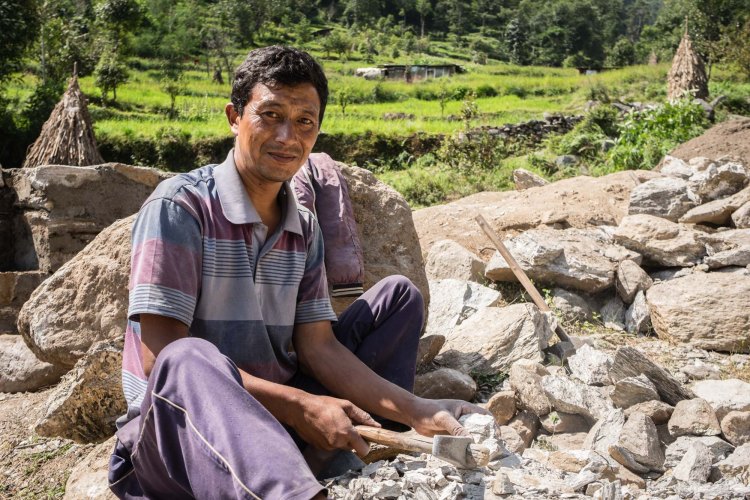


 A little about Ben
 Chris is a Nottinghamshire based, award winning, photographer specialising in Travel and Landscape photography.


