Do you know which prime lenses you use more than any others? I do.

Things you and I already know about the Fujinon XF lens range:
1) They’re as sharply designed and as beautifully well made as the cameras they attach to.
2) They can, without exception, deliver outstanding results.
3) There’s already a superb line-up and it’s only going to get better.
But there was something that I didn’t know about my own use of XF lenses and felt that I really should; which lenses did I use for what subject and, perhaps more importantly, why. In order to find out, I decided to apply a small amount of science to this with the aid of Lightroom.
If you select Lightroom’s Library module, you can quickly see which lenses you’ve used and how many shots you’ve taken with them by selecting the Metadata option in the Library Filter bar. Once this option is selected, you can use the individual drop down menus below this bar to further refine your search. I did this and quickly discovered that I’d shot with a wide variety of XF lenses, but some definitely got more use than others. What follows here are my top five prime lens choices, in focal length order, what I use them for and why I love them. It’s worth pointing out before we get started, of course, that my suggestions may or may not be up your street. You can use the XF16mm for portraits just as much as you can use the XF90mm for landscapes, so be sure to experiment!
1) XF23mmF1.4 R
This is a firm favourite for plenty of X Series users, but based on my Lightroom-based search my primary usage seems to be in two main areas: landscapes and travel. Both of these are pretty obvious, I guess. The lens offers a modest, distortion-free wide-angle view that suits a whole range of subjects and flicking through my images it’s easy to see the appeal – the XF23mm is spectacularly sharp, right from F1.4. Delving a little deeper into the metadata, I discovered that I rarely used the lens at its minimum aperture, favouring the wide apertures more, except when I was striving for plenty of depth-of-field. I expect the new XF23mmF2 to get similar levels of usage once I get my hands on one (hint, hint…)
Find out more about the XF23mm lens here.
2) XF27mmF2.8
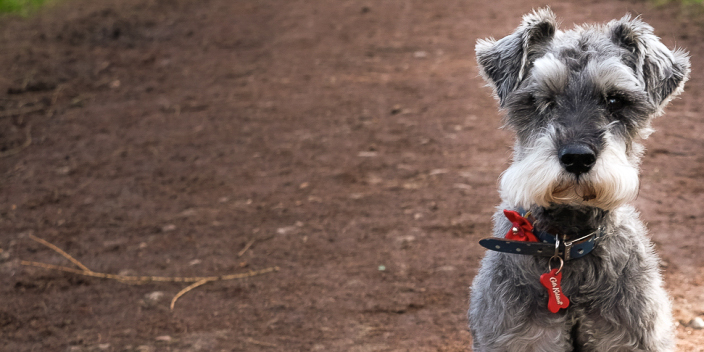
Given my regular use of the XF23mm, I was surprised to see that I also gave the XF27mm plenty of outings, too. Looking at the resulting shots, though, it was evident that I shot very different subjects with this more compact lens. It’s definitely the one I pick when I head into a city or town to shoot street images, or just want a lens that I can pop on a camera body and head out. There were an inordinate number of pictures taken with the XF27mm when I was out walking my dog (see the shot at the top of this post) and it was interesting to see that my use of the XF27mm had greatly increased when I was testing the X-Pro2. This duo make a killer combination in both portability and image quality.
Find out more about the XF27mm lens here.
3) XF56mmF1.2 R
The 35mm focal length lenses barely registered on my Lightroom search, so the next in my top five was this beauty in its non-APD form. Compared to the XF23mm and XF27mm, this is a real lump of a lens, but in a good way. It’s supremely well made and the optical quality is truly exceptional – if you’ve ever used one, you’ll know exactly what I mean. My use of it, however, was a little more surprising. Sure, there were a few portraits in the selection, but the majority of my shots were taken with the lens at its widest aperture (or thereabouts) to make the most of the tremendous bokeh effects it offers. Less than 10% of the shots were taken at an aperture of F4 or smaller.
Find out more about the XF56mm lens here.
4) XF60mmF2.4 R Macro
Another surprise, given its proximity in focal length terms to the XF56mm but, as with my 23mm/27mm lens scenario, the XF60mm gets used for a different set of images. In fact, I’ve shot a great deal with this lens, probably because it remains one of the sharpest in the XF line-up, despite being one of the first introduced with the X-Pro1 back in 2012. Weddings, portraits, still life images, close ups and product shots have all been shot with the Macro, and on a variety of X Series bodies, too. I even took some street images with it, but I guess it’s because I left the XF27mm at home that day…
Find out more about the XF60mm lens here.
5) XF90mmF2 R LM WR
A late entry into my list of top five primes largely because I’ve been shooting with it so much of late. This is an absolutely stunning lens that has a look all of its own and delivers outstanding image quality. I used it for a lot of shots in my Fun in the Sun blog from a couple of months ago and since then it has stayed pretty much permanently on a Fujifilm X-E2S body. Yes, it’s great for portraits, but I also found that I shot lots of close-ups and detail images with this lens, making the most of its fast focusing and high quality optics.
Find out more about the XF90mm lens here.
So, which one have I used the most?
This surprised me. Based on this Lightroom search, my undisputed king of prime lenses is the XF60mmF2.4 R Macro which beats the second most used lens (the XF23mmF1.4 R) by almost two to one. I’ve always loved the 60mm, but I never realised that I used it quite as much as I evidently do. It may not be the fastest focusing lens in the XF line-up, but it’s an optical gem which must be the reason why I keep on going back to it. Right, I’m off to do the same experiment for zooms…




 From the moment we exited the airport doors of Jose Marti International, taxi drivers lined the terminal swiftly coaxing the array of people to follow them to their cars. Being able to speak Spanish has proven valuable on many occasions, and helped us find a fair deal for such a late time of the night. The 30-minute drive from the airport to our apartment in the city of Vedado felt like Havana’s version of Tokyo Drift, lead by an aggressive local cab driver in his beat up old school car. Weaving through pedestrians, alleyways, and several animals we made it to our apartment in one piece. Upon arrival the driver insisted the price was higher than he had agreed upon, introducing us to our first taste of the local Cuban hustlers. After relentless persistence from the driver, we settled for a new deal and made it up to our apartment to call it a night. As I went to bed, I couldn’t wait to explore the city of old Havana, Habana Vieja, in the morning.
 Before I visit a new destination, I always do my research to ensure that I’m well prepared, know what to expect, and plan out locations to shoot. After taking our first cab ride in an old school car, or coche viejo, to Habana Vieja, I quickly learned that Cuba is by far the most unique country I’ve ever visited. The shock factor of wandering the post-apocalyptic streets of Habana Vieja made it nearly impossible to comprehend what I was seeing. The streets were lined with colorful decaying buildings guarded by locals who spend much of their day on their front porch observing their surroundings. From stray dogs to barefoot kids running through alleyways playing soccer to the cigar-selling hustlers on every street corner, the ambiance of the city was something you have to physically experience to believe.
 The most exciting aspect of this trip was the addition of my Fujifilm X-Pro2 to my X Series arsenal. After my first day with the camera, I immediately fell in love with the system. My favorite aspect of the X-Pro2 is the aesthetic of the body. The sleek, classic design avoided the intimidation of the locals when I kindly would ask for their portrait or to enter their residence. Whether the body was accompanied by the compact FUJINON XF10-24mmF4 R OIS, XF35mmF1.4 R, or the XF55-200mmF3.5-4.8 R LM OIS, the camera always stunned the locals when they asked to see the images.
 While I did encounter a couple strict denials from potential subjects, the sketchiest moment of the trip took place when I noticed a very interesting opportunity for a photograph of a mother and her infant son. When I approached what appeared to be their home, I realized it was the gateway to an entire storage lot of bike taxis. Slowly making my way forward, I called for the attention of the mother to softly introduce myself and ask for permission to take a photo. As she shook her head no, a dog that looked like a hyena out of The Lion King on steroids emerged from the darkness and bolted towards me, snarling and foaming from the mouth. I took off, and after a few blocks I made my way back to meet with my friends, avoiding whatever plans the mutant dog had for me.
 As the day continued, we explored just about every neighborhood we hadn’t seen in the area. Thanks to my cousin’s strong sense of direction, we continuously encountered new people, hole-in-the-wall restaurants, and a wide variety of subjects throughout the day. From the reflective puddles, to the daily life of the Cubanos, to the hissing hustlers of the streets, there were endless moments to photograph. We ended the day off along the seaside Malecón street for sunset. The array of classic cars, ocean views, and fisherman lining the Malecón made it one of my favorite spots in all of Havana. I was able to document the experience in all of its glory with the help of my X-Pro2 and FUJINON XF10-24mmF4 R OIS lens. After a very eventful first day in Havana, I could not wait to experience what the city would have to offer throughout the rest of the week.


