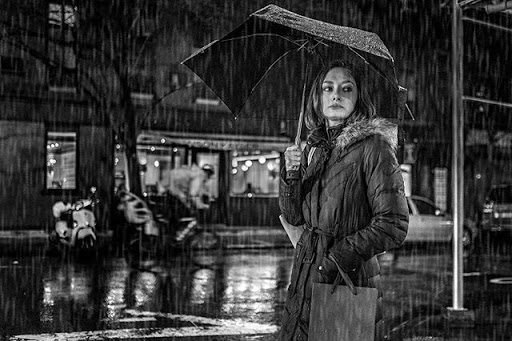
#streetphotography

Abstract Architecture Photography with the XF100-400mmF4.5-5.6 Lens

By Felix Mooneeram

I first became interested in the XF100-400mmF4.5-5.6 lens when I had an idea for a specific photo series which came to mind as I was travelling around my home city: Manchester. There’s a lot of history here but there’s also been a great deal of new architecture built in the last 10 or 15 years. For a few months, I imagined a series of images where I could get closer to the architecture that was catching my eye everyday around the city. I wanted to explore the relationships between the old and the new, whilst examining the styles and materials of the recent developments more closely and the XF100-400mm was the definitely the lens to do this. Not only was I interested to see how a lens typically used for sports and wildlife photography could work in a city; but I was excited about the new perspective it could gave me on buildings that I pass on a daily basis. Read More

X-Thusiast Featured Photographer – Alessia Francischiello

This month’s featured photographer is Italian-born Alessia Francischiello, a freelance photographer with lots of wisdom to share about getting the right shot and finding the best photos even in the most unlikely places.


Can you tell us a bit about yourself and where you are from?


Hi to all Fujifilm lovers. I am Alessia Francischiello and come from Italy. I’ve been living in Australia for the last four years and it’s been full of opportunities in the photography field, especially thanks to Fujifilm, which I have been using for the last three years. I am, in fact, honoured to be featured by Fujifilm Australia, which is the greatest company I ever dealt with. I work in a camera store in Sydney and am a freelance photographer. My passion for photography started about seven years ago while living in Rome, mostly interested in street and architectural style. Studying photography for several years in Italy and Australia caused my interest to turn to portraiture, as I am a real people person. My photography now is mostly beauty and fashion, with a few publications done for magazines around the world, but I also enjoy landscape and street photography.


How did you develop an interest in photography using Fujifilm equipment?


I haven’t always been a Fujifilm shooter because when I started there weren’t all the amazing options we have now with this brand. Since I bought my first X-T1 my passion for photography grew more and more, thanks to the excellence of the products and the feeling of comfort using them. I felt so confident in shooting portraits thanks to the discretion of the equipment and its portability. I also enjoy the colours and the old style dials on top of the cameras which are great for people who just shoot manual like I do.

‘Black Soul’ – Fujifilm X-T2 with XF50-140mmF2.8 R LM OIS WR – F5.6 – 1/125 second – ISO 200


How would you describe your photography style and strategy?


My style is made by anything that communicates effectively and is enjoyable for the viewers. Mostly studio or outdoor fashion and beauty style.


I like to keep it natural as much as I can. I like new and original ideas. I take my time to create mood boards and work closely with makeup artists and models to make sure we always have innovative and creative content.


What inspires your photography?


People! I love being around people and making them feel comfortable (models or not), which is an easy task with Fujifilm equipment. How many of you felt like paparazzi when using a big DSLR? Well, I did! I like discretion and not being invasive showing off my equipment to everyone.

‘Simple is Perfect’ – Fujifilm X-T2 with XF56mmF1.2 R – F1.2 – 1/500 second – ISO 200


Where are your favourite places to take photos and do you prefer a certain type of light to photograph in?


Australia is full of places to take stunning shots. I love water and beaches, which are not hard to find here. I love natural light because you have to deal with it and it pushes you to think about it. I am also fascinated by studio lighting because it is editable and you can learn how to control it to make your own ideas come true.


What is your favourite memory from a photography session?


I have many memories and positive experiences. But I can say the best moment I remember is during my last beauty session, shot with studio lights indoor, where this model was so into the role of punk diva that we laughed genuinely for half an hour.


Can you tell us which is your favourite Fujifilm camera to use and why?


I currently use X-T2 and a bunch of XF lenses that all work smooth on it. Its fast performance allows me to shoot in any situation and any weather, because it’s weather-sealed, and I feel comfortable not worrying about it. I shoot in windy and sandy situations, rainy, low light and it never lets me down. The low light capability in this new version is astonishing and I wouldn’t change it. I love its ergonomic grip which makes it easy to balance with any kind of lens, like for example the XF50-140mmF2.8.


Which Fujinon lens or lenses do you prefer to use with your Fujifilm camera and why?


I love my XF56mm1.2 R! The best lens I have ever used and the speed and sharpness allows me to use it in studio or outdoor without limits. Even at F1.2 the sharpness doesn’t look compromised and this is one of the most important characteristics I like about it.


My second favourite lens is the XF18mmF2. It’s affordable, small and fast. It’s my first choice when I am on holiday, hiking or with friends in day or nighttime, because it’s discrete and the sharpness is high standard for the price you pay.


I have to say, Fujifilm is the only brand with such great quality lenses in any price range, and for any kind of shooters.

‘Natural Beauty’ – Fujifilm X-T2 with XF56mmF1.2 – F2.2 – 1/125 second – ISO 200


What sort of workflow do you use in your photography? Do you shoot in RAW or JPEG?


I am not a big fan of post-processing but when you work with models and fashion products you don’t have much choice. I always try to keep my work as real as possible and help the viewer to recognise the real beauty. I use mostly Lightroom for quick editing and Photoshop for deeper improvements. Both perfectly compatible with Fujifilm files.


I always shoot Raw+JPEG. Raw is necessary for me, especially for work, because I want to have the best file I can to work on after. I am fascinated by the quality of JPEGs in this camera: Colours are shiny and real, quality is amazing despite the compression and having the WiFi option, I love to share the JPEGs straight out of the camera, especially when on holiday and have no time to do post-processing.


As you can see, these products can be used for really any kind of photography.

‘Innocence’ – Fujifilm X-T2 with XF56mmF1.2 – F2 – 1/5000 second – ISO 200


Do you have any technical tips you’d like to share? Perhaps suggestions on the best lighting, shutter speed, white balance, aperture, ISO, etc.? Other preferences?


Have fun and enjoy your moments with the camera! I never had more fun shooting in my life than now that I am using these products. I feel I can do anything I want with it in my hands. Some people told me this is not the best brand if I wanted to do studio photography. Well, my pictures speak for me.


A tip for X-T2 shooters: Get your Power Booster Grip and use it all the time. It’s perfect to balance long telephoto lenses or to get better performance from your camera anywhere, anytime. I always have it with me and it makes the difference.


Do you have advice for new photographers or the next potential X-Thusiast?


Don’t think a portrait is good just when the background is blurred or a landscape is stunning only when it’s all sharp. Be creative, help innovate the way people look at images. Create a story, not only a picture. What remains of them nowadays is just a big file on your computer unless you’re able to push yourself to the limits and try something different. And if you own a Fujifilm camera you’ll understand how good it feels when you’re equipment thinks like you do, responds to your needs and is your loyal friend in any situation.


Don’t buy a camera because it looks professional, buy it because when you use it — it makes you feel you’re doing the right thing, learn on it and make mistakes. The best photos are the ones you weren’t meant to take.

‘Simple is Perfect 2’ – Fujifilm X-T2 with XF56mmF1.2 – F7.1 – 1/125 second – ISO 200


To see more of Alessia’s photography follow her on Instagram, Facebook or visit alessiafrancischiello.com


Interested in becoming our next featured X-Thusiast photographer? Check out our full X-Thusiast Gallery and submission details.

9 Ways to Gain Better Rainy Day Photos

That torrential downpour you see out the window some days could signal the end of your next big shoot — or it could indicate a new, albeit slushier, opportunity. Rain brings new possibilities for portrait, landscape and other genres of photos.


Take up some savvy ways to set up these rain shots so you and your subjects minimize time spent in puddles as you get the perfect pic.


Fear not — it’s just water.

If you want the best rain photography, you have to be willing to get wet. Dress for the weather, whenever possible, and embrace a bit of discomfort for the sake of perfecting your craft.

Photo by Nick Edmunson


Use microfiber cloths to keep your gear dry.

Just as you should dress for the weather, so too should your equipment. Even weather resistant gear is better off not getting drenched, and you are going to want your lens dry for most shots.


Create contrast by shooting in low light.

Raindrops are most apparent in twilight and nighttime shots, especially if the picture is eventually published in black and white. Viewers’ eyes are called to textures and patterns, like rippling puddles or splashing raindrops, with less light — and thus less colour.

Photo by Bob Cooley


Backlight your raindrops for visibility.

While low light calls attention to patterns, backlight makes subjects in its path more visible. Try shooting toward – though not directly into – a light source to see the raindrops against its luminosity. Streetlights are great for this approach.


Establish complementary light with your flash.

Yet another way to illuminate raindrops is to use your flash. It does not have to be your primary light source. Instead, it can be lowered by a few stops to supply complementary light that lets the precipitation glisten.


Research in advance for portraiture scenes.

Rain can be an interruption to portraiture sessions, but maybe your clients embrace its melancholy vibe. Survey your area for potential compositions where your subject could pose at length without getting soaked.

Photo by Jason Vinson


Place your subject beneath an awning or overhang.

Keep your subject dry for a portrait session by setting the shot beneath a covering on the street. This provides shelter, and the composition has a natural feel, seeing as people often wait out storms beneath these coverings.


Move out of the shower and behind the wheel.

Like awnings and overhangs, cars serve as adequate shelter and realistic scenes. Vehicles are good for more than composition, though. If the rain is too much for you and your equipment, and if you don’t have a sufficient umbrella, shoot from your car.


Capture the humanity in rainy day reactions.

It is difficult to be unaffected by rain. Reactions range from puddle dances to dread-faced power walks. Street photography on rainy days can highlight characteristics of joy, resilience and vulnerability in fresh ways.

Photo by Erwin T Lim


Rain does not have to be end of your shoot. It can be the beginning, so long as your eyes stay open to creative opportunities. To learn more about the cameras you could be using for your rain photography sessions, check out our eBook, Which X Series Should I Buy?


X-Thusiast Featured Photographer – Stephen Vincent-Grace

We caught up with photographer Stephen Vincent-Grace this month to learn more about how to capture the beauty of the world, and find out what inspires him to continue to pursue photography as a hobby.

Can you tell us a bit about yourself and where you are from?


My name is Stephen Vincent-Grace, although everyone knows me as SVG. I am originally from Adelaide but have lived in Italy, England and the U.S.A. and have now settled in Melbourne, where I am product manager for a creative online marketplace. Besides photography, I am a crazy soccer fan and love to travel with 37 countries ticked off my bucket list.


How did you develop an interest in photography using Fujifilm equipment?


My interest in Fujifilm developed when I was on a trip to New York a few years back. I had my DSLR gear and over a three-week period took it out twice due to the pain of carrying it around everywhere. Subsequently after that trip I didn’t take a photo for over a year. I knew then it was time to sell the DSLR and look for something else. The X-Pro2 had just come out and I needed a camera. I instantly fell in love with the rangefinder look and manual dials of the brand. I read reviews and I was sold on Fujifilm and have been in love with it ever since.

Fujifilm X-Pro2 with XF16mmF1.4 R WR – 1.3 seconds – F5 – ISO 200


How would you describe your photography style and strategy?


Interesting question. I would say my style is still evolving; at the moment it’s about big iconic landscapes and cityscapes with lots of colours but I am also exploring something different from this. I am working on something surrounding the ACROS film simulation with not a landscape in sight. In regards to my strategy, so far it is to research places that inspire me and then plan to see them and share my take on them.


What inspires your photography?


I get inspired by the the Fujifilm X community, from official X photographers such as Elia Locardi and Jonas Rask (who are my idols) to fellow Fujifilm X enthusiasts. I see what they can create and it inspires me to know that we are all using the same tools and that I can hopefully create beautiful photos like everyone else. It’s nice to know there is a community out there that is passionate and positive.

Fujifilm X-Pro2 with XF10-24mmF4 R OIS – 20 seconds – F10 – ISO 100


Where are your favourite places to take photos and do you prefer a certain type of light for photography?


I just love diverse and beautiful landscapes, so it has to be Iceland and New Zealand. They are a photographer’s paradise and they are small enough you can see so many different sites in a short period of time. If I am not wanting a landscape, then for the amazing skyline or cool street photos, it has to be New York City. For me, when it comes to light, it’s the tried-and-tested formula of sunrise and sunset. Sunrise is amazing as it’s hard to do, as you have to get up so early but that is why it is so rewarding because you get lovely, soft light and there are usually not many people around. I think the blue hour is magical too, especially at sunset.

Fujifilm X-Pro2 with XF10-24mmF4 R OIS – 1 second – F11 – ISO 100


What is your favourite memory from a photography session?


My favourite memory is going to Aldeyjarfoss, Iceland. I went to Iceland for five days and hired a tiny campervan and tried to get a few shots in a small amount of time. The magic of Aldeyjarfoss was that I had to drive to a spot in the middle of nowhere, sleep the night at the bottom of a path that could only be accessed via four-wheel drive or on foot. The next morning I got up at 4am, walked 45 minutes with no maps, hoping I was going the right way. When I got there, it was so magical that I got emotional because of how beautiful it was and the adventure of getting there.


Can you tell us what’s your favourite Fujifilm camera and why?


My favourite camera is the one I own, the Fujifilm X-Pro2. I just love the look and feel of the camera. It can be used as a general purpose camera for travel and landscape or it can be the iconic rangefinder street camera. I probably shouldn’t admit this but it sits on my desk at home and sometimes I just look at it and admire the aesthetic of the camera or just pick it up for no reason.


Which Fujinon lens or lenses do you prefer to use with your Fujifilm X-Pro2 and why?


My current lens lineup starts with the XF35mmF2, which I use for general walk-around, weddings for friends and family and sometimes for landscapes if my XF10-24mmF4 is too wide. The next is the XF10-24mmF4, which I purely use for landscapes and cityscapes. I absolutely love this lens, although it would be even more amazing if it had weather sealing. The last lens I own is XF56mmF1.2, which I use for portraits and weddings for friends. I intend on getting the XF55-200mm as I need a telephoto for that extra reach on some of my travel adventures. I have also just seen the newly announced XF8-16mmF2.8 WR; if it lives up to expectations and isn’t crazy big then I might have to add that, too!

Fujifilm X-Pro2 with XF10-24mmF4 R OIS – 25 seconds – F9 – ISO 100


What sort of workflow do you use in your photography? Do you shoot in RAW or JPEG?


I shoot mostly RAW, I import the photos, just copying them over to my computer then use Photo Mechanic for the cull process. I then use Adobe LR and Nik Collection and a touch of Photoshop for sharpening and corrections if needed. I have just become a Capture One Beta tester, so I want to teach myself how to use this software as I have heard it handles the X-Trans raws a lot better than Adobe. I do use JPEG when I shoot in ACROS as I have read the JPEGs are tied so closely to the processor that there is a slight difference when coming straight out of camera.

Do you have any technical tips you’d like to share? Perhaps suggestions on the best lighting, shutter speed, white balance, aperture, ISO, etc.? Other preferences?


I don’t think I have specific tips as I feel settings really depend on the lighting conditions you are in or what style of photography you are doing. However, my general tips would be first and foremost read the manual of your camera inside out. I actually bought a tip book for the Fujifilm X-Pro2, which explained in detail some of the functions that helped me get the most of my camera and understand some of the settings and how to best set them. I also follow so many blogs and photography Twitter feeds and always find something new I didn’t know. Finally, just keep practicing and use the camera as much as you can.

Fujifilm X-Pro2 with XF10-24mmF4 R OIS – 9 seconds – F10 – ISO 250


Do you have advice for new photographers or the next potential X-Thusiast?


Enjoy your Fuji camera, go out and shoot and love the photography journey you are on. It’s a journey that never has to end and can go anywhere you want to take it.


To see more of Stephen’s photography follow him on Instagram, PhotoDune or visit his website.


Are you interested in becoming our next featured X-Thusiast photographer? Check out our full X-Thusiast Gallery and submission details.


Wall Street Journal on instax boom

Wall Street Journal

Wall Street Journal has published a surprising movie on the Fujifilm instax boom.  “Fujifilm’s instax camera is back in the spotlight after nearly two decades, thanks to a growing taste for analog, especially among young buyers. Fujifilm Holdings Corp. said it expects to sell a record 5 million units of the instant-film camera in the fiscal year ending March 31, compared with 1.4 million of its digital cameras. And it sees strong growth for the instax next year.” the Wall Street Journal writes. “We aim to sell at least 6.5 million instax cameras next fiscal year,” Go Miyazaki, director in charge of Fujifilm’s photo imaging-products division, said in a recent interview.”
See the video here.