healthcare

Józef Niedbalski | Honest conversations about mental health

Some workplaces tend to celebrate the people who stay late, take on more, and never say no. We believe what takes true courage is not pushing through at all costs but asking for help when you need it. Taking breaks and saying “no” when you’ve reached your limit.

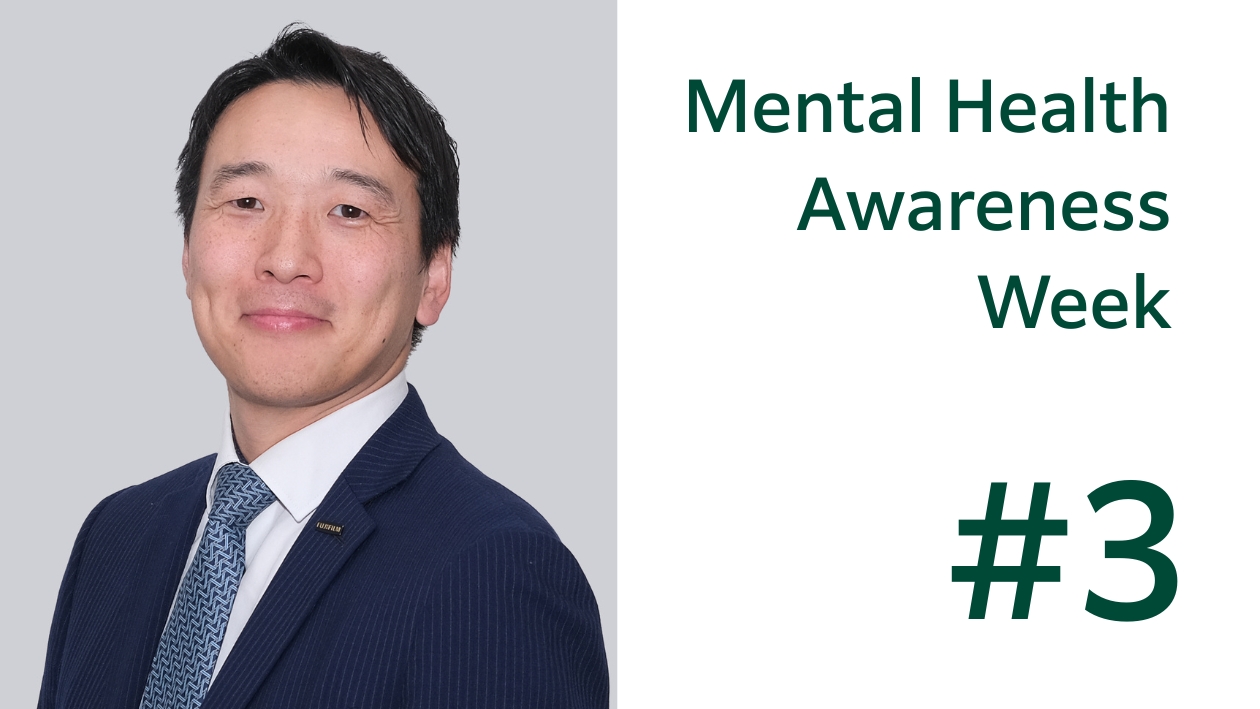
This Mental Health Awareness Week, we’re listening to our Fujifilm colleagues from around the world who shared personal stories of what helps them keep on track and take care of their mental health in the work environment. And we close the series with an honest talk to Józef Niedbalski, HR Junior Specialist at Fujifilm Europe Business Service. He’s speaking about unlearning old patterns and setting emotional boundaries for better well-being.

“Life is not about avoiding the hardships – it’s about finding purpose within them.“

– I remember a moment when I became aware of how my own anxiety had spilled over and made others feel the same. During a hike, my partner suffered a minor injury, which understandably dulled her enjoyment of the journey. Yet, caught up in my own perspective, I mistook her quietness and lack of enthusiasm as indifference toward my efforts to connect with her. In hindsight, this assumption was utterly misguided. But at that moment, driven by defensiveness and panic, I convinced myself – irrationally and without evidence – that she had somehow lost interest in me. That distorted, anxious thinking led me to act out in ways that only added to both of our discomfort. Not only did I burden myself with unwarranted guilt, but I also drew her into a cloud of unnecessary tension. It wasn’t until I allowed myself to step back, reflect, and step out of my fear-driven frame of mind that I could finally see the situation clearly. The truth was never what I had thought it to be, and in my rush to react, I let anxiety take the wheel. What this experience taught me is that my emotions are my responsibility and mine alone. Learning to manage that responsibility is essential – not only for my own peace of mind but also for preserving the relationships I hold dear.

How do you know when you need to step back and recharge?

– When I find myself struggling to breathe, overwhelmed by a longing to escape, I know it’s time to step back and regroup. The feeling that something is wrong doesn’t come from nowhere, it sits in the gut. Unlike the reasoning mind, the gut doesn’t lie. It gives us the unfiltered truth, even when that truth feels too heavy to face. In those moments, I know I need to pause. I need to take a deep breath, let my body find stillness, and reconnect with a part of me that helps make sense of the chaos. Then I can find the strength to move forward.

How do you think, are open conversations about mental health important in the workplace?

– At our core, people are wired to seek connection and intimacy. To deny oneself the chance to share feels like an act of cruelty. Work is more than just tasks and deadlines. It’s a place where people exist as whole beings, not just roles. There must be room for shared understanding.

If you could share one key takeaway about looking after your mind, what would it be?

– Life is not about avoiding hardships – it’s about finding purpose within them. So go with your purpose. Don’t spend your days doing things you despise. Life is far too fleeting. And while it may sound like a cliché, deep down, we all know it to be true.

Where the Stories end, the Work goes on

This conversation, like the ones before it, is part of our broader purpose – Giving Our World More Smiles. And we aim for the real ones that come from feeling supported and valued. With our Employee Wellness Declaration, we’ve taken a public step forward in making mental well-being a shared priority.

Although Mental Health Awareness Week comes to an end, the work doesn’t. These stories stay with us, as does our commitment to create a culture of care – through our resources, policies, and people. Because when we talk about giving our world more smiles, we mean it – and we know it starts right there, with each of us.

If you’re looking for support

For hotline and lifeline options by country, check out these websites:

findahelpline.com
yourlifecounts.org
https://unisafe-gbv.eu/national-support-resources-counselling-and-helplines/

Find out more about mental health and devoted initiatives here:

https://www.mentalhealtheurope.org/
https://www.who.int/teams/mental-health-and-substance-use

Rania Badawy | Honest conversations about mental health

We don’t always need big moments to take mental health seriously. Often, it’s the small ones – the choices we make daily to protect our peace of mind, energy, and clarity.

This is the fourth story of our Mental Health Awareness Week series. These conversations are just one part of raising awareness about mental health and creating a culture where people and their well-being truly matter. Through this series and our broader initiatives, we’re working to make our workplace more open, more compassionate, and more prepared to support people’s mental well-being.

Here, we talk to Rania Badawy, Marketing Specialist at Fujifilm Healthcare Middle East, who shares her small habits that help her stay grounded. She’s learned through experience that mental well-being doesn’t come from pushing through all the time but from finding a moment to pause and set your boundaries.

“We need to treat our mental well-being as non-negotiable. Just like physical health, it needs daily care.”

– There was a time when I was juggling too much without asking for help. Eventually, I took a step back, spoke openly with my team, and created better boundaries. That shift had a lasting impact on both my mental health and performance. Now, when I notice I’m feeling less focused, or a task takes more than usual, it’s a signal for me to slow down. I’ve learned to listen to those cues and prioritize rest or mental space, even if just for some minutes. We need to treat our mental well-being as non-negotiable. Just like physical health, it needs daily care – and a little goes a long way.

During busy or challenging times, what’s your go-to strategy for managing stress?

– I break down tasks into smaller, manageable steps and give myself permission to pause. A quick reset – like stepping outside for fresh air or a quick chat with my colleague – makes a huge difference.

What’s one small, regular habit that makes a positive difference to your mental well-being?

– Taking 10 minutes each morning to disconnect from devices and simply breathe. It can be a short walk, or a coffee with the team. This helps me start the day grounded and with intention.

Who or what aspects of your work environment contribute most to your mental well-being?

– Having a supportive team and a great leader who encourages openness without judgment. It makes a big difference. Because silence often leads to misunderstanding. When we normalize these conversations, we create safer, more connected environments where people feel seen. I also believe that work-life balance and access to healthcare are fundamental in sustaining mental health long-term.

If you’re looking for support

We believe our responsibility goes beyond that, that’s why we have also introduced our Employee Wellness Declaration – a commitment to supporting mental health through action, dialogue, and care.

Mental health doesn’t always wait for a quiet moment to remind of itself. And knowing where to turn can make all the difference. We’ve collected some resources with mental health hotlines that may be of use:

For hotline and lifeline options by country, check out these websites:

findahelpline.com
yourlifecounts.org
https://unisafe-gbv.eu/national-support-resources-counselling-and-helplines/

Find out more about mental health and devoted initiatives here:

https://www.mentalhealtheurope.org/
https://www.who.int/teams/mental-health-and-substance-use

Tatsuya Kobayashi | Honest conversations about mental health

There are words we say at work all the time. “I’m fine”, “All good”, “No worries”. But behind those lines, there’s often more. At Fujifilm, we want to make space for that “more” – the emotions, challenges, and small wins that shape our days but rarely make it into emails, work meetings, or performance reviews.

At Fujifilm, our mission is simple but powerful – Giving Our World More Smiles. And these smiles start with people who feel safe, valued, and supported. This Mental Health Awareness Week, we continue our series of personal stories from our colleagues. Each one is different and honest. And all part of a broader purpose – to create a healthier, supportive, and more human workplace where people feel seen.

In this interview, we hear from a colleague who is often described as one of the best smiles in the European HQ. In this interview, Tatsuya Kobayashi, Service Manager in MS/RDI Division at Fujifilm Healthcare Europe, shares what makes positive difference to his mental well-being and how he manages to keep giving our world more smiles in a fast-paced work environment.

“I try to smile in the office as much as possible, so that I can give a positive vibe to the people around me.”

– Thankfully, I have never had a situation where I had to prioritize my mental well-being. But I think this has to do with the fact that I have an environment where I can openly discuss things and don’t have to bottle up all alone. My team members also can speak to me freely and say what they feel. I try to ask for their opinions or ask questions to understand the situation better before I give my opinion. We work as a team, and everyone is valuable and essential to what we do. Therefore conversation is the key to our success. I think that everyone has experienced tough times and it is important to have someone you can rely on – this is the key to overcoming the issue as a team.

Work-life balance is also the key to me. Work is important but personal life is important as well. You should not take the negative vibe from work to home as no one will benefit from this. And then, if you can refresh at home, you are able to challenge again.

What’s one small, regular habit that makes a positive difference to your mental well-being?

– Taking pride in the work I do. I think if you believe in what you do, you will not have any regrets. Also, you can take responsibility for your choices and fix it if there are obstacles. What else?.. I try to smile in the office as much as possible, so that I can give a positive vibe to the people around me!

During busy or challenging times, what’s your go-to strategy for managing stress and maintaining your mental balance?

– Sleep. I think this is essential to maintain your mental balance. As the saying goes, “let me sleep on it”. I think the mind is fresher after sleeping, and you are more calm and able to see a better solution.

What are some early signs that tell you it’s time to take a break and recharge?

– I tend to get annoyed with small things. I get more emotional about things that are usually fine. That’s when I tell myself to call it a day.

Do you think equality and social support at work play their role in maintaining good mental health of employees?

– I think equality and social support are key factors for good mental health, as we need to be treated fairly. Small things someone feels from unfairness can bother them and pile up to become something that they may feel offensive.

If you could share one key takeaway about looking after your mind, what would it be?

– I have a motto which is “Always look on the bright side of life”. I try to take more positive from work, like a “thank you” from a colleague, and build on that, and think how I can do better tomorrow.

If you’re looking for support

This series is part of a broader commitment we’ve made through Fujifilm’s Group Employee Wellness Declaration and the Sustainable Value Plan 2030, aiming to create a workplace culture where talking about mental health is normalised and nobody feels like they have to leave their personal struggles at the door. We want to ensure that no one has to hide the weight of the challenges they face. If you know someone struggling, forward this. If you’re struggling yourself, save this. There is no right way to ask for help – only your way and the time that feels right.

For hotline and lifeline options by country, check out these websites:

findahelpline.com
yourlifecounts.org
https://unisafe-gbv.eu/national-support-resources-counselling-and-helplines/

Find out more about mental health and devoted initiatives here:

https://www.mentalhealtheurope.org/
https://www.who.int/teams/mental-health-and-substance-use

Juliana Machado | Honest conversations about mental health

Some days are smooth, some are difficult. Mental well-being doesn’t follow a template – it shifts with life, with pressure, with change. The tools we rely on can be personal and sometimes unexpected: a call to a friend, a daily walk, a no-screen break, or, maybe, something bigger. But what is clear, something powerful happens when people open up and share the burden.

Following the ongoing commitment to building a long-term framework to promote a safe, open, and supportive work environment, which is declared in the Employee Wellness Declaration and is part of our Sustainable Value Plan 2030, we want to make mental health part of the everyday conversation. To mark Mental Health Awareness Week, we’ve launched a 5-part blog series, inviting colleagues from across EMEA to share what it really takes sometimes to get through the day and what tips or routines help them to keep on track mentally. In a series of blog posts,

In part two of our series, we speak to Juliana Machado, Medical Systems Clinical Application Specialist at Fujifilm Portugal.

I thought it was just a “lack of organisation.” Until my body forced me to stop.”

– There was a period when I tried to keep up with everything and everyone – work, home, side projects – and for weeks, I ignored the signs of burnout. I thought it was just a “lack of organisation.” Until my body forced me to stop: I wasn’t sleeping, I felt constantly anxious, and even simple tasks felt overwhelming. That’s when I realised that mental health isn’t optional. Since then, I’ve learned to respect my limits, say “no” when needed, and place my well-being at the top of my list.

But the most important lesson I’ve learned is that the mind also needs rest, nourishment, and care, just like the body. It’s not enough to just “power through” or ignore how we feel. We need to listen, reflect, and act with kindness toward ourselves. Caring for mental health is an ongoing process, not something you fix once and forget. It requires self-awareness, asking for help when needed, and accepting that some days are better than others. And that’s okay, the key is not to give up on ourselves.

How do you listen to your body and mind to know when you need to step back and recharge? 

– The signs are subtle at first, but once I learned to recognise them, everything got easier. I get more irritable, less patient with others and with myself. I lose focus easily, start many tasks, and finish none. Creativity disappears, and I feel a kind of mental fog. There are also physical signs: neck tension, poor sleep, or fatigue without explanation. When that happens, I know I need to stop, even for a day. Turning off screens, being with loved ones, sleeping better, or taking a short trip to the countryside all help me recharge.

When everything seems to happen at once (tight deadlines, difficult decisions, multiple responsibilities), my strategy is to stop and breathe. I take conscious breaks, even if brief, to organise my thoughts. I usually write everything down and break it into smaller tasks. Tackling one thing at a time gives me a sense of progress. And moving my body helps: a 20-minute walk, phone-free, just listening to the sounds around me, is often enough to reset and gain perspective.

What’s one small, regular habit that makes a positive difference to your mental well-being?

– One of the simplest but most transformative habits I’ve adopted is starting my day with a moment just for myself. As soon as I wake up, before picking up my phone or thinking about tasks, I pause intentionally: I sit down with a hot cup of coffee and look out the window. I don’t plan, I don’t think about anything specific, I just observe. This daily ritual helps me feel grounded and begin the day with calm and clarity, instead of rushing headfirst into stress.

Who or what aspects of your work environment contribute most to your mental well-being?

– What I value most in my work environment is empathy between colleagues. Knowing that I can be myself, that I don’t have to pretend I’m always fine, and that there is openness to talk about difficulties makes a huge difference. Mutual support, informal conversations, and even shared laughter are important. We are not machines and only with this balance can we feel good and be productive.

Silence often weighs more than the issue itself. Talking openly about mental health helps to demystify it, to humanise it, and to build a culture of care. When someone shares that they went through a hard time and were supported, it encourages others. It shows they’re not alone and that asking for help isn’t a sign of weakness. Even small stories, like a tip for managing anxiety or a kind gesture, have an impact. They make the workplace more supportive, more real, and healthier for everyone.

Do you think equality and social support at work play their role in maintaining good mental health of employees?

– Definitely. A workplace where everyone feels heard, respected, and included is a powerful protector of mental health. Inequality creates insecurity, fear, and silence. On the other hand, social support builds trust, strengthens teams, and ensures everyone feels valued, not just for what they do, but for who they are. When there’s fairness and support, people feel more motivated, more creative, and more willing to contribute in a positive way.

If you’re looking for support

Mental health support can take many forms. For some, it’s a trusted therapist, for others, it’s a line manager who gets it, or a colleague who says, “me too”. Whatever shape it takes, support matters – and it should never be out of reach. If you’re looking for someone to talk to, or just to understand your options, here are helplines and resources that offer help, in confidence and without judging:

For hotline and lifeline options by country, check out these websites:

findahelpline.com
yourlifecounts.org
https://unisafe-gbv.eu/national-support-resources-counselling-and-helplines/

Find out more about mental health and devoted initiatives here:

https://www.mentalhealtheurope.org/
https://www.who.int/teams/mental-health-and-substance-use
Andy Ross | Honest conversations about mental health

What do we come to work with? Skills, titles, responsibilities. What else? The weight of the morning, the rush to get out the door, the things we didn’t sleep over, the text we forgot to reply to. And beyond all that, we carry stories. Some visible, some hidden. Stories, shaped by what we’ve been through and who we’re trying to become. They live behind the brightest smiles and the busiest calendars – as well as in moments of stress, quiet victories, or the hard work of showing up when it’s tough.

Driven by our Purpose of Giving Our World More Smiles, we believe that it starts with taking care of the people who actually create them. And probably, sometimes, the most powerful thing we can offer one another is the space to speak openly and the time to listen. For this Mental Health Awareness Week, we asked our colleagues from different countries to share their lived experiences of managing their mental health at the workplace – what helps, what hurts, and what heals.

Five voices, five real stories.

We begin the series with Andy Ross, Deputy Head of Corporate Communications at Fujifilm Europe. In a team, he’s known for his sharp mind, easy-going vibe, and the ability to turn a tangled conversation into something suddenly clear. He’s quick to spot the irony in a situation and is rarely seen without a smile. In this interview, he opens up to show what’s behind that image. And well, maybe, leadership also means going first – saying the quiet part out loud, so that others feel safe to follow.

“There is nothing lost in being honest – not just with others, but with yourself.”


– There’s no one way that mental health struggles manifest in life – they’re deeply personal and unique to each individual. For me, it began with a life event: almost 20 years ago, my Dad experienced what he described as “an uncomfortable twinge” – a mild heart attack. While it didn’t leave him with lasting harm, it ignited a fear in me that spiraled into anxiety, panic, and eventually depression. As a 19-year-old at University, thoughts of death became all-consuming. Anxiety took over, leaving me hyper-conscious of my heartbeat, terrified of being too far from hospitals, and even unable to enjoy something as light-hearted as watching Scrubs with my housemates. Looking back, I can see how my low self-esteem and poor physical health at the time made me more vulnerable – but the truth is, struggles like these can happen to anyone, regardless of their circumstances.

Managing your mental health isn’t a straight road. The turning point was opening up – first to friends, then to my parents, who encouraged me to seek help. Over the years, I learned to manage my mental health through talking therapies and prescription medication – then after that, being mature enough to have the willingness to confront the ups and downs head-on. Even now, as a 38-year-old parent, frequent traveler (despite my fear of flying), and someone working in a high-demand, always-on job, both rational and irrational anxiety or panic occasionally resurfaces. It’s something you never lose. But I’ve learned that proactively managing my mental well-being starts with being honest – both with others and with myself. Sharing your struggles can feel like the hardest step, but it’s also one of the most important. Whether it’s the beginning of your journey or part of a lifelong process, talking to someone can make all the difference.

During busy or challenging times, what’s your go-to strategy for managing stress and maintaining your mental balance?

– Talking. A very British saying is, “a problem shared is a problem halved.” Saying things out loud helps me make sense of them and feel less alone – and there are some go-to people at work, or former colleagues, who I know I can rely on. Also, in a busy working life, I always spend a few quiet moments each morning and at the end of every day to write down my thoughts, to-do’s, and actions – to declutter my mind. It can help break challenges into smaller, manageable steps and focus on what’s actually in my control. It’s simple but helps me feel grounded before the chaos starts – and after it ends. Other than that, making the most of time with family particularly holidays is massive for maintaining mental balance. Making the most of your own time is valuable, spending quality time away from work and on the things that truly matter in life.

What are some early signs that tell you it’s time to take a break?

– I’m not great at this – but anyone who has suffered from anxiety or panic attacks knows their own signs. For me, constant aches, pains, and tension are a big clue – feeling the stress in my body. Nowadays, when I notice these signs, I find an avenue to call out my anxiety or stress – or even ask for help. That’s my starting point to reset and recharge.

Who or what aspects of your work environment or team contribute most to your mental well-being?

– Establishing a support network – and having no qualms about a culture of openness around your own mental health make the biggest difference, at least to me. On a practical level, all of our healthcare systems from the UK to Germany still require much improvement in dealing with mental health – we’re still in the dark ages!

Why do you believe open conversations about mental health are important in the workplace?

– Talking about mental health normalises it – sharing your story personalises it, and reminds us we are all individuals with our own stories and backgrounds. From dedicated Awareness Weeks like this, to small conversations by the coffee machine, it’s valuable to create a culture of kindness and empathy at work – which ultimately benefits us all, and the business.

If you could share one key takeaway about looking after your mind, what would it be?

– There is nothing lost in being honest – not just with others, but with yourself. Whether it’s a small step like talking to someone or taking time to reset, looking after your mind is an ongoing process, and that’s perfectly okay.

When care becomes culture

We believe that the health of any team depends on how well we care for the people behind it. That’s why stories, like these, matter. Through these real voices, we aim to help normalise the conversation around mental health and, as it is outlined in Fujifilm’s Sustainable Value Plan 2030, we are committed to creating a supportive and positive working environment where people can thrive.

In September 2019, we’ve adopted the Fujifilm Group Employee Wellness Declaration – a commitment to building a culture where support is visible and well-being is treated as a shared responsibility. Our top priority is supporting employee wellness initiatives to inspire our colleagues to improve their physical and mental well-being so they can be energetic and have a zest for life.

While the declaration outlines the intent, it’s our people who bring it to life in conversations and everyday choices we make as colleagues, teammates, and leaders. And this is how care becomes culture.

If you’re looking for support

Mental health is deeply personal but that doesn’t mean you have to face challenges alone. You matter. And getting help is a strength. If you are struggling with stress, anxiety, burnout, or just feel like something’s off, there are many helplines with people ready to listen and help you make sense of what you are feeling.

For hotline and lifeline options by country, check out these websites:

findahelpline.com
yourlifecounts.org
https://unisafe-gbv.eu/national-support-resources-counselling-and-helplines/

Find out more about mental health and devoted initiatives here:

https://www.mentalhealtheurope.org/
https://www.who.int/teams/mental-health-and-substance-use

From Banepa to Willich: a quiet exchange with lasting impact

The journey from Nepal to Germany is not a common one. It’s also not the kind of trip that makes headlines. No delegation, no ribbon-cutting, no press-conference. Just a nurse stepping off a long flight, carrying with her years of hands-on experience, a notebook filled with questions, and determination to bring change to her patients at home.

Sister Gayatri works at Scheer memorial Adventist Hospital in Banepa, Nepal – a modest institution with limited resources but an outsized mission: to raise the standard of care in a region where too many people still go without. This May, she arrived in Willich, Germany not as a visitor but as a collaborator. An experienced endoscopy nurse, she is taking part in a work-shadowing program, with a focus on knowledge transfer and training in endoscope reprocessing, damage prevention, and product use. Sister Gayatri is receiving a detailed introduction to our ELUXEO series, but just as importantly, she’s experiencing how teams work together, how systems are built, and how small improvements can lead to long-term impact.

She is here to observe. To learn. To ask why certain protocols exist, and how others could be adapted. In a workshop that repairs and reprocesses some of the most advanced endoscopic tools, she listens closely, takes notes, and asks questions that cut to the heart of daily practice. And the value of this exchange is mutual. Her perspective – shaped by years of practical improvisation in a resource-limited setting – brings invaluable insight to our processes.

In the language of healthcare, this kind of exchange is called ‘capacity building’. Alongside transferring technology or introducing new tools, this collaboration focuses on practical knowledge that helps hospitals build systems they can maintain and adapt to their realities. The most valuable lessons here are often the simplest: how to organize a workflow, or how to prevent damage to delicate instruments – the kind of experience-based learning that lays the groundwork for long-term progress.

‘It was a great experience to see the wide range of products Fujifilm has to offer. Endoscope reprocessing is a very important issue for us and has high priority. In Nepal, we are not yet able to meet the requirements as they currently exist in Germany, but we hope that other companies will eventually provide support in this area in the future to raise standards in our country,’ – Sister Gayatri.

Her visit is part of a broader collaboration focused on a simple but powerful mission: to share expertise to further improve the quality of medical care in places where resources are limited. As a total healthcare company, we are committed to address critical gaps in access to medical care for people across the globe, helping ensure that every patient, no matter where they are in the world, can be treated with the best care possible.

From small steps to major milestones

Our relationship with Scheer Memorial started quietly, in 2019, with a simple request – a replacement device. At that time, we sent it right away, also donating some devices that we knew were indispensable to provide a service to the local community.

A lot has happened since then. Thanks to Fujifilm’s support, the hospital now has two fully equipped endoscopy rooms – an extraordinary advance in a region where the population often has limited access to medical care. An impressive success is a colon cancer screening program now starting in the district of Ramechhap – one of the few in Nepal. It’s an ambitious step for a rural hospital, but also a hopeful one. This shows how technology and commitment can work together to improve the quality of life of an entire region. 

Shared values, big impact 

Our partnership with Scheer Memorial is not unique in mission, but it is personal in practice. It represents work that often happens behind the scenes, away from the spotlight: small, steady efforts that build over time.

Your support enables us to provide services in line with international standards and brings us closer to our goal of becoming a leading healthcare facility,’ – Scheer Memorial Adventist Hospital.

There is still a long way to go. But with visits like Sister Gayatri’s, and ongoing collaboration between our teams, we’re reminded that global health progress doesn’t always come in breakthroughs. Sometimes, it arrives in a suitcase. In a quiet question. And in a firm belief that the best change maker is knowledge – passed from one hand to another.

We look forward to further strengthening this partnership, making a long-term difference, and putting more smiles on faces around the world!