Discover the world of photography and creativity with Fujifilm’s range of consumer products, including digital cameras, Instax instant cameras, and photo printing solutions.
Machine vision lenses have become an essential component in various industries, from manufacturing to quality control. These lenses allow machines to ‘see’ and capture images with high accuracy and precision. Among the many lens manufacturers in the market, why do people choose FUJINON lenses?
One reason is the wide range of product categories that Fujifilm offers. They are the only comprehensive lens manufacturer handling lenses in a wide range of sizes, materials, and shapes. Their lenses range from large to tiny aperture lenses, lenses for 8K and 4K high-definition TV broadcasting, interchangeable lenses, and cinema lenses for digital cameras. Professionals in the broadcasting industry worldwide recognize the high performance and quality of FUJINON lenses, as evidenced by their several Engineering Emmy Awards.
Another reason is the advanced technologies that Fujifilm has accumulated over its more than 80 years in the business. The company has been manufacturing high-precision lenses since 1940 and has since developed numerous products that lead the world. Fujifilm’s expertise in manufacturing, processing, assembly, and other technologies allows them to deliver consistent high resolution performance in a wide range of installation environments.
Fujifilm’s global network is also a notable advantage. With sales and production bases in more than 30 countries worldwide, the company develops its logistic marketing from a global perspective and provides quick and tailored local services at each base. This ensures that customers receive the best possible service, regardless of their location.
The total number of FUJINON Machine Vision Lenses produced is a testament to the brand’s quality and reliability. With more than 1.1 million lenses produced, the company continues to evolve technologically and address customer needs with a variety of products. Fujifilm lenses manufactured by bringing together the company’s state-of-the-art technologies are used at production and quality inspection sites all around the world.
In today’s fast-moving world, businesses need the best tools to meet their constantly growing demands. This is especially true in the field of imaging and photography, where quality is paramount. With the GFX system camera and its accessories, Fujifilm Digital Imaging Solutions offers a versatile and unparalleled imaging solution that meets the diverse needs of commercial imaging applications.
At the heart of each GFX system camera is a 43.8mm x 32.9mm CMOS image sensor that delivers incredible image quality. This makes the camera ideal for a wide range of commercial imaging applications that require flexibility and versatility. From product photography to architectural photography and everything in between, the GFX system camera is designed to meet the needs of the most demanding professionals.
At moments when absolute color accuracy and pixel information are critical, Fujifilm’s latest Pixel Shift technology, available on the GFX100, GFX100 IR or GFX100S cameras, produces incredibly detailed images with a maximum resolution of 400MP. This is of immediate benefit to institutions or organizations conducting historical research, archival projects or scientific studies where accuracy and precision are paramount.
When absolute flexibility from production to output is required, the GFX system camera offers the perfect balance between performance and image resolution. Thanks to the camera’s autofocus capabilities and the ever-expanding selection of FUJINON G-mount lenses, image creators have complete control over their images from start to finish. In-camera images can be saved as JPEGs, 16-bit RAW files, or a combination of both. 8-bit or 16-bit TIFF files can also be created through in-camera processing. On a computer, a single high-resolution image can be cropped multiple times to create different versions for different needs. Regardless of workflow, the GFX system cameras offer all the options you need.
Fujifilm Digital Imaging Solutions’ unparalleled image quality is the result of using a large 43.8x32.9mm CMOS sensor and imaging technology that has grown over 85 years of designing and manufacturing the highest quality photographic and film equipment. This know-how and heritage, combined with the latest digital imaging technologies, enables professionals to achieve the best possible quality for their needs.
The GFX system camera is complemented by Fujinon lenses designed and engineered to keep pace with the high-resolution image sensors found in all GFX system cameras. Every detail is perfectly resolved, and every color shift is beautifully reproduced. This ever-expanding collection of lenses for GFX system cameras will meet the needs of various commercial imaging applications for years to come.
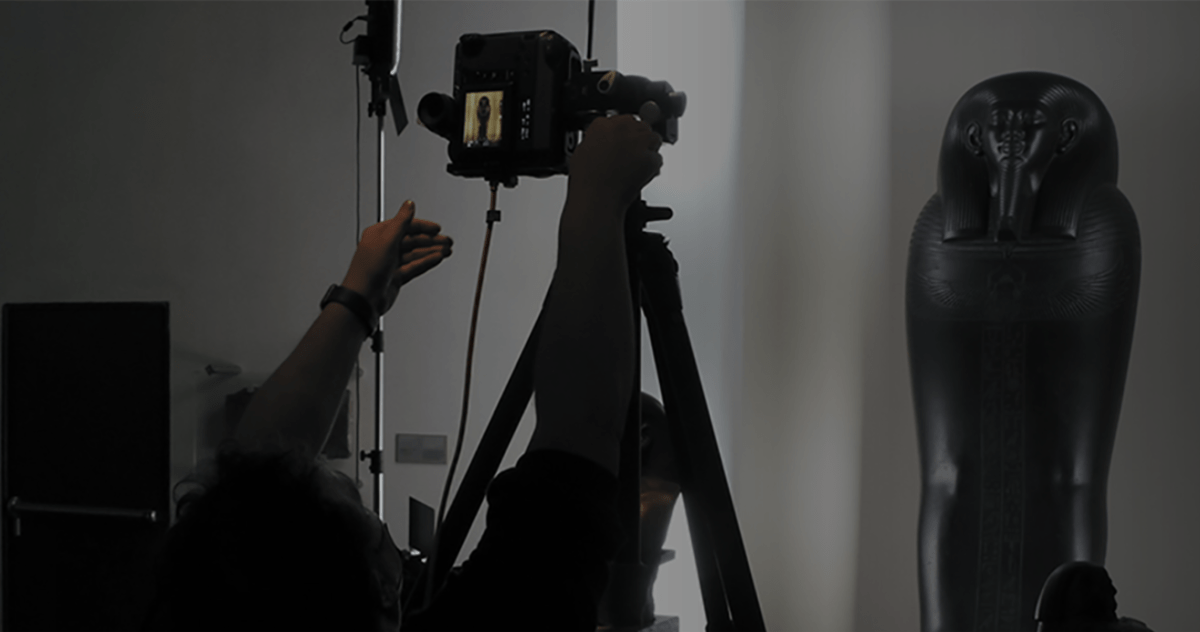
In case studies conducted by Toppan Printing Co., Ltd. and the Tokyo National Museum, the GFX system camera proved invaluable for archiving and preserving cultural assets, valuable materials, and historical artifacts. In addition, photographers have used the GFX System camera to photograph the Gemenefherbak sarcophagus in the Egyptian Museum of Turin, highlighting the camera’s capabilities in reproducing intricate details and textures of historical artifacts.
Preserving the Legacy of Katsushika Hokusai’s Artworks
Toppan Printing Co., Ltd. is a renowned organization that specializes in the digital archiving, restoration, reproduction, and exhibition of cultural assets and valuable materials. Recently, we were privileged to capture the essence of a magnificent work by Katsushika Hokusai from the collection of the Sumida Hokusai Museum. Utilizing the advanced technology of the GFX series, we were able to produce rich and detailed data that not only safeguards cultural properties but also enhances their versatility in various domains.
Preserving History with 400MP High-Resolution Images
“Robe (Kosode) with Autumn Flowers” from the Tokyo National Museum collection features intricate designs painted by artist Ogata Kōrin in the early 18th century. Kōrin, born in Kyoto, later went to Edo (present-day Tokyo), where he stayed with the Fuyuki family, wealthy lumber merchants. As a token of gratitude, he painted the designs on the wife’s kimono. Before the garment underwent conservation work to prevent further wear and tear, we were granted permission to photograph it in ultra-high resolution. Archiving valuable cultural properties is crucial for future generations, and to this end, we employed the 400MP Pixel Shift Multi-Shot for the GFX system to create an accurate archive of the garment’s condition before restoration work began.
Egyptian Museum of Turin and the Power of FUJIFILM GFX100
After testing the new features of the Studio and searching for a subject to showcase the full potential of the new Firmware, we turned to the Egyptian Museum of Turin, the oldest museum dedicated entirely to the Nilotic civilization and considered second only to the Cairo museum in terms of value and quantity of artifacts. We had the opportunity to photograph the sarcophagus of Gemenefherbak, a vizier from the XXVI dynasty (664-525 BC).
The sarcophagus’s surface is strikingly smooth and velvety, despite being made of a very hard, dark green stone called “bekhen stone” extracted from quarries in the eastern desert of Egypt. Gemenefherbak is depicted on the cover of the sarcophagus, wearing a small image of the goddess Maat, symbolizing justice. His chest is protected by a winged scarab.
After two “reproductions” of the sarcophagus were made, we used post-production to cut out the front and back of the sarcophagus and placed the images side by side on a black background. The result was a stunning visual representation of an ancient cultural artifact, capturing its intricate details and historical significance.
The GFX System camera and its accompanying accessories provide a versatile and unparalleled imaging solution for commercial image-making applications. With its unmatched image quality, pixel-shift technology, and flexible workflow options, the GFX System camera is an indispensable tool for professionals who demand the best. For more information, visit Fujifilm Digital Imaging Solutions‘ website and contact their team to learn how they can help you meet your imaging needs.
With the rise of digital photography and the decline of film photography, the art of printing photos has somewhat been lost. The process of printing and displaying your photographs has become more difficult and less accessible, with many people opting to simply store their pictures on a computer or phone. However, the “Wonder Photo Shop” powered by Fujifilm Europe has created a new era of photo printing stores, bringing back the joy of printing and displaying your photos.
One of the most unique features of the “Wonder Photo Shop” is the Fujifilm instax range. This range offers instant film cameras and printers, allowing customers to capture and print their memories in seconds. The instax range has become increasingly popular over the years and is now available in many variations and colors, including the latest instax mini Link printer, which connects to your phone via Bluetooth.
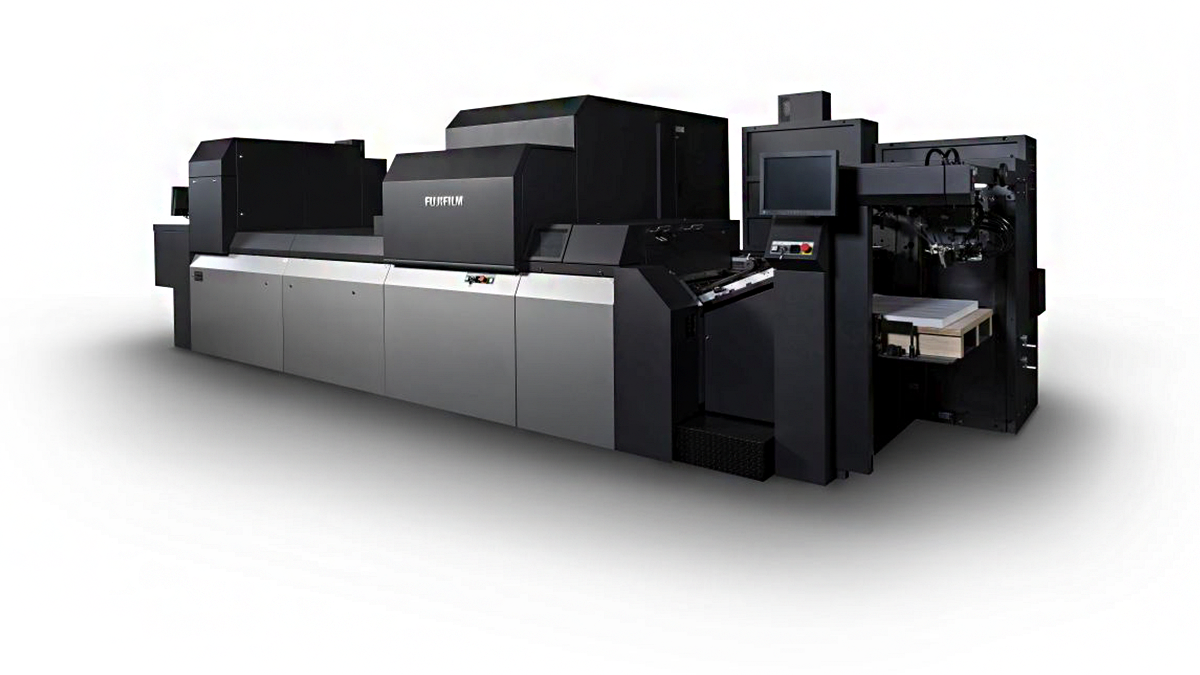
Fujifilm Graphic Communications Europe has joined forces with Kama, leading print finishing and cutting technology experts, to showcase a world-class digital print and converting production demonstration at interpack 2023. The event will take place at the Fujifilm stand (Hall 8a, Stand F65), where visitors will witness live demonstrations of the Kama ProCut 76 Foil and Fujifilm’s B2 sheet-fedJet Press 750S and Revoria Press PC1120 6-colour digital press.
Kama’s offline post-press technology is designed to seamlessly convert Fujifilm’s best-in-class digital print output into a range of high value packaging products. Packaging converters can gain a competitive edge and expand their business potential in the production of high-quality folding cartons.
The Kama ProCut 76 Foil is one of the most versatile, accurate, and efficient solutions for premium packaging production. It offers ten different post-press and enhancement functions, including cutting, creasing, perforating, embossing, braille, hot foil finishing, and holograms. Extensive testing has proven the reliability of these solutions in the production of high-quality, shorter run folding carton packaging.
“The compatibility of KAMA’s easy to use and flexible finishing technology with our high-quality digital presses gives packaging converters additional production options, which in turn will enable them to engage new customers and enter new markets.”
Manuel Schrutt, Head of Packaging at Fujifilm Graphic Communications EMEA
“Our collaboration with KAMA demonstrates how the Jet Press and Revoria are suitable for both the packaging and commercial print markets, including food packaging, thanks to our unique FS1 ink technology.”
Taro Aoki, Head of Digital Press Solutions, Fujifilm EMEA
“At interpack, we will be showing live demonstrations of the KAMA ProCut 76 Foil machine converting and embellishing print produced on the Jet Press 750S High Speed Model at a quality level that satisfies even the most demanding markets such as beauty and cosmetics.”
Bernd Sauter, Managing Director KAMA GmbH
Make sure to visit the Fujifilm stand (Hall 8a, Stand F65) at interpack 2023 to witness the live demonstrations and learn more about the collaboration between Fujifilm and Kama. Don’t miss the opportunity to gain a competitive edge in the production of high-quality folding cartons.
You have probably heard and seen it already, but just in case, our INSTAX mini 12 is finally here and will be available everywhere from 16 March! Unlimited joy and your favorite colors combined in one instant film camera. Our colleagues from instax have created such an amazing post, deep diving into the newest features of mini 12. Here are all essential facts you need to know:
Instant photos & unlimited joy
It is all about living in the moment and with the instax mini 12 it is time to capture all your delicious meals, exciting events, or whatever you want to capture and turn into an unforgettable memory.
Improved auto exposure (shoot in all lights), automatic adjustable flash and a lens with some handy features (turn once to turn it on, twice for Close-up Mode, all the way back to switch it off) make the mini 12 easy to handle for everyone.
Your favorite new color
INSTAX mini 12 comes in five cute colors – Blossom Pink, Mint Green, Clay White, Lilac Purple and Pastel Blue.
Which one is your favorite? Choose one and get started.
Selfies made simple
Where are the selfie lovers?
With the new and improved Close-up Mode and the selfie mirror on the front, you can kiss goodbye guesswork.
Let’s get digital
Along with the INSTAX mini 12 we also launched the new INSTAX UP! app, allowing you to scan and drop every print into a custom background.
It is easy to share your prints with everyone online afterward, you can also get inspo on INSTAX DIY projects and all the other features the app has to offer.
Isn’t it insane how fast 2022 went by? Only a couple of weeks left until we enter 2023. Luckily, we are already excited to welcome 2023 because something new is waiting for you… A new feature for our FUJIFILM X Series.
We are happy to announce the world’s first Native Digital Stills Camera Integration for Adobe Camera to Cloud, which is coming to FUJIFILM X-H2S Series. Now it is easier to connect, create and collaborate by simply connecting to Frame.io using X-H2S and an attached FT-XH file transmitter to send files directly from the camera to collaborators anywhere in the world.
Key features:
Send images and videos quickly and safely with global standards in Cloud Security
Automatically send JPEG, HEIF or RAW files to Frame.io directly from the camera
Deliver Apple ProRes Proxy files and get bandwidth-efficient, high-quality files into Frame.io
Make your content available to collaborators worldwide within seconds
More information will definitely follow. Stay tuned and keep your eyes open because it is planned to launch in early Spring 2023 as a special firmware update for X-H2S.