Month: January 2024

10 Minutes To Save A Life: Make Your Blood Work

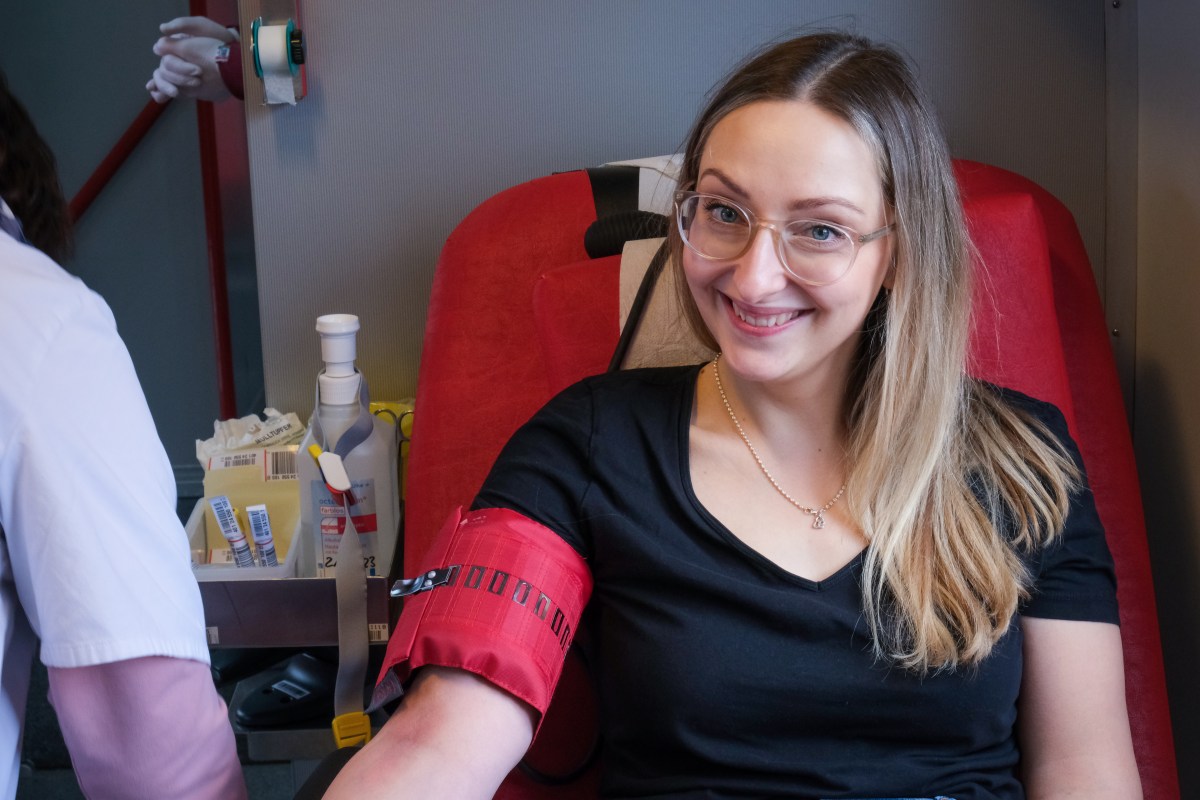
You don’t need to be a superhero to save lives. Actually, all it takes is a mere 10 minutes of your time and donate just a pint of your blood, giving someone a chance for life. On Wednesday, our team rolled up our sleeves and took part in a local blood donation initiative in Ratingen supported by DKV Mobility, Barmer, EDEKA Kels, and DRK Blood Donor Service West.

A mobile donation station was set up for the campaign in the EDEKA Kels car park. Everybody could choose a convenient time slot and donate at three blood donation stations simultaneously at 10-minute intervals. A total of 40 donors took part, and we were happy to see that some of them were encouraged to donate for the very first time.

Every Drop Counts

It is so easy to become someone’s hero. So, why not? By supporting blood donation initiatives in your city, you can give hope and strength to people facing challenging medical circumstances and fighting for life. Every person counts, and every donation matters. Just one pint of your blood can be divided into three primary components — red blood cells, plasma, and platelets — saving up to 3 lives. It’s astonishing to think that even three teaspoons may be a lifeline for a premature baby – a small act that makes a big difference.

When you give blood, you contribute to saving lives, whether in routine or emergency situations. Only in Germany, 15 000 blood donations per day are needed for operations, to treat severe illnesses, such as cancer, and to help accident victims. It enables medical professionals to perform increasingly intricate medical and surgical procedures, giving hope and healing to those in critical need. It also has a huge impact on the overall quality of life for patients facing acute and chronic conditions.

Ensuring The Safety

Keeping people receiving this blood safe is of utmost importance. Thus, every blood donation must be screened. We strive to contribute to building a healthcare landscape that values patient-centric care and the continuous pursuit of excellence. In our commitment to making a positive impact, we created the DRI-CHEM NX600 — an automated clinical chemistry analyzer designed to streamline blood testing processes, ensuring their efficiency and accuracy.

Curious to know more? Check here.

Slowing Down for Perfection: Renée Kemps & FUJINON Tilt-Shift Lenses

“Home is where your heart is”, right? Then, it has a truly captivating story to tell. With a keen eye for the spaces we inhabit and a passion for playing with light, Renée Kemps reveals these stories and makes them visible, turning everyday home details into unique communication tools. Recently equipped with her FUJINON’s GF30mmF5.6 T/S and GF110mmF5.6 T/S Macro lenses, she became an architectural storyteller, using all-new camera capabilities and benefits of the tilt-shift lens to document a sense of place.

“There’s something in a space, a property or architecture, that really only speaks to you. Focus on that individual perspective. Personally, I love intimacy in my images, but there’s also elegance and fragility,”

Renée Kemps.
Photo 2023 © Renée Kemps | FUJIFILM GFX100 II and FUJINON GF30mmF5.6 T/S
Photo 2023 © Renée Kemps | FUJIFILM GFX100 II & FUJINON GF110mmF5.6 T/S Macro, 1/100 sec, F5.6, ISO 100

For architectural photographers, maintaining straight lines is paramount. The tilt-shift functionality of these lenses proved to be invaluable, enabling Renée to correct perspectives in real time. This is particularly crucial when capturing details from a slightly downward angle, ensuring that lines remain straight without the need for post-production adjustments. It also offers a unique perspective for those who seek more complexity and variety in photo compositions.

“It’s quite unusual to have a telephoto tilt-shift lens. Often, they’re only made super wide, which limits you. I think this variety is beautiful to have, because for me and a lot of other people, it lets us apply tilt-shift benefits to so many different things. Partnered with the shorter lens, you have an incredible range. You can play around and take a whole different approach to scenes,”

Renée Kemps.

Paired with the new FUJIFILM GFX100 II body, with a remarkable 102-megapixel quality and the rapid functionality of X-Processor 5, these tilt-shift lenses have a powerful ally for image perfection. The large sensor quality provides bigger flexibility and allows for extensive cropping without compromising image quality. It is especially useful when working with challenging spaces.

“They make you slow down a little. Sometimes, you just end up running around a property photographing everything all at once, because it looks so good. With this pair, you can really say: ‘This is the corner I want to document, and I want to have it perfect.’ You live in that moment, and that’s where you can create your best work,”

Renée Kemps.

Read the full story of Renée’s experience with the GF30mmF5.6 T/S and GF110mmF5.6 T/S Macro here.

Renée Kemps

A commercial and editorial interior, architecture and lifestyle photographer and art director. Based in both London and Amsterdam, she operates on a global scale, producing remarkable work that has been featured in editions of Kinfolk, Ark Journal, Openhouse Magazine, Wallpaper, AD, Ignant, Elle Decor, Vogue, and Harpers Bazaar. Her clients include, among others: American Express, AMAN, RIMOWA, Carl Hansen & Søn, Ark Journal, Ogilvy, Kinfolk, Virgin, H&M Home, The White Company, Creative Blood Agency.

Fujifilm Manufacturing Europe: Pioneering the Future of Ion Exchange Membranes

In the dynamic world of membrane technology, Fujifilm Manufacturing Europe has been making remarkable strides that deserve a closer look. With a sharp focus on high-volume membrane supply, they are not only a manufacturer but a catalyst for transformative membrane processes. We believe in celebrating the achievements of our industry colleagues, especially when their innovations are at the forefront of shaping the future.

In this blog post, we’re excited to delve into the fascinating realm of ion exchange membranes (IEM) and how our relentless commitment to excellence is driving us further. If you’re passionate about cutting-edge membrane technology, this is a journey you won’t want to miss.

Drive for Incomparable Quality

The heart of these thin, anion and cation ion exchange membranes lies in the cutting-edge coating and polymer technology, which allows to precisely engineer the composition and structure of the membrane materials and produce membranes with exceptional functionality and durability. Years of experience in working with sensitive photo films have honed our understanding of the coating process slightest specifics. Just the same way, we’ve perfected the art of applying uniform and precise layers of active materials onto the polymer membranes, which lets us ensure consistent, exceptional quality and performance, eliminating variations that could impact product quality.

Applications Beyond Imagination

The world of electro-separation technologies is broad and diverse, with unique requirements for each application. Whether it’s fresh water production or wastewater concentration, Fujifilm Manufacturing Europe has engineered a membrane portfolio designed to cater to the specific needs of our customers. The portfolio boasts a wide spectrum of ion exchange membranes, including those with low electrical resistance, broad pH range suitability, and low water permeation capabilities.

Membrane Production

Situated on a sprawling 61-hectare site in Tilburg, Netherlands, Fujifilm Manufacturing Europe B.V. is a powerhouse of production. The diverse range of products, including photo paper, offset plates, membranes (ion exchange and gas separation), and cell culture media, underscores the magnitude of their operations. With a workforce exceeding 700 employees, this facility stands tall as one of Fujifilm’s largest production centres, serving the photographic products, membranes, and bio materials industries.

Our dedication to research and development is a cornerstone of our success. We have two cutting-edge R&D laboratories dedicated to membranes:

Advanced Research Laboratory in Kanagawa, Japan

This laboratory specializes in Synthetic Organic Chemistry, focusing on high-performance polymer technology, and Highly Functional Materials Research, dedicated to innovations in coating technology.

Tilburg Research Laboratory

Located at the production site of Fujifilm Manufacturing Europe B.V., this lab houses an exceptional analytical laboratory. It plays a pivotal role in supporting customer and application activities related to ion exchange membranes and gas separation membranes.

In the quest for perfection, the laboratory is equipped with an extensive set of validated test methods. These methods include perm selectivity, electrical resistance, ion exchange capacity, water permeation, and burst strength, ensuring the evaluation of membrane properties and performance is held to the highest standards.

Paving the Way Forward

Fujifilm Manufacturing Europe’s journey is a testament to the remarkable advancements that can be achieved when a company relentlessly pursues excellence. Our team is excited to spotlight such achievements in the industry and share them with our dedicated readers. We encourage you to explore Fujifilm Manufacturing Europe’s website to learn more about their pioneering work in ion exchange membranes. It’s a step toward not only celebrating success but also drawing inspiration from the remarkable progress made by our colleagues. We look forward to seeing how their work continues to shape the landscape of membrane technology in the years to come.

SBT Validates Our Greenhouse Gas Emission Cut Target for FY2030

A tenth of a degree may seem quite insignificant on a thermometer. When checking it out of the window, it may seem just a question of whether you should wear jeans or shorts today. However, globally, even a teeny-tiny change in average temperature can unleash a cascade of consequences, fuelling unpredictable and extreme weather events. The weather goes wild, and we’ve had a hand in it.

Back in 2015, countries worldwide united under the Paris Agreement, committing to reducing their greenhouse gas emissions to combat climate change and keep global warming below 2°C (ideally, aiming to limit it to 1.5°C). It was a global effort to tackle one of the greatest challenges of our time. And we’re eager to contribute.

The Science Based Targets (SBT) initiative has validated our greenhouse gas emission target for FY2030, confirming that it aligns with the scientifically based goal of limiting global temperature rise, as specified in the Paris Agreement. This marks a significant milestone in our sustainability efforts.

Why 1.5°C?

In 2021, the first volume of the Sixth Assessment Report of the UN Intergovernmental Panel on Climate Change (IPCC) was published and it became clear that global warming goes faster and more intense than expected. If anthropogenic greenhouse gas emissions are not cut, the rate of global warming is expected to increase as well as the intensity of critical events. If the planet warms by 1.5°C, we will experience approximately 4 extreme weather events every 10 years, at 2°C – 5 or 6 extreme events, and at 4°C we will have them every year.

Our GHG Reduction Targets

As part of our Sustainable Value Plan 2030, we’ve set ambitious GHG emission reduction targets that serve as a core pillar of our commitment to addressing climate change and contributing to a more sustainable future. We aim to reduce greenhouse gas emissions from our operations and across the entire product lifecycle by 50% compared to FY2019 levels.

Under the Green Value Climate Strategy, we aspire to minimize our environmental impact by promoting production activities with lower carbon footprints and delivering top-notch products and services with outstanding environmental performance. This strategy reflects our commitment to addressing environmental and social issues and creating long-term value for both society and the planet.

Why is it important?

When burning fossil fuels like coal, oil, and gas for energy, greenhouse gases are released into the atmosphere. These gases serve as a barrier, trapping heat from the sun and keeping it within the atmosphere, similar to how a blanket keeps us warm at night. It’s one of the basic things that makes our life on the Earth possible. However, there can be too much of a good thing. Human activities release excessive amounts of greenhouse gases, resulting in well-known greenhouse effect and global warming. It ruins natural weather patterns. You may have already witnessed snow in summer or extremely high temperatures as well. But more than that, it causes disasters like droughts, floods, or hurricanes. Glaciers melt, the sea level rises, water absorbs more CO2 and goes more acidic, harming the marine life and ruining entire ecosystems.

These consequences have far-reaching impact and we may face bigger challenges if we don’t take action. That’s why it’s crucial to reduce greenhouse gas emissions and improve energy efficiency. By understanding the impact of our actions and aiming at more sustainable choices, we have the power to limit the effects of greenhouse gas emissions. And together, we can make a positive difference, working towards a safer future for ourselves and new generations.