#X-Series

X-Photographer’s Spotlight – Greg Whitton

Tell us about yourself and what got you into photography?

Profile1Well, I’m married to Lisa and as we don’t have any children, it leaves us plenty of free time to enjoy stuff outside of the home. We met through our walking group as we both have a love for the outdoors and it is that which helped me discover a love for photography. Initially I started heading to the hills with mates and just enjoyed climbing hills and mountains, but over time I came to appreciate the landscape and I was ended up trying to capture more than just snapshots of our hiking activities. This then developed into a strong affinity with photography.

Greg_Whitton_Photography_Fuji_2015-8

How did you develop your style in photography?

I don’t think I really have a style, although just the other day someone said they could single out a “Greg Whitton shot” from others. I wasn’t sure how to take that but they assured me it was a good thing. I’m not sure I really believe it. I’m very much a photographer who strives to capture epic landscapes, typically made that way due to the pattern of weather in them. They tend to be very moody. I’m not a heavy user of post-processing, although I would say that I think I use most of the tools that Lightroom offers. Typically my images follow the same processing workflow which takes two or three minutes. It’s perhaps why they are easier to single out, they exhibit the same characteristics. I’m using colour a lot more these days. By that I mean I’m playing with individual colour channels to achieve a ‘mood’ that I want. It’s surprising just how effective this is, a minor nudge of the blue primary colour channel for example can do wonders.

Why did you choose Fujifilm cameras?

A friend of mine introduced me to them. He was searching for his ‘perfect camera’ and seemed to have a new camera every week, Nikon, Sony, Ricoh, etc. I was using Canon, a 5DmkII. Eventually he got a Fujifilm X-E1 and was raving about the image quality. It was small and lightweight, and it wasn’t full frame. Naturally I didn’t really believe him. However, I started to notice I wasn’t using my own set up very effectively. I was hiking a lot and it was just too heavy. I wasn’t carrying it around my neck and was leaving it in my rucksack. As a result I was missing a lot of shots (I very much tend to shoot handheld on the fly as things happen quickly in the mountains). He showed me some of his RAF files and I have to say, I was impressed. I decided to experiment and bought an X-Pro1 and a bunch of lenses in a cashback deal. I took it on one dual shoot with the Canon. The Canon was on the tripod the whole time for ‘the big shot’ while I ran around the summit of a mountain with the X-Pro1 shooting handheld. When I got home to check the results, I had more useable images from the Fuji than I did from the Canon. When comparing images that were shot side by side, the Fuji had better clarity, less noise and were sharper. That was it, that one shoot persuaded me to ditch the Canon and go full Fuji. I don’t regret it a single bit.

Greg_Whitton_Photography_Fuji_2015-2

Do you have a photographic philosophy you live by?

Simply shoot what you love and don’t listen to others.

Greg_Whitton_Photography_Fuji_2015-12

Key inspirations – What & who inspires you?

Colin Prior is one of my photographic heroes. My photographic eye has certainly been influenced by his amazing body of panoramic work. In recent years I’ve followed Julian Calverley because his use of mood in landscape photography is almost second to none. I’ve also become a bit of a fan of David Ward. Every image I see from him fills me with wonder. He can make the most benign foreground subject so incredibly intriguing and unique. It blows my mind sometimes.

Greg_Whitton_Photography_Fuji_2015-7

Do you have any tips or tricks you could share with us?

Oh crikey, not really. If I told you how I got most of my images you’d realise just how un-professional I am! My few words of wisdom would extend to, if you enjoy shooting the outdoors, then you must do it because you love the outdoors. Try to appreciate them for what they are and don’t get hung up on ‘the shot’. I go out to enjoy the outdoors first. A good photograph is a bonus.

Greg_Whitton_Photography_Fuji_2015

What’s next for you?

Winning Outdoor Photographer of the Year has given me a massive boost in self confidence and opened one or two doors. But I’m learning that it still doesn’t mean people are knocking down your door for stuff. You still have to be pro-active to make the most of it. I’ve been really busy since then, but it’s not all photography, I have a full time job to do too. So, you’d be surprised how little I’ve been able to capitalise on the accolade. I do have a book coming out in August, ‘Mountainscape’ published by Triplekite. It is a book that contains many of my favourite mountain images from the UK, from vistas to more personal work. It’s available to pre-order from www.triplekite.co.uk. Beyond that I’m hoping to launch workshops later in the year (folks can sign up for news on them by contacting me through the website). Mind you, if anyone wants to commission me for anything else, I’m all ears!

I’m looking forward to the next generation of cameras from Fuji, I think we are going to be treated to something special. Recently we’ve seen huge advances in resolution & technology in the digital photography world, mind you, we don’t seem to have been held back by lower resolution, I won a major competition with only 16 megapixels to play with, it was the overall image that won, not how detailed it was. Others have achieved much more with much less. It is an exciting time for digital photography and it’s great to be involved.

Contact info

Website
Twitter

Greg_Whitton_Photography_Fuji_2015-5

Tutorial: To take great pictures first you have to S.E.E.

w360_6415757_tutorialbannerfordotmailerSo how do I take better pictures?

Great question, glad you asked! There are so many ways to take better pictures, but I would say the easiest way to improve is to read tutorials, watch tutorials and try all the techniques you see to develop your skills. Think of every tutorial as a new recipe that you can add to a larger collection, then when you need a certain flavour of image, you just choose the relevant recipe. It not only means you will feel more confident when shooting, but you’ll also start producing consistently good, consistently your-style images, which is very important.

And don’t worry if you don’t quite get a technique straight away, because you will, and when you do, embrace it. Use it over and over until it becomes part of your very own photography recipe book.

So with this in mind, I want to introduce you to a new recipe to add to that book. This is a simple mnemonic that I want you to memorise, and then try out as soon as you can.

S: Search – E: Evaluate – E: Emphasise

S : Search

Being a budding photographer, I can assume that you are always looking for an interesting subject to take pictures of and this is what this step is all about. Search for the perfect photo any time you have a camera handy ( which of course, you always do 😉 ) because an interesting shot can find its way to you very quickly in almost all circumstances. Whether you are doing street photography and suddenly a flash mob arrives, or maybe it’s some landscape photography and you notice a small glint of the sun peeking through some trees. Be mindful of these possibilities and be ready.

Now, here’s the important part – when you find an interesting subject, don’t just shoot a picture of it and move on. This is a habit of many photographers, and it doesn’t mean that they will take bad pictures, on the contrary, they could be good photos. But, to take great photos, consistently, look to the next step..


E: Evaluate

So you have found something to take a picture of? That’s great! Now ask yourself this very simple question:

Why do I want to take a picture of it?

Think about what makes this subject special? Is it the colour of the ladies hair? Is it the shape formed from the shadow of that building? Maybe it’s the emotion that you want to capture? Or could it be the sharp stylish lines in the car? If you cannot answer this question, it probably isn’t worth taking a photograph. But, if you can answer it, take that knowledge to the next step.


E: Emphasise

So now you have a potential shot in mind, and very importantly, you know what makes it interesting. So this last step is to emphasise that point. Here are some ideas and examples to this way of thinking:


The red haired girl

11075265_10155408130050534_5931365906495866649_o (1)

Let’s say you’re taking an image of a red haired girl, if the reason you chose her as your subject is because of her beautiful hair colour, don’t shoot her in black and white – consider complimentary colours in the background (greens usually work well) to help her stand out from the background. You could even increase the saturation ever so slightly to boost the colour further.

Tip: Your eye is always drawn to the warmer colour palette first in an image followed by cooler tones (blues).


The aggressively styled car

car

If it is a car you’re shooting, and the reason that you chose it is because it looks mean and aggressive, getting down low to the ground, close to the car and shooting upwards can really add to the drama, especially if you add a little dutch tilt as well.

Tip: Using a wide-angle lens like the XF10-24mm or XF14mm can really increase the mood further as it pulls the centre of the frame forward, towards the viewer.


The modern city building

building

If it’s an interesting bit of modern architecture you’re shooting, and the reason that you chose it is because of its modern lines and edges. Consider following one of these lines of the building from one edge of the frame to the other. Look at capturing the symmetry of the building, try it in black and white and also look at increasing the contrast to make the building ‘pop out’ from the image.

Tip: Try shooting in the 1:1 ratio (square crop) to enhance the symmetry and pattern-like nature of the image.


Why S.E.E. can help you

If you don’t go through these steps every time you go to take a picture, there is a high chance that you will only ever take good photos, not great ones.

This process is there to remind you to squeeze out every last drop of special into every photograph you take. After a while you will know this recipe off by heart and it will become second nature, very much like the difference between learning to drive and being able to drive – it just happens naturally with a little repetition.

And most of all.. have fun and keep snapping!

😀


X-T1 or X-T10 ?

I’ve been using an X-T1 for the best part of a year now after finally admitting to myself that my X100S didn’t quite stand up to the variety of different photography subjects I had started to shoot. Don’t get me wrong, the X100S has a permanent slot in my camera bag, and will always be my travel-light camera, but apparently there’s more focal lengths out there than 35mm equiv!

The X-T1 has served me extremely well and as an amateur photographer with no real need for a second body, I wasn’t massively excited about the X-T10 for my personal use.

Then I actually used one…

Firstly: What I love about the X-T1

Image quality
I love the image quality of the X-T1. Pretty simple really. The RAW files are great for what you can do in Lightroom. So much data is captured that can be brought in. And the JPEGs are just beautiful, with plenty of in-built features and film simulation modes to give your images that final touch.

X-T10, XF35mm, 1/950th, f/8.0, ISO200

Live view
I shoot everything as close to what I want my final image to look like and I like to be able to see it before I shoot. For example, I’ll shoot street in black and white (JPG+RAW) and under exposed by 1/3 or 2/3 stop. For landscape photography (my biggest vice) I can see where my Grad filters are on the screen as I move them around. Same goes for the Polarising filter. (In case you’re interested, I use the Seven5 system from LEE. Great quality. Very small. Very Fuji!)

X-T1 with XF35mm 1/250 f/8 ISO200
X-T10 with XF35mm
1/250 f/8 ISO200


Amazing quality EVF
I do not use my screen for anything other than composition (see below). For exposure checking and for quick previews of shots I just took, it’s all about the EVF. So clear. So high resolution. I cannot stress enough how useful this thing is for me.

Tilting screen
I’ve already mentioned that I love landscape photography. For this I will almost always use a tripod and when the camera is on the tripod, I’ll use the screen for 99% of the time. I’m a big lad – 6 foot 4 / 193cm to be precise, and I tend to prefer to shoot with my camera far below my eye level. The tilting screen saves me a lot of backache. Even in the sunshine, I just crank it right up to +5 brightness and it works fine (just remember to turn it back down when you turn your camera on next in a dark environment!)

Q menu + custom settings
I set my camera up to have 3 different custom settings. I have a “ready to edit” colour profile, a “ready to go” colour profile and a black and white profile. If you’re interested, this is what I currently have:

C1. Ready to edit colour: Pro Neg Std, -2 NR, -1 sharp, -2 highlight, -2 shadow, -1 color.
C2. Ready to go colour: Classic Chrome, -2 NR,-1 sharp, 0 highlight, 0 shadow, 0 color.
C3. Black and white: Mono+G, -2 NR, +1 sharp, +1 highlight, +1 shadow.

I still change on the fly, and I use the Q menu to make tweaks with the above settings as my starting point. C2 and C3 JPEGs will frequently be used straight out of camera. C1 JPEGs will have a bit of contrast added back and then used.

Looks amazing, feels amazing*, is a pleasure to shoot with
Not sure I need to expand on this. I love the manual exposure settings – aperture, shutter speed, ISO all at your finger tips. I love the simplicity of using the camera and how few buttons you can really get away with using. I also love the look of the camera.

X-T1 with XF35mm 1/1000 f/7.1 ISO200
X-T10 with XF35mm
1/1000 f/7.1 ISO200


Wifi
I use this a lot in my work as “social media guy for Fujifilm UK” and also in my personal life as “proud dad, must update Facebook with pictures of kids / cats”. It’s one of those features that some people can live with out, but I’m not one of those people.

And finally…

My lenses
I have an XF14, XF18-55, XF35 and XF56. All four of them get used regularly and all four of them are simply amazing.

DSCF5109
X-T10 with XF35mm 1/4000 f/1.8 ISO200


So what about the X-T10?

Well look at the list above. The X-T10 has all of these.

What the X-T10 doesn’t have, when compared to the X-T1 is weather resistance. This doesn’t bother me personally. I’m so scared of catching a drop of water of the front lens element and ruining a shot that I’ll do my utmost to keep it dry at all times. It’s still an incredibly robust camera and I’m sure it’ll take a quick downpour and be fine (disclaimer: probably best to not try this at home).

Also, it doesn’t support UHS-II. This is only a problem if you are shooting continuous, which I rarely ever do. It can only shoot 8fps for a maximum of 8 frames. The X-T1 can shoot 8fps for 47 frames on a UHS-II card. This is obviously a massive difference and if you intend to shoot High-Speed Continuous, the X-T10 is severely lacking compared to its big brother.

The reason for the * next to “feels amazing” in my list above is that it comes with a caveat. It does feel great, but it doesn’t quite fit my hand “out of the box” and therefore is not as comfortable as the X-T1. It’s fine to shoot with while you support the lens with your left hand, but it doesn’t feel as comfortable in my hand in between shots. To me there’s not quite enough grip there. HOWEVER, there is an optional Hand Grip MHG-XT10 which resolves this. It doesn’t make the camera much heavier or bigger, but it adds a good bit of bulk to the hand grip which resolves this issue.

X-T10 with XF35mm 1/1000 f/8 ISO200
X-T10 with XF35mm
1/1000 f/8 ISO200


Now for the advantages of the X-T10 over the X-T1

The most important advantage is the size and weight. It’s a really tiny camera and (with the optional grip) is still comfortable to shoot with. It looks “even less pro” than the X-T1 to the uneducated, so if you’re shooting in places where security guards etc are not happy with professionals shooting, you are going to blend in as any other tourist. However the build quality is still top notch, check out this video below for a quick “factory tour”:

https://www.youtube.com/watch?v=9imKQZoQ1_U

Another advantage is that it doesn’t have an ISO dial like the X-T1 has. I know what you’re thinking: “How can this be an advantage?” I’ll tell you why. After using the camera for a bit and spending some time talking to Damien Lovegrove who has been using one professional for a week now, I realised the benefit.

Damien shooting Amber Tutton during the recent Fujifilm Xperience day. X-T10 with XF35mm. 1/1000th, f/1.4, ISO800
Damien shooting Amber Tutton during the recent Fujifilm Xperience day.
X-T10 with XF35mm. 1/1000th, f/1.4, ISO800

On the X-T1, the ISO dial has a lock button that is a little clunky to use. On the X-T10, the front wheel is one of the function buttons which can be set to ISO. Once you do this, you can change the ISO value by pressing the wheel in, moving it left to right to change the setting, and then pressing it once more to save the value. You currently can’t do this on the X-T1 because ISO is controlled by a physical dial. Something I’ll ask Fujifilm Toyko to look at as it would be nice to be able to set the dial to A and then have a manual over-ride.

The last advantage is that it’s easier for a novice to use. I have very few images of me and the reason for this is my wife and kids don’t really use my cameras. The Auto switch on the top will definitely come in handy when I hand it over to one of them to use on family trips.

So what would I buy?

I work for Fujifilm and therefore inevitably get access to gear that would normally be way out of my budget in terms of how much I want to spend on my hobby.

I love my X-T1 and never thought I’d be looking at an alternative camera already. But the truth is, if I didn’t already have an X-T1, and if I was putting my own hand in my pocket to pay for the camera, I would definitely buy an X-T10.

I hope this post has helped to explain the reasons why and might come in handy if you are making a similar decision. If there’s anything else you’d like to know, please leave a comment below.

Summary

Need weatherproof? Go X-T1
Need High Speed Continuous Shooting? Go X-T1
Want a bit more bulk in your hand? Go X-T1
Need an additional battery grip? Go X-T1

Not too concerned about any of those points above? Go X-T10!

The Kushti Wrestlers

By Danny Fernandez

At some point during 2013 it dawned on me that I hadn’t had an adventure for a number of years. Bored with my job and in the need of a change, I began looking at voluntary positions in India. A year later I boarded a flight to Delhi with high hopes of adventure, new experiences and great photo opportunities. Luckily, all of these wishes were granted.

6 weeks of my time were spent volunteering in a small village called Nagwa, just outside the intense city of Varanasi. My job was to teach young people from the local area how to use cameras. The students of the charity (named ‘Fairmail’) then take photos which are in turn made into greeting cards, and sold throughout the world. The students receive money from sales, which pays for their education/health/housing costs etc.

During my time teaching there, I became good friends with the students. One student had previously mentioned that his brother takes part in Kushti, an ancient tradition of Indian wrestling which still thrives in Varanasi.

He told me that we could go to the the temple where they train to meet and possibly photograph the wrestlers. I was super excited at this prospect as if it happened, it would allow me a glimpse into the mostly unseen world of Kushti wrestling.

We arrived to the temple a little before 7am and were met with some suspicious eyes from the wrestlers (foreigners are not normally allowed into the training grounds, especially those with cameras). My student spoke to the wrestlers while myself and a few other students (each with their cameras) held back. I was nervous and felt out of place, especially as I had brought a small lighting kit with me (which I imagined made the wrestlers think I was shooting for professional/commercial reasons).  After a few minutes one of the wrestlers came over and my student introduced us; he told us that it was ok for us to take photos and I was incredibly relieved. I felt like a National Geographic photographer on his first assignment, with feelings of intimidation and self doubt. Was I ready for this? What if I screwed it up?

Kushti wrestlers Danny Fernandez Photography landscape (2)

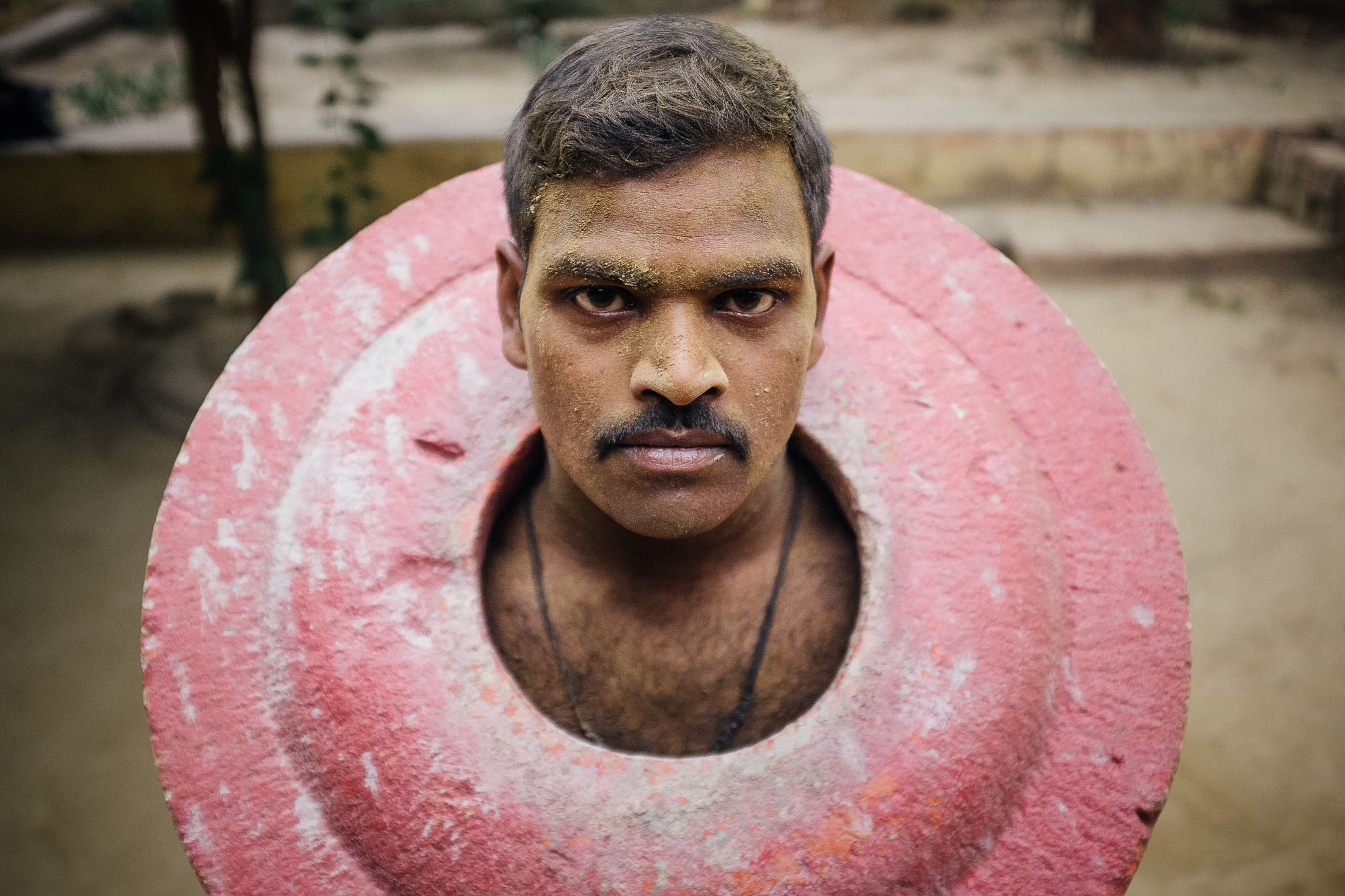
The training grounds were basic, but very serene. The ring reminded me of a temple, and there was a beautiful tree in the middle of the grounds. The various weights and equipment were made in traditional, and primitive, ways. Examples included solid wooden bats which are swung around your head, and a 50kg circular weight which you wear around your neck.

Kushti wrestlers Danny Fernandez Photography (9)

Kushti wrestlers Danny Fernandez Photography landscape (16)

The training began with the wrestlers entering the ring to pray. I couldn’t understand the words, but the feeling transcended language barriers. As with many other moments in Varanasi, there was a momentary sense of peace. These moments always took me by surprise, as Varanasi is the most chaotic place I have ever experienced. It was refreshing to see religion and tradition still deeply rooted in a land that often idealises the West.

My work began slowly, taking a more documentary style approach, allowing the wrestlers to get used to me being there. I kept a distance and began documenting their training and their gym. After a while (and after I put down my camera and began training with the wrestlers), they welcomed me to come closer to photograph them.

Kushti wrestlers Danny Fernandez Photography landscape (14)

Kushti wrestlers Danny Fernandez Photography landscape (8)

Despite my initial intimidation, the wrestlers were very friendly, and after they had warmed up to the camera, I felt like they began to show off. At times I had different wrestlers asking me to take photos of them as them attempted heavier weights and more difficult exercises. You could tell that they were proud to be continuing the Kushti tradition, and wanted it to be recorded.

Kushti wrestlers Danny Fernandez Photography (11)

Kushti wrestlers Danny Fernandez Photography landscape (6)

Kushti wrestlers Danny Fernandez Photography (15)

There are two things that I think helped me in this situation – firstly, I was a volunteer, working with the local youth, so they knew my intentions were pure. Secondly, I had been growing an awesome Indian style moustache that they all found hilarious (this actually helped me out in many situations during my travel!).

The highlight for me was when the wrestling began. Usually witnessing a fight makes me feel uneasy, but when I watched Kushti, I could appreciate the skill and dedication of their art. Perhaps it was the beauty of the surroundings, or the inner peace that seemed to radiate from the wrestlers, but I sensed absolutely no aggression on a personal level between the wrestlers. They seemed like a band of brothers.

Kushti wrestlers Danny Fernandez Photography landscape (4)

Kushti wrestlers Danny Fernandez Photography landscape (10)

Towards the end of the training when I was taking group shots, they insisted that I was included in the photos. The also insisted that I took my top off so that we were all the same. I felt like they had accepted me; somebody who has lead a completely different, and completely privileged life in comparison to theirs, but at that moment when we shirtless, bare footed and stripped of our normal identity, we were equal.

Kushti wrestlers Danny Fernandez Photography landscape (12)

In total I was lucky enough to spend 2 mornings with the wrestlers, and I felt extremely privileged to have seen this beautiful art form in action.

Upon leaving Varanasi, I regrettably didn’t have time to visit the wrestlers to say good bye, but I left my student with prints which they gave to the wrestlers. Apparently they loved them.

ALL IMAGES SHOT ON THE FUJIFILM X100S

– – – – – – –

To see more of Danny’s work, please visit his website at www.dannyfernandez.co.uk or follow him on Instagram at @dannyfernandez1984


X-Photographer’s Spotlight – Chris Weston

Tell us about yourself and what got you into photography?

chris westonWhen I was about 15 years old, I lived in Boston. Unfortunately, not the colourful, vibrant city in the United States but the quiet market town in Lincolnshire, England – historically linked to its American namesake but a place best known for its Dutch-like landscape and the agricultural prowess of its inhabitants. What I am trying to say is, I grew up in a part of England that required much of one’s imagination.

At school one day, I was asked to select my preferred employer for a 2-week work placement. The options weren’t good. Potato planting, bulb cleaning or strawberry picking were three of the more attractive options, as I recall. Seeing my inner turmoil, in a way only dads can, my father asked me what I wanted to do for a career. Without hesitation I replied, “I want to be a photojournalist”.

From where that statement came, I have no idea. Not a clue. I mean, I remember wanting to be (at various stages and in no particular order) a fireman, a policeman, a jet pilot, a train driver, a ski jumper and, of all things, an accountant … but a photojournalist? That was a new one. Even so, at my father’s behest and with the blessing of a somewhat perplexed headmaster, I began my first ever assignment.

_DSF610172

How did you develop your style in photography?

While I was on an assignment, about a year after I turned professional, I had a light bulb moment. I was in Tanzania photographing the annual wildebeest migration, as it passed across the Grumeti River. It was a slow day and photographic opportunities were few and far between. I don’t know if you’ve ever paid a lot of attention to wildebeest but they’re not Africa’s most alluring creatures. African’s describe them as, “The animal God created out of the leftover parts of other animals”. Don’t get me wrong, I like wildebeest but they don’t do much. Their day consists of walking in a wide circle eating grass. And that’s about it. Two days into a three-week long project, I was struggling for ideas. How do you continually photograph what amounts to a large brown antelope grazing in a big brown field?

And then it struck me. I started to think about migration and what it really is. Migration is the movement of animals from point A to point B. Movement. Migration is movement and that not wildebeest was the real story. I started to make photographs that captured the story of the migration – wildebeest moving, individually, in a line, in large herds. Suddenly, my photography had purpose and it has been guided by the light from that bulb ever since. We’re not just photographers we’re storytellers. In place of a pen we have a camera but irrespective of the tool our aim is the same: to amuse, emote, inform, educate, and entertain. I believe that inside all of us is a story that is aching to be told, tales that make photography a unique and intensely personal experience.

_DSF1284

Why did you choose Fujifilm cameras?

For the past couple of years, I have been advocating that the next major shift in camera design will be the exit of the mirror. The mirror is perhaps the single most-limiting factor in an SLR camera, which is rather surprising given that it has been the mainstay of camera design for nearly 80 years.

First of all, the mirror causes cameras to be far bigger and heavier than necessary. Secondly, to accommodate the mirror, the lens needs to be pushed further forward, increasing the distance between the rear lens element and the sensor (or film) plane, which diminishes the quality of the light transmitted by the lens.

Thirdly, the mirror slapping up against the chamber introduces vibration that, when combined with relatively slow shutter speeds, softens edge detail, reducing image quality further. This is particularly true when using ultra-high resolution DSLR cameras. Finally, mirrors are noisy. The constant slap-slap-slap cuts through the silence of dawn and dusk, echoing across open savannahs and bouncing off woodland trees, startling anxious wildlife into panic.

So, when Fuji announced the launch of the X-T1 mirror-less camera, I was intrigued enough to contact Fujifilm UK. My main question to Fuji was: Is the X-T1 up to the rigors of professional wildlife photography? They answered my question with a question: loaning me an X-T1 body and a couple of lenses they said, “You tell us!” I’ve been using the X-T1 ever since and my investment in Fujifilm products continues to grow.

_DSF5175

Do you have a photographic philosophy you live by?

For me, a photograph begins with a caption. That may sound a little back-to-front but if you think about it, really it isn’t. For example, imagine trying to build a house with no architectural drawings. Where would you start? How would you even know what materials you needed? Nobody would approach house building this way, yet the idea that fully formed, well-composed photographs just happen seems to be accepted as the exception to the rule. It’s not. Photographs are designed and crafting an image begins with having something interesting you want to say.

Knowing what to say comes from knowing your subject. The better you know your subject, the more stories you have to tell. I became a wildlife photographer because I’m fascinated by the natural world. How it works, how it fits together and how everything is connected. I often find myself intrigued by inane questions like,  “Why are zebras black-and-white striped when they live in a yellow savannah?”

It’s by asking questions and finding answers that I’m able to hit upon new ideas for images, find ways of making interesting photographs of ordinary subjects or different ways to photograph the same subject over and over. It’s how I learn about the natural world and develop a better understanding of wildlife and nature and, to some extent, my part in it all. And knowing yourself, how you feel about things and how things move you is as important a part of the process as the technical aspects of photography.

_DSF561872

Key inspirations – What & who inspires you?

Perhaps intriguingly, I’m more inspired by people and events outside of photography. In photographic circles, I admire the work of Michael Nichols, particularly, and, in the very early days, I learned a lot of the basics from Art Wolfe. However, today, science (especially quantum mechanics) and extraordinary people and thinkers, such as astronaut Chris Hadfield, author Yuval Noah Harari and physicist Brian Cox inspire me.

_DSF1764

Do you have any tips or tricks you could share with us?

There are so many thoughts, ideas and techniques that have led me to where I am that it’s hard to narrow them down to a few. So, instead, how about I offer Fujifilm readers a completely free e-book titled Nature Photography: Insider Secrets. To get a free copy simply click on this link: Top Wildlife Tips

_DSF4607

What’s next for you?

I’m on an amazing personal journey of discovery, looking at how creativity through photography can inspire how we live, as individuals and within communities and society as a whole. It’s a story that I want to share with the world and I’m currently talking to Fujifilm about how we can make that happen. Watch this space!

_DSF1679-2

Contact info

Website
Facebook

Thoresby. The end of an era

By Chris Upton

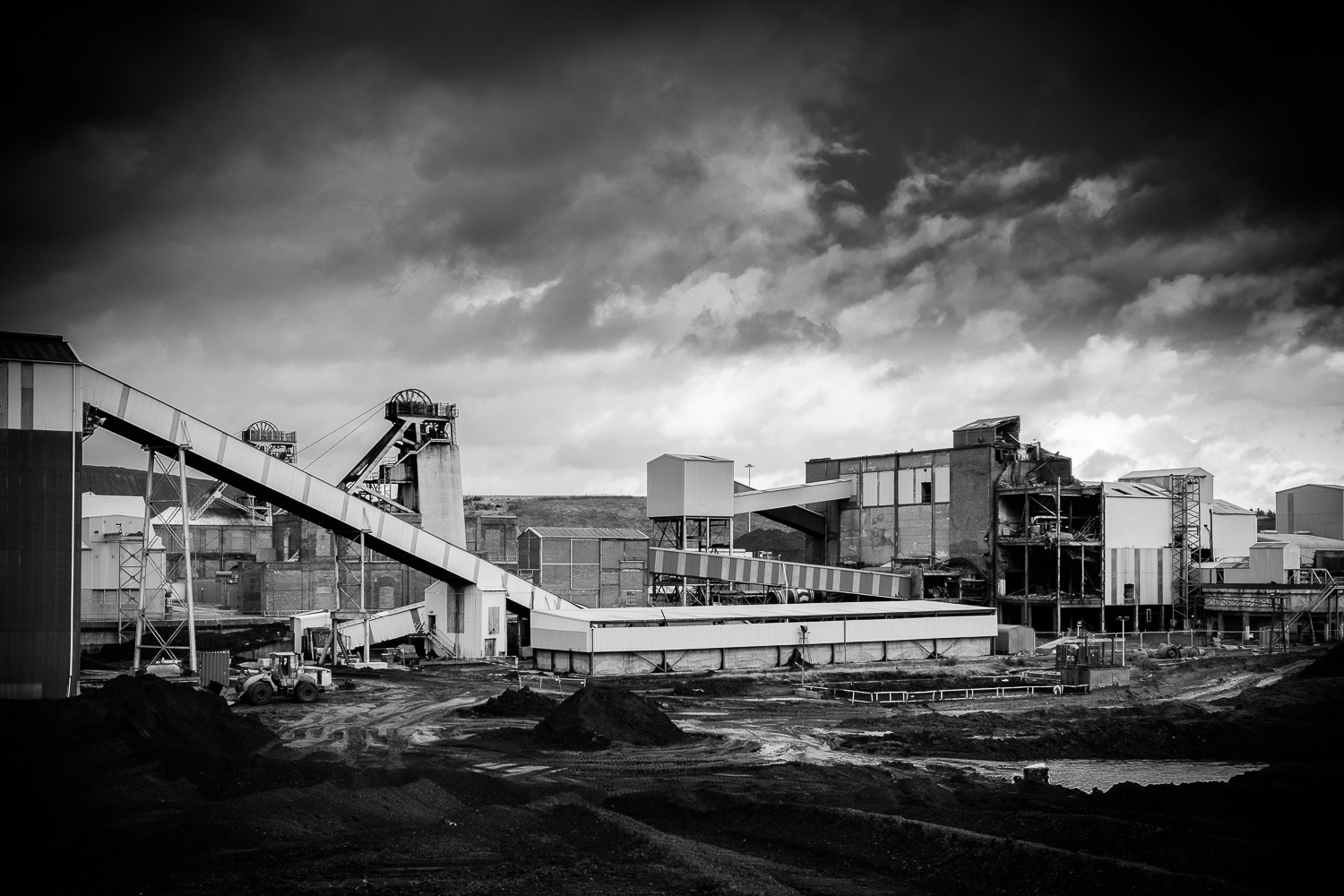
personThe 10th July 2015 was a landmark date in the history of Nottinghamshire. When the last shift at Thoresby Colliery finished on that day not only did it mark the end of 90 years of mining in the village of Edwinstowe but it signals the end of mining in Nottinghamshire.

The pit opened in 1925 and over the years has employed tens of thousands of local people. It was one of 46 coalmines in Nottinghamshire, which supplied more than 14 million tonnes of coal per year at their peak in the early 1960s.

The first two shafts were sunk to 690m in 1925 and subsequently deepened in the 1950s to the current pit bottom at around 900m depth.

Thoresby Colliery was the first to have fully mechanised coal production and also the first to achieve an annual saleable output of more than a million tons, it became a star performer in the British coal mining industry.

In the late 1980s it raised output to exceed 2 million tons, regularly smashing it’s production records, and the colliery became known as the Jewel in the crown of Nottinghamshire mines. A crown sits proudly on the headstocks in recognition of this achievement.

When the coal industry was nationalised in 1947 it employed a million men at 1,503 pits; prior to the miners’ strike in 1984, there were 180,000 miners at 170 pits. Today there are just two deep mines left, employing about 5,000 men, at Thoresby and Kellingley in Yorkshire. Kellingley will suffer the same fate as Thoresby and closes in the autumn.

UK Coal say market pressures have led to the closure of Thoresby Colliery. Coal generates more than a third of Britain’s electricity, but it is cheaper to import coal from countries such as Russia, South Africa and Colombia than to mine it in the UK.

For the past few months I have been recording the colliery, it’s buildings, plant and people for posterity. It was my aim to create a comprehensive record of the pit at a specific point in time immediately prior to its closure.

It was a chance conversation after giving a camera club lecture that started the ball rolling. A chap in the audience worked at Thoresby and was unfortunately in the first wave of redundancies. He asked if I would be interested in visiting the colliery to take a few pictures. It was a fantastic opportunity and I jumped at the chance. He put me in touch with the Health and Safety manager, I explained what I would like to do and we were off and running. It was at this point, after I had gained their agreement to document the colliery, that the full extent of the task dawned on me.

Starting the project

I visited the colliery on seven occasions, at different times of day, in different lighting conditions, including dawn and dusk. I planned each shoot but found that an outline plan whilst retaining a degree of flexibility to react to opportunities worked best.

At the outset I just toured the site to give me an understanding of the buildings, the machinery, the operation and the people. I took snaps to create a digital scrapbook to help me plan my approach. Essentially I was imbibing the atmosphere much as I would do when visiting a foreign destination for the first time. I wanted to get a real feeling for the place before I started the photography in earnest.

Health & Safety manager Grant was so supportive of my visits giving me more time than I could have wished for.  Even coming in at 3.30am for a dawn shoot and returning to work late in the evening to get “the best of the light” didn’t diminish his enthusiasm. In fact he joked that, after watching me, he would now be able to take the best holiday snaps ever! I hope he does.

20150617_thoresby_0049-Pano

Gear used

All of the images were shot on a Fujifilm X-T1 or X-E1 camera using a selection of Fujifilm XF lenses including the 10-24, 18-55 and 55-200 zoom lenses and 14, 23, 35 and 56mm primes. I also used a Nissin i40 flash for some shots, though preferred to use natural light wherever possible.

For my portraits, the unobtrusive Fuji equipment allowed me to concentrate on building a rapport with my subjects rather than intimidate them with a large DSLR and f2.8 lens combination. Miners might be tough guy’s and supermodels they certainly are not but they seemed to relax pretty quickly in front of my Fuji lenses.

20150701_thoresby_0111

20150319_thoresby_0288-Edit-2

There were several challenges to overcome not least the light levels that were typically pretty low in all of the buildings. Because of the poor light I used a tripod fitted with a ball and socket head for as many shots as possible. My cameras are fitted with arca swiss type plates so that I can switch from landscape format to portrait very easily and without having to waste time readjusting the tripod.

The mix of different light sources from tungsten, to fluorescent and natural meant it was difficult to assess the ideal colour temperature. However the decision early on to convert all the images to black & white certainly helped counter that problem!

In a coal mine dust was another inevitable and unavoidable issue. As the miners told me it’s not only the dust you can see that is the problem and I was very careful when changing lenses and using two bodies certainly helped. Thankfully the in camera sensor cleaning worked well and I was pleasantly surprised at the minimum amount of dust spotting required.

20150422_thoresby_0189-HDR-Edit

Working on a project

As my photography has progressed I have found that I prefer to look at a series of images that tell a story rather than seeing individual impactful pictures. Whilst I have adopted this storytelling approach in my travel and landscape photography this project was a whole different ballgame. This wasn’t going to be a six or ten image set but a large body of work that had to be planned and created in a certain style. I found this experience fascinating, though at first it was pretty daunting. However after a couple of visits I had captured some shots I was very pleased with and the plan started to fall into place. I think the discipline required in a project such as this has helped me to improve my photography and it felt good to be succeeding in this new genre of social documentary photography.

In an attempt to capture the “feel” of the colliery, and to bring completeness to the project, I also recorded various sounds around the pit and organised a series of interviews with miners past and present. I will be producing mini AV’s including these sounds and using the miner’s comments in my presentations.

20150115_thoresby_0097-Edit

20150115_thoresby_0006-Edit

Stretch yourself

It is very easy to stick to what we know in photography and limit yourself to a particular genre. Whilst my experience as a travel photographer, where you are required to be adept at many different genres, undoubtedly helped me there were aspects of this project that were not so familiar. As a result I feel I have grown as a photographer and I would urge you to move out of your comfort zone and try something new. There will be similar opportunities in your area, seek and ye shall find!

20140723_thoresby_0046-Edit

Capturing a piece of history

As I progressed through the project I realised that I was not only taking pictures for myself but that I was actually recording a piece of history, an enduring record of a place that, in just a few months time, would be gone forever. With that came a feeling of responsibility, not only to do myself justice but also to represent the life and work of the mining community. Apart from my family photographs, this project is the most important and worthwhile piece of work that I have ever created. Whilst there is clearly interest in the work now, what will its importance be in another 10 or 20 years?

20150115_thoresby_0052-Edit

A personal perspective

This project has been a fantastic experience. It has improved my photography, taken me into a different genre and enlightened my knowledge of an otherwise mysterious industry.

It has been a pleasure to work with the team at Thoresby, without whom I would not have been able to produce this body of work. Whilst the colliery may not draw its workers from the immediate village area, as in years gone by, their camaraderie, team spirit, hard work and no nonsense attitude in this tough and uncompromising industry epitomise the best of British workers. The closure of Thoresby truly is the end of an era.

20150513_thoresby_0257

20150513_thoresby_0267

What next?

I feel it is important to showcase my images to as wide an audience as possible, especially in the local area. Therefore, after securing feature in the local and national press, I will be staging a major exhibition in Nottinghamshire and am planning to produce a book – more details to follow.

To see more Thoresby images and to keep updated on the project developments please visit my website  www.chrisuptonphotography.com

20150422_thoresby_0301-Edit-3