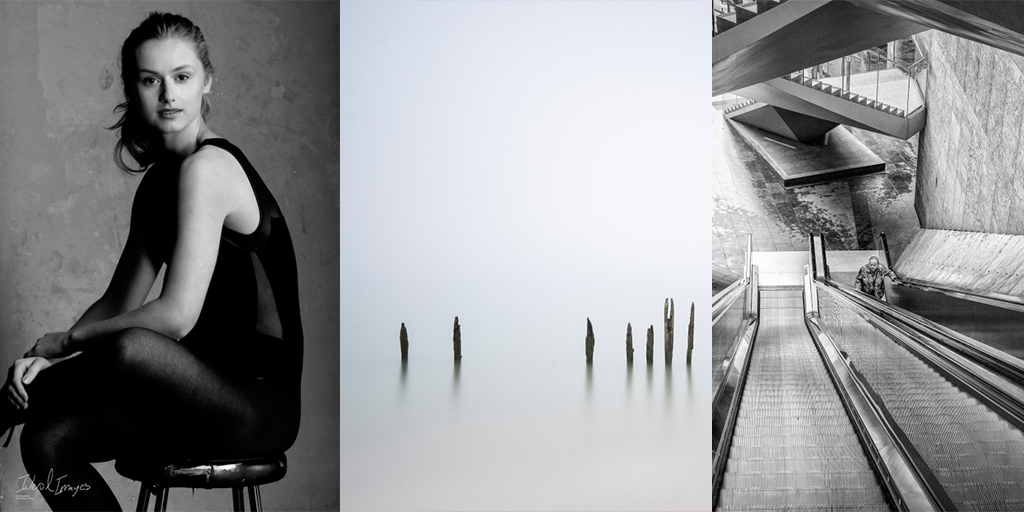
portrait photography

X-Pro2 Portraits with The Woz, Apple’s Co-Founder

Guest Blogger strip BLACK

By Dan Taylor

It’s not every day that you get the chance to photograph a person who is directly involved in creating a product that has changed the world. And it’s even rarer to have this person’s undivided attention for a few minutes just before getting mic’d up to take the stage.Dan Taylor photographing Steve Wozniak for Fujifilm - Image by Dan Taylor - dan@heisenbergmedia.com-1So, when I first got word that I’d have exactly this opportunity to photograph Apple co-founder Steve Wozniak in Manchester, England, at Business Rocks, I knew I had to be prepared and have everything ready to go the minute he came out of the green room. Striving for absolute image perfection, my choice of gear was clear: The Fujifilm X-Pro2 and XF56mmF1.2 R.

While I’m generally a fan of the SLR body format, e.g. my X-T1, utilizing the new technology and features in the rangefinder format X-Pro2 was too good to pass up. And when combined with the XF56mmF1.2 R (in this case at F8) the results are razor sharp, crystal clear, and absolutely stunning. I’d even venture to say that the XF56mm is the best headshot lens I’ve ever used.

Knowing that I had very little time with Steve, I had prepared my lighting setup in advance, and fired off a few quick test images with a colleague. Given that our time together was to be quite short, I knew that simplicity would be key. Building on this simplicity, I found a plain white wall between the green room and stage and used a slow(er) shutter speed to capture the ambient lighting to help illuminate the background.

Initially, I had a black background setup, but decided at the last minute to go with white. With the black background I could use a fast shutter speed, as ambient light wasn’t needed or wanted. However, with the introduction of the white background, I did want to capture the ambient light generated by the speedlights. At f/8, a shutter speed of 1/60th of a second was just right.

For my headshot with The Woz, I used 1 key and 1 fill triggered via a wireless transceiver in an off axis clamshell lighting setup. The key light is diffused inside a Lastolite Umbrella Box, and the fill light diffused via a standard umbrella.

Depending on the look you’re trying to create, the fill light might not even be necessary. In this case, I’ve used it to fill and soften the shadows the key light would be casting.Dan Taylor and Steve Wozniak headshot  for Fujifilm - Image by Dan Taylor - dan@heisenbergmedia.com-1When shooting with speedlights and any FUJIFILM X Series camera, one crucial menu option you want to turn off is the Preview Exp./WB in Manual Mode. If this option is on, you’ll be presented with things exactly the way the sensor sees things, normally a good thing, but here, without compensating for the light the speedlights are going to generate.

Right. Settings set, lights lit, The Woz ready to go. Let’s make some magic!

I generally turn to humor to get the ball rolling, and always have a joke or two ready. I’ve got a few really, really bad one liners that are just so horrible, there’s really no choice but not to laugh at them, and so far, they haven’t let me down. With The Woz, I actually had to resort to joke number two, as he gave me the punch line to joke number one before I could even finish the sentence. Ever the prankster.  Steve Wozniak for Fujifilm - Image by Dan Taylor - dan@heisenbergmedia.com-1All in all, I’d estimate that Steve and I did 4 shots together in a time period totaling less than a minute. And even though our time together was short, The Woz has been one of my favorite sessions yet. Not only is he an iconic figure, but a true gentleman, as for when I sent him the images we did together, he replied within minutes, stating, “It was great to watch you work. I love seeing great technical skills of all kinds.”

Thank YOU Steve for a great collaboration!

For me, when it comes to quality, portability, and forward thinking, the Fujifilm X-Pro2 is the camera that always makes it in my bag.

The X-T2 gets a test drive with X-Photographer Damien Lovegrove

damien-lovegrove-profile-200x200Damien Lovegrove is considered by many to be one of the worlds most influential contemporary photographers. He is best known for creating portraits that make women look fabulous. He is a confident director and great fun to shoot with too. Damien’s lighting style is distinctive and his picture composition unique.

Damien is an official Fujifilm UK ambassador and a renowned Fuji X-Photographer.


It was in May 2012 that I ditched my SLRs for a Fuji X-Pro1 and the three prime lenses it launched with. From day one I utilised the mirrorless advantage to leap ahead of my competition. I had been using a Fuji X100 fixed lens camera for a year integrating it into my workflow alongside my SLRs and I loved the pictures I captured with it so the leap to mirrorless was a gentle one for me.

X-T2_BrochureImage_TopThe Fujifilm X-T2 is the camera I’ve been waiting for. It’s no surprise it’s here but what I love most is that the consultation period with X-Photographers has delivered a camera that is spot on mechanically. Everything that could have been improved on the X-T1 from the dial locks to the tilting screen has been perfected on the X-T2.

The Fuji X-Pro1 gave me mirrorless shooting and it rekindled my passion for photography. The X-T1 gave me the extra usability I craved, The X-Pro2 took the image file to the next level and brought the technical specification of the X system bang up to date. Now the the Fujifilm X-T2 has brought it all together and raised the bar again. The sum of all the tweaks and changes in this new camera make a huge difference and leave me not wanting more.


The Fuji X-T2 features that I love the most:

•    The locking buttons on the ISO and Shutter speed dials combined with the higher profile work perfectly. Being able to lock the dials in any position is genius.

•    The bi-directional tilting screen is wonderful. It’s a must for a portrait photographer.

•    The camera size and weight are spot on. The ultra reliable and compact W126 battery has been retained. The weight of the camera in the hand is really important to me. I never want my photography to feel like a chore again.

•    The media door has a newly designed latch that is really secure.

•    The joystick to move the focus position makes the shooting process faster.

•    The 1/250th second flash sync is welcome and is the new setting for all my studio flash working.

I team the Fuji X-T2 with the fast primes because I love a shallow depth of field combined with absolute resolution. A prime lens is lighter on the camera than the equivalent zoom and this suits my way of shooting well. I have the XF16mm f/1.4, XF23mm f/1.4, XF35mm f/1.4, XF56mm f/1.2, and the XF90mm f/2 lenses. There are times when a telephoto zoom is the perfect lens for a shoot and I use the XF50-140mm or the XF100-400mm lenses depending upon the assignment. The zooms offer optical image stabilisation and this really comes into its own at longer focal lengths.


And the results?

I had planned this first sequence of shots about a year ahead of the shoot. I bought the dresses from an Asian manufacturer via the internet and I transported them to the USA in my luggage. The location is in the high deserts of Arizona, USA. I used the XF100-400mm and XF50-140mm lenses to compress the perspective. These frames were all lit with natural sunlight.

1

I spent 12 days touring the USA and in that time I shot about 5000 frames on the Fuji X-T2.

Arielle down on a farm in Utah. There were snakes keeping us company as we shot a wonderful sequence of images. XF50-140mm f/2.8 at f/4
Arielle sits by a cattle coral in Arizona. The dust on the wind has turned the sky a shade of pink. This figure in the landscape style is one I want to further develop in the coming months and the extra resolution of the Fuji X-T2 really comes in handy when making big exhibition prints. XF50-140mm f/2.8 at f/5.6

Since then I’ve added another 4000 frames in Europe to my camera testing routine. The camera feels just right in the hand and there is nothing I would change about the mechanics of the build.


Discover creative resources for photographers written by Damien Lovegrove at Prophotonut and Lovegrove Photography


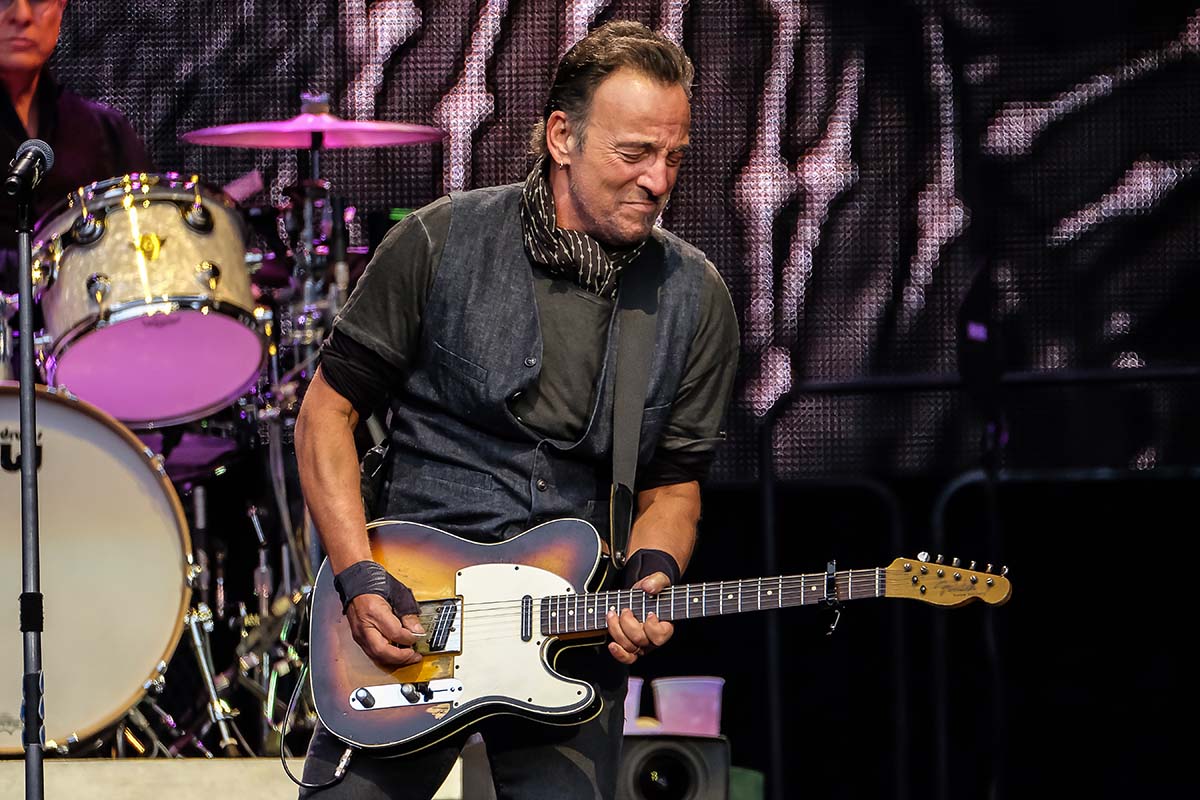
XF100-400mm Vs Bruce Springsteen

By Tony Woolliscroft

tony-woolliscroft-jul-2014For music & concert photographers, restrictions have meant it’s become harder and harder over the years to get those great shots. So seeing the Fujifilm XF100-400mm lens come into the fold is a very welcome addition to the Fujifilm lenses lineup.

Along with bad photography contracts thrust upon us as we collect our photo passes, and image right grabs on the pictures we capture, we’re now being forced further and further back within a venue, which restricts what we can actually capture due to the distance we’re expected to shoot at. This makes the XF100-400mm essential to achieving good results.


Bruce Springsteen – Manchester

With Bruce Springsteen performing in Manchester, I looked forward to using Fuji’s new beast of a lens the 100-400mm. Even though we were expected to shoot from the ‘Golden Circle’ barrier at around 50 meters (164 feet) from the stage, it’s still quite a distance.

DSCF5436

The size & weight of this new lens was inline with all the Fuji X series cameras/lenses, well made, light in weight and weather sealed.

The one thing that did concern me though as I arrived at the City of Manchester stadium was the weather…… It was absolutely pouring down. I knew this would be a good test for both this new lens and my Fuji X-T1 camera!

DSCF5199

Once in position, I had 3 songs in which to capture images from the ‘Golden Circle’ barrier. Even from here it was difficult to gain a vantage point above the sea of waving arms, mobile phones and homemade signs that swam through the crowd as Springsteen performed.

Even though it is a larger lens than other Fuji lenses in their range, in comparison to Full Frame it’s still relatively light and having to shoot without a mono pod (as I was constantly moving to dodge the arms blocking my shot) I was able to do this and keep my camera steady without much shake.

The camera and lens handled the heavy rain perfectly, no problems there, and I also found that the lens focuses very quickly and especially when Bruce was standing directly in front of the big video screen (which can be challenging for cameras).


Once home and after a bit of time spent editing the pictures, I was extremely happy with how the 100-400mm lens performed.

It helped me capture some great moments in the allotted 3 songs slot I was given to shoot in, and the distance the lens covers from 100mm to 400mm was a massive plus as right at the end of the third song Springsteen stepped onto the lower stage and I was able to capture that moment too!

DSCF5601
Springsteen on the lower stage platform

Enthusiast to Pro Photographer – My first steps

Guest Blogger strip BLACK

By Rachel Riley

12938283_10156677220760567_2341754691662753021_nSitting here, cup of tea in one hand, a sleepy puppy curled up by my side, I wonder I got to this point – writing a blog for the good people of Fuji about my journey in photography so far. After a good deal of umming and aahing, long, heart-searching conversations with those I love most, the decision has been made – leaving my 20-year career in education behind to take the first tentative steps into professional photography.

Like most folk of my age, I guess, photos played a huge part in my youth; from family snaps in albums to hilariously poor quality shots from primary school day trips, all blur and thumbs, either over the lens or enthusiastically held up by school friends. Growing up, through school and then into student years, photographs were a record – of parties, events, drama productions, collages of images of friends and family from home adorning the walls next to a dog-eared “Taxi Driver” poster. Photos always surrounded us, but as a way of recording our lives. My late Dad, as a gifted artist, used many media to great effect in his work, but never film – photography wasn’t really seen as an art form in our house.

HW trees2

Despite this, one of the first images of which I was very proud was taken in 1992 on a school Classics trip to Greece. I had in mind a shot I really wanted to capture – that of the Parthenon against a clear blue sky. In the end, our visit coincided with snow in Athens – so my eventual photograph was the Erectheion dusted with snow against a moody grey sky. Not quite what I had intended but I was pleased nonetheless!

Digital photography soon began to seep into our every day existence – although our wedding in 2003 was shot entirely on film – at about the same time as the birth of my daughter. Sharing photos suddenly became an instant activity – grainy snap shots from my Nokia 3650, or on our tiny 1MB digital camera were so easy to ping via email to family at a distance and, by the time my son arrived in 2007, social media provided the perfect forum for visual sharing.

For me, the turning point in photography from babies and holiday snaps came when our family relocated to Portugal in 2009. Leaving behind my teaching job to give my children the chance to experience another country and to support my husband in his own career, I was keen to grasp the opportunity to use this sabbatical wisely. The original plan had been to co-write a sitcom with a friend back in the UK, but once faced with the fresh light and unique environment of the Atlantic and the river Douro, the ranging, tightly-packed cobbled streets of Foz and the beautiful city of Porto, my heart was lost. Capturing the curious fog on the beach, the mussel beds and driftwood revealed at low tide, the endless beautiful tiles and ancient doors became a wonderful challenge.

wave web

Lizzy1smallArmed with my little point & shoot and a woeful lack of technical knowledge or expertise, I wanted to learn more and, indeed, achieve more at such an opportune time. After a while, a DSLR seemed the logical next step. Slipping back into a little teaching at the local British School meant I could save up for a Nikon D5000 which, from the moment of purchase in April 2010, rarely left my side. My new hobby grew from that point on. A little win in a Facebook Photography competition led to joining a group of similarly minded keen amateur photographers around the UK and beyond. They were undertaking a 365 photo a day project which proved to be a fantastic experience – a daily image, shared with the other group members, learning from each other, through both successes and mistakes!

On our return to the UK, it was back to work. Although with a lot less time for photography, it continued to play a big part in my life. Through some work with Photobox, I met landscape photographer Paul Sanders and together we started Camera Kids, working with Fujifilm, to teach children photography in school-based workshops and after school clubs. We had some success with this, even working with Travel Photographer of the Year at their annual exhibition. I attended an Aspire training course in Cumbria – right out of my comfort zone – and fell in love with the intuitive design and ease of use of the Fuji X-series cameras, eventually choosing the X-E2. And so my photography took another huge step forward.

last day bw small

Having taken another break from teaching as my husband was working in Kazakhstan for two years, I had a little time back to concentrate on photography again. Requests began to come in – from a local gardening business, to portraits of family and friends for gifts and special occasions, greetings cards featuring my Instagram images (shooting square is something I love), photographing plays and events at my children’s school, running a photo booth at the summer fair. Gradually, however, it became clear that my interest lay in children’s portraits – after years of working hard to get the best out of youngsters and being blessed with two very patient and photogenic kids myself, this was surely what I wanted to do.

Phoebe

And so here I am. My husband is back in the UK and working reassuringly near by,  and the decision to become a photographer seems to have been the right one. I have a batch of pleasing square Moo business cards, a Facebook page and website up and running, and six jobs under my belt already – there are a myriad of other things that need to be done and carefully thought about! But, for now, with my cup of tea and sleepy puppy, the love, enthusiasm and endless support of some wonderful people, here’s hoping that I am finally on the right track and facing the challenging but exciting times that lie ahead.

Rachel Riley


To see more of Rachel’s work click here.

Naomi 3

Buy an X-Pro2, win a workshop with an X-Photographer

Pretty simple right?

If you buy an X-Pro2 and register the warranty on our website before the 8th April 2016, you could win a place on one of our fantastic workshops.

Image by Dave Kai PiperDSCF4552-Edit-

1st May – Portrait workshop with Dave Kai Piper – (4 delegates)

Location: Amersham Studios

Being a photography lecturer, Adobe Community Pro and Fujifilm X-Photographer, Dave Kai-Piper will take you on an exciting journey into portrait photography.

His workshop starts off with a conversation with each participant discussing individual goals for the day alongside a group objective. As part of the morning set-up you will have a look at some iconic images from influential photographers. Then he will break down what makes those images work & talk about how different lighting types can create moods and styles. You will learn how to build on simple lighting styles like Butterfly lighting, Split lighting and Rembrandt lighting and then put them into practice using live demonstrations with a stunning model.

Once your objectives are set, you will jump into the studio full of the newest WiFi controllable Broncolor lighting to put your new Fujifilm X-Pro 2 through its paces. You will look at ways to shape, control and create that perfect image. Within this workshop you will also learn the best way to communicate and pose your subject to get the best from your model.

Whether you have spent a lot of time in the studio using lighting or have never used additive / flash lighting in your photography before, each attendee will leave the workshop with a broader knowledge of various techniques from lighting your subject, creating a scene and directing your model.


Matt-Hart

4th May – Street workshop with Matt Hart – (4 delegates)

Location: Liverpool

Spend the day with Street, Event and X-Photographer Matt Hart in this candid street photography workshop. It is here that Matt will give you an insight into the way he works and how to shoot his style of street photography.

He will show you how to anticipate and capture decisive moments, how to be invisible in public spaces to get the best images and how to to develop confidence shooting street photography. He will show you the best places in Liverpool to capture great street images – so in the future you can come back and have another go!

Matt’s workshops are always fun, informative and relaxed whilst at the same time challenging and have been designed to stretch your imagination.


Winchelsea-1

7th May – Landscape workshop with Paul Sanders – (4 delegates)

Location: Dungeoness and surrounding areas

Your day will be spent with Fujifilm X photographer and landscape artist Paul Sanders, he will help you develop your own way of seeing the landscape to create images that resonate with how you feel about the location.

Paul’s specialty is long exposure photography, he will take through a natural and easy to follow workflow that enables you to get to grips with the technical side of this style of photography. He will have some Neutral Density filters and graduated filters for you to use on the day. Filtration is one of the key aspects of landscape photography, it allows you to control contrast, mood and exposure time. Paul will explain all of the pros and cons of using filters and the different types of filters available.

The day will be split into two sessions – one at Dungeness and the other at Winchelsea beach.

Dungeness is the only classified desert area in the UK, its flat bleak landscape has inspired photographers, artist, writers and filmmakers for many years. The beach is a detritus of fishing boats and fleet. The decaying hulls of boats are left on the shingle, nets, huts and machinery make this a photographers dream location. Paul will explain that landscape photography isn’t always about the big vista but also lies within the details and the abstract he will guide you around the area so that you don’t miss anything.

Winchelsea Beach is a long exposure dream, lines of decaying groynes stretch along the beach. These make the perfect subjects for getting to grips with the minimalist style that long exposure work generates. Paul will also pay special attention to composition and exposure time to create beautifully minimal images.


Register your X-Pro2 warranty here


Terms
  • Only X-Pro2 cameras purchased from Authorised UK Dealers are eligible to win.
  • Each workshop has 4 spaces available.
  • Winners will be notified by the 13th April.
  • Prizes are not transferable and does not cover the cost of travel and accommodation.
  • Lunch and refreshments will be provided

Why I chose Fujifilm X – Andy May

Andy_May_Header_image

Tell us about yourself and what got you into photography?

Andy_May_HeadshotI’m a photographer based just outside of Bath, UK. Reading books as a child was all about the pictures. I’m a visual person and love to create. I guess being a visual person photography has become a natural creative outlet for me. I’ve had an interest in photography for as long as I can remember, I don’t recall a specific moment that made me fall in love with taking pictures, it’s just been a life long love that crept up on me.

I did the whole college course thing, read books (looked at the pictures) and tried to improve my photographic knowledge and skills. My first ‘real camera’ was an Olympus OM-1n. Learning on film was slow and expensive.

Andy_May_1

In 2004, I moved to a digital DSLR with which digital photography brought a whole new learning curve. But the addition of Photoshop and digital processing really opened up a new world of creative options for me.

I think that having children of my own was what really got me hooked. I started to appreciate the significance of capturing moments in time. Kids are one of the most challenging and rewarding subjects to photograph.

As my photography progressed I found myself leaning towards studio shooting as a firm favourite, as I liked being able to experiment and control light. I don’t think that you can beat great natural light but you are at the mercy of mother nature – when you are shooting to a schedule, artificial light is your friend.

Andy_May_13

Why did you choose to shoot with the Fujifilm X series?

I have always been an SLR shooter, but it got to a point where my gear was impractical to carry everywhere with me. Even carrying a “Lightweight” bag wasn’t really that portable – and after a whole day on the shoulder you certainly felt it.

My journey into the X-System started with the X100 in 2012. This gave me the quality that I wanted in a small & light package. As a result, I started to carry a camera about with me everywhere.

Andy_May_2

Having used the X100 for a while I found that I was using my SLR system less and less for personal work. And when the X-T1 came out I decided to take the jump – flogged my SLR kit and moved to Fuji. The layout of the controls on the X-T1 is an absolute godsend for me. I love being able to turn a physical dial for all the important stuff and in 2015, I used the X-T1 for a 365 project. I used it with just the XF18-55mm and a Samyang 12mm. This little combo went everywhere with me, everyday for a whole year.

It didn’t let me down, not once.

Andy_May_9

I don’t consider myself to be a niche photographer. If I see something that interests me, I’ll shoot it. I enjoy portraiture and people do make up the majority of my work. Part of the appeal of the Fuji system was its small size. When photographing people with the X100 or X-T1 it stays out of the way so I can get a better connection with my subject, it’s less imposing.

Credit: Ben Lowrey
Credit: Ben Lowrey

What is your favourite lens in our range and why?

I guess with portraiture making up the majority of my work, it has to be my most recent addition – The 50-140 f2.8. Yes it is starting to get into heavy gear territory but not so much that I notice it. The quality of this lens is simply stunning, at any focal length and at any aperture.

Model: Freyalily
Model: Freyalily

The above image was shot using the X-T1 and 50-140mm in very low light (using UV) the autofocus had no problems locking on, and the OIS really helped here.

It’s great in the studio too. Having the flexibility of a zoom really helps. If your lucky enough to have the extra space you can make the most of it -from mid telephoto to telephoto gives a great deal of flexibility quickly without breaking your flow.

Model: Paul Walker
Model: Paul Walker
Models: Jaz Talbot & Paul Walker

Do you have any tips or tricks you could share with us?

I’ll admit that I’m not the most organised photographer. I don’t plan things in any great detail and tend to shoot by feel. When shooting people it’s always tricky to get them to relax in front of the camera, very few people feel completely at ease under the spot light – even models. Communication before the shoot is key – even if you don’t have every last detail planned, share what you do know with your client.

When you are ready to shoot, don’t. Put the camera down and talk to your victim (I mean subject). The usual pleasantries are fine, “How was the traffic” or talk about the weather (I’m allowed, I’m British) anything to break the ice and try to build rapport.

Once I’m all set up a trick I often use is to ask my subject to keep looking in my general direction and don’t worry about me. I tell a little white lie and say that I’m just testing my light / exposure to make sure I get everything set up correctly. I know my gear and through experience I know my settings are fine. The thing is that the subject doesn’t think that the photos will be used. I find quite often these first few frames can be the most natural.

Model: Layla Leigh
Model: Layla Leigh

The image above was taken with a beauty dish against a white wall, using the “Don’t mind me I’m just mucking about technique”

Talking of mucking about, relax and enjoy yourself. Everyone likes to have fun and a bit of silliness now and again makes great images.

Model: Layla Leigh
Model: Layla Leigh

What’s next for you?

The last 12 months or so have been amazing for me. I’ve met so many great new people through photography. I’ll keep on getting out and about, planning shoots and producing more themed work. The summer will soon be here and I’m hoping to be ready for it. I’m always on the lookout for a great location that can be used to shoot in / on / over / under. I have a couple of things in the pipeline that are still just concepts at present but will develop over the next few months – I just need to find the time somewhere !

Andy_May_7

Contact info

To see more of Andy’s work, please visit his website and social channels.

Twitter @Kuhlephoto
Instagram @Kuhlephoto
Blog www.kuhlephoto.tumblr.com
Facebook https://m.facebook.com/andymayphotography/
Website www.andymayphotography.uk