

Fujifilm Australia is thrilled to introduce our June 2016 X-Thusiast Featured Photographer: Michael DeBeen. Hailing from Geelong, Victoria, Michael is a horologist, calligrapher and gifted photographer with a penchant for exploring the great outdoors. In this month’s Q&A, Michael shares how he uses the science of photography to capture striking shots in vivid detail with his Fujifilm X-T1.
 “Little Gepetto,” Fujifilm X-T1 + XF56mmF1.2 @ F2.5
How did you develop an interest in Fujifilm photography, and how would you describe your photographic style?
This is a tough question—I’m not sure what was the pivoting point that led me to photography. Throughout my life, I have been attracted to ideas and pursue them obsessively. It is simultaneously a gift and a fault of my personality, and photography is a product of this.
I consider myself technical-minded, and it may have been the science of photography that initially gained my attention. Things like lens and sensor design are fascinating to me. One of the reasons I became interested in Fujifilm was its unique X-Trans sensor array that negates the need for any anti-aliasing filter to minimise moiré.
My first exposure to photography was almost two years ago now, when, after much deliberation, I bought my first camera: the Fujifilm X-T1.
Before my interest in photography sparked, I never considered myself creative. I had a clear structure in my mind where science and arts were on opposite sides of a great divide. It wasn’t until recently when a friend commended my creativity that I realised there isn’t such a divide, and you can’t have one without the other.
While consistency is important to me, I don’t actively seek it in my photographs. I take each photograph as they come and try to find an ideal look for that particular image. It has a little to do with intuition and a lot to do with over-analysis and micro-adjustments. Perhaps some day someone wiser than I will help me understand and articulate my photographic style. Until then, I’ll continue being my usual oblivious self.

“Cappuccino” Fujifilm X-T1 + Fujinon XF56mmF1.2 @ F1.2, 1/2000sec, ISO200.
What’s your favourite location to shoot in Australia? Your favourite subject?
So far, in Australia, my favourite location to shoot is the Great Otway National Park and the Great Ocean Road. It is wonderfully refreshing and calming, even from a non-photography perspective.
I look forward to exploring more of Australia in my future, and discovering more of its sights.
As for my favourite subject, that can change by the day. I appreciate minimalism—especially if I can find something striking without distractions.

“Beach” Fujifilm X-T1+ Fujinon XF56mmF1.2 @ F1.2, 1/4000, ISO200
Why did you choose the Fujifilm X-T1, and what is your favorite aspect?
Touching on what I mentioned before: The X-Trans sensor contributed to my choice, but it wasn’t the only deciding factor. My priorities for a camera system were quality (both image and physical), functionality, weight/size and support.
The Fujifilm X-T1 ticked all these boxes.
I was (and still am) impressed with the clarity and colour rendition of the X-Trans II sensor. Fujifilm’s choice to implement additional features such as an intervalometer, filmic profiles in-camera and their commitment to support even their dated cameras via software updates is a benefit some other manufacturers often overlook.
The X-T1 was Fujifilm’s current flagship interchangeable lens camera. I liked the X-Pro1 aesthetically, but couldn’t justify it over the technical improvements that the X-T1 offered. I love the idea of the X100 series, but I wasn’t in the market for a fixed lens system.
It is difficult for me to choose one feature over any other as a favourite, but the 0.005-second refresh rate of the electronic viewfinder is at the top of the list.
Which Fujinon lens(es) do you prefer to use with your Fujifilm X-T1 camera?
My favourite X-Mount lens is the Fujinon XF56mmF1.2 (~85mm full frame equivalent). It is such a flattering lens, it’s practically impossible to take a bad photo.
And while I was traveling through Europe, the Fujinon XF23mmF1.4 (~35mm equivalent) was invaluable. It is an incredibly versatile lens.
Could you describe your photographic workflow/process? Do you prefer any particular editing tools, social networks or camera accessories to enhance your work?
There is not much to say other than I still have a lot to learn. That is true of everything in life.
Although the X-T1 is very capable of producing brilliant results straight out of the camera—especially when you consider Fujifilm’s film simulations—I always finalise whatever I envisioned in post-production.
Beyond exposure, my most valued in-camera settings are the RAW file-type and the Adobe RGB colour space. I pay close attention to the histogram. The dynamic range of the X-T1 is admirable, so unless I am in an unusual situation, I will prioritise highlights and do my best to not clip them unless it is unavoidable.
Ideally I try to keep a rounded histogram so that when I get it to my computer I have as much data as possible.
My post-production workflow is probably best described as disorderly. I have not yet found a single software solution that can do everything I need in one neat package. I extensively use Adobe Photoshop CC as a tool to refine, polish and offer greater levels of photo manipulation. To complement Photoshop, I also use Adobe Lightroom and Phase One Capture One Pro 9 regularly.

London Tourist, Fujifilm X-T1 + Fujinon XF23mmF1.4 @ F1.4, 1/2000, ISO800, polarising filter
Do you have any advice to new photographers?
Do not delete your photos! Once you become more confident in your abilities, you will return to them with a fresh perspective, and you will find hidden gems that you previously overlooked. If you are happy using your camera on auto, the best thing you can teach yourself is how spot, matrix and scene metering modes affect your exposure.
Any final thoughts, tips or advice?
A significant influence to my ideas and final results as a photographer is print and framing—how the image will appear on different paper stock, and how it can be complemented by a different frame.
Photography now being a predominantly digital format makes it easy to forget about your photos. Even if you are just starting out, don’t shy away from printing them. It’s important to have a tangible representation of your work.

You can find more of Michael’s compelling work on his Instagram account here.
Interested in joining the X-thusiast community and sharing your own story? See the full X-Thusiast Gallery and Submission details here.

 Chris is a Nottinghamshire based, award winning, photographer specialising in Travel and Landscape photography.


 Pete Bridgwood is a fine-art landscape photographer and writer from Nottingham in the UK. He started making photographs back in 1978 with black and white film and manual cameras, using wet-process in a traditional darkroom. This time spent in his youth, learning about the traditional process proved invaluable to Pete, but his workflow is now completely digital and he now uses X-Series cameras exclusively. “They facilitate communication for me in a way that’s impossible with any other type of camera and they rediscover this nostalgic feel for photography that was lost in the early digital years. Perhaps the greatest challenge in creative landscape photography comes from encapsulating the soul or spirit of the location and communicating that captured perception to the viewer of the final print. Fuji X-Series allow me to accomplish this emotive translation in a seamless way, and the X-Pro2 is the ultimate evolution of these amazing cameras”


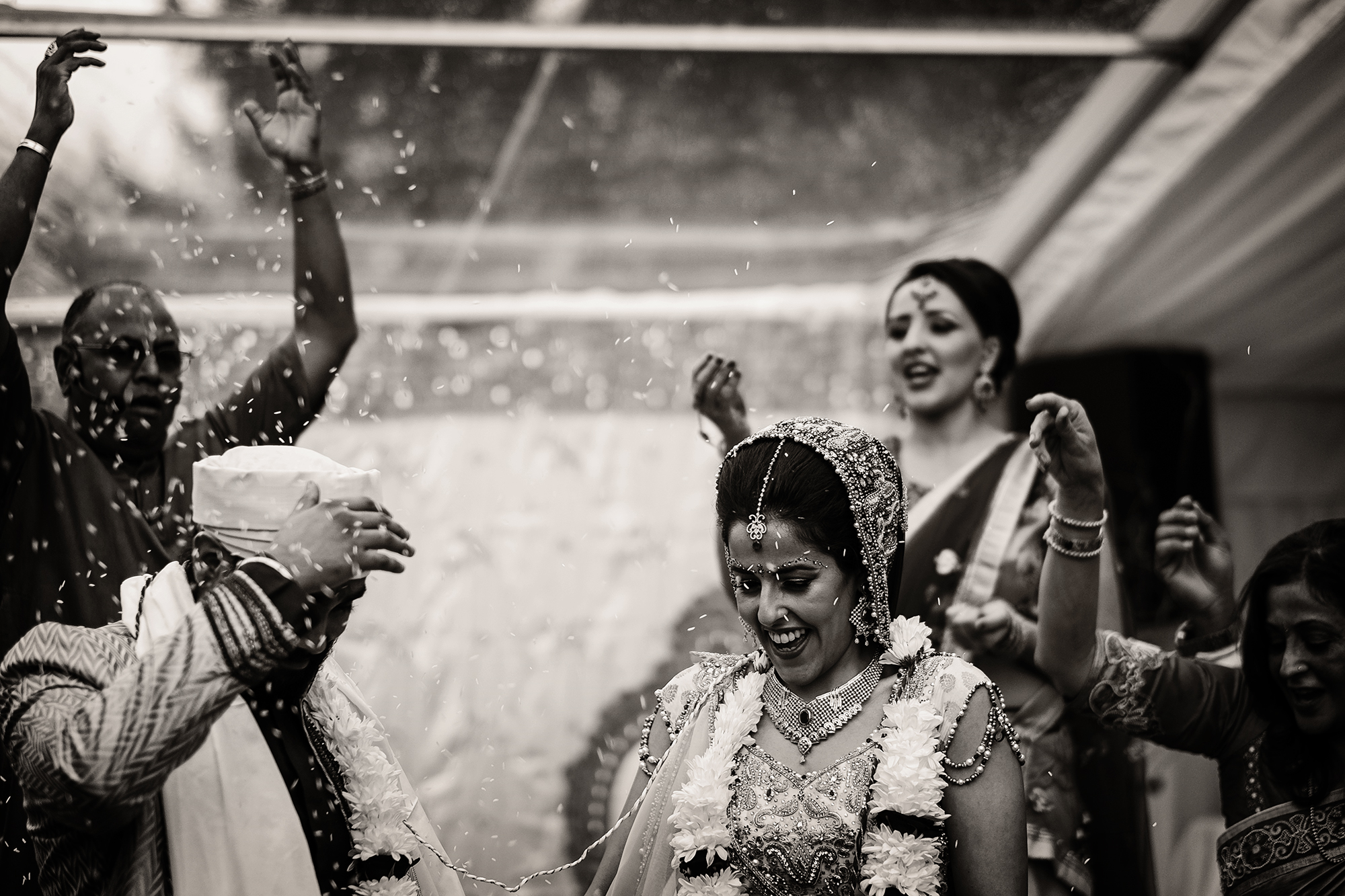


 Most wedding photographers want to be able to separate their subjects from the background at some point during the day and the amazingly fast 1.2 aperture of the 56mm (85mm full frame equivalent) allows me to do that. Even when I’m shooting fast moving subjects, such as a confetti throw, I will sometimes want to offer a luscious depth of field and there is no other lens that offers that f1.2 aperture that allows me to do that right now. This lens, along with the 23mm lenses are my goto lenses for every single wedding I shoot.

 The super fast aperture of f1.2 and the full frame equivalent of 85mm make this lens an essential part of my kit. It doesn’t matter if I’m shooting a documentary wedding, a jazz artist in a dimly lit room or a well lit portrait, the 56mm lens has a unique look and produces some of the best shallow depth of field creaminess of any lens I’ve ever used. Like all the Fuji XF lenses, the 56mm is also razor sharp and it beats the best of the high end 85mm lenses from the other big manufacturers. I haven’t tried the 90mm f2 yet, but it looks like that too will be an amazing portrait lens.
 Many photographers came to the X-Series because of this lens. Offering F1.2 at 85mm equiv. focal length in a compact package that happens to be one of the fastest focusing lenses in the range… The F1.2 effect has so many benefits, from striking portraits to being invaluable in low light conditions. The later is particularly helpful for me. In tropical rainforests you don’t often see wildlife from a far but instead stumble across it. Here the F1.2 helped to capture this baby elephant dozing, ISO1600 F1.2 1/120sec. If this were with a F2.8 lens I would have been shooting at 1/30sec, risking motion blur as I tried to contain my excitement.
 The 56mm F1.2 is my most used lens, it’s almost always the first lens I reach for on every shoot. I love the narrow depth of field and the super fast focusing. As a landscape photographer people are surprised when I say that I often shoot with the lens quite wide open, but for my style of long exposures where I’m trying to create a sense of infinite space the wide aperture looses the background nicely obscuring details I don’t need in the image.
  Click to see retailers selling the XF56mm lens

 When Fuji released this lens (75-210mm DSLR Equivalent), my intrigue questioned whether this would be an equal to the 70-200mm F2.8L series I had used on my DSLR; would the optics be as good? After trying it I could only describe the results in 2 words ‘Blown away’; the image quality was absolutely outstanding. I use this lens a lot in the studio for its narrower angle of view and the compression it applies to the depth of my images. The focusing & sharpness of this lens, even when hand held is amazing!… I had no need to question this lens, it more than equaled my DSLR equivalent and it’s much lighter too.
 I’ve shot on Fuji for almost two years now, but it was the release of the 50-140mm lens that really sealed the deal for me. Shooting fast equestrian sports needs a fast, longer lens – whether you are looking to capture pin sharp action pictures, or deliberately looking to include creative movement with interesting bokeh.


 I love to shoot prime lenses but at events and festivals you just cant get close enough to your subjects due to the crowed density, so the next best lens to a fast prime is a fast Zoom and the 50-140mm lens is just stunning. I have used top of the range glass from all the other big names when I used to use DSLR’s but nothing compares to the sharpness of this 75-210mm equivalent. What makes it even better is I can shoot with this lens all day and still not have shoulder and neck ache. It gives me beautiful out of focus areas, pin sharp subjects and the image stabilisation comes in to its own when the light drops.

 When this lens was created there was nothing else much like it in the range. And to date, it is still the finest long lens in the line up. Tack sharp from 50mm to 140mm – this constant f2.8 lens is fast enough & stabilised enough for you to think less and shoot more. Combined with the most recent updates leaves this lens as one of the most reliable lenses – regardless of genre or type of photography.
 Click here to see retailers selling the XF50-140mm lens