birds

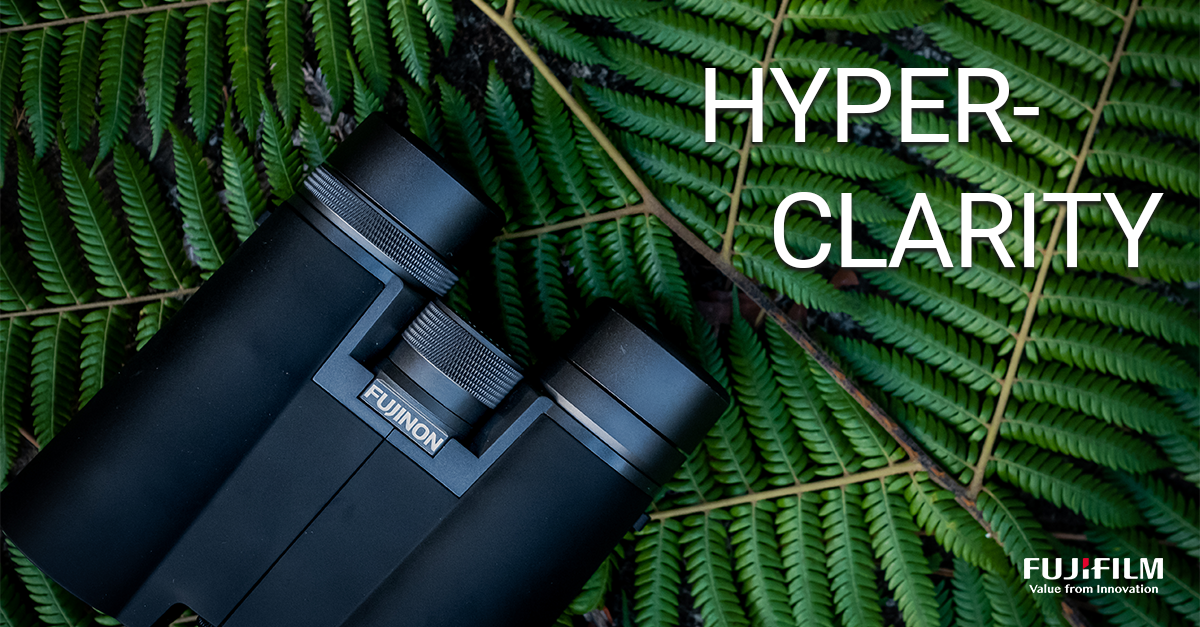
Fujifilm HYPER-CLARITY: A Birder’s Best Companion

The first principle of birding: spot the bird first, then point your optics at it.
The second principle of birding: make sure your optics play on your side. And here we talk not only about a camera but the right binoculars to use in conjunction. Birdwatching does not necessarily mean bird photography. However, even when it does, a good pair of binos can be an invaluable companion for all birders, hardcore or not.

Do you use binoculars in conjunction with your camera?

If you have not tried it, have a go. We suspect you would be surprised by how nicer an image may be compared to looking just through a camera. Binoculars help you see subjects more closely and in greater detail, and identify their behavior patterns as well as potential photography opportunities without wasting time setting up your camera for every distant subject. You can focus on specific details, adjust your perspective, and frame the shot exactly as you desire, ensuring a better-composed image. Choosing the right binos in this case can make all the difference.

Fujifilm HYPER-CLARITY series of binoculars is an excellent choice for those who don’t want to miss a thing while observing wildlife. They feature the sophisticated optical technology that Fujifilm has developed over the years in its professional binoculars business.

Hyper-Clear Field of View

The HYPER-CLARITY series is perfectly optimised for wildlife and nature observation, providing a bright and clear field of view. Due to our unique SUPER EBC FUJINON multi-coating on all light-transmitting surfaces, including the lens elements and prisms, these binos provide superb light transmission. This means improved brightness and a sharper, clearer, more detailed view, even in challenging lighting conditions. This is particularly beneficial in low-light situations, such as early morning or late evening birdwatching or observing wildlife in shaded areas.

The ED lens elements effectively control the chromatic aberration and prism coating for superior image resolution as well as contrast. This also allows for a much brighter field of view, more accurate colours and a reduction of visual distortions.

Magnification & Usability

The higher the magnification, the harder it is to find and track the bird. Let’s be honest, with a big zoom and little details moving unexpectedly, the world may seem too quick and shaky. In this case, you can certainly get binoculars on a bird faster than with a DSLR and a long lens. Offering 8x or 10x magnification, HYPER-CLARITY binos strike a balance between magnifying power and optimal usability. A slip-resistant elastomeric material and ergonomically engineered easy-grip body shape allow for excellent stability when held in your hand. And with the objective lens diameter of 42mm, they are still quite lightweight to carry around and easy to handle. 

Performance in Adverse Weather Conditions

With the water- and fog-proof structure, HYPER-CLARITY binoculars ensure durability and an enhanced user experience even in challenging outdoor conditions, such as rain or high humidity, without compromising their performance. A water-repellent coating applied to both objective lenses and eyepieces helps repel water droplets, preventing them from obstructing the view and compromising image quality. The robust magnesium-alloy body also adds durability and ensures that binoculars can withstand rough handling, accidental drops, and minor impacts, making them suitable for outdoor adventures and long-term use.

More beauty to it, these binos offer long eye relief for those who wear glasses, providing a comfortable viewing experience and minimising peripheral distortion. Longer eye relief allows you to maintain a proper distance between your eyes and eyepieces and ensures that even with glasses, you can see the full field of view without having to press your glasses against the eyepieces.

Maybe the right pair of binoculars doesn’t make you a better birdwatcher, but striking a balance of visibility, comfort, and image quality, it gives you all the opportunities to become one.

Kayaking with a Fujifilm X-T1 and XF100-400mm

Guest Blogger strip BLACK

By Jon Vause

I am a keen kayaker with a passion for photography so with the estuary and wetlands near my home having prolific birdlife it has been a natural progression to combine both. Using a kayak gives you unique access to the areas you just can’t get to on foot or by boat so this means less (usually no) people, which results in more bird activity. But let’s face it an open kayak isn’t necessarily a camera friendly zone and a DSLR with a zoom lens fitted isn’t the most buoyant combination around so it was a bit daunting at first to take this out in my kayak but over the past couple of years I have developed a reasonably successful and safe technique.

Egret_3411_2_FB-

There are a number of advantages using a kayak for photography as birds move with the tides and their feeding patterns so you can cover a lot of ground throughout the wetlands and estuary paddling the kayak. It is low to the water so gives a good angle for photography, is quiet and doesn’t alarm the birds as if on foot, allowing you to drift down onto your subject so you can get close. Sometimes very close as the birds seem to accept your presence. Being 10m away from an Osprey feeding on a fish without alarming it is a memorable experience. Also, it’s a lot more fun that sitting in a hide for hours waiting for something to come to you or wading knee deep in the mud.

I had been using a Canon DSLR, 70mm-200mm F2.8 lens with a 2x converter but wasn’t really happy with the image quality when using the converter so had resorted to just the lens which meant I had to try to get closer to my subject and crop images. To progress further I really needed a longer lens but it had to be practical to use in my kayak and without having to take out a second mortgage.

Enter Fujifilm.

Osprey_0491_FB-

Osprey_7668_FB-

The lens went on the back burner and in July last year I attended a Camera Expo looking for a travel camera as we had an overseas trip planned in 2017 and I didn’t want to take my heavy DSLR. I bought a Fuji X-T1 with the XF18-135mmF3.5-5.6 R LM OIS WR lens as it was compact, light in weight and promised good image quality.

I initially had no real intention of using the X-T1 for wildlife photography but I took it out in the kayak a few times to compliment my DSLR and get familiar with using it for landscape and the occasional bird life, and I was blown away by the image quality. There was also something special about the images compared to my DSLR. They had a vibrancy and just seemed better particularly the jpegs straight from the camera and having used many rolls of Fuji Velvia in my film days it took me back to images produced then. I loved the retro feel of the camera, it was just like my very first SLR many years ago and when I did try it on birdlife it captured the colours and details in the feathers beautifully and when I zoomed in on the image the lens proved to be sharp and I was impressed.

Gull_5661_FB-

I was hooked and the Fujifilm X-T1 became my go to camera for landscape and general photography but I needed a longer lens for my wildlife. I was pleased to see that Fujifilm had a XF100-400mm lens planned for release in early 2016. So, I waited and read the pre-release reviews with anticipation. It rated well so once released in Australia I parted with my hard earned cash and purchased the XF100-400mmF4.5-5.6 R LM OIS WR lens.

The camera, lens set up I had now, even with the optional vertical grip battery grip fitted to my X-T1 was half a kilo lighter than my previous DSLR and lens. This may not sound a lot but the weight reduction at eye level in a kayak plays a big part in balance.

Rule number one in kayaking with a camera – stay upright.

Not only was the weight reduced but when the XF100-400mm lens was fitted to the X-T1 it felt far better balanced and wasn’t “nose heavy” like my previous gear.

Tern_5812-FB_90-

So far so good but the proof would be how does the combination perform in the field or should I say in the boat? I just had to find out.

The lens is a similar physical length to my Canon 70-200mm lens, so I now had a 400mm lens that was compact enough lengthwise to fit into my waterproof camera bag in my kayak hatch with the lens hood permanently attached. This allows quick access when an opportunity arises.

And the performance of the lens did not disappoint.

Ibis_2312-FB-

Rated at 5 stops the OIS is just brilliant and I can confidently get hand-held shots at 400mm from the kayak at shutter speeds of 1/400 second and the results are pin sharp. This has allowed more flexibility following birds on the move, as in the past I would try to use a monopod for support which was restrictive should the bird fly away, but now this wasn’t a necessity. The image quality of the lens still impresses me as it is so sharp and quick to focus. It tracks subjects well in continuous focus mode although fast birds in flight can be challenging, in more ways than one. Pan too quick and you can end up having a swim! When combined with the burst speed of the X-T1 you can still get some great shots and this provides a great combination. For my style of photography, this lens is fantastic. I love it.

Egret_9377_FB-

I’ve also had use of the Fujifilm 1.4X TC WR teleconverter for a weekend and whilst you lose a stop this gives you an 840mm equivalent lens with no noticeable loss of image quality.

But it’s not just the lens, the combination with the X-T1 works so well I’ve left the DSLR at home now. I have been using the X-T1 exclusively for some months while learning its capabilities. The EVF I’ll say took me a little while to get used when compared to an optical viewfinder but that was really me not understanding its capabilities. Once I had the menu options of the X-T1 set up right I realized how good this was and how to use it to get the maximum out of it. I love the WYSIWYG image in the viewfinder as I can spot meter on a bird which may have very contrasting plumage. I see exactly the image and by changing the metering position, I’m able to prevent blown highlights or even change the background exposure. Also to be able to check your images in the viewfinder and use the focus assist button to zoom in check sharpness is a great feature in bright light conditions. I can also shoot at far higher ISO ratings now without any noticeable noise, which I couldn’t do with my DSLR. This allows me to use more of the lower light conditions available in “the golden hour” than before and also keep up the shutter speed and obviously with both camera and lens being weather resistant this is a great advantage in the environment I use it in.

Osprey_B0412_FB-

Like all photography though it’s what’s behind the image that makes a good image. When using a kayak you can have a 360-degree possibility of the approach angle on the subject so you have to plan you method of approach. Not only do you have to work out the lighting and sun angle you also have to judge the wind, tide and any current so that ideally you can drift down onto your subject with the camera at ready and eye to the viewfinder. Not to mention a co-operative subject or being in the right place at the right time. There’s a lot of hit and miss and it varies day to day as the birds move, but with Fujifilm and the X-T1 and XF100-400mm lens combination, this has helped to reinvent me in my photography as my results are much improved. This makes the hours of paddling and the effort all the more worthwhile. I am still learning and trying to get that perfect image but now with Fujifilm it’s a lot more fun trying.

I look forward to trying the X-T2 with the XF100-400mm lens one day.

About the author

Jon Vause

I live in Mandurah, 70kms south of Perth in Western Australia and have a keen interest in photography seemly always having a camera since the days of my first Kodak Instamatic. I also had a period of developing and printing with my own darkroom back in the film days but had to give that away when we moved to the Pilbara region in WA as the tap water was too hot.

Photography runs in the family and although I work in the telecommunications industry with constantly changing technology I didn’t initially embrace the digital era of photography until my daughter started studying it at school then going on and becoming a professional photographer.

My passion is the outdoors and outdoor activities. I enjoy bushwalking, mountain bike riding and kayaking. Having moved to Mandurah six years ago I now have the extensive waterways of the Peel Estuary at my doorstep and have combined kayaking with photography to pursue my main interest in bird photography.

Capturing bird images in the wild is challenging and using the kayak gives you access to unique areas. I also engage in landscape, seascape and water sports and with retirement coming it in a few years I am working on my skills to make photography my main pastime.

I’m still chasing the perfect shot. More photos are on my website www.jonvausephotography.com

Motorsport Photographer Jeff Carter has his say about the NEW X-T2

jeff carterAbout Jeff Carter

Jeff Carter founded MacLean Photographic after leaving the Royal Air Force in 1996.  The company name is from Jeff Carter’s full name – Jeffrey Stuart MacLean Carter.

With over 20 years’ experience in several fields, including sport, landscape, wildlife and travel, Jeff is based in Dunbar, near Edinburgh in Scotland. However he travels the world with his work in the motorsport and automotive industry and is constantly on the lookout for that next great image to capture.

As well as providing photographic services to editorial and commercial clients, MacLean Photographic runs a number of Photographic Workshops and Tours for individual or small groups of photographers of all abilities in and around the South East of Scotland.

Landscape photography with the X-T2 in East Lothian


Belhaven Bay in East Lothian

Why did you choose Fujifilm?

A camera is the tool of my trade and the best tool is one that becomes an extension of my creativity, something that I can use without thinking about how to capture an image. I have used all different types of cameras over the last 20+ years but, for me, the three X Series cameras I use are like an extension of my eye and brain.

The first X Series camera I bought was an X100 black limited edition for a business trip to Shanghai. The X100 was like a mini version of the Fujifilm GA645 medium format camera that I had used in the early 1990s and the fixed focal length camera put a spark back into my photography, it was a joy to use. The ability to travel light and still get ‘the shot’ really opened up my mind to the possibilities of the compact system camera. This led to an X-Pro1 a year later, then the X-T1, an X-Pro2 in 2016 and now the X-T2, with a good selection of XF lenses to match.

The X-T2, X-Pro2, X-T1 and X100 I currently use, along with the range of quality XF lenses, are tools that allow me the freedom to be creative but they have also put the joy back into the image making process.


How have you found the new Fujifilm X-T2 camera?

This is the camera I have been waiting for ever since I moved from Nikon to Fujifilm in 2014.  Each step that Fujifilm has made in the past four years have culminated into this camera.  It is like an extension of my arm and eye when working trackside or in the pitlane.  The X-Pro2 is a great camera and pointed the way to the next step. And the X-T2 doesn’t disappoint.

On track battles during the TCR International Series at Spa-Francorchamps

I can follow focus a car moving at 200mph and I can follow focus a bird in flight.  I can also switch focus from one subject to another quickly and seamlessly.  The Electronic View Finder is beautiful, a joy to use, and doesn’t black out when shooting long bursts.  The 11 frames per seconds on boost mode adds to the flexibility of the camera, as does the ability to shoot 4K video.

The 24MP sensor produces the same stunning image quality as the X-Pro2 and 6000 x 4000 pixel images gives greater flexibility to crop the image in post production.  The film simulations are to the same high standard as always with Fujifilm and gives me the option to take the images straight off the camera if speed is of the essence, which in sports photography is usually the case.

The quality of the images when shooting at high ISO settings is really outstanding and I have no hesitation in pushing the dial to 6400 or even 12800 when needed.

The ergonomics of the X-T2 have taken the best that the X-T1 had to offer and improved the overall operation of the camera.  The new dials and locking mechanism are really good to use and the joystick on the back of the camera also speeds up the operation in the field.  Finally the new tilting screen which means I can shoot in a landscape or portrait format from down low or above my head is a big plus point and something I was using all of the time at the 24 Hours of Le Mans.

The weather proofing got a thorough test at Le Mans too as it rained for most of the week leading up to the race and the X-T2 never missed a beat, which is more than I can say for the photographer!

For me this is the ultimate X Series camera!

Heavy Rain during qualifying for the 24 Hours of Le Mans caused the session to be stopped fo r20 minutes due to deep water on the circuit


What’s your most loved image taken on the X-T2 so far and can you tell us little bit about it?

Capturing the moment at a top international sporting event like the 24 Hours of Le Mans is hugely important for any photographer working in editorial photography, especially sport.  The new X-T2 allows me to react to a situation quickly and this was essential in capturing my favourite image so far.

The image is of the podium celebrations following the 24 Hours of Le Mans.  Porsche had a dramatic win in the final five minutes of the 24 hour race when the leading Toyota stopped on the final lap, allowing the Porsche to take the chequered flag.  The emotions on the podium were there for all to see.

The winning Porsche drivers Marc Lieb, Neel Jani and Romain Dumas were celebrating in true motorsport style and afterwards Romain Dumas was speaking to the circuit commentator on the podium after his second overall win at Le Mans.  While he was speaking he was ambushed by four of the other drivers and they tipped champagne all over his head.

I was able to react quickly and capture a whole sequence of images with the X-T2 and the XF50-140mm f2.8 + 2x converter.  This image sums up the relief and elation of winning the most famous motorsport event in the world and this is why this is my favourite image from my time with the X-T2 – so far!

Romain Dumas (FRA) celebrates winning the 2016 24 Hours of Le Mans for Porsche.


What lens do you think best pairs up with this camera for your shooting style?

For sport most people would probably think I would say the XF100-400mm f4.5/5.6 but for me, the best all round lens is the XF50-140mm f2.8.  This lens gives me the greatest flexibility and produces images that can match anything produced on the XF56mm f1.2 or XF90mm f2 (which I own and use as well).

Photographing the Gannets of Bass Rock in flight. A good test of the AF capabilities of the X-T2 and 50-140mm lens

The XF50-140mm f2.8 coupled to the X-T2 is a powerful combination, especially with the improvements made to the continuous Auto Focus function on the new camera.  The ability to follow focus a fast moving subject, such as a race car, or a randomly moving subject such as a Gannet diving into the sea for fish, is a huge plus point for my work.

Another advantage of the XF50-140mm is the ability to fit the 1.4x and 2x converters, meaning I have a focal range of 50mm to 280mm available to me in a relatively small package.


To see more of Jeff’s work please visit his website and social sites:

Website:             www.macleanphotographic.co.uk

Twitter:               @macleancomms

Facebook:          www.facebook.com/macleanphotographic

Flickr:                 www.flickr.com/macleancomms/

Instagram:         www.instagram.com/maclean_photo/

Using flash to capture action

I am currently in the middle of a six-month research stint with the Wild Macaw Association, gathering data on a scarlet macaw population for a study in Costa Rica, associated with Gent University. This remarkable opportunity allows me to study these birds closely and to explore the surrounding area during our two daily treks. To find out more about this very successful project, in which 75 macaws were released from 2002-2012, please check out this link here.

Scarlet macaws are incredible birds, with their bright colours and quirky behaviour making them very photogenic. However, they are often found within the rainforest and this often means in dark conditions, too dark for even the XF50-140mm F2.8 and high ISOs to capture any sort of motion. This problem will sound familiar to many of you in different situations, where OIS is redundant as the problem is subject movement, not camera shake. There is however one way to get around this: add artificial light. It may not be suitable for some situations but with a little bit of time and understanding this can allow for that otherwise impossible shot.

Here is a video showing how I developed my flying macaw photographs.

For me, there are two reasons to add flash to an action situation; we’ll take a look at both of these in a little bit of detail.

You need more light to freeze the subject/scene

In other words you simply can’t get a sharp image without more light. This is the most common reason to switch to flash. Most will start with the popup flash on their cameras and/or then get a dedicated flash and mount it on the hotshoe of the camera. There are photographers who can produce exceptional images using just this simple technique, and if you have a TTL (through the lens metering) flash then this becomes relatively quick and simple as the camera will communicate with the camera how much flash output there should be. Generally this will be fine for most needs, especially if you are short of time and need to take a variety of photos.

If you do have a TTL flash and you haven’t experimented with manual flash outputs before I would highly recommend that you give it a go. This slows you down and makes you think more about what you want to produce – do you simply want the flash to give a little bit of fill light to an otherwise correctly exposed scene? Or would you rather the camera underexposes the scene while the flash exposes correctly, so bringing the focus onto your subject and away from the darker background? These are all fun things to play with.

This all sounds great but flash photography can drive you around the bend if you’re not careful. On current X-Series cameras the maximum flash sync is 1/180sec (except the X100 series because of a leaf shutter allowing 1/1000sec flash sync). Anything more than this will not allow proper flash input. When it comes to action 1/180sec is pretty slow! There is one flash currently available, the Nissin i40, which is different. It offers high-speed sync (HSS), which allows you to use the flash up to 1/4000 sec, this is certainly helpful when adding some fill flash but it does cut the overall output of the flash. The reason for the downgraded power in this mode is because the flash sends out a series of very high speed flashes (instead of one, more powerful flash) that are fast enough to expose the subject within the maximum shutter speeds.

On camera flash
1/180sec flash sync isn’t enough to freeze background movement when following a fast moving subject. This can be fine as it shows some motion. The illuminated subject should generally be sharp because a flash pulse is so fast. However this can be improved by using second curtain/slow sync that I will talk about soon.

If you want to freeze the subject and aren’t bothered by the background then what you want to do is find an exposure combination that creates a totally black image. For example 1/180sec (max sync), F11, ISO200 – a mix which should require too much light for a lot of scenes, thus leaving your image black/heavily under exposed. The next thing to do is to add the flash that will offer all the light on the subject. If your subject is moving quickly then you’ll want to cut the flash output, this sounds counterintuitive, but as you cut the light output say from 1/1 to ¼ then the flash time is four times faster than maximum 1/1 power. This ensures that the subject is completely frozen.

Stopping the feathers in mid-beat, using ¼ power of the flash ensured it froze the macaw. However, when you do this you’ll often need more than one flash to get enough light to illuminate the subject with the ‘ambient stopping’ settings and the fractional flash power output.
Stopping the feathers in mid-beat using ¼ power of the flash ensured it froze the macaw. However, when you do this you’ll often need more than one flash to get enough light to illuminate the subject with the ‘ambient stopping’ settings and the fractional flash power output.

The scene isn’t dramatic enough so you add artificial light

Sometimes a scene just looks flat and no matter what you do images just don’t ‘pop’. This is where some creative artificial light can make an image. In the rainforest undergrowth this definitely applies, as apart from being really dark, there is generally very little direct sunlight so the light is muted. Some images where I panned with the subject came out ok, partly thanks to the wonderful colours of the birds, but I still felt that it need an extra something. This is where the aforementioned video shows the progression from initial photos to more dynamic, off-camera flash images. 

There are countless blogs on creative use of artificial light and I’m not going to pretend that I am a flash master, instead I’m simply going to show the set up I ended up using and why.

First of all I love off-camera flash, it opens up so many more opportunities compared to simple on-camera flash (this is just my opinion and not fact). So I very quickly knew that for the image I had in mind, I needed to use flashes off camera. I experimented from backlighting the birds to using the two flashes one from each side and then from slap bang in front. But the combination that created the image I really wanted involved having both flashes to the right-hand side, where the bird was flying. One flash was in line with where the birds fly over, while the other was slightly around towards me so giving a bit of light onto the side of the face towards the camera. This gave sufficient light onto the face to freeze the detail (especially as the face is lighter than the body) but didn’t cast enough light onto the rest of the bird to freeze more detail so creating motion. Here is a sketch to indicate what I did.

Lighting

Different Flash Curtains

There are two curtains in a flash exposure. The first curtain reveals the sensor to the light coming through the lens and then the second that closes the sensor to light, completing the exposure. This is important to understand as it can greatly affect how you use flash.

First curtain flash

Where the flash is triggered as the first curtain opens. This is the most common set up, where your main priority is the flash. The go-to set up unless you’re using slightly slow shutter speeds with subjects or moving lights. It captures the exact action that you press the shutter to capture, if you use second curtain/slow sync then you could miss the split-second moment you were hoping to catch.

1st curtain is great for portraits.

Second Curtain Flash

As the second curtain is about to come up and finish the exposure the flash fires making it effectively the last light to hit the sensor. This method does send off a flash initially to get a meter reading if used in aperture priority mode (no meter flash in manual mode). I generally avoid this method as it can give weird results (see video).

Look at the weird double freezes, by the metering flash and 2nd sync flash.

Slow Flash Sync     

Slow sync is only available in aperture priority/auto-shutter speed modes, generally it is the same as second curtain flash but without the disruptive initial metering flash (note that it can only go down to 1/8sec). This is my favorite option for any kind of action photography and is the method I used for the panning images. The reason why this works best is it lets the ambient light reach the sensor first; correctly exposing the background and THEN the flash is triggered reaching and freezing the subject. This is preferential for panning/slow shutter speeds because it prevents ghosting – where the subject is flashed and but there is time afterwards for some light to reach the subject and any subject movement creates a bit of a psychedelic feel!

Slow Sync
Slow flash sync is my favourite option.

Conclusion

There concludes a rough/quick break down of different flash curtain types for the X-Series. To summarise there are a number of ways you can use flash to help your action photography:

  • Fill flash either up to 1/180sec or higher if using a HSS flash.
  • Causing a correctly exposed subject with a darkened/underexposed background.
  • Freezing a subject
  • Capturing motion with a bit of detail while panning with a moving subject.
  • Blending ambient light with directional flash light.

I hope that gives you a little bit of inspiration to get out there and try your hand at creative flash photography.

If you’d like to find out more about the Wild Macaw Association project or even donate to keep the project running then please check it out here – http://www.tiskita.com/macaw-conservation/


A little about Ben

Ben is an environmental photojournalist, zoologist and Fujifilm X-Photographer. His passion is showing the beauty and fragility of the natural world. Find more of his work at:

X-Photographer’s Spotlight – Chris Weston

Tell us about yourself and what got you into photography?

chris westonWhen I was about 15 years old, I lived in Boston. Unfortunately, not the colourful, vibrant city in the United States but the quiet market town in Lincolnshire, England – historically linked to its American namesake but a place best known for its Dutch-like landscape and the agricultural prowess of its inhabitants. What I am trying to say is, I grew up in a part of England that required much of one’s imagination.

At school one day, I was asked to select my preferred employer for a 2-week work placement. The options weren’t good. Potato planting, bulb cleaning or strawberry picking were three of the more attractive options, as I recall. Seeing my inner turmoil, in a way only dads can, my father asked me what I wanted to do for a career. Without hesitation I replied, “I want to be a photojournalist”.

From where that statement came, I have no idea. Not a clue. I mean, I remember wanting to be (at various stages and in no particular order) a fireman, a policeman, a jet pilot, a train driver, a ski jumper and, of all things, an accountant … but a photojournalist? That was a new one. Even so, at my father’s behest and with the blessing of a somewhat perplexed headmaster, I began my first ever assignment.

_DSF610172

How did you develop your style in photography?

While I was on an assignment, about a year after I turned professional, I had a light bulb moment. I was in Tanzania photographing the annual wildebeest migration, as it passed across the Grumeti River. It was a slow day and photographic opportunities were few and far between. I don’t know if you’ve ever paid a lot of attention to wildebeest but they’re not Africa’s most alluring creatures. African’s describe them as, “The animal God created out of the leftover parts of other animals”. Don’t get me wrong, I like wildebeest but they don’t do much. Their day consists of walking in a wide circle eating grass. And that’s about it. Two days into a three-week long project, I was struggling for ideas. How do you continually photograph what amounts to a large brown antelope grazing in a big brown field?

And then it struck me. I started to think about migration and what it really is. Migration is the movement of animals from point A to point B. Movement. Migration is movement and that not wildebeest was the real story. I started to make photographs that captured the story of the migration – wildebeest moving, individually, in a line, in large herds. Suddenly, my photography had purpose and it has been guided by the light from that bulb ever since. We’re not just photographers we’re storytellers. In place of a pen we have a camera but irrespective of the tool our aim is the same: to amuse, emote, inform, educate, and entertain. I believe that inside all of us is a story that is aching to be told, tales that make photography a unique and intensely personal experience.

_DSF1284

Why did you choose Fujifilm cameras?

For the past couple of years, I have been advocating that the next major shift in camera design will be the exit of the mirror. The mirror is perhaps the single most-limiting factor in an SLR camera, which is rather surprising given that it has been the mainstay of camera design for nearly 80 years.

First of all, the mirror causes cameras to be far bigger and heavier than necessary. Secondly, to accommodate the mirror, the lens needs to be pushed further forward, increasing the distance between the rear lens element and the sensor (or film) plane, which diminishes the quality of the light transmitted by the lens.

Thirdly, the mirror slapping up against the chamber introduces vibration that, when combined with relatively slow shutter speeds, softens edge detail, reducing image quality further. This is particularly true when using ultra-high resolution DSLR cameras. Finally, mirrors are noisy. The constant slap-slap-slap cuts through the silence of dawn and dusk, echoing across open savannahs and bouncing off woodland trees, startling anxious wildlife into panic.

So, when Fuji announced the launch of the X-T1 mirror-less camera, I was intrigued enough to contact Fujifilm UK. My main question to Fuji was: Is the X-T1 up to the rigors of professional wildlife photography? They answered my question with a question: loaning me an X-T1 body and a couple of lenses they said, “You tell us!” I’ve been using the X-T1 ever since and my investment in Fujifilm products continues to grow.

_DSF5175

Do you have a photographic philosophy you live by?

For me, a photograph begins with a caption. That may sound a little back-to-front but if you think about it, really it isn’t. For example, imagine trying to build a house with no architectural drawings. Where would you start? How would you even know what materials you needed? Nobody would approach house building this way, yet the idea that fully formed, well-composed photographs just happen seems to be accepted as the exception to the rule. It’s not. Photographs are designed and crafting an image begins with having something interesting you want to say.

Knowing what to say comes from knowing your subject. The better you know your subject, the more stories you have to tell. I became a wildlife photographer because I’m fascinated by the natural world. How it works, how it fits together and how everything is connected. I often find myself intrigued by inane questions like,  “Why are zebras black-and-white striped when they live in a yellow savannah?”

It’s by asking questions and finding answers that I’m able to hit upon new ideas for images, find ways of making interesting photographs of ordinary subjects or different ways to photograph the same subject over and over. It’s how I learn about the natural world and develop a better understanding of wildlife and nature and, to some extent, my part in it all. And knowing yourself, how you feel about things and how things move you is as important a part of the process as the technical aspects of photography.

_DSF561872

Key inspirations – What & who inspires you?

Perhaps intriguingly, I’m more inspired by people and events outside of photography. In photographic circles, I admire the work of Michael Nichols, particularly, and, in the very early days, I learned a lot of the basics from Art Wolfe. However, today, science (especially quantum mechanics) and extraordinary people and thinkers, such as astronaut Chris Hadfield, author Yuval Noah Harari and physicist Brian Cox inspire me.

_DSF1764

Do you have any tips or tricks you could share with us?

There are so many thoughts, ideas and techniques that have led me to where I am that it’s hard to narrow them down to a few. So, instead, how about I offer Fujifilm readers a completely free e-book titled Nature Photography: Insider Secrets. To get a free copy simply click on this link: Top Wildlife Tips

_DSF4607

What’s next for you?

I’m on an amazing personal journey of discovery, looking at how creativity through photography can inspire how we live, as individuals and within communities and society as a whole. It’s a story that I want to share with the world and I’m currently talking to Fujifilm about how we can make that happen. Watch this space!

_DSF1679-2

Contact info

Website
Facebook

The right gear for the job – Wildlife

I thought this could be a helpful blog series for individuals looking to invest in equipment with particular interests in mind. This blog series will hopefully cover gear and techniques to help those getting into photography, who want to develop their skill set and knowledge. Because one of my main subject matters is wildlife I thought I’d start off with this genre.

Wildlife photography is a genre that can massively benefit from having suitable equipment, in my eyes more so than many other photography genres (but I’m biased!). To that end it’s good to be prepared with the most suitable gear for the task.

Best Camera – X-T1

The X-T1 has a number of features that make it the most suitable camera for wildlife:

Dolphins
Knowing that my X-T1 and 18-135mm lens set up was weather sealed meant that I could stop worrying about splashes and focus on capturing the dolphins.

First of all it is a weather sealed camera, so when used with a weather sealed lens you have a completely sealed system which is important when outdoors if you’re having to counter water in wet conditions or dust in dry conditions.

Then there is the fast auto focus, which the X-T1 is definitely the best at in the X-Series at this moment in time. The auto focus is very quick in single focus mode with basically every lens available and the continuous focusing mode is also very reliable and quick once focus has locked.

Terns
Fast continuous focus and 8 frames per second meant that I could get the composition just right as these terns flew at me on the Farne Islands.

Being able to shoot at 8 frames per second and take advantage of the latest UHS-II SD cards for fast writing speeds means that this camera can cope with quickly evolving situations where you need fast bursts to capture the action and to be quickly ready to repeat the process.

As well as the camera being great, the accessories can be really helpful, namely the battery grip. Often with wildlife photography you are out and about for many hours and the last thing you want to happen is to be stuck changing batteries just as something exciting is happening (this has happened to me far too many times!). The battery grip holds an extra battery so doubles the time before you need to change your batteries.

Finally, the big thing about to come to the X-T1 (black version) is the electronic shutter. Being able to shoot at up to 1/32000 second is great but is generally not necessary for the lenses used with wildlife photography; but what will be very beneficial is the silent shutter. If you’re close to wildlife or in ear shot then even the slightest sound can set off a timid animal. The X-T1 shutter is by no means loud but certain animals have such finely tuned hearing that the mechanical shutter sound can be enough to scare off your subject.

Back up camera – X-E2

Having two cameras is a good idea for wildlife photography. It is often helpful to have two different lenses on the cameras so you can quickly capture images at different focal lengths, going from the close up headshot to the animal in environment shot. If an X-T1 is out of the question, let alone two of them, then the X-E2 is a brilliant compromise. It offers a more affordable option and though it may not have weather sealing and all the bells and whistles I mentioned above it is still a very capable camera. With 7 frames per second and a hybrid AF system that includes contrast and phase detection, this camera is able to capture fast paced action almost as well as the X-T1.

Lenses

Puffin
The 55-200mm in action.

The 55-200mm is currently the longest lens available for the X-Series until the 140-400mm comes out very soon. Covering a good range with a very useable widest aperture (F3.5-4.8), this lens is a super lightweight option for wildlife photography. The auto focus is fast and accurate plus the lens has OIS (optical image stabilisation) which is great to help you capture sharp shots if you’re handholding.

Moving into the weather sealed lenses, the 18-135mm lens is a brilliant all-in-one wildlife/nature lens to carry around if you’re wanting a one-lens solution. When used on the X-T1 this is a sealed system that has snappy auto focus and OIS to help make sure your shot comes out sharp. If you’re looking to have a more specialist lens(es) then the new 50-140mm is a good place to start, though not as long as the 55-200mm lens it offers a widest constant aperture of F2.8. This is brilliant for photography in darker conditions, such as golden hour at sunrise and sunset. This has been combined with OIS and the world’s first triple linear motor auto focus system to ensure you focus in on your subject quickly and get sharp results. This lens has internal focusing and zoom, helping ensure that no moisture or dust can get into this weather sealed lens.

Wildlife doesn’t always require the longest focal length possible. Often framing your subject within the environment can have a much more powerful effect than the classic headshot close up. The soon to be released 16-55mm lens will be the perfect partner for the 50-140mm lens, providing another weather sealed option with a fast widest aperture of F2.8.

Highland cattle
Highland cattle of the Isle of Skye at 18mm. Not the best ‘wild’life photograph but it helps emphasise the point of framing an animal in its environment.

If you’re interested in macro photography then you have two options, the Fujifilm XF60mm F2.4 or the Zeiss 50mm F2.8. I have used the Fujifilm version and love it, though if you want 1:1 scale then the Zeiss is the way to go. These lenses are also great general purpose lenses, the orang utan photo at the top was taken with the XF60mm.

Ants
Ants crawl over a vivid red plant in the heart of the rainforest in Borneo.

Beetle
An emerald green beetle’s shell glistens from my off camera flash. The XF60mm is a great lens to cover a wide variety of shots.


I hope this has proved helpful to those of you that are looking to invest in the Fujifilm X-Series for wildlife photography. If you have any questions then please leave a comment below or contact me via:

Twitter – @benji_cherry

Facebook – https://www.facebook.com/BenCherryPhotography