Wildlife

10 Tips for Better Wildlife Pictures

Struggling to catch the near-perfect wildlife shots you have seen in top magazines and exhibits? Now that camera technology has become more accessible, many people are branching out into nature. Wildlife photography isn’t for the faint of heart, however, and plenty of professionals and enthusiasts alike encounter challenges.

Photo by Ben Cherry (@benji_cherry), Fujifilm X-T2 with XF100-400mmF4.5-5.6 R LM OIS WR lens

Fortunately, with the right equipment, research and mindset — and of course, plenty of practice — you can make major improvements. The following are 10 tips you can use to take better wildlife pictures today.


Study Your Subject


What kinds of environments do your local fauna love most? Which animals live within driving distance, and what are their migratory patterns and schedules? Will your subjects even be awake when you go to shoot? Wildlife photography is all about catching those fleeting moments that most people never get to see, and being there at the right time and place is a numbers game. Study your subject matter to give yourself the best chance of being in position for a great shot.


Stand Back, Zoom In


Animals are tough enough to shoot in urban environments; in nature, they can seem impossible to catch up close. To capture wildlife acting as naturally and unafraid as possible, you may need to rely on a long telephoto lens. When dealing with the most skittish creatures, the longer the focal length, the better.

Photo by Vincent Yuhiko, Fujifilm X-T1 with XF18-135mm R LM OIS WR lens

Broaden Your Horizons


As helpful as a long, narrow focus can be, you don’t always need to catch creatures up close — nor do you need to isolate them from their environments. Some shots are actually more powerful when taken with a wide angle that gives the viewer context. Experiment with both broad and narrow focuses to see which suits your tastes and subject matter. You’ll probably find that different shots are best for different situations.


Practice Patience


Nature is unpredictable. Even if you rigorously study the animal you want to shoot, you’ll probably have to play the waiting game once you get into position. In fact, patience is one of the defining factors of a great wildlife photographer, and some of the most iconic shots have only been possible after hours or even days of waiting and returning to the same spot.

Photo by Vinh Le (@mylittledistraktions), Fujifilm X-M1

Don’t Wait for Every Opportunity


At the same time, patience isn’t everything. You can’t always wait for great shots to materialise, especially when you only have a small window of decent lighting and weather. If your only goal is to capture a specific animal in a specific moment, then yes, you’ll need to wait. But if you just want to capture interesting shots within an environment, make the most of your time and seek out opportunities for great shots.


Simplify Your Backgrounds


Photography is all about using depth and contrast to highlight your subject, and wildlife photography is no exception. While some photos will be inherently “busy,” you can often create a dramatic effect by simply capturing an animal against a non-distracting background.

Photo by Daniel Bradford (@dbrad1992), Fujifilm X-T1


Keep Both Eyes Open


When you control neither your environment nor your subject matter, you’ve got to be ready for anything. To stay aware of your surroundings, keep both eyes open as you look through the viewfinder. If you’re only focused on what’s in the frame, you’ll miss far more opportunities than you see.


Focus and Exposure


A few setting tweaks can make all the difference between a clear shot and an indecipherable photo. If your camera allows, set your focus mode to “continuous” and your focus area to “zone.” Use a larger grid setting for larger animals and a smaller setting for small subjects. As for exposure, you’ll want to choose a small area for a shot that emphasises the subject and de-emphasizes the background.

Photo by Nina Dos Santos, Fujifilm X-T1 with XF27mmF2.8 R

Know Your Equipment


During a daylong shoot, you’ll encounter — at best — mere minutes of photo-worthy material. What’s more, each moment of interest may only last a few seconds. If you’re not familiar with the capabilities and settings of your camera and lens, you could miss once-in-a-lifetime shots. Know your equipment’s shutter speeds, memory card speeds and focal lengths, as well as all the options you have for toggling focus points and modes.


(Perfect) Practice Makes Perfect!


Last but not least, practice, practice, practice! Analyse the shots you take, and consult experienced photographers for advice on how you can improve. The more hours you can spend, the better you’ll become, but you can fast-track your progress by seeking feedback and making the most of each shot you take.

BBC & NatGeo wildlife photographer Ben Osborne switches to Fujifilm

By Ben Osborne

Tell us about yourself and what got you into photography

Photography has been part of my life for as long as I can remember. I still have packets full of black and white negatives taken on 127 roll film with an old Brownie box camera – memories of family holidays and school trips from way back when. At the University of Edinburgh my interest in photography developed when I used still images and Super 8 film to back up field research on the feeding behavior of Ringed Plover, the subject of my Zoology Honours Degree dissertation. Having completed a second degree, my scientific “career” took a series of slightly disjointed steps through various biological research jobs, mainly ones with a wildlife theme. My interest in photography matured during this time until Read More

Orcas. An Arctic fairytale of whales (which are actually big dolphins)

By Tommy Simonsen – Northern Norway, January 2017.

The air is crisp and cold, and the light is about to break as we speed through the strait, heading north. We freeze a little in our yellow safety suits; we are after all in an open boat hurtling through the winter darkness at 69”N. The 12 meter long black R.I.B. (rigid inflatable boat) is perfect for these arctic waters, and the feeling of cold doesn’t bother us too much on our way to a great annual adventure: the Arctic Orca Safari!

The dark season is about to come to an end at these latitudes. The region has been engulfed in darkness and passing winter storms since the end of November, when the sun broke above the horizon for the last time. The further north you get, the longer the darkness lasts. Today we got a vague sort of daylight between 11.00 and 13:30.

I have been tracking the weather forecast, and noted that the clouds are supposed to clear around this time. As the sun is about to make a return, that is an extra reward, whether or not we find any orcas. At this time of the year, sky at the top of the world turns a special shade of pastel pink.

Orcas and other whales arrive in the northern coast of Troms county from the end of October to February. They follow the large shoals of herring that come from the open waters into the fjords. Herring is food, so where there is herring, there are whales.


After an hour the R.I.B. suddenly slows down. It lies quietly in the water, with snow covered mountains rising in the distance. The light has turned an intense yellow in the southern sky, and in the north, deep blue has given way to pastel pink.

P-Tchhh!  I look around; it’s close.


P-TCHHH!!!


It’s really close!


An orca pops up right next to our R.I.B., exhaling explosively, filling the air with the smell of digested fish.

There’s nothing like the smell of herring in the morning!

As the light gets stronger, we realize that it is a large family group we have found. A shoal of herring is present, and the family is in hunt mode, ignoring us completely. They work like a wolf pack, confusing the fish by blowing bubbles, working to keep the panicked herring close to the surface and then barrel through them, filling their great mouths with stunned prey. It is clamour and carnage on the surface, with seagulls and sea eagles swooping in to join the feeding frenzy. Pods of orcas zigzag, coming right towards the R.I.B., dorsal fins slicing the water.

P-Tchhh!
Orcas are everywhere. They dive under us, emerging on the other side of the boat. Close by us. Far away from us. Everywhere. It’s intense. I remind myself to breathe, to not forget why I am here.

To get extraordinary pictures.


How I create my orca pictures from a boat

Type of boat

I prefer to work from a small boat, so I can shoot from lower angles. But remember: salt water is certain death to your expensive electronic camera. It is extremely important to pack your gear in a waterproof Ortlieb, Lowepro or similar bag of another brand. And I mean really waterproof! If you’re not used to shooting from a small boat, keep the bag properly closed during transport. Learn to read the waves and how the boat responds to them. The waves might not splash you from the front, but come at you from the sides, or elsewhere unexpected.

When you use your camera, keep the bag closed. And NEVER leave the bag unattended on the boat deck. When I need to, I cover the camera under my arm or in a plastic bag when I wait for something to happen. Don’t put the camera against your body under the jacket. Remember it’s cold outside, and you are warm. When you take your camera out again, the lens and viewfinder will fog up.

Keep your gear cold. Only spare batteries should be kept warm in your inner pockets. On a trip like this, you should bring several batteries.


Position in the boat

Where you sit on an R.I.B. during a tour is important. If you occupy a front seat in the bow, you get a wide, panoramic view with no obstructions. But the bow gets the worst beating from the chop, and is also the one position where you are almost guaranteed to get wet if the sea is anything but calm.

On an R.I.B. during a whale safari, I prefer a seat at the rear, as close to the pilot / guide as possible. It makes communication easier, and is also the place where the boat’s rail is at its lowest, so I can lean over the side in calmer conditions, to get the lowest angle possible. Capturing whales high above the horizon line adds to the drama of my images.


Cameras and settings

I have two FUJIFILM X-T2 camera bodies with two 32 or 64GB SD cards in each. One with the XF50-140mmF2.8 WR on it, and the other with the XF16-55mmF2.8 WR.

Both bodies and lenses are weather sealed, which is necessary because you get a little wet working around waves and whales, and this equipment can take some some sea water without damage. And I always have the ever important, absorbent microfiber lens cloth. I have a couple of them in different pockets, so I can switch when one of them gets too wet.

The X-T2’s tilt screen is one of the reasons it is my preferred field camera. It’s perfect for shots at lower angles, especially with the vertical tilt for portrait oriented images.

Shutter speed and reaction time are vital to shooting whales. I prefer 1/2000 sec. If the sea is rough, shutter speed has to come up. All of these shots were made under lower lighting conditions, so my shutter speed varied from 1/500 to 1/1000 sec at ISO 1600 to 2500 in all of them. Imagine how the colors would have turned out at ISO 200? Fast lenses are certainly critical in these conditions.

Responsive auto focus is also important. I often use “single point” or “Zone” AF mode, normally on Single or Continuous tracking focus. Typically, I use “CL” or “CH” burst modes for whales. The AF point joystick is most important to me for quick composing and shooting.


Don’t forget to have fun

Remember to put your camera down once in a while. These Arctic orca safaris have a special place in my heart. I work very hard on these trips, but remind myself to put my cameras away sometimes, to fully enjoy the spectacle of these magnificent creatures in action.

Thanks for coming along on this Arctic journey with me.

Tommy


Arctic Orca facts

  • The Orca is the largest of whales in the dolphin family, and like most other dolphin species, they live in social groups.
  • There are about 3000 orcas in the Norwegian and Barents Seas.
  • Females can be up to 7.7 meters, and weigh 3.8 tons, with an average life expectancy of 50 years, and a maximum of 80-90 years. After being pregnant for 15-18 months, a female gives birth in the late autumn to a 2.3 meter long calf that weights about 200Kg.
  • Males can be up to 9 meters, and weigh 5.5 tons, with an average life expectancy of 30 years, and a maximum of 50-60 years. The dorsal fin is much larger on males.
  • They live in family groups of females and calves, with only one or few adult males.
  • Each group seems to have their own dialect for communicating.
  • Orcas often collaborate to capture prey, which can be small fish like herring, or the large species like other whales. They have been observed herding fish into tight corrals, while other members of the group swim into its midst, stunning the fish with their tails to make feeding more efficient.

Facts source: Norwegian Polar Institute.


Flight of The Swans – Final Chapter

ben-cherry-flight-of-the-swans-baltics-1

X-Photographer strip BLACK

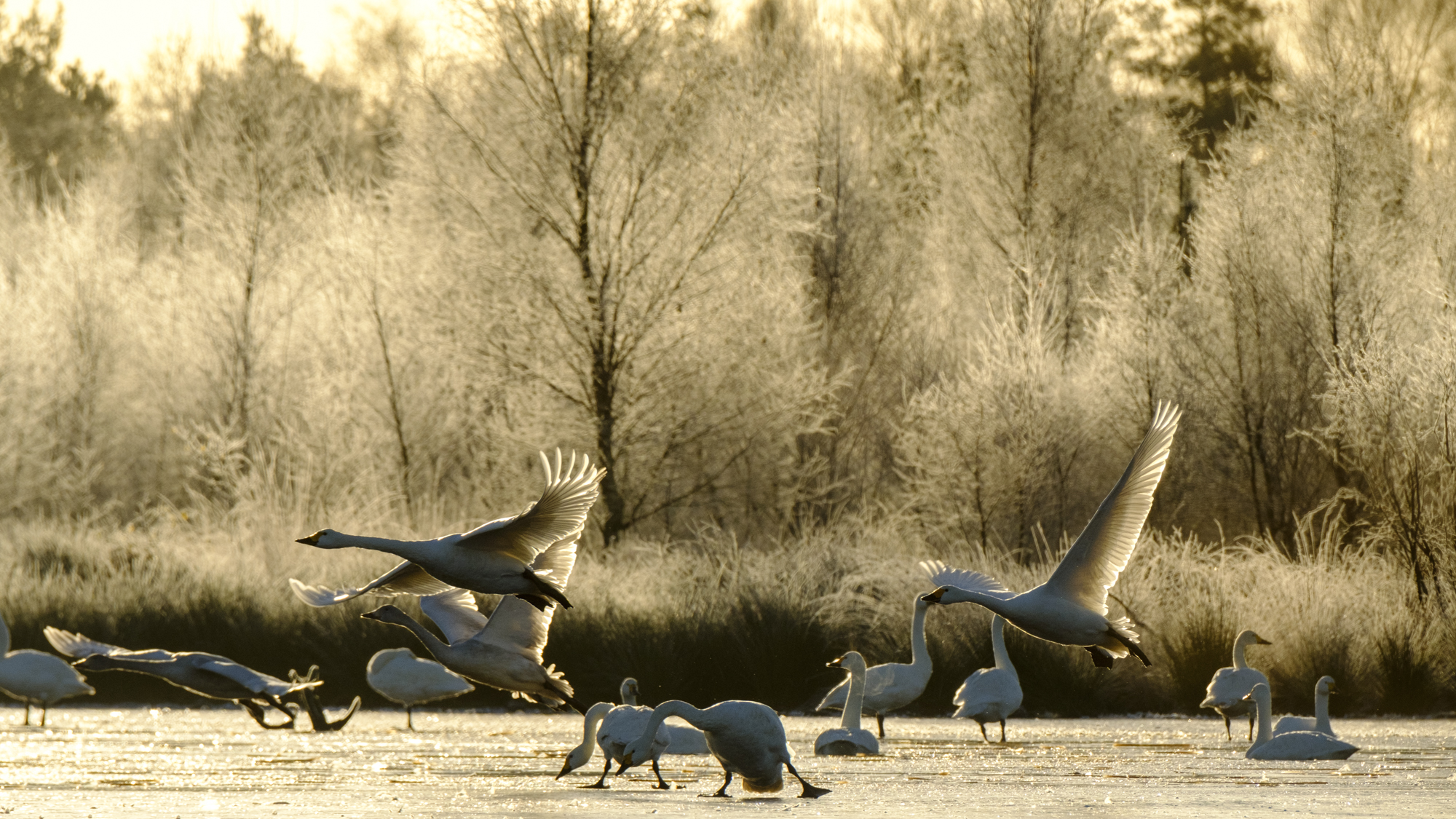
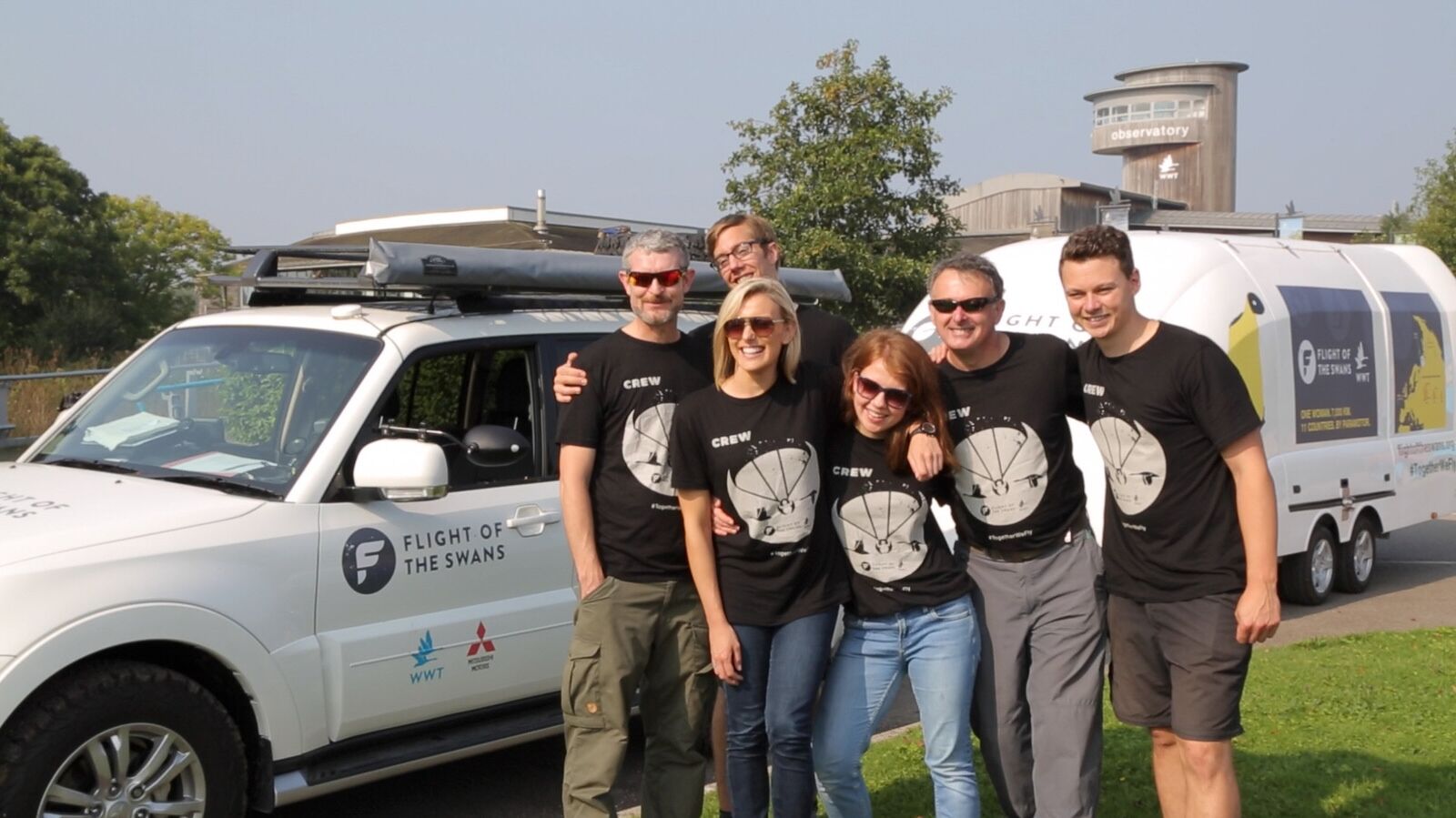
Recap – My name is Ben Cherry, I’m a Fujifilm X-Photographer focusing on environmental photojournalism. Currently I am part of the WWT Flight of the Swans conservation project, where Sacha Dench is flying from Arctic Russia back to the UK; following the declining Bewick’s swan as they migrate to overwinter in warmer climates.

You can find the first blog explaining how I got involved in this unique project and what I’ve brought along with me here.

While the second installment, talking about incredible Russia can be found here.


Well we eventually got out of Russia, after a 19 hour border crossing. Estonia was instantly different. It had a significantly different feel to it, from seemingly greener, richer forest to just a different culture. It was all quite refreshing!

I broke off from the core team to focus on finding Read More

Failing to scratch the surface of Russia – Flight of the Swans – Part 2

X-Pro2 XF35mm F2 ISO 200 1/5800

X-Photographer strip BLACK

Recap – My name is Ben Cherry, I’m a Fujifilm X-Photographer focusing on environmental photojournalism. Currently I am part of the WWT Flight of the Swans conservation project, where Sacha Dench is flying from Arctic Russia back to the UK; following the declining Bewick’s swan as they migrate to overwinter in warmer climates. You can find the first blog explaining how I got involved in this unique project and what I’ve brought along with me here.


Flight of the Swans has finally left Russia, only ten days behind schedule… Ten extra days I am very happy to have spent in this dramatic country. Enormous in every sense of the word, we barely scratched the surface, but what we did see left a lasting impression. From incredible generosity to gorgeous autumnal scenes, this rugged place has wilderness to truly get lost in.

ben-cherry-flight-of-the-swans-russia-2
X-Pro2 and XF10-24mm F4 ISO6400 30 Seconds

Hazard lights cast against the roadside trees as the convoy headed to Kimzha. We were very much alone on this dirt road and the stars were simply spectacular! 

The 19th September greeted us with a 32 hour stay at the Estonian – Russian Border, an experience that I’ve recently had a case of deja vu with as we returned from the other direction on the 19th October for a 18+ hour stay to return to the EU. In-between that time we have raced up to Kimzha, Arkhangelsk region, 1800+KM away within five days, via roads where for periods our trailer towing vehicle had to crawl at 6kph. It was a mental run, marred by a diesel spill in the trailer at 2am and paramotor pilots arriving at the collection point ahead of schedule, resulting in some all-nighters.

Once we linked up with the pilots who had just crossed the tundra section, things were marginally less hectic, marginally.

Sacha has done an amazing personal journey so far, she even dislocated her knee! But still going via a trike to take stress off her legs. The Flight of the swan’s team have been featured on news channels all around the world and the ground team are doing their best to engage local communities, particularly through school programs. All to raise awareness of the Bewick swan and other migrating wildfowl. The aim is to improve international awareness and cooperation, to find out more and to sign the WWT’s petition to help their conservation, which can be found here.

Personal highlights included witnessing the northern lights and catching a glimpse of a wolf as it slinked off into the darkness of a moonlit woodland road. But the biggest surprise has the be the incredible generosity that our team witnessed in Russia, I haven’t experienced anything like it before, where families would happily take in 8-12 people, feed us, give us a place to stay and even offer us a banya (Russian bath)! We were welcomed with open arms. Meeting conservationists, or simply random families along our journey, all seemed to have a deep connection for nature and the importance for managing it suitably, including the declining Bewick’s swan. We would be let into the lives of these people and get to know them, usually over a skinful of vodka.

one-too-many-vodkas
One too many..

Time-lapse taken with X-Pro2 and XF16mm F1.4 using the in-camera intervalometer.


Cine Fujinon Lens

As well as using my personal X-Series kit on this project we are very proud to be sponsored by Fujifilm with a  Fujinon ZK3.5×85 (85-300mm). Our media team are documenting the project in as wide a means as possible, from virtual reality experiences to documenting the project with various filming equipment, to hopefully continuing to share this project to a wider audience and help communicate the importance of Bewick’s swans conservation.

ben-cherry-flight-of-the-swans-russia-8

Here is one of our cameramen, Ben Sadd in the Gulf of Finland, Russia searching for swans.

https://www.youtube.com/watch?v=g8if_WHGJAM


instax

Because so much of this trip is about communicating with as many people as possible, I have been using my instax SP-1 printer a lot to leave little mementos. It always gets a fantastic reaction, the business card sized prints are perfect for travelling with. Giving a physical print has such a positive effect on an experience compared to simply tagging someone in a digital photograph. instax has for a long time been one of the first things in my bag whenever I travel, this feeling has been encouraged further. The benefit-to-cost ratio isn’t even worth talking about as the effect it has on a situation is huge, it sounds cheesy but seeing the smiles appear as the photo develops on the instax is worth it.

I’ve found that it develops a situation from a set of friendly acquaintances to the start of friendships, leaving both the recipient and photographer with lasting, fond memories.


Connectivity

As well as directly sending images to my SP-1 printer, the ability to send lightly edited files (via the in-camera RAW converter) to my phone and then share on the Flight of the Swans social media channels has helped to massively streamline my image sharing process. You can follow these channels here:

Facebook – Flight of the Swans

Instagram – @wwt_swanflight

Twitter -@wwtswanflight

swans
X-T2 XF100-400mm (370mm) F5.6 ISO 1600 1/2400

Live Map Update

The team are now in Estonia. Russia was an amazing experience but the project is still very much on the move. There is a major set of wetlands in Estonia which we want to visit and hopefully witness more migrating Bewicks. You can stay up to date via our live map, with trackers on birds, vehicles and of course Sacha! Click here.

screen-shot-2016-10-22-at-10-33-21


Summary

Flight of the Swans is a fascinating project, where WWT has taken a big leap into the unknown to try and reach a new level of engagement to help improve conservation of wildfowl. If you’re interested in travel, extreme sports or wildlife then hopefully this project will be of interest. If so, then please help us by signing our petition here. Until my final instalment in a month’s time, here are a few more photos from our Russian experience. In the next blog I will update you on the project as well as talking about the 4K capabilities of the X-T2 and how it has been incredibly helpful to film the swans.

Flight of the Swans

Fujifilm is honoured to be sponsor to “flight of the Swans” expedition

‘Flight of the Swans’ is a mission that connects wildlife, wetlands and people; from the wilderness of  the arctic tundra all the way to Slimbridge, UK. One woman, 7.000 km, 11 countries, by Paramotor glider; a daring bid to fly with one of nature’s great migrations on a quest to save Bewick’s swans.

The movie puts a totally new spin on migration with an epic 7,000km journey by Paramotor glider from the Bewick’s Swans arctic breeding grounds back to the UK.

Sacha Dench and the expedition team will be flying the Bewick’s entire flyway, often at altitudes as low as 100m on a voyage that lasts as long as ten weeks; providing a birds eye view on the challenges facing these critically endangered birds. Once they’ve safely navigated the vast Russian tundra – and its polar bears – Sacha and the team will continue to track the swans’ progress through Finland, Estonia, Latvia, Lithuania, Poland, Germany, Denmark, Netherlands, Belgium and France.