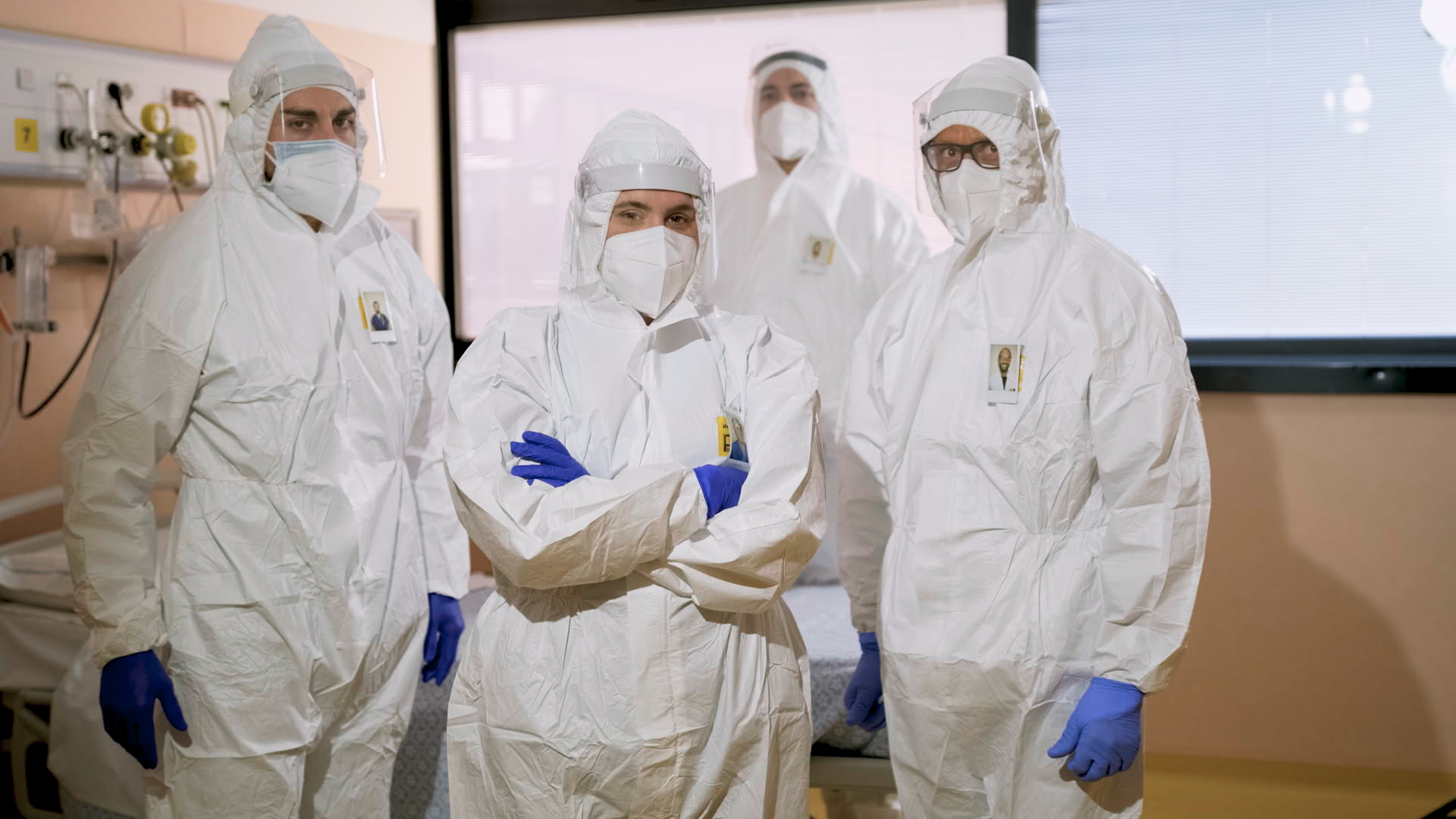
Fujifilm offers a range of healthcare products and services that utilize advanced technologies, including AI. These solutions are designed to support medical professionals across various fields such as Healthcare IT, MRI/CT, X-ray, endoscopy, ultrasound, and IVD.
Science needs passion. Science builds on creativity. Interest in science emerges from intriguing experiences. All these factors do not differentiate between sex or gender. However, there is still a striking underrepresentation of women in science today.
“After all, genius, creativity and preseverance have no sex or gender.”
Licia Troisi
Fujifilm features women scientists from around the world. All of them are working as experts in the Fujifilm Group or as its partners. In Women4Women, accomplished researcher and author Licia Troisi speaks about her ideas and experiences in the world of science, what people need to become a scientist and writer and how she perceives the role of gender in research. As an astrophysicist and astronomer, she studied galaxies and built satellites that map our galaxy. As an author, she published more than a dozen books. These experiences make her a great conversation partner with interesting takes on the key question: “how can we make science more accessible to people?”
One thing we need in order to gain access to complex topics is passion. Passion helps us to continuously find new challenges, motivating us to dissect a subject into interesting bits of knowledge, building a cluster of pieces that later on interconnect and form a coherent picture. Also, passion knows no gender. But how can passion be sparked?
There are two driving factors that inspire passion and help us to get a grasp on science – creativity and experiences. Creativity is a motor that motivates us to find new stimuli and engage with new approaches to uncharted fields of knowledge. Without creativity, we would never be able to solve the mysteries of our universe. Experiences, on the other hand, are a more tangible key to making science accessible to people. Challenging experiences encourage us to improve us and our grasp on things that interest us.
Discover the full interview with Licia Troisi to learn more about her take on this topic.
The outstanding photographer Valentina Tamborra brightens up the report with her reportage photos of women from all over the world.
The magazine “Women4Women” is a valuable piece of knowledge for all those who want to be inspired by female expertise and commitment in science.
Browse the magazine Women4Womento experience more about amazing women in science!
Today is World Cancer Day and we, at Fujifilm, we are continuing our fighting against cancer even in this critical pandemic situation. During the first phase of the COVID-19 pandemic, countries across Europe suspended breast cancer screening programs. In some areas, the number of patients who have had mammograms has decreased by more than two thirds.
Depending on the lockdown periods, which differed from country to country, the European breast units were closed one after another, first in Italy, then in other European countries. However, we know that breast cancer screening can save lives. A number of studies conducted by leading research institutions suggest that stopping screening could result in an increase in the percentage of women who will die from breast cancer in the future.1
There is much to catch up on now. With this in mind, screening units have established new routines, adapting their workflows and their workplaces. Across Europe, women’s health services have reorganised themselves in order to face the challenges of COVID-19, showing an exemplary and effective attitude to change.
To understand this change, we have invited influential voices of the European breast cancer screening landscape to understand and learn about the current situation. We asked them to tell us about how the impact of the pandemic has demanded new models of working and how this changes their relationships to their patients. The report created based on this new input is based on interviews conducted in September and October 2020. In case you are curious, the paper can be found here.
The message that we want to push and spread as much as possible is to take care of yourself, of your health, of your body. Book your screening appointment, breast units across Europe have implemented the best ways of working which help to safely reinstate screening services even in times of COVID.
Anika Sand, Application Specialist for Fujifilm Germany’s Medical Systems division, servicing hospitals in Germany, shares her experience and feelings during the Coronavirus pandemic.Due to the rapid developments of the Corona situation, we would like to point out that we conducted the interview in 2020.
– We are at your service. During the current Coronavirus pandemic our technicians and application specialists are working on the front line alongside healthcare professionals to make sure patients can be diagnosed and treated. These are their stories. –
Fujifilm: When the Coronavirus pandemic reached Germany, what were your first thoughts? Anika Sand: At the beginning, when Corona reached Germany, I was probably concerned about whether and how the pandemic would affect my work – not only for Fujifilm but especially for doctors, nurses and patients. The facilities, like hospitals or doctor’s practices, had to prepare for the situation within a short time. Life outside of hospitals also became more difficult for everyone.
Fujifilm: We would like to get to know you better. You are Application Specialist for Radiography for Fujifilm in Germany. Can you describe your role? Anika Sand: My job is to look after our customers immediately after installation of our Medical Systems on site. I do the briefings with the operating staff, set up the software according to the customer’s wishes and needs. Also, I change the image processing in cooperation with the doctors, if this is desired. At Fujifilm, we work as one team, so I accompany demos to support my sales colleagues, too.
Fujifilm: What motivates you to go to work every day? Anika Sand: I have been working for Fujifilm for almost 7 years now. Previously, I had worked as an MTA in a radiology practice and was looking for a new challenge. At Fujifilm, I never have the feeling of “stopping” due to our extensive product portfolio and the constant new developments. I look after our digital X-ray systems, mobile and portable radiography solutions, the field of mammography and our CT. Naturally, during COVID-19 we have experienced a shift in demand, especially of our mobile X-ray devices. So, the customers I look after are mixed. This can range from a radiological, gynecological or surgical practice to a university clinic. It can be very enriching to work with customers and being able to show the latest technology to them.
Fujifilm: How do you support the hospitals, doctors and nurses in the current situation? Anika Sand: During this time, our workload has increased because appointments on site must be carefully planned and prepared. Overnight stays in hotels have also become more difficult, since the rules for protection must also be observed there. My actual job I do the same way as before. Only the “how” has changed – and it has changed a lot. The support is not much different either. Certainly you need to do certain things by phone or online, but working directly with customers usually would be the most efficient way of working – interaction is easier and more direct, you can explain and show face-to-face. I still can, and need to, go to the clinics for my work. I am responsible for radiology operation working smoothly on our devices, regardless of whether it is about the operation or the setting of the images.
“I have hoped from the start that we as society overcome this crisis and everyone can quickly get back to “normal” while learning from this experience.”
Fujifilm: What has changed on site – in hospitals and doctor’s practices – for you? Anika Sand: I always have a facemask or face covering with me. I also bring disinfectant with me, but it is available at the customer’s sites in all departments. Even before COVID-19, the entrances to the clinics were equipped with disinfectant dispensers. It is good to experience well-managed crisis management in hospitals with all German clinics that I have worked with being well prepared. However, the uncertainty about what the future holds is there. In the meantime, however, the clinics are back in relatively normal operation, which until recently had been severely shut down. I feel safe working at home and at hospital appointments. And for sure, working with a facemask is necessary and can be lifesaving, but is a bit difficult because the air underneath gets quite thin after a lot of talking. A “regular” workday therefore can get quite exhausting.
Fujifilm: What has changed at home and at work? Anika Sand: Not that much has changed for me. I would normally work at home. So, this is nothing new for my partner and me. At work the situation is very different though. Personal meetings and training cannot take place. Nevertheless, the team has worked out how to exchange information in the home office via regular web meetings to keep everything going as best as possible.
Fujifilm: What have you learned during your recent work in the Coronavirus pandemic? Anika Sand: My job includes a lot of travelling; I often need to be on site with the doctors and nurses to support them as best as possible. Therefore, possibilities of travelling and overnight stays are heavily necessary to do my job. At the beginning the problem was that many hotels and all restaurants had to close and it was difficult to find something to stay overnight let alone find something to eat after a whole day of work. It was good to experience that problems can be seen as challenges and big and small ones can often be solved according to rules and thinking creatively at the same time. For example, a colleague and I simply had a socially distanced picnic at our hotel one evening. I have hoped from the start that we as society overcome this crisis and everyone can quickly get back to “normal” while learning from this experience.
In Zambia, there is limited healthcare provision, and in particular a great need for radiology equipment, accessories and services. Brigitte Kaviani, Deputy Operations Director at Sheffield Teaching Hospitals, has been working in collaboration with Zambian radiographers since 2017.
Brigitte works closely with Sydney Mulamfu, Head of Radiology at Livingstone Central Hospital, and together they have helped educate radiographers with a library of books donated from the UK.
“The response from the UK radiology community to this project has been wonderful. Both radiology staff and UK companies have donated books, markers and equipment, but there is still a considerable need for further donations. I’m very grateful to Fujifilm for their contribution, every donation makes a huge impact.”
Brigitte Kaviani
As well as helping to advance their radiology skills,the project also trains radiographers in basic first aid, so they can support their communities in emergencies. Anatomical markers and other medical devices are in short supply in the country, and over the last few years Brigitte has sourced hundreds of markers and radiology books, and has also helped supply crucial items healthcare equipment.
Fujifilm recently donated 100 anatomical markers to the project, and Brigitte delivered them to Sydney and his students earlier this year.
“We are delighted to have been able to help in a small way with the donation of anatomical markers for Zambia. We understand the desperate need in the country for healthcare equipment, and Fujifilm will be looking at how else we can support Zambian radiographers in the future.”
Steve Leatherland, Modality Business Unit Manager at Fujifilm
Fujifilm wants to dedicate this day to all radiologists and radiographers supporting patients during COVID-19.
On November 8, radiologists and healthcare professionals across the world celebrate the International Day of Radiology (IDoR 2020). Let’s celebrate together!
The International Day of Radiology (IDoR) is an annual event promoting the role of medical imaging in modern healthcare. It was introduced in 2012, as a common initiative of the European Society of Radiology (ESR), the Radiological Society of North America (RSNA), and the American College of Radiology (ACR).
IDoR was launched to develop greater awareness of radiology and the vital role radiologists play in patient care. Since 2012, every year the associations chose a theme for the day, in 2019 sports imaging has been chosen as the main theme of the day. This year International Day of Radiology will be dedicated to all imaging professionals and their indispensable role in fighting the COVID-19 pandemic making a vital contribution to the diagnosis and treatment of COVID-19 patients.
But let’s see why the associations chose November 8.
That’s the day that Wilhelm Conrad Röntgen discovered the existence of x-rays in 1895.
Roentgen’s experiments at Würzburg focused on light phenomena and other emissions produced by discharging electrical current in “Crookes tubes”.
On November 8, 1895, Roentgen learned the fluorescence was produced by invisible rays originating from the Crookes tube he was using to examine cathode rays (later known as electrons), which punched the dark black paper wrapped around the tube. The earliest photographic plate from his experiments was a shot of his wife Bertha’s hand where her wedding ring clearly visible. After Roentgen plunged into seven weeks of meticulous planned and executed experiments to verify his observations and enhance his scientific data, on December 28, he presented his “temporary” communication, “On a New Kind of Rays,” in the Proceedings of the Würzburg Physico-Medical Society. The world and the medical society recognized very quickly the importance of Roentgen’s discovery. Only two months later the x-rays were finding their first clinical use in the US.
His discovery allowed Roentgen was awarded the Nobel Prize in physics in 1901. When questioned what his feelings were at the moment of discovery and experiments, he simply replied: “I didn’t think, I investigated.” We would like to remember that Roentgen never sought honours or financial profits indeed he never took out any patents on X-rays, to guarantee that the world could freely serve from his work.
Let’s confirm that 8th November is the perfect time to celebrate radiologists and a great scientist by sharing the stunning medical, scientific and artistic possibilities of medical imaging and highlighting the essential role radiologists play.
– We are at your service. During the current Coronavirus pandemic, our technicians and application specialists are working on the front line alongside healthcare professionals to make sure patients can be diagnosed and treated. Today, Fujifilm looks back at decades of research and development to make this – today’s support – possible. –
Fujifilm has the possibility to support healthcare workers, doctors and patients during the current coronavirus crisis. Our colleagues have adapted to the new situation quickly to enable service and support for those who need it most during the pandemic. This approach might seem new to a few of our readers, but is actually more than 80 years old to us as the Fujifilm family.
Fujifilm was founded in 1934, back then named Fuji Photo Film Co. Lt., and only two years later, we already launched our first x-ray films. They have been our start in a long history of caring for people’s health. Have a look at this video for a few Fujifilm milestones in the healthcare field:
Due to the novel coronavirus emergency and the character of the COVID-19 disease, affecting the human lung especially heavily, x-ray is in focus in 2020. – Sadly, not primarily for the 125 year anniversary of Wilhelm Conrad Röntgen’s discovery of x-rays, but due to a critical new disease putting the world into crisis mode and people’s health at great risk.
Our decades of research, development, and pursuing strategic cooperations, have now put us in a position to offer support to the healthcare sector across the entire spectrum of patient care, ranging from prevention to diagnostics and therapy solutions.
Now, digitisation is driving us to create value from innovation; growing alongside the needs of the hospitals and doctors caring for you, we have been working in the field of medical IT and medical AI. We are grateful this approach has made it possible lately to support European hospitals, like the ASST Vimercate Hospital in Italy, to efficiently set up a system to assist healthcare professionals to manage the large number of COVID patients.
We have always learned and evolved, enabling our technology and our colleagues to be at your service. Growing, to serve the health of society – back then, today and in the future.