Be Inspired

A collection of inspirational blog posts that will give you some great new ideas and cause you to pick up your camera and go out shooting

5 Tips on Portraiture with the Fujifilm X Series

We hear more and more stories of photographers making the Fujifilm X Series their go-to kit for portraiture. The series is ideal for this style. The lightweight equipment allows portrait photographers to nimbly adjust around their subjects and the vivid colour processing makes subjects look stunning.


Get the most out of portraits with an X Series kit by following these tips.


  1. Fill your frame with complementary colours.

You chose your X Series likely in part for its vibrant colour processing. So make colours pop perfectly in your portraits as you play with contrast and hue. To the extent, you control attire and scene for your shoot, find colours that complement each other and especially those in your subject’s eyes and skin. If necessary, look at a colour wheel to strategize your fashion and setting.

Image by Edo Xu


  1. Bring a street photo mindset to portraiture.

Not all portrait photography requires studio space or time slots for your subjects. Get to the streets and capture portraits from the urban bustle. For this style of portraiture, use the XF23mmF1.4 R, which has a 63-degree angle of view, or a similar wide-angle lens to capture both your subject and your scene in detail.

Image by Derek Snee

  1. Get candid portraits with a quick X Series lens.

On streets, at events or in studio, permit your subjects to move freely, and then follow them for candid portraits. Make sure to get them in the act of something viewers can understand, and look for moments when their hand position adds emotion. For these fleeting moments, you want a lens with a quick autofocus sensor. Go with the XF23mmF1.4 R mentioned above or the XF35mmF2 R WR.

Image by Brandon Wong


  1. Clarify your subject by using bokeh.

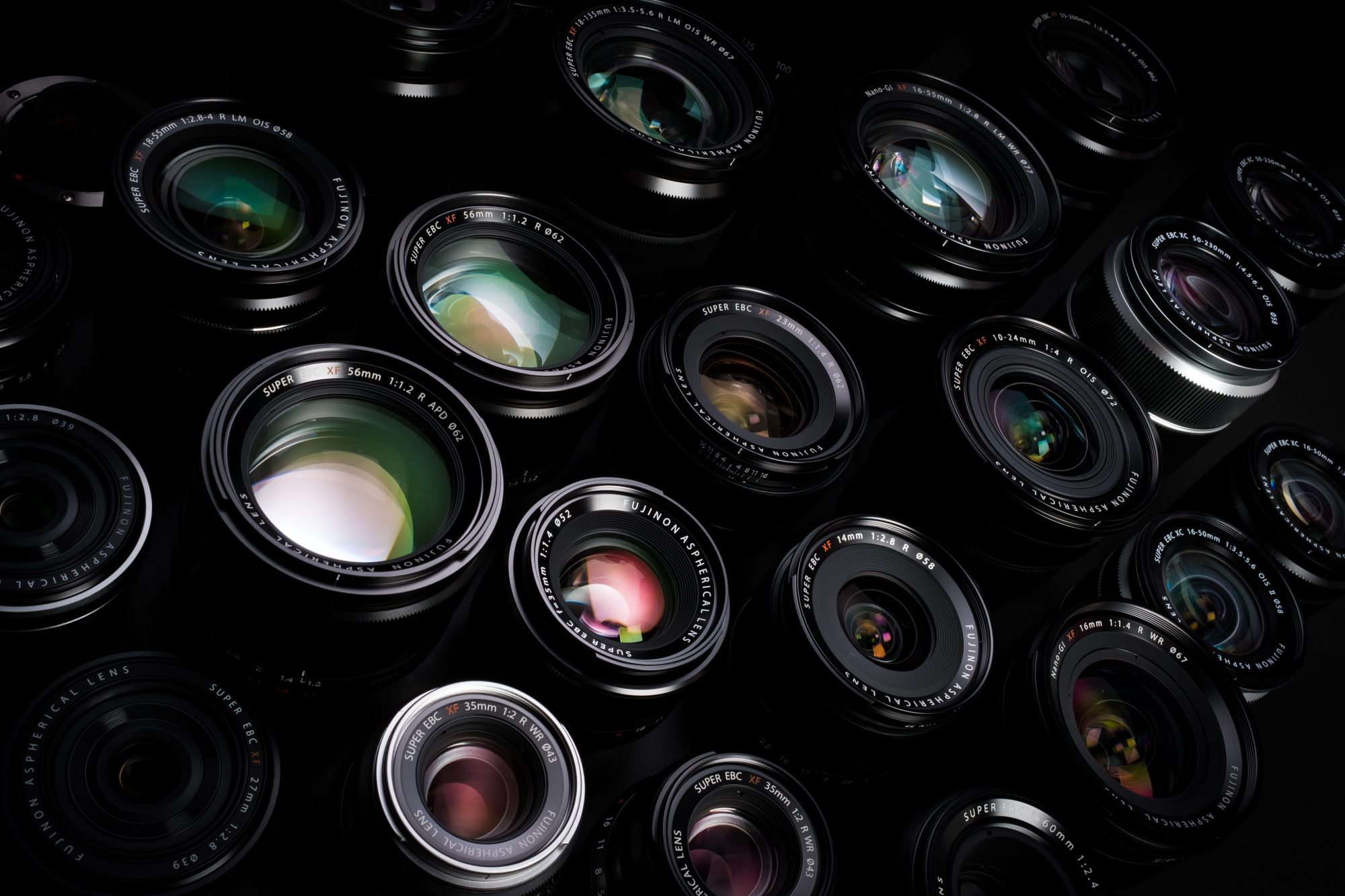
One way to make your subject a focal point in a portrait is to use bokeh, the blurring of out-of-focus regions. To get this effect, portrait photographers favour lenses with wide maximum apertures. While the XF23mmF1.4 R and the XF35mmF2 R WR both fit this category, the XF56mmF1.2 R is the optimum Fujinon lens to achieve sharp bokeh.

Image by Ashri Husaeni


  1. Frame portraits by using foreground objects.

You can add a creative layer to your composition by placing your subject behind a framing foreground image. Tree branches, plant leaves, window frames and another person’s shoulder are just some of your options for framing. This style of composition works well with the bokeh effect, as you can accentuate the spatial gap between your subject and the framing device.

Image by Dan Ginn


With the right equipment, techniques and mindset, you are ready to snap captivating portraits with your Fujifilm X Series kit.


10 Tips to Capture Natural Wedding Photographs

10 Tips to Capture Natural Wedding Photographs

10 Tips to Capture Natural Wedding Photographs

By Kristian Leven

Kristian Leven

For the past seven years I’ve photographed weddings in an unobtrusive way, preferring the day’s event’s to unfold naturally in front of me rather than coordinating anything. This style has been derived from my love of documentary and street photography, which I shoot outside of weddings as much as possible. Doing so has given me a fresh perspective on the work I’m producing, and I often use what I’ve learnt shooting street photography with me on a wedding day. Here are ten things I’ve learnt about taking better wedding photographs, and how I applied them to a wedding I shot on the FUJIFILM XT-2 last month. Read More

Fujifilm’s History – Nearly a Century of Innovation

Fujifilm has become a household name. It is a publicly traded company and a leader in digital cameras and accessories. That level of success does not come instantly or easily, though. More than eight decades of history have contributed to building the film behemoth Fujifilm is today.


When you get a sense of Fujifilm’s history, then you can even better appreciate how legacy influences the characteristics of Fujifilm products today.


An innovative company enters the photography industry.

In the early 1930s, the Japanese government set out a plan to create a local industry for photographic film. That mandate led to the Fuji Photo Film Company’s formation in 1934. Its first factory, Ashigara, sat at the foot of Mount Hakone, but because the “Hakone” title was registered to another company, the film business took the name of a nearby mountain, Fuji.

As Fuji grew, it produced photographic, motion picture and X-Ray films. By 1948, it manufactured its first camera, the Fujica Six, which was known for its compact body and being lightweight. The camera became popular, and Fuji launched a series of Fujica still-photo and motion picture cameras and continued production of that line well into the 1980s.


Fujifilm goes digital with the DS-1P.

In 1988, at a photography trade show in Germany, Fujifilm forever changed the industry by unveiling a new toy, the FUJIX DS-1P, the world’s first digital camera. There had been electronic cameras before, but those cameras had stored images in an analog way. The DS-1P did so digitally with its semiconductor memory card. That first model retained only five to 10 images on its card, but Fujifilm further developed its digital technology and, in 1989, released an improved successor, the DS-X, for commercial purchase.


The FinePix X100 brings Fujifilm to pros.

Fujifilm continued to build digital cameras—most were designed with the casual user in mind. But in 2010, Fujifilm had something new for the pros when it released the FinePix X100. This camera fused worlds old and new with its APS-C sensor and contemporary viewfinder stashed in a vintage body.


Instant success leads to a series.

The X100 was so high in demand that it sold on secondary markets for double its retail price. So the following year, Fujifilm launched an entire series of high-end cameras like the X100. The next in the series, the X10, was released later that year and boasted a larger sensor and an EXR color filter, and the X-S1, the first in a series of interchangeable lenses, came soon after.


As the X Series continues today, its products are united not by a particular feature, but by the company’s commitment to create advanced controls for serious photographers.


The series is just another way Fujifilm continues its company-wide legacy of advancing technology and anticipating user needs.


Springtime at 50 megapixels

GFX 120mm F10 1/280 ISO400

By Ben Cherry

I first moved to the X Series four years ago because I was carrying too much equipment on trips and I wanted to switch to a smaller, lighter alternative. Now with X-T2s and the superb range of lenses available it is often difficult to decide what to take on assignments or trips, making sure it all fits in one backpack. But my kit is still smaller item for item than what it used to be before, its just a question of knowing exactly what you’ll need for each job (not always easy, particularly with nature photography). Read More