Fujifilm EMEA

This blog account is managed by the Corporate Communication team for Fujifilm in EMEA.

Switching Systems – Interview with Michelle Williams

Interview with Michelle Williams – professional photographer that recently made the switch to the world of Fujifilm X

Michelle is a professional photographer from North Wales. She has been photographing weddings, newborns and animals as her full time job on a Canon camera for the last ten years. She recently discovered the Fujifilm X series of cameras so we got in touch to ask her a bit about her rite of discovery.

So what made you decide to try a Fujifilm camera?

I’m a Canon user and have been for ten years. I never thought I would want to change to another make of camera, ever. Recently however, I’ve seen a lot of feedback online about the Fuji cameras so last week I sold some bits and bought a used X-E1 and a 35mm lens.

I wasn’t expecting much as these things are usually prone to hype. I’d tried the Olympus pen for a walk around camera and it was good but more of a fun camera than one I would seriously use. From the very first image I took with the X-E1 I was nothing short of gobsmacked. I was so excited to see what it was capable of.

ISO 100 1500 F1.4

How has the X-E1 changed how you shoot?

I’ve not been out of the house without it since I bought it. This weekend I had a wedding and packed my usual kit of a 5D2 and a 7D with all my lenses. I also took along the little Fuji to play with if I got a chance.

To my surprise, I shot the majority of the day with the Fuji alone! The images are brilliant straight from camera which on a wedding means saving tons of time for me so again I’m taken aback by its capabilities…especially in low light!

I truly am blown away with the colour, clarity and functionality of this camera.

Once again, thank you to you all for making photography fun and exciting for me again. Keep up the great work!

See more of Michelle’s work by following her on Facebook https://www.facebook.com/michellewilliamsphotographyuk

Fujifilm Instax Share SP-1 Smartphoto Printer – Review by Kevin Mullins

A little while back someone showed me the Fujifilm Instax Share SP-1 Smartphoto Printer.  At first, I though…meh!  I could see it’s uses, but I couldn’t see it’s uses for me.

Instax-Share-SP-1-1Instax-Share-SP-1-2

Instax Share SP-1 next to an X100S for size comparison

This changed once I received it last week.

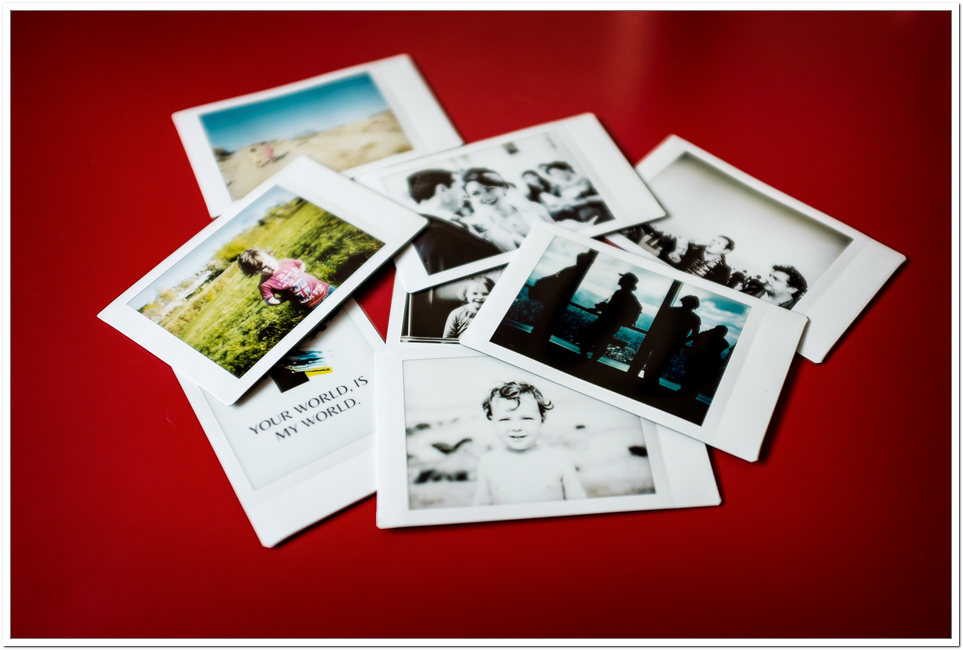
Let me tell you a little anecdote;  My daughter has one of the Instax Mini 8 cameras.  It’s pink (she’s five years old).  She adores it and she snaps away at anybody who will allow her.  She has a little album and it’s been a wonderful way for her to enter into the world of photography.

So, when I received the Fujifilm Instax Share SP-1 Smartphoto Printer I was intrigued, more than anything, to see how I could utilise it in my day to day work.

The Fujifilm Instax Share SP-1 Smartphoto Printer is nicely designed, and rounded.  The buttons are tactile and well positioned.  There is a neat battery indicator and also an exposures remaining LED.

It looks good and is really quite discrete too.  I have a white one, and I’m not sure if other colours will be offered.

Instax-Share-SP-1-3
Battery indicator and exposures remaining LED are very useful
Instax-Share-SP-1-4
A very handy reprint button will duplicate your last exposure. Good thinking Fuji!
Instax-Share-SP-1-5
The device simply looks good and the branding is discrete.

As you probably know, by day, I’m a professional documentary wedding photographer, and my other passion is Street Photography.

Street Photographers I think will simply love this device.  If you shoot portraits on the street, as I do occasionally, I usually end up offering the subject a business card and asking them to email me (I always send them a small print in the post if they do email).  This is a laborious task right? and an even more pain if you are shooting abroad.

I can see me taking the Fujifilm Instax Share SP-1 Smartphoto Printer with me when ever I shoot street now.  It’s small enough (101.6mm x 42mm x 122.5mm / 253g ) to slip into a bag and the two CR2 batteries will last for around a hundred exposures.  Plenty for a few shooting trips for me.

So; engage with subject, shoot, print…..away you go.  Very cool.

I was a bit reticent about using it at a wedding.  My style is totally candid.  I don’t really do bridal portraits etc.  However, I gladly took the SP-1 with me to a wedding I shot in the South of France last weekend.

This is what I did – and this is where I think it will be amazingly powerful for wedding photographers:

  • Shot the wedding all day using my X-T1 and X100S
  • During the down time I WiFi’ed (is that a real word?) over an image from the X-T1 to my iPad.  If you don’t have a wifi enabled camera you can of course simply ingest the card to the device.
  • I used Snapseed to edit the image sightly.  A bit of contrast and conversion to black and white.
  • I printed on the Instax Share SP-1
  • I gave it to the bride and groom as I left
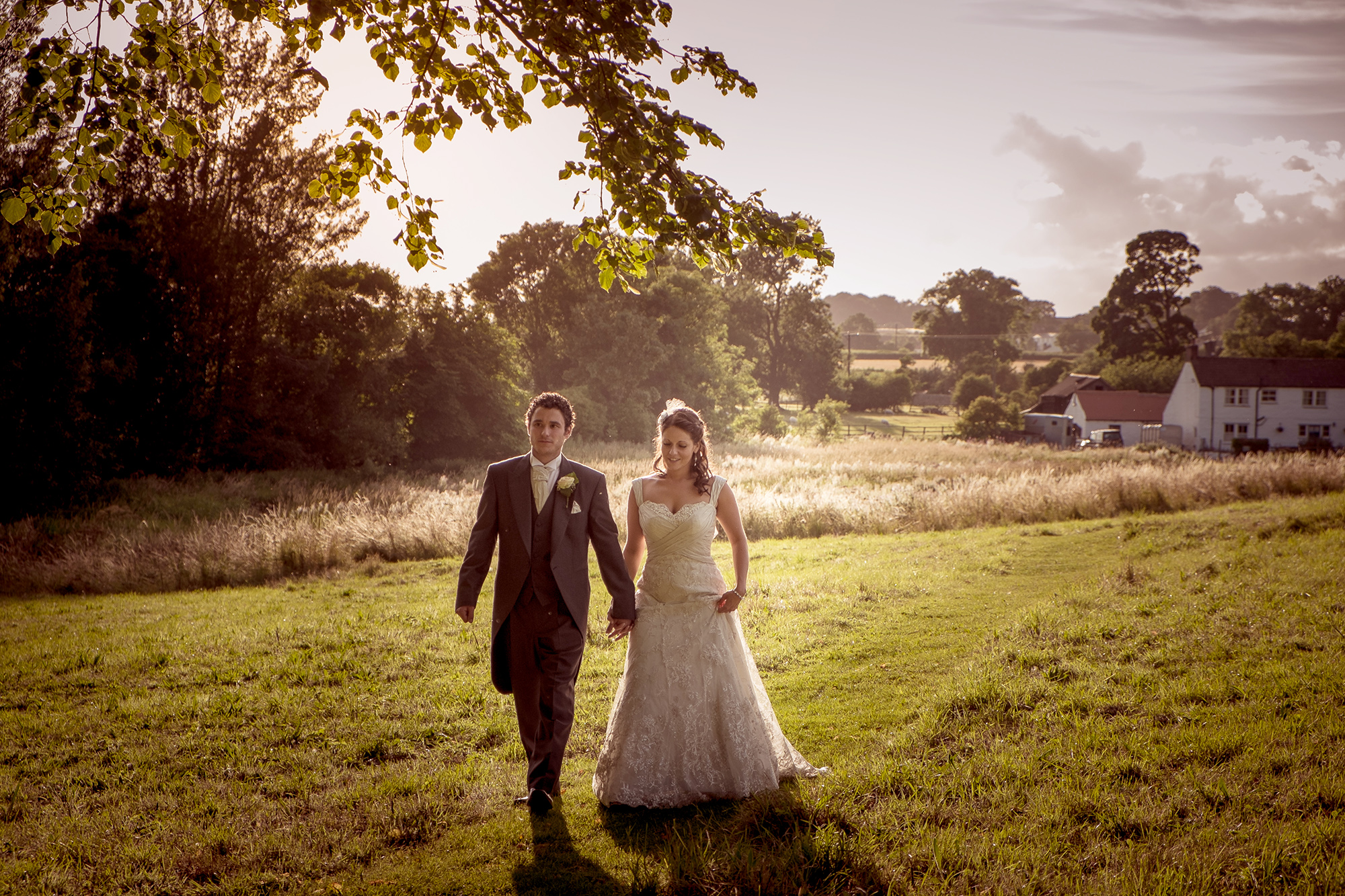
  • They cried….said it was wonderful….and showed it to everyone else.
  • Boom!  Added value for wedding photographers right there.

Instax-Share-SP-1-7Instax-Share-SP-1-8Instax-Share-SP-1-10Instax-Share-SP-1-6Instax-Share-SP-1-11Instax-Share-SP-1-12Instax-Share-SP-1-13

 Connecting the printer, editing and printing the image took around one minute in total.
Connecting the printer, editing and printing the image took around one minute in total.

I can see wedding shooters who offer a more formal type of photography benefiting from this as well.  Being able to take a portrait of Aunty Mabel and print it there and then is going to make you the good guy (or girl).

Fujifilm Instax Share SP-1 Smartphoto Printer Print Quality

The print quality is fine.  You are not going to lose print sales post event by handing these out.  They are very much aimed at resembling the Poloroids of past and that, they do very well.  According to Fuji the print resolution is 10 dots/mm (254 dpi) with 256 levels per color (RGB).  It’s not hi-res printing but the images that do come out are snappy and certainly of a high enough quality to make people go “Ooooo” and even, perhaps “Aaaaah”.

The physical size of the images are 62mm x 46mm, so not huge….but perfect for street shooters and wedding photographers a like I think.

Cool things I like about the Fujifilm Instax Share SP-1 Smartphoto Printer:

  • Very quick to connect.
  • The App Software is very easy to use.
  • The printer itself tells you via the green LED lights how many exposures are left on the roll.
  • The App Software tells you which images you’ve already printed, or if an image is not usable.
  • Print time is around 9 seconds in total.
  • Didn’t have a miss communication once.
  • It’s a pretty small device.
  • Comes with batteries and two cassettes of film in the box.

A couple of things I’d like to see with the Fujifilm Instax Share SP-1 Smartphoto Printer in the future:

  • The ability to print direct from a WiFi enabled camera (X-T1 for example) would be awesome.
  • A better set of templates and editing options in the App
  • It would be cool to have a strap too.  I know, I know, you aren’t going to walk around all day with this around your neck but if you are doing a run of portraits, at a wedding perhaps, it would be useful.

Using the Fujifilm Instax Share SP-1 Smartphoto Printer:

  • You need the Instax Share App.  I believe this is available for iOS (iPhone and iPad) and Android devices.  I just used the iPad version.
  • Simply hold the power button the printer down for about a second and it comes to life.
  • At the same time, it creates and ad hoc wi-fi network (you can change the name, password etc if you are security conscience).
  • Go into your device settings and connect to that network.
  • Launch the Insax Share App.
  • Select the image.
  • Edit, add text, rotate the image etc as you see fit.
  • Press PRINT.
  • Then wait around 9-15 seconds for the emulation to be exposed in front of your eyes.
  • Stand back and admire your work.

The application comes with some themes and basic editing functionality (though I suspect any serious photographer will edit the images first in another image editing app on their device).  There are some neat uses of the themes where I can see it being useful to put your name or your website address on the image via the software.  All very cool stuff.   You can make the image Sepia or black and white too but, as mentioned, something like Snapseed is far better positioned for this type of editing.

In summary – I think this is a great device.  I know there are similar things on the market but for me this is a well rounded all in one solution for printing your phone photos or from a wi-fi enabled camera.

I really, really, really, really want to be able to print directly from the X-T1 and other wifi enabled cameras though.  I think that would make this device go from seriously useful, to absolutely necessary for travel photographers, street photographers and wedding photographers who want to give their clients that little extra.

Enjoy it.  I did.

Written by Kevin Mullins

“Why the X series?” with Martin Castein

Why choose the X-Series? Read our guest blog by Martin Castein to find out.

About Martin
Martin has achieved 18 gold awards at SWPP (Society of Wedding and Portrait Photographers) which is one of the largest international photography organizations in the world. Is the 2013 SWPP architectural photographer of the year and has also been nominated by the judges as the SWPP overall photographer of the year for 2013.

The Fuji X-series journey for me began with the excellent X-E1 and now the X-Pro1. The weight-saving advantage of the X series is obvious. But let’s look a little deeper than that.

EVF and Sensor
For the type of photography I do, I like to bring out a lot of detail, colour and contrast in my images.
So for me it is vital that I get my exposures absolutely perfect and that the sensor of the camera is truly capable when it comes to delivering detail, dynamic range and the tone the sensor produces, particularly skin tones.
Let me give you an example. This image was processed in Lightroom. The sensor can handle the complex lighting easily, in fact better than some current top end DSLRs I have owned.

XF-18-55mm - ISO200 - f/2.8
XF-18-55mm – ISO200 – f/2.8

Colour
I work mostly in colour. I love colour.
We live in the digital age where colour can be so expressive and powerful.
The Fuji X-series sensor can match and in most instances beat other manufacturers when it comes to these issues.

When the X-trans sensor is combined with the live exposure of the Fuji X-series EVF, we have the recipe for a very high hit-rate of usable images.
This next image was taken with a wall blocking half the image, the flare on the left is from a window, not post production. I could see this in viewfinder before I took the image, this aids creativity. Post production in Lightroom again, very simple with the brilliant colour of the X-trans sensor.

XF18-55mm - ISO640 - f/4
XF18-55mm – ISO640 – f/4

Manual focus
I really love the ability to use manual focus and then have the back button do autofocus should I require it. I use this all the time. It is like manual focus with auto focus override. With other systems we have auto focus with manual override.
This works because it is so easy to see what is in focus in the EVF.
I can see the focus peeking, working all the time. This way I can fire off shots freely, capturing moments and know immediately when it is time to change my focus. That’s the benefit of not needing to take the camera away from your eye. What you see is what you get.

LCD screen
Additionally, it is an advantage to have a rear LCD screen that can focus the same way as the viewfinder can. This allows me to get unusual angles and shoot from angles that wouldn’t be easy to manage with a DSLR. In the past I went through a lot of trial and error with a DSLR to get the same angles.

Advantages
So for me the biggest advantage of the X-series is the combination of the incredible performance of the X-trans sensor with Fuji’s brilliant implementation of the electronic viewfinder and manual focusing. Of course coupled with the savings in size and weight.

Lets remember
We are artists. As photographers we rely on our equipment to allow us to fulfil our artistic vision. The urge that drives us to create, that is what we are all about as photographers. The tool we do that with, our camera, ultimately either enhances this ambition or it stifles it.
The fact is our choice of camera affects how we feel about photography.
Fuji made that t-shirt we all like to wear, they made the camera that speaks to the photographer in a way that is hard to verbalise other than it feels right.

XF35mm - ISO200 - f/5.6
XF35mm – ISO200 – f/5.6

To see more of Martin’s work, please visit his website here or follow him on Facebook


Interview: Tim Wallace – Project Darwin, the California Ghost Town

Photographer Tim Wallace is the driving force and creative thinking behind Ambient Life. An award winning photographer his work is often described as both conceptual and dramatic.

Tim works internationally with many high clients across the globe such as Jaguar Land Rover, Mercedes and Morgan as well as shooting some of the worlds most iconic brands such as Lamborghini, Aston Martin and Ferrari in the UK and Europe to shooting Dodge, Chevrolet and Mustangs in the US.

His work has been published globally and he was recently named by as one of the UK’s most creative photographers whilst in the US Scott Kelby described Tim recently as one of the Ten most influential photographers in the World today, Tim’s view is a little more straight forward, a man who’s known for his down to earth attitude, his feet are firmly on the ground and his desire to produce creative work is one that he has been driven to from a very young age when he first picked up a camera.

“Photography is for me simply a creative passion, the ability to use light and form to
capture in a single image what I see in my own imagination”

travel photography

Tim is the humble recipient of many awards over recent years including, International Commercial Advertising Photographer of the Year, UK Motor Industry Professional Car Photographer of the Year and a few months ago was awarded International Travel Photographer of the Year.

“I plan to live forever, so far so good…

I’m 40 but apparently 40 is the new 30 so things are always good and I have never felt better!, I don’t sleep much because I’m always thinking about what I can do to create something new, on a morning I often wake up excited for the day like a kid at Christmas just wanting to get out on the road and get on with it. People say I have a wicked sense of humour, not sure on that one, maybe its just a defence mechanism for the fact I’m always trying to lose weight but enjoy good food too much…!

I love the whole creative visual voodoo, the journey from A to B and the chance of arriving at C.

My work is often regarded as conceptual and dramatic and to me photography is a process, you’ll never hear me mutter ‘it’ll be fine’ as that’s simply not enough for me. Life is short and I aim to make mine worth while and interesting with work that I hope reflects this.

My goal in life is to be myself always, be creative, be true and most of all improve just a little part of peoples lives with images that both entertain and sometimes invoke the feelings that I had when I shot them. I’ve won awards and I’m always of the thought that maybe they got the wrong Tim Wallace, hey I’m grateful always but never take myself or any achievements too seriously, life’s too short and people will forget you quickly.

I jumped off a cliff in Norway a few years ago in a BASE jump, why?, well because it felt right for me to do that for myself at that time, I truly believe that anything in life is possible, work hard, be an honest person, tell the people that you love just what they mean to you as often as you can, and most of all be out there shooting because sometimes that’s where amazing things can happen.”

Project Darwin, the California Ghost Town

X-Pro1 with XF14mm
X-Pro1 with XF14mm

Tim may be known for his carefully crafted and beautifully lit images of prestige cars, however a recent trip to the USA saw him shooting something less glossy and more on the gritty side -­ an old mining town in Death Valley.

We found ourselves moving through the Valley from South to North. Death Valley has always held a fascination for me in its sheer scale and beauty and this week I shot some ‘personal work’ there, focusing on a project about the abandoned town of Darwin. 6 miles off the main road quite literally in the middle of absolutely nowhere we came across the town of Darwin sat in the base of the mountains, shrouded in dust and sand and abandoned in the sheer deafening silence that you experience only in places like Death Valley.

X-Pro1 with XF14mm f/7.1 - 1/1000 - ISO200
X-Pro1 with XF14mm
f/7.1 – 1/1000 – ISO200

Darwin itself is a truly amazing place and we really didn’t know what to expect as we pulled onto the dirt track that carried us into this sleepy little abandoned area in the middle of the valley with a reported population today of under 40 even though the sign brags a few more that have since packed up and moved on away from the town.

The town was first established by American explorer Dr Darwin French in 1874 after he discovered silver ore deposits in the mountains, just south of Death Valley but the mining area is now closed off and out of limits to people with many signs warning of the dangers of open mines still being there and potential death traps to those that wander into the area. Just a year later, 700 people were found living in the town where around 20 mines were discovered – the population peaked in 1877 at several thousand people. In its heyday, Darwin was buzzing with saloon bars, miners, busy general stores and even brothels.

X-Pro1 with XF14mm f/22 - 1/80sec - ISO200
X-Pro1 with XF14mm
f/22 – 1/80sec – ISO200

As with many ghost towns across the U.S., once the industry has died, life in the town becomes lost and soon after years just simply disappears. However in Darwin, a small community of artists and those preferring life in the wilderness, has remained in settlements further down the valley from the ‘original’ settlements. The population is made up of mainly couples and with no one under the age of 18, so no children at all exist there. There are no stores to buy anything and nowhere to stay – the nearest supermarket is well over 90 miles away and the tiny community that remains in the dust had only a local post office where residents could gather to pass the time of day and even this now is shut and abandoned forever.

X-Pro1 with XF14mm f/2.8 - 1/2900 - ISO200
X-Pro1 with XF14mm
f/2.8 – 1/2900 – ISO200

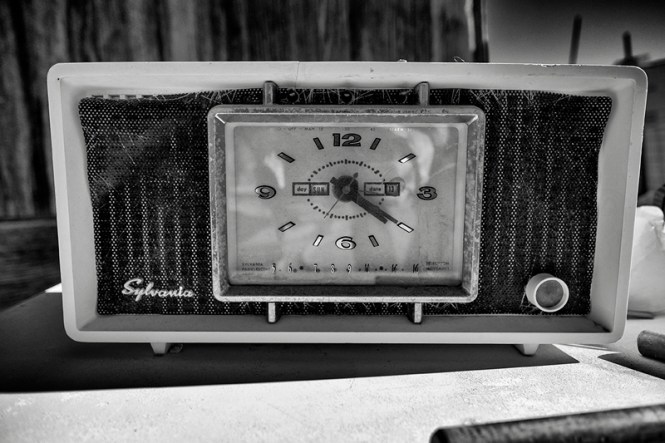
Just further down the hill we started to come across the houses of those both past and recently present, many just left abandoned and with the contents still in place, refrigerators, clocks and books still on the shelves.

We shot there for over an hour, being respectful to those that still call this dusty town home and exchanged a few hearty hello’s to those few that we met along the way walking through the small town.

Darwin is in many ways a place of both sadness and wonder and it remains sat in the middle of Death Valley and the days and nights pass like a ticking clock with no impact or change on anything that remains, a modern day time capsule sat baking in the desert sun.

X-Pro1 with XF14mm f/2.8 - 1/3500 - ISO200
X-Pro1 with XF14mm
f/2.8 – 1/3500 – ISO200

Why the X-Pro1?

I¹ve heard that when you turn professional, you lose the love for photography as a hobby. I very much disagree ­ this type of diverse personal work allows me to still enjoy shooting stuff for myself.

My tool of choice for these images was the excellent lightweight Fujifilm X-Pro1 and a 14mm lens, the 14mm is perfect for the type of off the cuff documentary shooting that I want to do and is a very impressive lens in its own right, especially when used wide open on the aperture as I often like to shoot…

X-Pro1 with XF14mm f/3.2 - 1/105 - ISO200
X-Pro1 with XF14mm
f/3.2 – 1/105 – ISO200

I love this little mighty camera ­ it’s a favourite of mine to travel with. It¹s easy to use and the quality of what such a little camera can produce is amazing.
I enjoy using black & white ­ I love to indulge in this style whenever I can.

More images

More about Tim

If you would like to see more of Tim’s work you can follow on Facebook and Twitter or visit his website.

Neil Torr shares his thoughts on the X-A1

“Would I recommend this as a good place to start for someone ready to move on from a bridge camera? Absolutely.”

I have been fortunate enough recently to have had a Fujifilm X-A1 on review, so now I come to share my thoughts, but first of all to put this in perspective here is a bit of history about my photographic background.

Before Jan 2012 as much as I enjoyed taking photos my cameras had consisted of film compacts, simple point and shoot jobs. I had access to some digital cameras belonging to my wife after that, but again they were point and shoot compacts.

Having been to RAF Waddington International Airshow in 2011 with a compact I soon decided I wanted something that allowed me to do more with photos. As much as I fancied the idea of a DSLR I couldn’t justify the cost with so little proper experience in photography so I opted for the HS20EXR bridge camera in December 2011.

Since then I have found myself enjoying photography more and more finding my favourites subjects to be airplanes, birds (particularly birds of prey) and architecture, as well as the obvious family photos. So when I was given the chance to try the X-A1 (together with the XC16-50mmF3.5-5.6 OIS lens) I jumped at the opportunity.

X-A1 072 copy1

X-A1 Oxburgh Hall 190

As an introductory level CSC it does not have all of the high tech wizardry of some of it fellow X-series siblings, but I soon found it was a great camera and performs significantly better than the HS20. So what were the key differences between the HS20 and X-A1?

Physically it is a much smaller camera in all respects and the build quality seems much better, though the HS20 is by no means of poor build quality. One thing in particular that was quite nice was the metal tripod screw – on the HS20 it is plastic and so can be a bit of a worry for damage.

One thing that I did miss on the X-A1 was the EVF. However, on using the camera it became apparent the LCD panel was of a good quality and although there are situations I would have preferred to have the EVF it was certainly not the end of the world. Most people coming from compact cameras would not notice the EVF missing as they tend not to be on compact cameras anymore.

Using the X-A1 felt like a very natural progression from the HS20, the menu layout was very similar but with some improvements made to navigation – the Q-button was a particularly handy addition for quick changes when needed.

Having a much larger sensor the X-A1 was able to utilise a much wider range of light levels and capture far more detail. In my time with it there were a number of occasions I would have had to resort to using the flash on the HS20 but the X-A1 took the low light in its stride and simply took great pictures at higher ISO values. For once I was using auto ISO usually with an upper limit of 3200, though 6400 was also still quite acceptable, a big improvement of the 400 which is the highest I would normally use on the HS20. This was particularly noticeable in trips to Oxburgh Hall (a National Trust property) and Peterborough Cathedral. The good low light performance, allowing pictures to be taken handheld that would have needed the tripod with the HS20. This allowed a far more productive time as I was not having to set up the tripod, adjust angles, settings, fiddle with a remote release, etc, etc. It even allowed for easier capture of sunsets whilst being driven around in a car.

X-A1 080 copy1

Visiting The Raptor Foundation, a near by raptor sanctuary, I needed a lens with a larger zoom to make the most of the visit but found in action, it performed well, being able use higher ISO settings for faster shutter speeds for the in flight shots. Even with the limited zoom of the XC16-50mm lens I was still able to get some great images of the birds. Even birds I couldn’t get very close to the images were high enough quality to be able to crop in.

As a simple amateur I have never done an official wedding shoot, and yet I found myself being asked to do just that for my brother-in-law. As I had the X-A1 this became a far less nerve racking thing for me to do than might have been the case. I was however worried about battery life as I had no spare. Even in this department thought the X-A1 performed beyond my expectations. I had expected no more than the 350 shots it is rated for so I had my HS20 on stand by for emergencies. However, almost 500 shots in and the single charge was only just beginning to show signs of running out.

X-A1 wedding 090

As well as all of this, with my two children – one of whom was only 2 weeks old at the time of receiving the X-A1 – there were a number of cheeky shots made easy simply by the quick start up and focus, catching moments that might otherwise have been missed.

X-A1 004 copy1

As you may have guessed I rather liked the X-A1. As much as I love my HS20 there really is no comparison. Despite being a different breed of camera, the X-A1 is no more difficult to operate than the HS20EXR, in fact if anything there are improvements of the controls with the X-A1.

I have now returned the X-A1 to the kind people of Fuji who allowed me to review it. Even at essentially the bottom of the X-series range it is an amazing camera to work with and a great introduction to CSCs.

Do I miss it? Yes, and it’s only been a few days.

Would I recommend this as a good place to start for someone ready to move on from a bridge camera? Absolutely.


Alex Lambrechts and Fujifilm Fashion X Street workshop

Date: Sat 3rd May
Time: Arrival at 10.00 and continue shooting for six hours.
Venue: Sanderson Hotel , 50 Berners Street, London, W1T 3NG
Limited to 6 attendees only.

2_800

Format of the day

This hands-on Fashion X Street workshop will focus on the various techniques and ideas Alex frequently uses when shooting an ‘On-Street’ Fashion, Press or Portrait, shooting with both daylight and flash for varied environmental and lighting effects. During this free 6 hour course, you’ll be learning/testing loads of tips, tricks and secrets. Suitable for all levels of photographers, you’ll be receiving personal hands-on tuition, tailored to your experience level, especially exciting for those still on the fence about switching to the X-Series from traditional DSLR, rangefinders and/or other formats.

You will receive hands-on coaching to achieve the results which have helped Alex become a very sought after UK fashion photographer.

The street shoot portion will be followed by an hour of post processing, Q&A and optional portfolio review

3_800

What you’ll learn

We’ll be shooting a professional international Fashion Model you’ll will be taken right the way through the process, from set up to directing your model for maximum results, learning the following along the way:

  • In-depth manual control and familiarisation of the various features unique to the X-Series, as well as basic manual photography.
  • Accurately & confidently selecting and using the new Fujifilm Fujinon lenses, in both Auto & Manual focus modes, with a variety of focusing techniques for different lighting and environmental situations.
  • Knowing how and when to switch between the various view options of the Hybrid viewfinder and LCD to get the most out of these great tools in every situation.
  • Looking for, identifying and creating dynamic compositions on the go, for that ‘reportage look’ whilst avoiding the typically boring/posed images.
  • How to shoot in the ‘real world’ and ‘on the fly’ with varying lighting conditions and moving subjects on the Streets of Soho.
  • How to use your flash in various ways, for either fill or creative lighting, as well as incorporating existing or external light sources, to enhance your creations.

The final part of this day will then be spent post processing and editing your new images using Lightroom, to prepare them for your portfolio as well as going over any aspects you might want to revisit or discuss again.

4_800

Equipment needed

Simply bring your camera, desired lenses and flashes.
Fujifilm will be providing a selection of X cameras on the day for you to use – including the brand new X-T1 and X100S.
Those wanting to post process your own images on the day will need to bring your own laptop (with the latest version of Lightroom already installed)

T + C’s

No additional, further or other costs or expenses are included in any prize unless stated. For example, the costs of transport to and from the event are not included.
There is no cash alternative

Where do I sign up?

The competition is now closed and congratulations to the winners. Details of the day will be shown on here and on Facebook after the weekend!

About Alex Lambrechts

Alex_800

Professional photographer Alex Lambrechts has already exhibited in London and New York and currently shoots commercially for magazines, brands, companies, music and fashion labels, travelling internationally.
Whilst he is well recognised for his ‘Quirky, often Edgy’ Children’s campaigns, and incorporating a ‘raw/street documentary’ style to his fashion editorials, Alex is forever closely studying the Masters of past & present, and is MOST passionate about the genres of ‘Social Documentary and Street Photography’ of which he is tirelessly working on personal projects. Alex’s most recent published works can be found in GQ Japan, Vogue Italia, 3 regional Elle and 2 L’Officiel mags and Nylon to name only a few, all these shoots were executed using Fujifilm X-Series cameras.

For more information on Alex, visit his website here