Fujifilm Australia

This blog account is managed by the Digital Camera team for Fujifilm in Australia. To learn more about us and to get in contact, visit our About page here: https://fujifilm-blog.com/about/

Did You Know You Could Do This on Your X Series Camera?

The Fuji Guys are back to show you five different tips and settings you can quickly change on your Fujifilm X Series camera.

Follow the Fuji Guys on Twitter: http://www.twitter.com/fujiguys

For more information about this and other Fujifilm products, please visit these websites.

Australia
http://www.fujifilm.com.au/products/digital_cameras

U.S.A.
http://www.fujifilmusa.com/products/digital_cameras/index.html

Canada
http://www.fujifilm.ca/products/digital_cameras/index.html

UK
http://www.fujifilm.eu/uk/products/digital-cameras/

Announcing GFX 50S Rentals at Australian Retailers

The Fujifilm GFX 50S is now available at selected retail locations Australia wide. If you have been looking to try our new system before making a purchase, great news – you can! There are speciality X Series dealers located around Australia who will now be offering rental GFX equipment at their standard rates.

Residents in New South Wales, Queensland, South Australia, Victoria and Western Australia will be able to rent the following gear:

  • Fujifilm GFX 50S
  • Fujinon GF63mmF2 R WR lens
  • Fujinon GF32-64mmF4 R LM WR lens
  • Fujinon GF120mmF4 R LM OIS WR Macro lens
  • Fujifilm GFX EVF-TL1 Tilt Adaptor
  • Fujifilm VG-GFX1 Vertical Grip
  • H-Mount Adaptor

What’s more, each store will be able to explain the details of the GFX system and answer any questions. So be sure to get your questions answered and try our new GFX today! To find a rental location in Australia visit our find a GFX rental location store locator.

Through a Photographer’s Eye: Alamby Leung

through-a-photographers-eye

Through a photographer’s eye is the first in a series of interviews featuring Australian photographers. In each interview, we learn about the person behind the camera and how they use Fujifilm X Series cameras to photograph the world around them. Our second interview is with Melbourne based photographer, Alamby Leung.

alambyl-profile

Alamby, you are well known in photography circles online, but for those who may not have seen your work can you tell us about yourself and why you enjoy taking photos?


I’m a travel/lifestyle photographer, content creator and video producer. My video works are mostly produced for media and creative agencies that I work for, while photography is a passion of my own. I started photography the old school way, like using manual film cameras, developing my own negatives, and making prints in the darkroom. I’ve always liked art and creating things, and photography became my creative outlet as soon as I discovered it. It was a very natural process, and I find myself most creative when taking photos.

fujifilmxalambyl-3

Fujifilm X-Pro2 with XF56mmF1.2 R – 56mm – ISO 400 – F4 – 1/7500 second

fujifilmxalambyl-4

Fujifilm X-Pro2 with XF18mmF2 R – 18mm – ISO 400 – F4 – 1/7500 second


Recently you travelled to New Zealand with the Fujifilm X-Pro2, based on your experience what did you most like about the X Series system and did it assist your photography style?


I’ve been a Fujifilm user for the past few years. I own an X100S myself and loved its design and usability. As someone always travelling, I prefer my gear to be light, easy to access, and discreet. The X-Pro2 fits my criteria, and the lenses I brought along with gave me a lot of flexibility to achieve the images I had in mind. It does everything I would do with a DSLR, only it’s much lighter, and a lot more stylish!

fujifilmxalambyl-1

Fujifilm X-Pro2 with XF18mmF2 R – 18mm – ISO 400 – F2.8 – 1/6000 second

fujifilmxalambyl-8

Fujifilm X-Pro2 with XF35mmF2 R WR – 35mm – ISO 400 – F4 – 1/75 second


Can you name any females in the creative space who inspire you to keep on creating? What do you like most about them?


The first name that comes to mind is Annie Leibovitz. I remember meeting her in person once and was so starstruck! She’s one of the first female photographers I studied and admired since I started in photography, and her work continues to inspire me over the years. She’s always pushing boundaries and finding new ways to shoot, and her photos are beyond just capturing a beautiful person. Her photos tell stories. That’s something I strive to achieve, to create some sort of dialogue through my images.


When photographing with the Fujifilm X-Pro2 what lens did you use to capture your travels and did it perform how you expected it too?


I had three lenses with me over the trips – the XF18mmF2, XF35mmF2, and XF56mmF1.2. My main subjects were landscapes, portraits, and daily snaps, so the three lenses were a perfect combination for me. The focus is fast and on-point in most shooting situations, which helps to ensure my subjects are in focus. l loved the smooth and soft bokeh produced by the XF56mm in particular, it really helps to create some dreamy shots and to define my subject from the background.


fujifilmxalambyl-2

Fujifilm X-Pro2 with XF18mmF2 R – 18mm – ISO 400 – F5.6 – 1/110 second


You regularly post photos to Instagram, do you have any hints or tricks to build a following and did the Fujifilm Camera Remote App assist you when you are travelling away from a computer?


Instagram is a platform for me to showcase my work and connect with my followers, so posting creative and relevant content is important for me. Keeping my content consistent is also a way to build a following and that’s why the Fujifilm Camera Remote App is useful as I can transfer images to my phone for quick edits and post them on the go. It’s especially handy when I’m travelling without my laptop.

fujifilmxalambyl-6

Fujifilm X-Pro2 with XF35mmF2 R WR – 35mm – ISO 200 – F10 – 1/550 second


If you have some advice for someone starting out in photography what would it be?


Social media is a great place for inspiration and to receive feedback, but developing your personal style and be creative with your ideas are important too.

fujifilmxalambyl-5

Fujifilm X-Pro2 with XF35mmF2 R WR – 35mm – ISO 640- F8 – 1/900 second


Having previously worked with well-known YouTubers Kaiman Wong and Lok Cheung, if you were to bump into them on the street, what advice would you give them about reviewing Fujifilm equipment?


I think they can’t review Fujifilm equipment without talking about the retro camera designs and the colours of the images, but they’re both experts in the camera and gear review world so no doubt they would have a lot more to say than I do.


Where can people see more of your work and do you have any current or future projects we should check out?


This year is going to be an exciting one as I’ll be spending the majority of my time in Australia, and producing work locally. I’m also aiming to pick up more travel related projects as travel is my main source of inspiration. For more of my work and personal projects please check out my website and Instagram for regular updates. Would love to hear your feedback!


fujifilmxalambyl-7

Fujifilm X-Pro2 with XF56mmF1.2 R – 56mm – ISO 200 – F8 – 1/1500 second


All images copyright Alamby Leung and used with permission. To see more of Alamby’s work visit her website or follow her on Instagram, Facebook and Twitter.

Other interviews in this series

Through A Photographer’s Eye: Drew Hopper

Through a Photographer’s Eye: Drew Hopper

through-a-photographers-eye

Through a photographer’s eye is the first in a series of interviews featuring Australian photographers. In each interview, we learn about the person behind the camera and how they use Fujifilm X Series cameras to photograph the world around them. Our first interview is with Sydney based photographer, Drew Hopper.


drew-headshot


Drew, what do you look for when taking a photo and how has photography shaped your career?


To me, photography is the art of observation. I try my best to find something interesting in everyday life and transform it into something surprising and captivating. For me, photography is about seeing things from a new perspective. If I can capture a moment and create some kind of tension that makes the viewer feel something then that to me is a successful photograph. As a photographer specialising in travel and documentary, stories are an integral part of my work. I strive to capture images that convey a sense of discovery with a story from everyday life moments. My goal as a visual storyteller is to be utterly infectious so that my audience can connect and feel something on an emotional level.


hoian-8809

Fujifilm X100S – 23mm – F4 – 1/100 second – ISO 200


I never intended on becoming a full time ‘professional’ photographer. My love for the craft has kept me moving forward. After my first trip overseas the travel bug hooked me and there was no turning back. My journey as a photographer originated as a landscape photographer on the beautiful Mid North Coast of New South Wales, Australia. My passion for the natural world led my desire to explore other parts of the world, which saw my journey as a landscape shooter evolve into the travel realm. I spend a lot of my time travelling abroad, mostly in Asia.

hoian-8234

Fujifilm X100S – 23mm – F8 – 1/125 second – ISO 200


By the looks of things, you travel abroad often to capture people and subjects that interest you. Did you choose the X100S for this reason and what do you like most about the camera?


Yes, I spend a lot of time travelling throughout Asia. During my first trip overseas I packed way too much camera equipment, which ended up becoming a burden. On my second trip I still carried my Canon DSLR, however, I also purchased an X100S. I ended up leaving my Canon kit at the hotel most days and went out shooting with the Fujifilm system. I just love how compact and discreet the X system is – it definitely was beneficial in mixing with the locals without standing out too much with a big camera. I find that when I shoot with the X100S people tend to turn a blind eye towards you being a ‘pro’ with a fancy camera.

kolkata-6353-edit

Fujifilm X-E1 – XF18-55mm – F2.8 – 1/40 second – ISO 250

untitled-shoot-6283-edit

Fujifilm X100S – 23mm – F5.6 – 1/4 second – ISO 800


Did you have any travel photography tips you could share with our readers?


The best advice I can offer aspiring travel photographers is to always ‘work the scene’ to get that perfect shot. This is usually a subtractive process, which means excluding certain elements from my frame to remove any clutter or unwanted distractions from the image before taking the shot. I apply this technique of shooting to all my photography, even landscapes. I cannot simply move part of a landscape; I must work the scene in order to make the scene work for me. If you want that shot then you need to really work for it – the X100S is fun for this as it’s so compact.

hoian-9253-edit

Fujifilm X100S – 23mm – F4 – 1/210 second – ISO 400

untitled-shoot-9096-edit

Fujifilm X100S – 23mm – F5.6 – 1/240 second – ISO 200


Can you tell us the story behind your favourite photo captured on the Fujifilm X100S?


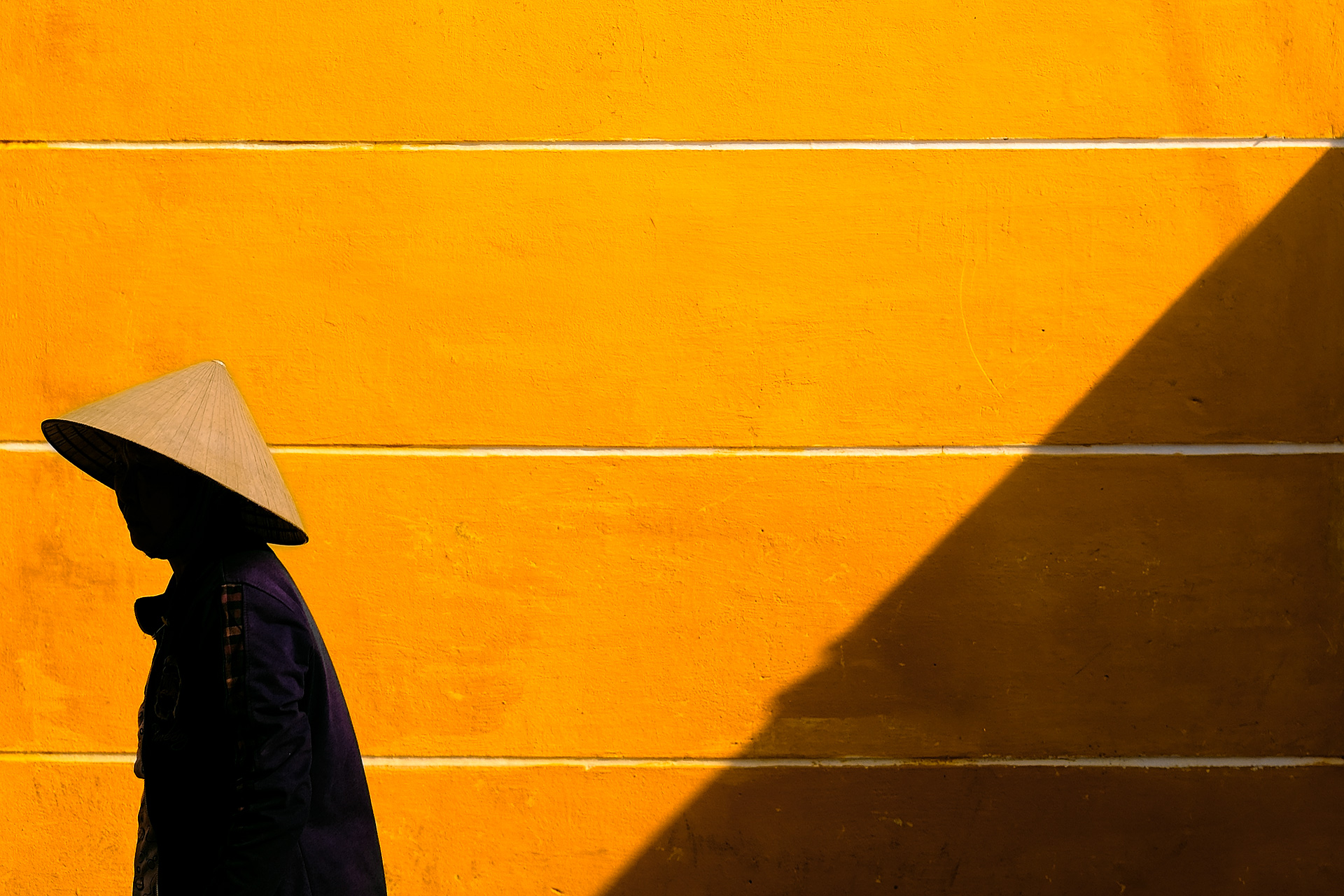
I don’t really have any all time favourite photos, but there is one that resonates with me. I’ve been focused on geometric patterns and shapes a lot when I’m travelling especially in places like Vietnam with the conical hats. I took this image in Hoi An Ancient Town on a sunny morning with the X100S. I waited patiently for about 10 minutes after finding my backdrop (the yellow wall) with a triangle shadow falling into part of the frame. The electronic viewfinder allowed me to position myself to compose the image, all I had to do was wait for someone to pass by to finish the shot. It’s a pretty surreal feeling watching your images unfold in real time right before your eyes – The X system rocks for this!

question-4-image

Fujifilm X100S – 23mm – F4 – 1/2000 second – ISO 400


How did you get into writing for publications such as Australian Geographic, Outdoor Magazine, Australian Photography Magazine and UK Digital Photography Magazine?


I was never really interested in writing, however since taking up photography and looking for other ways to generate income I fell into being commissioned for assignments that involved writing articles. I found out very quickly that it’s not what you know, but who you know in this competitive industry.

vivid2016-0886

Fujifilm X100S – 23mm – F2 – 1/180 second – ISO 400


If you have some advice for someone starting out in photography what would it be?


Just get out there and shoot! It is not about becoming famous or having all the gear available on the market. It is about enjoying yourself and finding your own style. Shoot what you like shooting, and avoid copying the work of others with the belief that it will make you a ‘better’ photographer. It’s totally fine to follow other photographer’s work, that’s how you find inspiration, but don’t compare yourself to other people’s success. Make your own success. Most importantly, save your money for a flight somewhere, not camera gear. Memories are worth more, and great photos wait for no one.

hoian-0071-edit-edit

Fujifilm X100S – 23mm – F2 – 1/320 second – ISO 400


Recently you expanded your reviews to include the Fujifilm X-T2. In four sentences what do you like most about the camera and what do you think needs improving?


The discreet and compact size in a nice lightweight package offers me an abundance of photographic opportunities that I may have never imagined lugging around my bulkier DSLR system. Mirrorless is evolving so quickly and it’s an exciting time to be experimenting and using these nifty cameras to their full potential. There’s not much I can really fault the X-T2 on, however, I do wish the articulating screen folded back in on itself, similar to the articulating screen on the Canon 60D. Overall it’s a quality build and shoots impressive images.


How important to you is getting the photo right in camera first? Does the Fujifilm X Series system help you achieve this?


I’m a firm believer in nailing the shot in camera rather than relying on editing software to ‘save’ or manipulate what could have been achieved at the time of capture. The electronic viewfinder combined with Fujifilm’s dedicated dials has enabled me to master my shooting style and post-processing workflow. I find myself shooting jpeg a lot more since switching to Fujifilm. The jpeg files are beautifully rich in colour and contrast, which does not require much enhancement in post-processing. For me, that’s the biggest selling point for Fujifilm cameras. Less time in front of the computer and more time out doing what I love!

hoian-9636-edit

Fujifilm X100S – 23mm – F2 – 1/250 second – ISO 800


To see more of Drew’s work visit his website or follow him on his various social media accounts including; Facebook, Instagram, Twitter, 500px and Google+

X-Thusiast Featured Photographer Carlo Mark Almadro


Carlo Mark Almadro, also known as the Stray Storyteller, is a photographer from the countryside in Victoria. Learn more about his adventures filming cosplay characters and street photography in Melbourne.


Can you tell us a bit about yourself and where you’re from?


My name is Carlo Mark Almadro and I live in a small town in country Victoria. I usually like to introduce myself with the moniker “The Stray Storyteller.” I got the idea from a popular street photographer who, in describing another photographer, wrote that we should “wander the streets like a stray dog.” So that’s what I started to enjoy doing, but the name “stray dog” was already taken, so I ended up wandering the streets like a stray storyteller.


How did you develop an interest in photography using Fujifilm equipment?


I’ve always liked browsing through great photos online, especially the ones taken by everyday people. I would always stare and wonder how some of them are able to evoke emotions and memories with a single still image. I wanted to be able to do what they did, so I started saving up to buy my first “big” camera. What I ended up buying was the Fujifilm FinePix X100. With zero knowledge in photography, I went out with my X100 and started taking random photos in full auto. Once I saw the images that it produced, I was hooked and I wanted to do and learn more.


How would you describe your photography style and strategy?


I don’t have a specific style yet and I am still learning, but I do like pouring over the work of several documentary and street photographers and try to emulate what they do and incorporate that into the photos I like to take. I’ve been experimenting a lot with different styles. I think it’ll be pretty apparent once you see my Instagram feed. It’s predominantly cosplay portraits at the moment but there is a good mix of everything.


03-ethereal

“Ethereal” – StarPandora as Princess Asseylum Vers Allusia | X-T1 + XF56mmF1.2 – F1.8 – 1/1000 second – ISO 200


What inspires your photography?

I’m inspired by the desire to learn and do more with photography. Every once in a while I will see a photo that truly stuns and inspires me. There is so much beauty, and there are so many stories I want to capture and immortalise. In order to do so properly, I have to keep learning and improving. My hope is that one day, maybe one of my own images will have that same impact on someone else.


Where are your favourite places to take photos and do you prefer a certain type of light to photograph in?


Melbourne, definitely! I love Melbourne. I love walking around the city, getting lost in the laneways, finding small nooks and crannies, meeting different people, watching the buskers, and seeing myriad scenes unfold before me.

06-street-art

“Street Art” – a graffiti artist working on his art as passers-by go on with their day | X-T1 + XF18mmF2


I’m still trying to get a better grip of natural light photography so my preferred type of day to shoot in would be really cloudy days where the light would be diffused beautifully. Overcast days also give that moody feel to a photo that I love. I also very much enjoy taking portraits of cosplayers at pop culture conventions. The fun atmosphere at these events is very infectious and the costumes made and worn by the cosplayers are so full of colour and detail.


What is your favourite memory from a photography session?


I’ve never done an organised photo session before, but if a street session counts, then my favourite would be the first time I went to a pop culture convention. I remember asking cosplayers if I could take their photo and they would always say yes. Every time I would review the image, I would feel happy. The character, the colours, the feeling—everything just looked right.

04-hunter

“Hunter” – Ataraxy Creative as Aloy of the game Horizon Zero Dawn | X-T1 + XF56mmF1.2 – F1.4 – 1/125 second – ISO 400


Can you tell us what’s your favourite Fujifilm camera to use and why?


My favourite would be my X-T1. I like the way it is so easy to handle and fits in the hand nicely. It took some getting used to but now I love having dials for all the things I like to adjust.


Which Fujinon lens or lenses do you prefer to use with your Fujifilm camera and why?


The XF56mmF1.2 hands down, because portraits just look so dreamy and everything just comes out great all the time.

my-melbourne

“Music window” – street photo of a busker on Bourke street | X-Pro1 + XF18mmF2 – F2.8 – 1/2000 second – ISO 3200


What sort of workflow do you use in your photography? Do you shoot in RAW or JPEG?


I shoot RAW+JPEG. The Fujifilm jpegs are already beautiful from the get-go and I always use them if I want to share something real quick. The RAW files, I import to Adobe Lightroom CC using my own personal preset that I based heavily on the Fujifilm Pro-Neg Hi Film Simulation. Usually, I would stop there, but if I’m not totally happy with an image, I would then make some adjustments to achieve the look I want.


Do you have any technical tips you’d like to share? Perhaps suggestions on the best lighting, shutter speed, white balance, aperture or ISO? Other preferences?


I’m no technical expert but I do have some personal preferences. I predominantly shoot in the daytime so my ISO is almost always set to 200. I usually try to keep my shutter speed at 1/180 second. Depending on the mood I’m after I interchange between two of my go-to White Balance settings: R +2 : Y -2 or B +2 : G -2. Then before taking the shot, I’d play around with the aperture ring until I get the exposure I want. Every situation would always need something different but that’s usually what I have once I step out the door.


Do you have advice for new photographers or the next potential X-Thusiast?


Attend a pop culture convention. The atmosphere is great and it is the best place you can practice taking portraits and adjusting your settings on the fly. Cosplayers are also among the friendliest people out there. Ask to take their portrait and once they get into character and strike their signature poses, the resulting photo will almost always look great.


When shooting in the streets, be constantly aware of your surroundings. Being the enthusiasts that we are, it’s too easy to get carried away and be oblivious to everything else that’s happening around us that we potentially could get into an accident or be a nuisance to others. I know I have been guilty of this several times in the past.


Don’t stress too much and enjoy yourself, and to do this, the one piece of advice that I keep in mind at all times that always helps is: If the person who took the photo loves their photo, then it is good.


If you or someone you know in Australia is interested in joining our X-Thusiast community, check out the full X-Thusiast Gallery and submission details here.


9 Best Practices for Event Photography

Capture the atmosphere of big scenes like music concerts, art performances and athletic games. Event photography gives you a way to remember and relive big moments, for either personal or commercial use. As you bring your camera to a live event, have a strategy for shooting amazing quality photos.


Here are nine ways you can optimise your opportunities to get live event photos:


  1. Shoot in RAW format.

The main advantage of RAW is it retains all the image detail in the file as it utilises all the pixels on the imaging sensor. Exposure, sharpness, saturation and white balance can then be changed in post processing software without losing too much image detail.


  1. Avoid using flash and use a fast aperture.

Most entertainment venues are quite dark and taking photos from a distance can be a challenge. If possible to get the best shot in these lighting conditions try two things. First, get as close as possible to the stage and second use a lens with a large aperture. For instance, if you use the Fujinon XF56mmF1.2 wide open (at F1.2) then the lens will be able to gather as much light as possible therefore providing you with a faster shutter speed, negating the need for a flash.

tilman-jentzsch

“Atari Teenage Riot,” by Tilman Jentzsch Fujifilm X-T1 + XF16mmF1.4

  1. Use fast shutter speeds for action shots.

If you want to capture an athlete’s gait or a singer’s croon, then you want to time your shot to the perfect millisecond. Use fast shutter speeds, even if that requires using a high ISO setting. For music and performance art shots that may contain noise from using a high ISO, try changing the shot into black and white for a timeless aesthetic.


  1. Illuminate with help from spot and beam lights.

Concert and theatre venues are often dimly lit, but you can use spot and beam lights for the brightness you need. Time your shot so that oscillating or flashing lights illuminate your subject, and see how different colours in venue lighting affect your subject’s appearance. Shoot straight into the light source for a striking effect.

“RedFoo,” by Tilman Jentzsch

“RedFoo,” by Tilman Jentzsch Fujifilm X-T1 + XF16-55mmF2.8

  1. Click, click, click that shutter. 

Your time to get photos is limited, and your attention has to be on the action. Don’t check your camera display after each shot to critique your previous image. Keep shooting and take many more shots than you think you need.


  1. Move with your feet, not with your lens. 

It is easy to feel timid about moving through a crowd to get the best image and to instead rely on your zoom. But no zoom makes up for a great angle, so move your body to the right shooting spot.

“Confetti walk” by Kevin Belson

“Confetti walk” by Kevin Belson, Fujifilm X-T2

  1. Show up early and stay late.

Another way to get close shots without a competing crowd is to arrive for practise or rehearsal. That is an easier time to approach subjects and to witness their candid and personable expressions.


  1. Know which moments matter.

Capture action from significant scenes. Get the basketball player dunking, not dribbling. Get the singer shouting into the mic, not waiting for the drummer to start the song. Capture the biggest moments for the biggest impact.


tilman-jentzsch-001

“Samuele Zanella / The Two Romans,” by Tilman Jentzsch, Fujifilm X-T1 + XF16-55mmF2.8

  1. Take caution with photo rights.

If you want to sell your images from an event, then select images over which you have legal rights. Copyright law gives athletes, musicians and other public figures the right to seek compensation from you if you try to profit from their unlicensed likeness.


By following these best practices, your event photography will tell the best story from the big scene.