Month: March 2017

Did You Know You Could Do This on Your X Series Camera?

The Fuji Guys are back to show you five different tips and settings you can quickly change on your Fujifilm X Series camera.

Follow the Fuji Guys on Twitter: http://www.twitter.com/fujiguys

For more information about this and other Fujifilm products, please visit these websites.

Australia
http://www.fujifilm.com.au/products/digital_cameras

U.S.A.
http://www.fujifilmusa.com/products/digital_cameras/index.html

Canada
http://www.fujifilm.ca/products/digital_cameras/index.html

UK
http://www.fujifilm.eu/uk/products/digital-cameras/

Announcing GFX 50S Rentals at Australian Retailers

The Fujifilm GFX 50S is now available at selected retail locations Australia wide. If you have been looking to try our new system before making a purchase, great news – you can! There are speciality X Series dealers located around Australia who will now be offering rental GFX equipment at their standard rates.

Residents in New South Wales, Queensland, South Australia, Victoria and Western Australia will be able to rent the following gear:

  • Fujifilm GFX 50S
  • Fujinon GF63mmF2 R WR lens
  • Fujinon GF32-64mmF4 R LM WR lens
  • Fujinon GF120mmF4 R LM OIS WR Macro lens
  • Fujifilm GFX EVF-TL1 Tilt Adaptor
  • Fujifilm VG-GFX1 Vertical Grip
  • H-Mount Adaptor

What’s more, each store will be able to explain the details of the GFX system and answer any questions. So be sure to get your questions answered and try our new GFX today! To find a rental location in Australia visit our find a GFX rental location store locator.

Through a Photographer’s Eye: Alamby Leung

through-a-photographers-eye

Through a photographer’s eye is the first in a series of interviews featuring Australian photographers. In each interview, we learn about the person behind the camera and how they use Fujifilm X Series cameras to photograph the world around them. Our second interview is with Melbourne based photographer, Alamby Leung.

alambyl-profile

Alamby, you are well known in photography circles online, but for those who may not have seen your work can you tell us about yourself and why you enjoy taking photos?


I’m a travel/lifestyle photographer, content creator and video producer. My video works are mostly produced for media and creative agencies that I work for, while photography is a passion of my own. I started photography the old school way, like using manual film cameras, developing my own negatives, and making prints in the darkroom. I’ve always liked art and creating things, and photography became my creative outlet as soon as I discovered it. It was a very natural process, and I find myself most creative when taking photos.

fujifilmxalambyl-3

Fujifilm X-Pro2 with XF56mmF1.2 R – 56mm – ISO 400 – F4 – 1/7500 second

fujifilmxalambyl-4

Fujifilm X-Pro2 with XF18mmF2 R – 18mm – ISO 400 – F4 – 1/7500 second


Recently you travelled to New Zealand with the Fujifilm X-Pro2, based on your experience what did you most like about the X Series system and did it assist your photography style?


I’ve been a Fujifilm user for the past few years. I own an X100S myself and loved its design and usability. As someone always travelling, I prefer my gear to be light, easy to access, and discreet. The X-Pro2 fits my criteria, and the lenses I brought along with gave me a lot of flexibility to achieve the images I had in mind. It does everything I would do with a DSLR, only it’s much lighter, and a lot more stylish!

fujifilmxalambyl-1

Fujifilm X-Pro2 with XF18mmF2 R – 18mm – ISO 400 – F2.8 – 1/6000 second

fujifilmxalambyl-8

Fujifilm X-Pro2 with XF35mmF2 R WR – 35mm – ISO 400 – F4 – 1/75 second


Can you name any females in the creative space who inspire you to keep on creating? What do you like most about them?


The first name that comes to mind is Annie Leibovitz. I remember meeting her in person once and was so starstruck! She’s one of the first female photographers I studied and admired since I started in photography, and her work continues to inspire me over the years. She’s always pushing boundaries and finding new ways to shoot, and her photos are beyond just capturing a beautiful person. Her photos tell stories. That’s something I strive to achieve, to create some sort of dialogue through my images.


When photographing with the Fujifilm X-Pro2 what lens did you use to capture your travels and did it perform how you expected it too?


I had three lenses with me over the trips – the XF18mmF2, XF35mmF2, and XF56mmF1.2. My main subjects were landscapes, portraits, and daily snaps, so the three lenses were a perfect combination for me. The focus is fast and on-point in most shooting situations, which helps to ensure my subjects are in focus. l loved the smooth and soft bokeh produced by the XF56mm in particular, it really helps to create some dreamy shots and to define my subject from the background.


fujifilmxalambyl-2

Fujifilm X-Pro2 with XF18mmF2 R – 18mm – ISO 400 – F5.6 – 1/110 second


You regularly post photos to Instagram, do you have any hints or tricks to build a following and did the Fujifilm Camera Remote App assist you when you are travelling away from a computer?


Instagram is a platform for me to showcase my work and connect with my followers, so posting creative and relevant content is important for me. Keeping my content consistent is also a way to build a following and that’s why the Fujifilm Camera Remote App is useful as I can transfer images to my phone for quick edits and post them on the go. It’s especially handy when I’m travelling without my laptop.

fujifilmxalambyl-6

Fujifilm X-Pro2 with XF35mmF2 R WR – 35mm – ISO 200 – F10 – 1/550 second


If you have some advice for someone starting out in photography what would it be?


Social media is a great place for inspiration and to receive feedback, but developing your personal style and be creative with your ideas are important too.

fujifilmxalambyl-5

Fujifilm X-Pro2 with XF35mmF2 R WR – 35mm – ISO 640- F8 – 1/900 second


Having previously worked with well-known YouTubers Kaiman Wong and Lok Cheung, if you were to bump into them on the street, what advice would you give them about reviewing Fujifilm equipment?


I think they can’t review Fujifilm equipment without talking about the retro camera designs and the colours of the images, but they’re both experts in the camera and gear review world so no doubt they would have a lot more to say than I do.


Where can people see more of your work and do you have any current or future projects we should check out?


This year is going to be an exciting one as I’ll be spending the majority of my time in Australia, and producing work locally. I’m also aiming to pick up more travel related projects as travel is my main source of inspiration. For more of my work and personal projects please check out my website and Instagram for regular updates. Would love to hear your feedback!


fujifilmxalambyl-7

Fujifilm X-Pro2 with XF56mmF1.2 R – 56mm – ISO 200 – F8 – 1/1500 second


All images copyright Alamby Leung and used with permission. To see more of Alamby’s work visit her website or follow her on Instagram, Facebook and Twitter.

Other interviews in this series

Through A Photographer’s Eye: Drew Hopper

Through a Photographer’s Eye: Drew Hopper

through-a-photographers-eye

Through a photographer’s eye is the first in a series of interviews featuring Australian photographers. In each interview, we learn about the person behind the camera and how they use Fujifilm X Series cameras to photograph the world around them. Our first interview is with Sydney based photographer, Drew Hopper.


drew-headshot


Drew, what do you look for when taking a photo and how has photography shaped your career?


To me, photography is the art of observation. I try my best to find something interesting in everyday life and transform it into something surprising and captivating. For me, photography is about seeing things from a new perspective. If I can capture a moment and create some kind of tension that makes the viewer feel something then that to me is a successful photograph. As a photographer specialising in travel and documentary, stories are an integral part of my work. I strive to capture images that convey a sense of discovery with a story from everyday life moments. My goal as a visual storyteller is to be utterly infectious so that my audience can connect and feel something on an emotional level.


hoian-8809

Fujifilm X100S – 23mm – F4 – 1/100 second – ISO 200


I never intended on becoming a full time ‘professional’ photographer. My love for the craft has kept me moving forward. After my first trip overseas the travel bug hooked me and there was no turning back. My journey as a photographer originated as a landscape photographer on the beautiful Mid North Coast of New South Wales, Australia. My passion for the natural world led my desire to explore other parts of the world, which saw my journey as a landscape shooter evolve into the travel realm. I spend a lot of my time travelling abroad, mostly in Asia.

hoian-8234

Fujifilm X100S – 23mm – F8 – 1/125 second – ISO 200


By the looks of things, you travel abroad often to capture people and subjects that interest you. Did you choose the X100S for this reason and what do you like most about the camera?


Yes, I spend a lot of time travelling throughout Asia. During my first trip overseas I packed way too much camera equipment, which ended up becoming a burden. On my second trip I still carried my Canon DSLR, however, I also purchased an X100S. I ended up leaving my Canon kit at the hotel most days and went out shooting with the Fujifilm system. I just love how compact and discreet the X system is – it definitely was beneficial in mixing with the locals without standing out too much with a big camera. I find that when I shoot with the X100S people tend to turn a blind eye towards you being a ‘pro’ with a fancy camera.

kolkata-6353-edit

Fujifilm X-E1 – XF18-55mm – F2.8 – 1/40 second – ISO 250

untitled-shoot-6283-edit

Fujifilm X100S – 23mm – F5.6 – 1/4 second – ISO 800


Did you have any travel photography tips you could share with our readers?


The best advice I can offer aspiring travel photographers is to always ‘work the scene’ to get that perfect shot. This is usually a subtractive process, which means excluding certain elements from my frame to remove any clutter or unwanted distractions from the image before taking the shot. I apply this technique of shooting to all my photography, even landscapes. I cannot simply move part of a landscape; I must work the scene in order to make the scene work for me. If you want that shot then you need to really work for it – the X100S is fun for this as it’s so compact.

hoian-9253-edit

Fujifilm X100S – 23mm – F4 – 1/210 second – ISO 400

untitled-shoot-9096-edit

Fujifilm X100S – 23mm – F5.6 – 1/240 second – ISO 200


Can you tell us the story behind your favourite photo captured on the Fujifilm X100S?


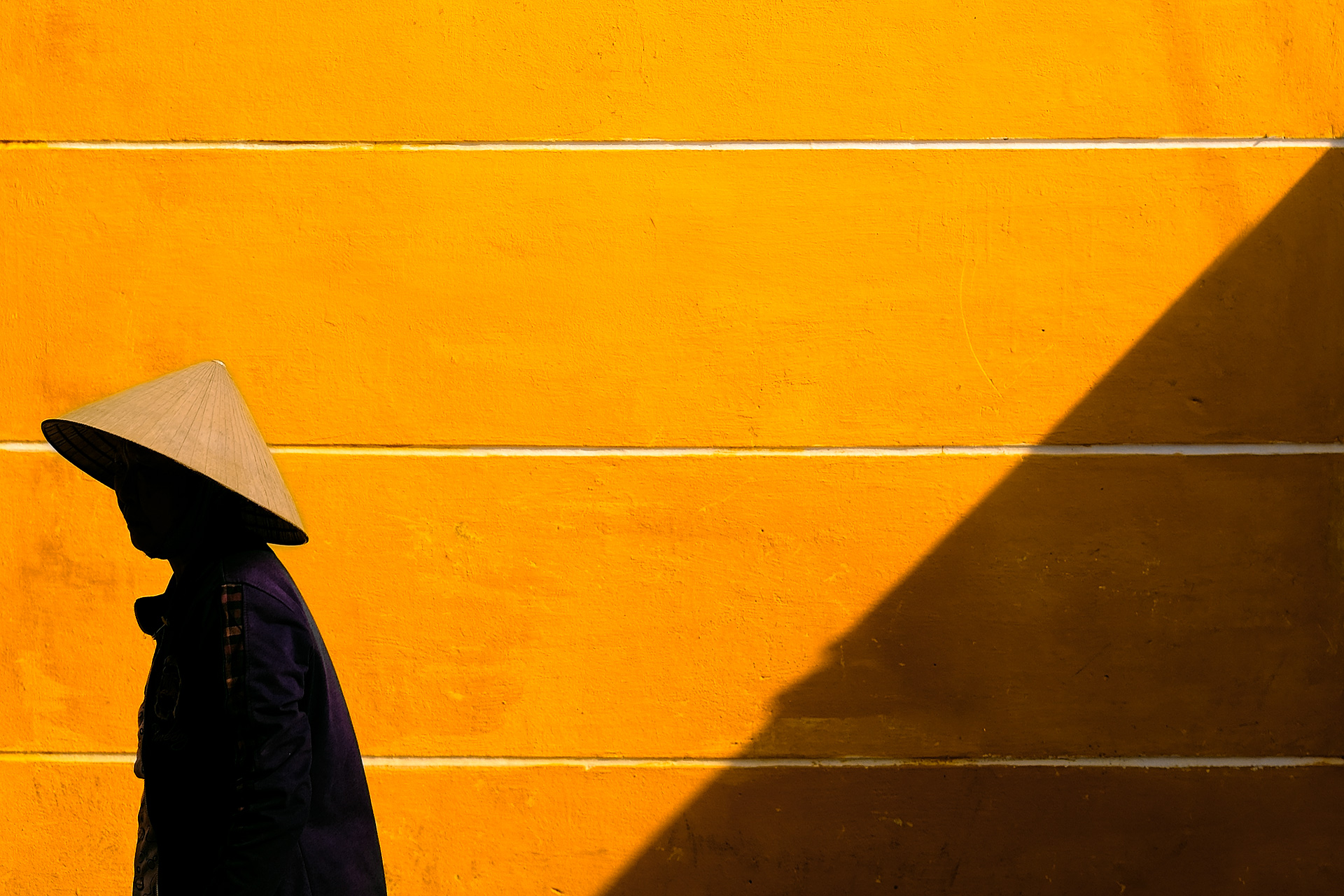
I don’t really have any all time favourite photos, but there is one that resonates with me. I’ve been focused on geometric patterns and shapes a lot when I’m travelling especially in places like Vietnam with the conical hats. I took this image in Hoi An Ancient Town on a sunny morning with the X100S. I waited patiently for about 10 minutes after finding my backdrop (the yellow wall) with a triangle shadow falling into part of the frame. The electronic viewfinder allowed me to position myself to compose the image, all I had to do was wait for someone to pass by to finish the shot. It’s a pretty surreal feeling watching your images unfold in real time right before your eyes – The X system rocks for this!

question-4-image

Fujifilm X100S – 23mm – F4 – 1/2000 second – ISO 400


How did you get into writing for publications such as Australian Geographic, Outdoor Magazine, Australian Photography Magazine and UK Digital Photography Magazine?


I was never really interested in writing, however since taking up photography and looking for other ways to generate income I fell into being commissioned for assignments that involved writing articles. I found out very quickly that it’s not what you know, but who you know in this competitive industry.

vivid2016-0886

Fujifilm X100S – 23mm – F2 – 1/180 second – ISO 400


If you have some advice for someone starting out in photography what would it be?


Just get out there and shoot! It is not about becoming famous or having all the gear available on the market. It is about enjoying yourself and finding your own style. Shoot what you like shooting, and avoid copying the work of others with the belief that it will make you a ‘better’ photographer. It’s totally fine to follow other photographer’s work, that’s how you find inspiration, but don’t compare yourself to other people’s success. Make your own success. Most importantly, save your money for a flight somewhere, not camera gear. Memories are worth more, and great photos wait for no one.

hoian-0071-edit-edit

Fujifilm X100S – 23mm – F2 – 1/320 second – ISO 400


Recently you expanded your reviews to include the Fujifilm X-T2. In four sentences what do you like most about the camera and what do you think needs improving?


The discreet and compact size in a nice lightweight package offers me an abundance of photographic opportunities that I may have never imagined lugging around my bulkier DSLR system. Mirrorless is evolving so quickly and it’s an exciting time to be experimenting and using these nifty cameras to their full potential. There’s not much I can really fault the X-T2 on, however, I do wish the articulating screen folded back in on itself, similar to the articulating screen on the Canon 60D. Overall it’s a quality build and shoots impressive images.


How important to you is getting the photo right in camera first? Does the Fujifilm X Series system help you achieve this?


I’m a firm believer in nailing the shot in camera rather than relying on editing software to ‘save’ or manipulate what could have been achieved at the time of capture. The electronic viewfinder combined with Fujifilm’s dedicated dials has enabled me to master my shooting style and post-processing workflow. I find myself shooting jpeg a lot more since switching to Fujifilm. The jpeg files are beautifully rich in colour and contrast, which does not require much enhancement in post-processing. For me, that’s the biggest selling point for Fujifilm cameras. Less time in front of the computer and more time out doing what I love!

hoian-9636-edit

Fujifilm X100S – 23mm – F2 – 1/250 second – ISO 800


To see more of Drew’s work visit his website or follow him on his various social media accounts including; Facebook, Instagram, Twitter, 500px and Google+

A night with the stars

There’s something very special about taking photographs at night. Aside from the challenges of working in low light, successful images reveal things that our eyes don’t ordinarily see; the result of working with lengthy exposures that can run into seconds and often minutes. For me, the ultimate example of this is a star trail, which is why you’ll often find see me heading out when darkness falls.

Before you shoot a star trail, you need to do some groundwork. First, Read More