For me personally, long exposure (LE) photography allows me to explore a sense of calm, a visual relaxation that matches the way I feel when I look at the landscape. But for some, the technical side of this style of photography makes it incredibly frustrating and stressful.
Before we get into the technical side of LE photography and counting exposure increase on our fingers and toes, there is something that is far more important than the technical issues. It is vision, interpretation and connection with your subject.
Ansel Adams said “A great photograph is a full expression of what one feels about what is being photographed in the deepest sense and is, thereby, a true expression of what one feels about life in its entirety.”
At the beginning of December, I was on my way to California for a part-work, part-fun gig in SoCal. Being that this was only my 2nd trip to California and my first to the coast, I wanted to take everything that I thought I might need. One of the perks of the FUJIFILM X Series system is that I’m able to bring a lot of gear without having to worry about my bag being too heavy, on account of everything being so small and light compared to a DSLR system.Gear List:
FUJIFILM X-T2
FUJIFILM X-Pro2
FUJIFILM XF10-24mmF4 R OIS
FUJIFILM XF16mmF1.4 R WR
FUJIFILM XF16-55mmF2.8 R LM WR
FUJIFILM XF35mmF1.4 R
FUJIFILM XF56mmF1.2 R
FUJIFILM XF50-140mmF2.8 R LM OIS WR
FUJIFILM XF1.4x TC & XF2.0x TC
Formatt-HItech Firecrest Holder
Formatt-HItech Firecrest 10-stop ND & 3-stop ND Grad
13” Macbook Pro
1TB SSD Hard Drive
Anker PowerCore 20000
The Camps Bay ONA Camera Bag in Smoke
I’ve always had a love/hate relationship with shooting out of airplane windows. I’ve taken some beautiful shots, and some terrible ones, but regardless I always give it a shot and hope for the right combination of clouds and terrain to come away with something cool. For the first time in the sky I gave the X-T2 with XF50-140mm and XF1.4X Teleconverter a shot and it ended up being really awesome. Typically I have always tried shooting wide and always seemed to get the wing of the plane, reflections, or window scratches that made my shots unusable. But zooming in that far, and having the crazy good image stabilization of the 50-140 gave me some spectacular results.When I finally landed in San Diego, I only had a few hours to get checked into my hotel and find a good spot to shoot the sunset before I had to shoot the event I was in town for. I grabbed my ONA bag and ran out the door to see what I could find. I just made my way toward the west-facing beach of Coronado. This was my first “true” California coastal sunset, and it was a colorful cloudless sky. I took a few shots but mostly just took it in and enjoyed the moment.Day 2 started when a friend picked me up and we drove out to Anza Borrego. It was an unbelievable experience for this midwestern boy; in just 2 hours, we went from beautiful rolling hills and coastline to mountainous desert. We spent some time shooting from Font’s Point which gave a breathtaking view of the terrain spread out in front of us. This was everything I always expected from California: palm trees and vast expansive desert spread out in front of me. We spent a few hours shooting the beautiful textures and colors of the desert before moving on.Heading back towards the coast, we decided that the next stop would be the rocks of Corona Del Mar. Despite slipping multiple times and having extremely soggy shoes, I was thankful to have experienced one of the most beautiful sunsets of my entire life. Having 2 camera bodies is absolutely essential for the kind of work that I like to do. I split my time between my X-Pro2 with XF10-24mm set up on a tripod shooting long exposures, and my X-T2 with XF50-140mm combo in hand snapping away at boats, water and really fine-tuning my compositions with the compressed field of view. Having the 50-140 lens has turned me from a 100% wide shooter to a 60/40 tele/wide shooter and it has made such a huge impact on the work that I create.The next day was spent shooting around the picturesque Laguna beach area. It was a semi-low tide so we climbed to an area along the coast that has a sinkhole with beautiful swirling water, and set up our gear. After a bit of droning and waiting to see what we would get in terms of a sunset burn, we all got a bit ambitious and ventured further out on the rocks that were exposed by the low tide. While setting up on a tripod to get some water movement shots, a rogue wave came out of nowhere and completely soaked me and my camera. There has never been a time that I was more thankful to have weather-resistant gear. I spent the rest of the night soaking wet from head to toe, but was able to continue to shoot the rest of the sunset.After drying off at my hotel and grabbing a couple hours of sleep, I decided that my final morning before flying home was going spent in Long Beach shooting the sun coming up behind The Queen Mary. I arrived to a beautiful star-filled sky, giving me enough time to nitpick and get the composition that I really wanted. As I sat there on the rocks with my X-T2 on-tripod in front of me just waiting for the perfect moment, I thought about all I was able to experience on such a short trip, and how there is so much more of the world to see and explore. I couldn’t ask for anything better than being constantly inspired to create by my surroundings, and the gear that helps me capture it all.
I like to travel alone. Partners and friends are great, but they can also hold you back from really experiencing a culture deeply. Solo travel allows you a freedom and adventure rarely achievable for those rushing back home for dinner. So when a group of friends and I booked a house in a rather touristy area of Panama, I didn’t plan to spend much time shooting. I grabbed my trusted X-T1 and my favorite lens – the XF23mmF1.4 R.One of the local attractions in this area is a beach only accessible by boat or a long muddy trail through the jungle. After attempting the trail, we opted for the boat and were dropped at a small dock in a lagoon filled with mangrove trees. A short walk across the island towards the sound of surf led us to a beautiful beach. We were walking along the beach when a foreign couple approached saying that a man with a machete had tried to rob them, but they were able to run away. Suddenly. I regretted bringing my camera. We stopped walking for some time. We swam, did hand stands, and drank beer. Eventually, the allure of discovery won over and we continued along the deserted beach.
On my extensive travels, I often have a specific image in my mind when I’m shooting. Sometimes, the search for this image blinds me from all the other potential shots present. It’s refreshing to go out with no expectations and see what organically appears. When I saw locals on horseback approaching, I sank into the jungle looking for a frame to contain them as they passed. They had ridden the muddy trail, and were headed to the far end of the island to go hunting.This long strip of sand is interrupted occasionally by large trees overhanging into the ocean. They are a natural jungle gym, and soon we were climbing all over them. From the trunk of a tree,I realized there was a good shot and picked up the camera again. I tilted the LCD to get super low to the ground and avoided wallowing around myself.As my friend Laura was working on a new route for this particular tree, I switch on the Cinematic Mode; it’s accessible on your camera by turning the mode dial to CH and holding down the shutter release button. As it’s clicking away, I’m able to make slight adjustments to the composition. But, I’m mostly waiting on the subject to look at their best. Yes, it fills a memory card really fast. That’s why I use Lexar 128s, so I don’t have to worry about changing cards very often.Beyond the beach, we came across some boys walking around with machetes. They seemed to be out honing their skills with these essential jungle tools. One boy was carefully opening a coconut to drink the water. I sat my X-T1 on the ground near his feet, using the tilting LCD to compose. It must be great to grow up in a land where snacks fall readily from the trees.In the evening, we returned home to discover the hunt had been successful. It’s rare that I do a trip with no photographic objective. It’s refreshing to travel light and go with the flow – and it’s authentic and easy to capture with FUJIFILM X Series. On to the next adventure!
Recap – My name is Ben Cherry, I’m a Fujifilm X-Photographer focusing on environmental photojournalism. Currently I am part of the WWT Flight of the Swans conservation project, where Sacha Dench is flying from Arctic Russia back to the UK; following the declining Bewick’s swan as they migrate to overwinter in warmer climates.
Well we eventually got out of Russia, after a 19 hour border crossing. Estonia was instantly different. It had a significantly different feel to it, from seemingly greener, richer forest to just a different culture. It was all quite refreshing!
I broke off from the core team to focus on finding Read More
At Christmas it’s almost compulsory to take photographs and when you add a newborn baby into the equation it’s the perfect opportunity to create something extra special.
Whether you’re a fan of full-on Christmas decor, or prefer just a subtle nod to the season I hope this fills you with hints, tips and a sprinkle of festive inspiration.
If you are new to photographing babies you can keep it simple and natural, have baby lying on the back and photograph them awake and relaxed. Newborn babies can’t focus their eyes well, so I wait for them to stare into the distance and then move my camera into their line of sight, it can take a bit of patience but is usually worth it.
For this shot, I dressed the baby in a soft white romper and a berry headband which sets the season without needing a santa hat.
1/100s, f/2.8, iso 100, X-T2, XF16-55
Another simple image to capture is baby toes, they can be awake or asleep for this, though for wrigglers I’m grateful for the fast focusing of the X-T2. In the first shot you can see the out of focus fairy lights which add an interest to the composition, and for the second shot I used a berry coloured wrap to create a warm festive feel. In the second shot I was actually gently holding the baby’s toes in place underneath the fabric to keep them at the angle I wanted. The tilt screen on the X-T2 was handy here as I could both hold her feet and shoot one handed comfortably.
1/100s, f/2.8, iso 100, X-T2, XF16-551/100s, f/2.8, iso 200, X-T2, XF16-55
Overhead shots are also easy shots to get whilst keeping baby safely lying down on fabric. The wreath I used is mainly fabric so is quite soft and not prickly, and I padded the middle out with a furry cushion cover so that she was well supported at all times.
If a baby isn’t the most settled then I will swaddle them with a wrap so they feel secure, and more often than not they fall asleep when wrapped. For all these shots I stand over the baby, using a camera strap, and then use live view on the tilt screen of my X-T2 to compose the image.
1/160s, f/2.8, iso 200, X-T2, XF16-551/125s, f/2.8, iso 200, X-T2, XF16-551/125s, f/2.8, iso 200, X-T2, XF16-55
This shot is a more typical newborn baby pose, but using a seasonal coloured wrap keeps the image simple whilst adding a slight festive touch.
1/100s, f/2.8, iso 100, X-T2, XF16-55
Christmas is a great excuse to pull out some of my favourite props too, so here are a few where I’ve tried to recreate some of the magic of the holiday. All of these images were taken with a spotter, which means I had someone on hand (usually a parent) to stay very close to the baby with the sole purpose of holding them if they start to move or roll. Spotters are either just outside the frame but still within reach of the baby, or I edit them out in Photoshop.
To make it a bit more interesting I wanted to include some lights within these set-ups too, one having a candle lit effect lantern and the other incorporating some fairly lights. Each of these meant I had to work out the best way to capture the lights whilst not overpowering them with flash. I needed to shoot fairly wide open to be able to record as much of the ambient light as possible, yet I still needed to light the subject too with my flash. I had the ISO at 100 (or Low) and my aperture at 2.8 on the 16-55mm, if I shot at 1/250s I overpowered the fairly lights and you couldn’t really see any light from them at all, when I slowed down to 1/125s they were visible but quite small and hard. I couldn’t shoot any wider unless I swapped lenses, so the next option was to reduce the shutter speed further. As my baby model was asleep, as long as I held the camera steady, I was able to shoot at 1/15s which enabled the flash to still perfectly light my model without overpowering the ambient so I captured the nice effect of the lights too. Again using the tilt screen was invaluable as I could sit down and hold the camera steady without having to lie on the floor to see.
1/15s, f/2.8, iso 100, X-T2, XF16-55
With the lantern shot the candlelight wasn’t giving any spread at all as it was just so low powered, so I photoshopped the glow in afterwards. I thought including both images will show you the different ways of achieving the same kind of end result. Where possible I do prefer to get it right in camera, but I’m not opposed to editing small things if it helps create the right feel either.
1/125s, f/2.2, iso 100, XT2, XF56,
And finally a slight twist on a more advanced newborn pose known as The Potato Sack, I wanted to give a bit of a snowman feel so added a hat and then in photoshop I added some snow, just for the fun of it. This pose is usually done with baby being supported and then the hand edited out afterwards.
1/125, f/2.8, iso 200, XT2, XF16-55
All images were shot with the X-T2 and lit with a single Elinchrom d-lite1 and a 1m² softbox. I almost always position the light so that it flows down the baby’s face to give either a butterfly shadow under their nose or a loop shadow at the side of their nose.
And finally I few tips for you to help get your newborn model to sleep:
1. Heat – A toasty warm room and a fan heater near baby, I find it’s the warm breeze that helps settle them 2. Milk – A ‘milky drunk’ baby, I always ensure they have a full feed before we start so they are nice and full 3. White noise – Background noise helps send most babies to sleep and masks any noise you might make whilst working 4. Blankets – I use a blanket from home to hold them in whilst getting them to sleep as it smells familiar to them 5. Dummy – I always ask if they have one at all, you can pose the baby with their dummy and then just remove it for the individual shots 6. Patience – sometimes it takes a while for them to drop off to sleep but having all the above in place can make it much easier.
I hope you all have a great Christmas and I’d love to hear how you get on with your festive baby photographs!
My work as a photographer has been characterized largely by my choice of subject matter and composition. Best known for photographing dancers against uncommon backdrops, I frequently get asked why and how I choose the backdrops that make it into the final frame. The truth is, when I travel (other than researching photography laws in each respective country), I don’t spend much time researching the “best places to photograph”.
Why not?I prefer to be surprised by the places I visit and let them speak to me as I make my way into the unknown. Avoiding preconception of a physical location helps my process: I believe it helps me to create more honest images. Honest, because the final output reflects my own discoveries as opposed to try to emulate what I have seen others do – even subconsciously. This can be frustrating at times, but frustration is a part of the creative process which welcome with open arms. Much as necessity is the mother of invention, frustration can be the propeller of creativity.I found myself traveling in Mexico City, where I was able to enlist and schedule several dancers before my trip. I had a full schedule of shoots before landing. Yet, I had no idea where was I going to photograph. While the thought frightened me, it also motivated me. Throughout the trip, I relied both on the advice of my dancers and local Fujifilm X-Photographer Jaime Ávila who, out of his own initiative, pre-scouted a few places for me (thanks a lot, brother!).However, seeing is believing. In spite of their local knowledge and willingness to help, it is not until I am at the actual locations that I face the real challenges: Will this location work for me? How can I make this place my own? How can I translate it into my visual language? My mission is to make the dancer the protagonist. It’s my responsibility to feature him or her in the location while creating a narrative evocative of the city. I can only achieve this through patience and observation.
No matter where I am, I need to observe what makes each place unique. And, more importantly, what is unique to me at that particular moment in time. That takes time and some trial and error – that’s where patience needs to kick in.
You CAN’T avoid heavy traffic in Mexico City….so you used it to your advantage.
Mexico City is the largest city in the world with an immense population of 20 million. Instead of avoiding crowds, I decided to incorporate the fot traffic as a key element of this photograph.
Here in Mexico City, more so than architectural elements, the one thing that has caught my attention is its density. LOTS of it. There are as many people in the streets as there are cars. While the density initially felt like a hardship, I took the time to discover how to use it to my advantage – and more importantly, how to use the density to tell the story of my experience here. Instead of running away from it, I decided to place the dancers between congested areas of people and between heavy traffic lanes.
To my advantage, working with FUJIFILM X Series gear has been a great blessing in these types of situations. Surfing waves of people, I was carrying equipment so light that I was able to move easily through the crowds. Having lightweight gear and fast autofocus, I jumped in and out of traffic swiftly (and safely).
Also, I have used the lightness of my X-T2 in combination with its burst mode to create slow exposures in areas where there are a lot of people moving. The result is an image of a magnificently elegant dancer standing strong with a blurred sea of moving people. I rarely carry a tripod; these images were easily created handheld.
I have been using the tilting screen quite often to shoot from extremely low angles. Shooting from low angles often helps in diminishing visual background noise.
My journey in Mexico City started with many revelations about my own process and creativity. I found myself slowly unraveling the unknown with the help of X Series and a true sense of adventure and exploration…


 For me personally, long exposure (LE) photography allows me to explore a sense of calm, a visual relaxation that matches the way I feel when I look at the landscape. But for some, the technical side of this style of photography makes it incredibly frustrating and stressful.
 By
By  Gear List:
 I’ve always had a love/hate relationship with shooting out of airplane windows. I’ve taken some beautiful shots, and some terrible ones, but regardless I always give it a shot and hope for the right combination of clouds and terrain to come away with something cool. For the first time in the sky I gave the X-T2 with XF50-140mm and XF1.4X Teleconverter a shot and it ended up being really awesome. Typically I have always tried shooting wide and always seemed to get the wing of the plane, reflections, or window scratches that made my shots unusable. But zooming in that far, and having the crazy good image stabilization of the 50-140 gave me some spectacular results.
 When I finally landed in San Diego, I only had a few hours to get checked into my hotel and find a good spot to shoot the sunset before I had to shoot the event I was in town for. I grabbed my ONA bag and ran out the door to see what I could find. I just made my way toward the west-facing beach of Coronado. This was my first “true” California coastal sunset, and it was a colorful cloudless sky. I took a few shots but mostly just took it in and enjoyed the moment.
 Day 2 started when a friend picked me up and we drove out to Anza Borrego. It was an unbelievable experience for this midwestern boy; in just 2 hours, we went from beautiful rolling hills and coastline to mountainous desert. We spent some time shooting from Font’s Point which gave a breathtaking view of the terrain spread out in front of us. This was everything I always expected from California: palm trees and vast expansive desert spread out in front of me. We spent a few hours shooting the beautiful textures and colors of the desert before moving on.
 Heading back towards the coast, we decided that the next stop would be the rocks of Corona Del Mar. Despite slipping multiple times and having extremely soggy shoes, I was thankful to have experienced one of the most beautiful sunsets of my entire life. Having 2 camera bodies is absolutely essential for the kind of work that I like to do. I split my time between my X-Pro2 with XF10-24mm set up on a tripod shooting long exposures, and my X-T2 with XF50-140mm combo in hand snapping away at boats, water and really fine-tuning my compositions with the compressed field of view. Having the 50-140 lens has turned me from a 100% wide shooter to a 60/40 tele/wide shooter and it has made such a huge impact on the work that I create.
 The next day was spent shooting around the picturesque Laguna beach area. It was a semi-low tide so we climbed to an area along the coast that has a sinkhole with beautiful swirling water, and set up our gear. After a bit of droning and waiting to see what we would get in terms of a sunset burn, we all got a bit ambitious and ventured further out on the rocks that were exposed by the low tide. While setting up on a tripod to get some water movement shots, a rogue wave came out of nowhere and completely soaked me and my camera. There has never been a time that I was more thankful to have weather-resistant gear. I spent the rest of the night soaking wet from head to toe, but was able to continue to shoot the rest of the sunset.
 After drying off at my hotel and grabbing a couple hours of sleep, I decided that my final morning before flying home was going spent in Long Beach shooting the sun coming up behind The Queen Mary. I arrived to a beautiful star-filled sky, giving me enough time to nitpick and get the composition that I really wanted. As I sat there on the rocks with my X-T2 on-tripod in front of me just waiting for the perfect moment, I thought about all I was able to experience on such a short trip, and how there is so much more of the world to see and explore. I couldn’t ask for anything better than being constantly inspired to create by my surroundings, and the gear that helps me capture it all.
 One of the local attractions in this area is a beach only accessible by boat or a long muddy trail through the jungle. After attempting the trail, we opted for the boat and were dropped at a small dock in a lagoon filled with mangrove trees. A short walk across the island towards the sound of surf led us to a beautiful beach.
  We were walking along the beach when a foreign couple approached saying that a man with a machete had tried to rob them, but they were able to run away. Suddenly. I regretted bringing my camera. We stopped walking for some time. We swam, did hand stands, and drank beer. Eventually, the allure of discovery won over and we continued along the deserted beach.
 This long strip of sand is interrupted occasionally by large trees overhanging into the ocean. They are a natural jungle gym, and soon we were climbing all over them. From the trunk of a tree,I realized there was a good shot and picked up the camera again. I tilted the LCD to get super low to the ground and avoided wallowing around myself.
 As my friend Laura was working on a new route for this particular tree, I switch on the Cinematic Mode; it’s accessible on your camera by turning the mode dial to CH and holding down the shutter release button. As it’s clicking away, I’m able to make slight adjustments to the composition. But, I’m mostly waiting on the subject to look at their best. Yes, it fills a memory card really fast. That’s why I use Lexar 128s, so I don’t have to worry about changing cards very often.
 Beyond the beach, we came across some boys walking around with machetes. They seemed to be out honing their skills with these essential jungle tools. One boy was carefully opening a coconut to drink the water. I sat my X-T1 on the ground near his feet, using the tilting LCD to compose. It must be great to grow up in a land where snacks fall readily from the trees.
 In the evening, we returned home to discover the hunt had been successful.
  It’s rare that I do a trip with no photographic objective. It’s refreshing to travel light and go with the flow – and it’s authentic and easy to capture with FUJIFILM X Series. On to the next adventure!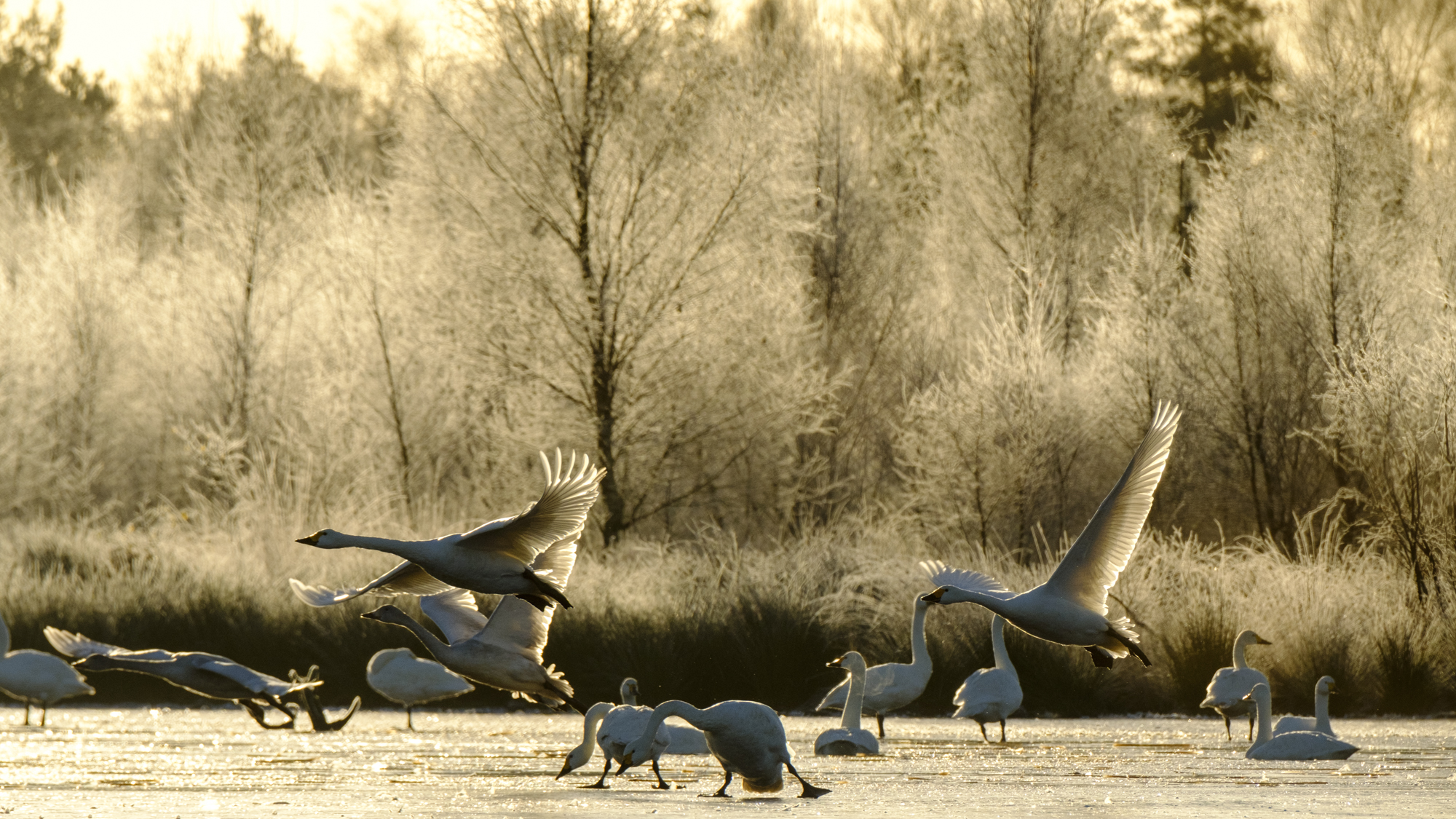




 I prefer to be surprised by the places I visit and let them speak to me as I make my way into the unknown. Avoiding preconception of a physical location helps my process: I believe it helps me to create more honest images. Honest, because the final output reflects my own discoveries as opposed to try to emulate what I have seen others do – even subconsciously. This can be frustrating at times, but frustration is a part of the creative process which welcome with open arms. Much as necessity is the mother of invention, frustration can be the propeller of creativity.
 I found myself traveling in Mexico City, where I was able to enlist and schedule several dancers before my trip. I had a full schedule of shoots before landing. Yet, I had no idea where was I going to photograph. While the thought frightened me, it also motivated me. Throughout the trip, I relied both on the advice of my dancers and local Fujifilm X-Photographer Jaime Ávila who, out of his own initiative, pre-scouted a few places for me (thanks a lot, brother!).
 However, seeing is believing. In spite of their local knowledge and willingness to help, it is not until I am at the actual locations that I face the real challenges: Will this location work for me? How can I make this place my own? How can I translate it into my visual language? My mission is to make the dancer the protagonist. It’s my responsibility to feature him or her in the location while creating a narrative evocative of the city. I can only achieve this through patience and observation.


