Through a Photographer’s Eye

Through a Photographer’s Eye: Bhagiraj Sivagnanasundaram

Welcome to the Second Series of Through a Photographer’s Eye. In this series, we continue to learn about Australian photographers and how they use X Series Cameras to photograph their world around them. Our sixth interview in Series Two is with Sydney based photographer, Bhagiraj Sivagnanasundaram.

Bhagiraj, can you tell us a bit about yourself and how you got started in photography?

I’m a wanderer often travelling between two worlds, one as a Doctor in a busy Emergency Department, another as a photographer. 
There should be a starting point to any kind of passion. For us photographers, it’s mostly another photographer or a photo that pushes us to start exploring the world. For me, it was the photos taken by my cousin brother when I was just five or six years old. The small chicks under the monsoon mushrooms in Sri Lanka, the beautiful flowers and of course the photos of myself in different attires, sometimes as a fashionista and occasionally as a native hunter wearing just a leaf where appropriate. Those were the old film days which provoked the craving for the looks of films even though I hardly used a film camera – one strong point that made me fall in love with Fujifilm and its film simulations.

Fujifilm X-T2 with XF10-24mmF4 R OIS – 1/15 second – F4.5 – ISO 400

The journey began with a small point and shoot ten years back; I went through different phases of bridge cameras, DSLRs and now have finally settled on Fujifilm X Series. Luckily I had early recognition of my work as some of them ended up in few magazines and some won awards. Slowly the passion to Travel started, and now I proudly call myself as a Travel & Documentary photographer even though occasionally I try other genres of photography out of curiosity.


We noticed travel and documentary photography form an important part of your portfolio.
 Can you tell us why?

Travel and documentary photography is something that challenges me. It’s highly unpredictable; scenes won’t wait for me, so I have to be at the right spot at the right time. I have to handle people with all types of personalities, and most importantly our world is rapidly evolving. We don’t see half as much of what our grandparents saw, and our grandkids won’t see much of what we see today. This reality constantly pushes me towards Travel and Photography.

Fujifilm X-T2 with XF35mmF2 R WR – 1/20 second – F2 – ISO 500

My inspirations are from famous travel and documentary photographers, and I follow the passion of those travellers who witnessed the various cultures, people, lifestyle and stunning destinations. However, art should be unique, and I try my best to maintain my way of the journey. I explore my way of expressing my inner feelings of witnessing a moment, let it be a happy event or something bad, either way, I make sure it will be remembered forever for what it is and I share it with my audience.

It is not only about a process of making an infinite physical memory of my travels. It is also a medium that connects me to a lonely Shepard in a cold Himalayan region with whom I shared a hot coffee or with a cliff diver in a rural village in Sri Lanka who asked me to take a good picture of him doing the stunt, risking his life.

Fujifilm X-T2 with XF10-24mmF4 R OIS – 1/500 second – F9 – ISO 250

Each moment I encounter has an unexplored history behind it. When explored, these moments become so important that they carry an experience of that fraction of a second. I become the portal connecting two unknown worlds, and the tool is my camera, from the artisans of Fujifilm. The fraction of a second that I encountered will never repeat, but it will resonate forever through my photographs.


What are your thoughts on editing an image by removing a distracting object from the scene? Do you change the scene in post processing or is your preferred capturing method SOOC (Straight Out Of Camera) with much editing?

I do not modify the scene, but I create the image to represent the actual scene as much as possible. We are getting a little bit technical here. As we know human eyes have higher dynamic range than any of the consumer cameras ever produced. So it becomes essential to process the photos to a certain level, so they match the original dynamic range of the scenes.

Fujifilm X-T2 with XF10-24mmF4 R OIS – 0.6 seconds – F16 – ISO 100

Over the course of a decade, I have used three different brands, and I have found Fujifilm is different to them. The mix of colours, shadows, and highlights are more artistic with this Japanese brand. When combined with stunning film simulations it just brings back my childhood memories, and it is one of the most important factors that opted me to do the big jump to the Fujifilm X Series territory. When used correctly the film simulations have some strange good emotions in them which I cannot explain, but I love them. Sometimes you don’t know why you love something, but it’s the best thing you can ever do.

SOOC has never been my method until I discovered Fujifilm. It is also one important reason I switched to the brand. With Fujifilm, all I have to do is a very basic editing for few a seconds or a couple of minutes, and sometimes I do nothing to the images at all.

One would argue that using film simulations is similar to digital manipulations. However being the photographer we should decide on what is the most important message we are conveying through our photographs. We should decide whether to give weight to the shadows, highlights or colours. Simulations help us to achieve them- I’m not talking about digital filters here.

Fujifilm X-T2 with XF10-24mmF4 R OIS – 1/100 second – F8 – ISO 100

Depending on the genres of photography the use of simulations or post processing differ. For example, travel photographs can be a bit exaggerated replica of the reality in a more promotional way of a destination, while most of my documentary photographs undergo very little processing or none. A travel image with a stray dog or a light post with wires visible on the street could give a negative feeling to the viewer which is unwanted, where the same scene in a documentary (more towards photojournalism) photograph will work entirely differently. I mostly avoid those scenes for a travel picture than spending hours removing it in Photoshop. This is where the composition comes into the picture; I think it is the most ethical means of removing a distracting object from the picture or changing the distractor into a helper and I’m a very strong supporter of compositions. It is the most important thing for me in photography. One wise man once said, “Photography is an art of exclusions”.


You recently travelled to Sri Lanka with the XF10-24mmF4 and XF90mmF2. How did you find the XF10-24mmF4 lens for travel photography? Did the lens meet your expectations?


I never used such wide angle range. The minimum I have used previously was a 24mm (35mm equivalent). I was never keen on landscapes. Most of my landscapes were the backdrops of the environmental portraits. The Fujifilm XF10-24mmF4 was the first lens of its kind for me, and the intention was to capture more landscapes.

Fujifilm X-E2S with XF10-24mmF4 R OIS – 1/500 second – F4 – ISO 400

In the field, it was far beyond that, the use of it in creating beautiful compositions of day to day Sri Lankan life was impressive. The lens remained on one of the camera bodies for the rest of the trip because of its versatility. I no longer see the wide angle lens reserved mostly for landscapes. Of course, there will be issues with distortion. However, I worry more about the moment than the technical aspects of capturing it. You don’t need to switch to Fujifilm for this lens, it doesn’t mean it is inferior to any other branded wide angles, but if you are into Fujifilm, then this is one lens you should have.

Both the XF10-24mmF4 and XF90mmF2 were loaned products from Fujifilm Australia. When I returned the gear, I made sure those are the next two lenses I will acquire.


How did the portraits you captured using the XF90mmF2 differ from the lens you used previously? Where there any differences in quality, sharpness and autofocus speeds?

I would like to answer it differently. Could the XF90mmF2 truly replace the legendary lens I already used before making the switch to Fujifilm? The answer is, yes by all means! In reality, the Fujifilm XF90mmF2 almost equals the 35mm equivalent focal length of 135mm. It’s a specialised focal length with specific uses, particularly with portraitures. So many hardcore lens reviewers have already concluded that it is one of the best lenses in the current market.

Fujifilm X-E2S with X90mmF2 R LM WR – 1/400 second – F2 – ISO 320

The autofocus speed is super fast that I hardly missed any shots and it maintains its speed in low light – my favourite type of lighting situation. The sharpness is equally incredible, and corner sharpness is well maintained at any aperture. The beautiful bokeh, particularly at F2, works amazingly well when compared to other 135mm lenses from other brands. With the excellent contrast, colour rendition, weather resistant sealing, lesser weight than counterparts, there’s nothing more I need other than just to keep shooting with this beauty. It’s an instant boost to the confidence level in image making.


If someone was travelling to Sri Lanka, based on your experience what camera and lens configuration would you recommend they take?

Sri Lanka is a small tropical Island. In a matter of few hours, you will be on a misty mountain or a rain forest from a beach. Depending on the places and the season you visit the selection of camera gear will vary. In general, it is advisable to carry weather resistant lenses and cameras as most of the beautiful natural habitats in the country are water based. Also, the island has friendly people, rich traditions and festivals. So you will need lenses that can be wide opened (in aperture) and good at focusing in low light. It is also a land of leopards, elephants and the mighty blue whales. It’s one of the best places on earth to witness these giants. So you will need a good telephoto lens if you decide to take photos of them.

Fujifilm X-E2S with XF55-200mmF3.5-4.8 R LM OIS – 1/4000 second – F5 – ISO 200

I would like to summarise the gear recommendation that will work for any travel and documentary photographer anywhere in the world.


Body Recommendations:

Main Camera – The Fujifilm X-T2.
Backup Camera – The Fujifilm X-T20.

Lens Recommendations:

The lenses listed below are the ones I carried.

Fujinon XF 18-55mmF2.8-4 R LM OIS
Fujinon XF55-200mmF3.5-4.8 R LM OIS
Fujinon XF35mmF2 R WR
Fujinon XF10-24mmF4 R OIS
Fujinon XF90mmF2 R LM WR (I’m comfortable with this focal length, but some people prefer Fujifilm XF56mmF1.2 R)
Optional – Fujifilm XF100-400mmF4.5-5.6 R LM OIS WR (If you are serious about wildlife photography).


Do you have a favourite image you captured on your trip? What was the story behind the shot?

My favourite image was from a remote village in Sri Lanka nestled among the large mountains ranges. It has a rich history dating back to many centuries. The village is abundant with beauty, and it was only recently received widespread attention from tourists after a few local films were shot in the location. Over very few years the village transformed dramatically, and now it’s a popular holiday hub for many tourists. Many villagers who relied primarily on paddy fields and other traditional lifestyle jobs are now into tourism as it gives more financial stability in the modern economy. Even though methods are implemented for sustainable tourism the rate at which tourism grows is a major threat to the centuries-old traditions of the village.

Fujifilm X-T2 with XF10-24mmF4 R OIS – 1/100 second – F16 – ISO 200

I wanted to capture the essence of the community, and during a stroll, I saw a villager visiting his paddy field surrounded by dark foliages and huts built for tourists – a familiar scene throughout the village.

The whole scene was like an arena – the field is the village, the dark foliage from the mountains and the huts surrounding it portrayed how tourism was slowly penetrating into the heart of the village. The man was both the victim and witness of this event. It was like there was a spotlight turned on to an important event in that village which will change its future forever.


When you look at a scene what is the most important thing you try and capture? Does composition play an important part of your photography?


Most of the times it is about how unique the image is. In the current world, almost all of us have a camera of some sort, from smartphones to the high-end medium formats. So many photographs are made of the same subject each second. Once I visited the Taj Mahal in India, and I tried to go as early as possible before sunrise, and I was among the handful of photographers at that time, and in few minutes there are hundreds of people with cameras. So it means most of them are going to take photographs of the same place at the same time and my worry is how can I stand out from that crowd while retaining the true meaning of the scenes I encountered.

This is where composition becomes important. For me, it is the most important part of a photograph. How you place and connect the elements of a scene into a photo will decide how the picture will connect with the audience. Naturally, I’m inclined towards better compositions in my images. The actual scene may look dull, could have bad weather, etc, but still one can come out with a good image if the composition is different and unique – often turning those negative factors into positives.

Fujifilm X-T2 with XF10-24mmF4 R OIS – 1/500 second – F4.5 – ISO 400

Just because a sunset looks beautiful or a shadow from a person in a city looks mysterious doesn’t mean they will make a great photograph unless they connect well with their surroundings and tell a story together which makes the audience have inner discussions about the image. Occasionally the story can come from just the subject alone like in close up portraits, but most of the time it’s something that evolves around the subject and its environment. So, we should be vigilant on how we are going to present the whole thing to the audience.


If you have some advice for someone starting out in photography what would it be?

Learn how to be a tough critic of your images. You can book a trip for a few thousand, buy the most expensive photography gear to take to your exotic location, but at the end of the day in the hotel room; you should be brave enough to delete most of those images which you think are not the best. You shouldn’t reflect on the amount of effort you put in to get those shots.

Fujifilm X-T2 with XF55-200mmF3.5-4.8 R LM OIS – 1/25 second – F16 – ISO 200

There is a difference between ‘creating’ images and ‘taking/capturing’ images. Photography is an art; we have to be the creators of the art. Perfection needs experience, and even with the best experience, it’s highly doubtful that anyone would become just perfect in image making, but keep fighting for it. Cherish the better pictures that you make today and compare these to the ones you shot last week and keep going. Keep connecting well with fellow photographers and share knowledge. Remember, it is not about the destination, but more about the journey. Good Luck!


To view more Bhagiraj’s work visit his websiteblog or Facebook Page. You can also follow him on Instagram.

Other interviews in this series

Through a Photographer’s Eye: Rhys Tattersall

Through a Photographer’s Eye: Jared Morgan

Through a Photographer’s Eye: Tony Gardiner
Through a Photographer’s Eye: Greg Cromie

Through a Photographer’s Eye: Clèment Breuille

Through a Photographer’s Eye: Clèment Breuille

Welcome to the Second Series of Through a Photographer’s Eye. In this series, we continue to learn about Australian photographers and how they use X Series Cameras to photograph their world around them. Our fifth interview in Series Two is with Sydney based photographer, Clèment Breuille.

Clément, what do you most like about Australian landscape photography and how did you end up shooting with a Fujifilm X-Pro2? 

I’ve grown up in France and never really got the chance to travel before I was twenty. During my master in design at l’Ecole de Design Nantes Atlantiques, it was mandatory for us to do an internship abroad. And this is where everything started. I’ve found my internship in Sydney, which is the farthest destination possible from France (17000km).

I think this is what the internship was all about, getting out of your comfort zone: discovering a new way of living, new language, new perspective, etc…

It’s a great thing as a designer to do this exercise as it does open your vision on the world. People understand the role of the designer only from a graphic approach, someone who is creating something visually attractive. This is not entirely true. Design is a process, a way of approaching a problem and developing a solution. I think this is why I’ve started photography. Not only as a hobby but as an exercise with rules and processes.

Landscape photography is my favourite subject down under. First of all for the challenge, but also for the magnificence of it.

As a European growing up in France for pretty much my entire life, I’m always amazed by the diversity and richness of this country, and this is even after two years of living here. As a designer, a photographer requires the appropriate tools to succeed. This is why I’ve ended up shooting with a Fujifilm X-Pro2 after having been Canon user for the last four years.

The X-Pro2 is a compact and lightweight camera, which is exactly what I need when I have to endure a long hike to access my dream locations. Additionally, the great details and quality produced by the camera are perfect.


What do you like most about the Fujifilm X-Pro2 and what do you like the least? 

The capability of the Fujifilm X-PRO2 is just incredible for a camera of its size. I can literally bring it with me everywhere each day with the ability to shoot within a few seconds.
I think this is what I like the most after using the camera for the last year. The capability of knowing what you are doing at all time and being able to obtain the best possible shot straight out of the camera with its viewfinder is just incredible for a photographer like me.

For me, the weakness of the X-Pro2 is visible when you mount it on a tripod. When shooting landscapes you don’t always have the luxury to get the camera at your height and in front of you, and for this reason, I’d love to have a tilt screen. Managing your settings and especially your ISO could be challenging. You need to pull up the ISO selector on the top of the camera, which sometimes can create a little vibration creating blur in your image. These two points were solved on the Fujifilm X-T2, but I wish that the features will be considered in the next generation of the X-Pro2.


We noticed you photograph quite a few long exposures, can you show us one and tell us the story behind the image?

Recently, during the Vivid Festival 2017. Josselin Cornou and I were photographing at Circular Quay. We were quite surprised at just how clear was the sky was. We decided to check the position of the Milky Way by using the Photopills app, as we knew that it was the perfect time to observe and shoot the stars. Josselin tried it first using his Fujifilm GFX 50S, to have as much detail as possible and check if the shot was worth trying. We didn’t wait long as the first attempt was a success.

Following that shot, we had been shooting continuously for at least two hours before. At the festival, there were many lights moving around making it hard to get that “perfect shot”. After a long shoot and a long process in Photoshop, I finally was able to produce this one.

I never post-process my shots that much, as I tend to have the best possible image straight out of the camera. I was quite surprised at just how much detail I was able to get back from the X-Pro2 even when I pushed it to the limit.

Of course, we are now comparing an image from a medium format camera, against an APS-C Sized sensor. But seeing the two final shots and forgetting about the two post-processing styles, I do think that the Fujifilm X-Pro2 holds up against its bigger brother.

As an expat living in Australia what artistic, environmental or logistical challenges have you found when photographing ‘down under’ compared with your homeland?

Australia is a great country for a landscape photographer. There are many opportunities to shoot here all time of the year. To capitalise on this, you need to be ready.
In France, it is quite different as everything is ‘close’. Here in Australia, you need to plan where you are going, and when you are going to leave. You can be isolated and most of the time without mobile reception.

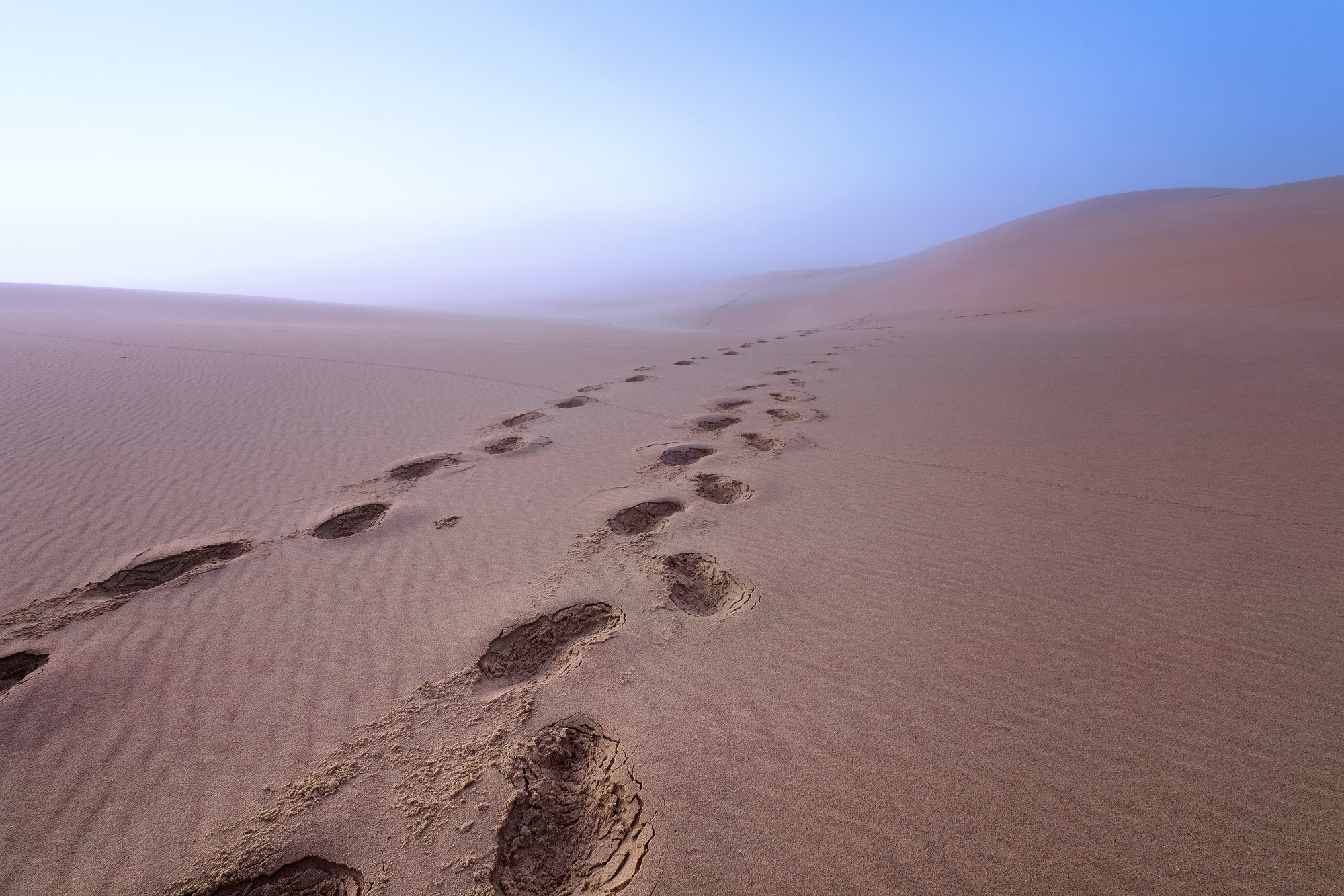
Taking the above image as an example, the plan was to go at Stockton just above Newcastle for sunset. After a long day driving and shooting at some spots on our way, @Adriano, @Josselin and I finally got to our location. After a quick one hour walk, we arrived in front of the dunes just on time.

We were there on time, but we didn’t take into consideration that we had to climb the massive dunes that were separating the track from the actual sand area where we wanted to shoot. It took us a good twenty minutes to climb the high dunes with all of our gear and equipment. In the end, we were only able to capture some of the last light due to the unexpected obstacle.
Looking back, the thought of driving, walking and climbing just for one shot was quite insane, but totally worth it.

Luckily enough, the conditions were perfect. During our stay in the dunes, we spotted a lot of nebulas and shooting stars that were clearly visible with our own eyes. When you arrive, you certainly feel small as Stockton is massive. You are surrounded by sand, and as we were walking, we started losing the notion of distance or time.

Around 3 am, we were all tired and cold. We weren’t sure exactly how far the was car, so we made the decision to sleep on the dunes. Without a tent, we used our camera bags as pillows and used the clothes on our backs to warm us up. That was certainly some of the longest hours I’ve experienced in my life! Waiting for the cold and the wind to dissipate before the sun warmed us up.

I remember us looking for another spot to ‘sleep’ as the first one ended up being too windy. We were walking like zombies in the dark hoping that this would end up soon. And that was the time the sun camera up, bringing with it a mysterious fog.

The journey to the dunes certainly was an amazing experience. Putting aside all the great moment and images it could have ended up turning for the worst. For example, running low on water, getting cold in the dunes without mobile reception, these things were avoidable if only we didn’t rush and instead equipped ourselves with all the information we needed to succeed in our trip.

Photography is a passion that requires a lot of time and effort, but you should never put yourself in a dangerous situation. Remember that at the end of the day (or night in our case) it’s only an image and it is not worth breaking your equipment for the shot, or worst losing your life.

In summary, my advice would be to know where you are going and what the weather will be, bring a lot of water and food, and let people know where you are.


How do you find the colours produced from Fujifilm X Series cameras compared with previous brands you may have used?

The colours straight out of the camera on the Fujifilm X-Pro2 are just amazingly correct! I used to shoot on a Canon EOS 60D for a long time, and I remember always having to change the white balance to get the shot looking natural in camera. With the X-Pro2, I may sometimes just increase the saturation and that’s it.

As a landscape photographer, it’s a great thing to be able to trust your camera as you are not always able to post process on the go. The Fujifilm cameras have an excellent advantage; they boast a broad range of film simulation, which makes your shot ready for social media or printing SOOC (straight out of the camera).


If you have some advice for someone starting out in photography what would it be?

The great thing about photography is that you have a lot of different genres to explore. For example, someone who is an excellent portrait photographer might find a new challenge in landscape photography. That’s why I love photography. You always have news technique and things to learn, it never stops.

My first piece of advice would be to not invest too much money in your gear. The most important aspect of your gear is to understand how it works. For that, you should bring it with you daily, take it to work for instance. Shoot as many different subjects as possible, until you learn what settings are best. There’s no need to have a professional camera body to start off with. I’ve seen a lot of people investing in professional cameras without even understanding it.

My second piece of advice would be not to limit yourself and your creativity. Recently I’ve participated in a creative meetup at the Vivid festival in Sydney. The purpose of the event was to produce an image based on the particular brief. By participating in meetups like this, you will find your creativity. As a designer, I’ll never be able to produce something if I didn’t have direction from the client. The same should be said when it comes to your photography. Try and push your ideas so that they develop into photos.

My final advice would be to stay aware and connected. With the chance to live in a connected world, where it’s easy to share and learn from other people it’s a great place to learn. I have watched a lot of tutorials on YouTube and other social media platforms to understand how to achieve things in my photography journey.

Share your work and ask for feedback. Even if the feedback is negative, remember people are judging an image not you. By listening and exploring your creativity, you will only improve your work.

If you could give Fujifilm any advice on future camera models what would it be and why?

Fujifilm designs their product very well and understands their end user. You can feel it when you have one of their cameras in your hand. However as I’ve mentioned, I’d love to understand why some of the features of the X-T2 such as the dedicated ISO selector and the tilt screen are not available for the X-PRO2. I’m also disappointed to see a particular range of L-Brackets and battery grips for the X-T2, whereas the X-Pro2 is lacking in the accessories arena. Reading this, you might be thinking why didn’t I purchased a Fujifilm X-T2? The reason is simple, at the time of buying my X-PRO2 nothing was communicated about the release of the X-T2.

I know that Fujifilm love to keep their product secret, but maybe a better communication for the next generation might be necessary.

Can you share any insight into any post processing techniques other Fujifilm users should explore?

When it comes to post processing, everybody has their preferences, the most popular programs I hear about are Adobe Photoshop and Adobe Lightroom.
As a personal choice, I only use Photoshop and Camera RAW which is part of Photoshop.

The important thing for me to remember is to keep the final image ‘natural’. It is good to think about this sometimes when you work on a picture. I find taking a break and returning to the edit later can be beneficial. The reason is when you process you might make a mistake. Having a fresh eye on your workflow will give you the ability to notice and improve your way of working.

For my editing process, I’ve followed some tutorials produced by Jimmy Mcintyre. I must say they have helped me on this difficult photographic journey. I will not get into details as I don’t want to steal the credit and effort that he put into his techniques, all I will say is you should check out his YouTube channel.

I’ll use this image shown below to explain how I best process an image.

The basic idea I like to use when processing one or multiple images is to use luminosity masks. The great thing about Fujifilm RAW files is they have a lot of image detail information in them. This gives you the ability to recover shadow or highlight details in a picture easily without affecting the final image. I must say though if you want to use multiple images, remember to use a tripod when shooting.

For this particular image, I used two photos: the RAW above and another image slightly more exposed for the fence. After the blending here is the results:

Once you have all blending completed and have one final image, move onto enhancing the image. This is a subjective step, and you can go as creative as you want, but I recommend for landscape photographers always to remember to be conservative and keep it ‘natural’. For this image, I enhanced the contrast and colours and finished with a soft vignette to lead the eyes to the subject.


To view more Clèment’s work visit his website or follow him on Instagram or Facebook.

Other interviews in this series

Through a Photographer’s Eye: Rhys Tattersall

Through a Photographer’s Eye: Jared Morgan

Through a Photographer’s Eye: Tony Gardiner

Through a Photographer’s Eye: Greg Cromie

Through a Photographer’s Eye: Greg Cromie

Welcome to the Second Series of Through a Photographer’s Eye. In this series, we continue to learn about Australian photographers and how they use X Series Cameras to photograph their world around them. Our fourth interview in Series Two is with Melbourne based photographer, Greg Cromie.

Greg, tell us a bit about your photography journey and how you ended up choosing street photography as your main genre?

I studied film photography in art school however once I graduated I did not pursue it any further.  It was 20 years later, in 2013, that I was encouraged to take up photography again. My wife had just passed away and I used street photography as a way to get out and face the world.  Through street photography I was able to see that the world and life went on. From behind the safety of my camera I captured life and love and happiness and every other emotion without feeling like it would swamp me in my raw state. A bit like snorkelling on a reef. I almost felt invisible and unaffected by what I was seeing. My street photography journey has been a tremendous part of dealing with my grief, reconnecting with the world and expressing myself through my images. It was, and still is, a form of therapy for me.

Queen Victorian Market – Fujifilm X-T2 with XF35mmF1.4 – 35mm – ISO 1000 – F2 – 1/1000 second


You mentioned you jumped from the X100 to the X-T1 and more recently to the Fujifilm X-T2. What made you want to upgrade your X Series camera?

When I picked up the original X100 I was instantly intrigued by the Fujifilm X Series. The image quality and the way that the Fujifilm X System renders images was just amazing and very unique. I prefer shooting with primes and having interchangeable lenses so it was not long before I sold all my DSLR gear and bought the Fujifilm X-T1 with the XF23mmF1.4 and the XF16mmF1.4. I loved the build quality of the Fujifilm X Series products. To have the manual controls so accessible on the camera allowed me complete creative control. It reminded me of my film photography days and the joy of creating a photo.

I took my Fujifilm X-T1 with me wherever I went – including two trips to Japan. It is such a compact and light kit that I could take my camera with a prime lens everywhere and hardly even notice it was in my bag. When the Fujifilm X-T2 launched I was quick to get my hands on one. Such a significant upgrade in capabilities from the X-T1 to the X-T2. The X-T1 had taught me the joy of controlling light and time to create images. The X-T2 has allowed me to master my photography and take it to the next level.

Melbourne Man – Fujifilm X-T2 with XF18mmF2 – 18mm – ISO 3200 – F2 – 1/640 second


There’s a lot of emotion that unveils itself on the street, can you share the photo you’ve captured with the most impact and tell us a bit about what you were feeling when you captured it?

On my last trip to Japan, I took a Shinkansen from Kyoto to Hiroshima on the International Day of Peace. Such a humbling and highly emotional experience. On August 6, 1945, 80,000 people were immediately killed when the first deployed atomic weapon was unleashed by the United States. 6,000 degrees Celsius. 90 percent of the city destroyed. Tens of thousands later died due to radiation exposure and disease. Nothing like it had ever been experienced before nor since.

Converging on Hiroshima were school groups, survivors and the families of victims visiting the site to perhaps share in hope that the world never had to visit such devastation and loss again. This shot was taken outside the building now known as the Atomic Bomb Dome – the exact location over which the atomic bomb detonated. The building is a shell of twisted steel and even melted concrete and bricks. This class of students with their matching yellow hats were all listening attentively and respectfully to their teacher.  I could not understand what was being said but the implied lesson was clear.

I think my own personal experience with loss and grief was awoken that day as I could all too clearly understand losing so much. But I was equally encouraged by the composure of the Japanese people and their ability to endure the worst of the worst and still prosper.

Hiroshima Education – Fujifilm X-T1 with XF50-140mmF2.8 – 140mm – ISO 200 – F2.8 – 1/500 second


What are the sorts of subjects you look for on the street and do you prefer a particular focal length to capture them?

I find my style of street photography to be an organic process. I prefer to capture images that tell some sort of story of the human experience. Where are we? What are the political and social considerations of the time and how does this subject interact with those? Is there tension or joy or stillness in the subject’s emotional experience? How are others impacting the scene or the experience of the subject? How is the subject impacting others? I will stroll though a location with camera in hand while my eyes scan the scene looking for the alignment of all these factors and much more. My preferred focal length for shooting street is 23mm. Something about this length allows me to capture a subject but also enough of the surrounding scene to suggest or tell the story.

Dayelsford Entertainer – Fujifilm X-T2 with XF23mmF2 – 23mm – ISO 400 – F2.8 – 1/1000 second


What’s it like owning the F2 trinity? Which lens out of the three do you prefer to use and can you show us your favourite photo captured with it?

With the recent release of the XF50mmF2 I was able to complete the F2 trinity of Fujifilm lenses. I prefer to shoot with primes so now that I have the XF23mmF2, XF35mmF2 and the XF50mmF2 I feel like my street kit (and my travel kit) is complete. The 23mm gives me the subject within the scene and allows for both to tell the story. The 35mm allows me to isolate the subject more but still allow for background and foreground elements to play a small part.  The 50mm gives me greater reach to capture the subject in isolation. To pull the subject out of the scene without disrupting it.

With my X-T2 and these three lenses I can carry my kit in a messenger bag and hardly notice the weight. When paired with the X-T2 each of these lenses are sharp and super quick on the auto focus. Plus, this makes my whole kit weather resistant. My favourite of these three lenses changes as they are all exceptional lenses. At the moment my ‘new’ favourite is the XF50mmF2 probably because it is the newest and there is so much enjoyment to be had with a new focal length. I look forward to taking only the F2 trinity with me to Japan again later this year.

Coffee Capital – Fujifilm X-T2 with XF23mmF2 – 23mm – ISO 1600 – F2 – 1/250 second

Here I am – Fujifilm X-T2 with XF35mmF2 – 35mm – ISO 400 – F5 – 1/250 second

Head – Fujifilm X-T2 with XF50mmF2 – 50mm – ISO 200 – F4 – 1/250 second


If you have some advice for someone starting out in photography what would it be?

A lot of people seem to have a fear about how to use their new gear. I see a lot of questions appear on forums from new photographers saying that they have camera X and lens Y and they want advice on the best settings to shoot something straight forward. This is so unnecessary as unlike in the film days, digital cameras give us limitless opportunity for trial and error. Your only real obstacle is how long your battery will last or how much your SD card can hold.

Be brave and take lots and lots of photos. If you are using a camera like one from the Fujifilm X Series, then set the Aperture and ISO to A (Auto) and just experiment with the Shutter Speed manually for a day or two. At the end of your shoot review your images and take note of the ones that you love and the ones you hate. What settings did you use? The next day, just use ISO on manual to see how this changes your images. Carry your camera everywhere and shoot everything. Don’t be afraid to experiment with your camera. As long as there is a hint of light, you can make an image.

Kyoto Couple – Fujifilm X-T1 with XF23mmF1.4 – 23mm – ISO 200 – F1.4 – 1/1000 second


Your passion for street photography has recently taken you to Japan for a second time, how did you find photographing people on the streets compared to Australia? Did you prefer a particular lens over another?

I have always had an affinity with Japanese culture so to be able to travel there was a big item on my bucket list. The first trip was to Tokyo and I stayed in Shibuya. What a crazy and amazing experience that was. A very youth centric area in the heart of the biggest and most densely populated city on the planet. The second time I travelled to Osaka, Kyoto and Hiroshima.

Doing street photography in Japan is incredible. Such diverse cities with backdrops that range from hyper-futuristic ‘Bladerunner’ style scenes in Tokyo to the still and sacred spaces that house the traditional temples and shrines in Kyoto. One day I was photographing in Shibuya at the scramble crossing, where thousands of people cross a giant zebra-crossing every few minutes. The next I was in the Tsukiji Central Fish Market photographing fish mongers carving giant tuna. On both trips to Japan I took my X-T1 and predominantly used the XF16mmF1.4 and XF23mmF1.4 lenses. I swapped between these two quite a bit and on days or nights when it was raining I stuck with the XF16mmF1.4 due to its weather resistance. They are both very versatile lenses and can be used for street, landscape and architecture.

Fish Monger – Fujifilm X-T1 with XF16mmF1.4 – 16mm – ISO 5000 – F2.2 – 1/500 second

Prayer – Fujifilm X-T1 with XF23mmF1.4 – 23mm – ISO 800 – F2.2 – 1/125 second


Based on your experience what would you like to see included on a future X Series camera?

When I first purchased the X-T1 I knew I was using such an incredible camera. The build quality, aesthetics, ergonomics and overall capabilities of the camera were amazing. My wish list for improvements was non-existent as the system was meeting all my needs at the time. Then the X-T2 was developed and Fujifilm managed to deliver a greater photography experience by adding features that I didn’t even know I wanted or needed. Superior sensor and processor, dual SD card slots and I find the AF toggle stick such a great addition for street photography. The quality and capabilities of this camera has also allowed me to start my own photography business and offer a broader range of photographic services. Conceptually an X-T3 could include improved battery durability and a performance boost system without the need for the additional battery grip to make it worthwhile. One of my favourite features of the Fujifilm X System is the film simulations. Further film simulations would be a fantastic addition.

Ice Cream Girl – Fujifilm X-T2 with XF35mmF1.4R – 35mm – ISO 800 – F2 – 1/2000 second


To view more of Greg’s work visit his web landing page that links to all of his social media profiles.

Other interviews in this series

Through a Photographer’s Eye: Rhys Tattersall

Through a Photographer’s Eye: Jared Morgan

Through a Photographer’s Eye: Tony Gardiner


Through a Photographer’s Eye: Jared Morgan

Welcome to the Second Series of Through a Photographer’s Eye. In this series, we continue to learn about Australian photographers and how they use X Series Cameras to photograph their world around them. Our second interview in Series Two is with Cairns, Queensland-based photographer, Jared Morgan.


When you first started out pursuing photography did you consider Fujifilm equipment and can you let us know why you use the gear now?


My only real experience with Fujifilm before the Fujifilm X-T10 and Fujifilm X-T2 was probably around 2006. If I remember correctly I had a Fujifilm FinePix S5500 bridge camera. I think it was a 4 Megapixel camera. They were a pretty good travel camera for the time. This camera did some hard travelling through Thailand, Cambodia and Vietnam after I purchased it.


The camera was also pushed into service as the camera I took in 2011 when I rode my motorcycle on a three-month trip around Australia. However, that trip eventually saw its demise, and it retired from active service!


I then went down a somewhat traditional route many photographers have gone down. I decided I liked the ergonomics of Nikon DSLR cameras and have used a Nikon DSLR system for several years. My interest for re-entering the Fujifilm world was I was looking for a lightweight travel system. I purchased the Fujifilm X-T10, XF18-55mmF2.8-4, XF55-200mmF3.5-4.8 and rented the XF10-24mmF4 for a personal trip to Japan in late 2016.


On my last few days in Japan, I purchased the Fujifilm X-T2. This was when I seriously considered the Fujifilm system for everyday professional use. I have been slowly but surely building up my Fujifilm inventory of equipment and introducing it to my professional work as my Nikon gear slowly phased out.

One of my first efforts exploring the Fujifilm X-T10 before Japan. Looking back at Cairns (Australia) over Trinity Inlet.

Fujifilm X-T10 with XF18-55mmF2.8-4 – 18mm – F13 – 20sec – ISO200


Do you have a favourite photo you have captured using Fujifilm equipment? Can you tell us the story behind the image?


I think my favourite photo so far with the Fujifilm system is a photograph I simply call “Takayama”. This photograph was taken with the Fujifilm X-T10 in Takayama, Japan. I had travelled to Japan in November of 2016 and was still getting to know the Fujifilm X-T10 on the fly a little bit.


I tend to walk a lot when I travel, I have always been a bit of a wanderer, (I think it’s a great way to get to know the places you visit). I had planned to walk to Hida Folk Village in Takayama in the morning which is located about 5 kilometres from the town. Well, as plans go, sometimes things don’t go as expected. I had been out quite late doing some night photography and ended up sleeping in. After getting organised, I walked outside to the most amazing mist or fog that had enveloped Takayama. I grabbed the nearest taxi and high-tailed it! It turned out to be great timing; I had still arrived early enough that the crowds were minimal and I had about twenty minutes of the mist rolling down off and surrounding the hills before the sun rose enough and the magic evaporated.


This is just one of many shots taken that morning in great haste! It may not be the most technically proficient photo, but I still smile when I think of that time in Takayama. Hopefully, I captured something of what it was like.

Takayama – Fujifilm X-T10 with XF18-55mmF2.8-4 – 18mm – F8 – 1/200sec – ISO200


We noticed you enjoy night photography, what sort of settings do you mainly use when photographing with your Fujifilm X-T2?


Night photography is something I very much enjoy. I consider myself a generalist at this stage in my photography career, but if I had to choose something I would prefer to do it would be out exploring in the dark with a camera.


I have always gravitated to night photography. Partly that’s just who I am, I am quite happy alone and exploring, and partly the technical challenge of finding light when there appears to be none. I have always been fascinated by the fact that mundane places can be very different, even spectacular when viewed through the filter of the darkness.


As for settings, it is rare for me to do much over a 30-second exposure. I find with the style of night photography I do there is usually enough in a 30-second exposure to make an image. I recently completed a small series of local waterfalls at night time. Almost all were taken with 30-second exposures, and occasionally multiple exposures blended together.


I found both the Fujifilm X-T10 and X-T2 easily the best cameras I have used for their ease of night photography. The Electronic View Finder has changed the way I shoot at night. I can compose in almost complete darkness and not have to take several high ISO shots to check my composition. This has most definitely kept my time spent ‘fiddling in the dark’ around to a minimum.

Takayama Swan – Fujifilm X-T10 with XF18-55mmF2.8-4 – 31mm – 1/100sec – ISO200


Jared, as a part time professional photographer what do you see being the biggest hurdle in establishing yourself as a full-time professional?


I think the main hurdle to becoming a full-time professional photographer for me is a somewhat complicated question! Firstly, the decision to become full-time must be examined.


I see advantages in not relying on photography as my main source of income. I have a reliable stream of income from my current employment and, I see the benefit in remaining a part-time photographer and reducing my hours spent in my ‘day job’.


By not constantly being under pressure to source income from my photography, I feel I have much more control and can be a bit pickier in what and when I shoot. I also feel this allows me more freedom to explore my interests in photography and allows me to be more creative. I have learnt that this journey as a photographer is somewhat out of my control at this time. I am happy and willing to some extent to let the fortunes of fate decide what is in store for my photographic career.


Just a short time ago I would never have dreamed of an opportunity like appearing in this series by Fujifilm, and am more curious than ever to see where and what I end up doing in photography be that in a full or part-time capacity.

Crystal Cascades Cairns – Fujifilm X-T2 with XF18-55mmF2.8-4 – 39mm – F11 – 30sec – ISO200


Recently you travelled to Japan with the Fujifilm X-T10 and three XF lenses. How did you find the Fujifilm X Series system when travelling?


The catalyst for looking at the Fujifilm system for me was largely an issue of weight. I had travelled to Europe in 2015, and like many photographers who travel, I suspect I tend to travel with a bit too much gear in fear of losing “the shot”!


I started looking at compact systems for travel but I also definitely did not want to sacrifice image quality and capability. This is how I ended up researching the Fujifilm cameras initially. I was going to Japan in November of 2016 for a solo photography trip and decided on the Fujifilm X-T10, XF18-55mmF2.8-4, XF55-200mmF3.5-4.8 and I rented the XF10-24mmF4. I weighed my gear that I took to Europe and Japan recently to compare the weight savings of now using Fujifilm. The Fujifilm gear I now travel with is about half that of my other equipment! So, safe to say that part of my requirements was achieved – absolutely!


As I do enjoy night photography, safety is always a concern as well. Although this is not really an issue in Japan, the smaller less obtrusive gear does allow me somewhat to be less conspicuous and not necessarily look like I am carrying lots of expensive camera gear around.


I have also discovered that people photography or street photography is much more enjoyable with the Fujifilm. People don’t seem to be as concerned when they notice they may be being photographed with a smaller camera than a traditional DSLR type camera, so definitely a good system for street photographers I think.


Overall, I have found I am much more likely to nearly always have a camera on me now, and the Fujifilm X-T2 is just such a pleasure to use. I found no drawbacks with the Fujifilm system when it comes to travelling, and am looking forward to returning to Japan with my Fujifilm X-T2 in December.

Shibuya Crossing – Tokyo Japan – Fujifilm X-T10 with XF10-24mmF4 – 10mm – F4 – 1/5sec – ISO200


While you were in Japan, you purchased the Fujifilm X-T2. Tell us in a few sentences what you are most excited about exploring on this camera?


The Fujifilm X-T2 was a turning point for me. This camera made me realise the potential of the Fujifilm cameras to be used professionally and was largely responsible for me to start switching to Fujifilm full time and not just as a travel camera.


The latest features to be introduced via the recent firmware update that were of most interest to me were the ability to change ISO on the front dial, longer exposure times when in bulb mode and smaller focus points available. I have also been making use of the voice memo function to make a few notes on location while shooting. I am slowly starting to explore video as well so I will be spending a fair amount of time exploring the Fujifilm X-T2’s video capabilities in the coming months.

Old Man Kyoto – Fujifilm X-T10 with XF18-55mmF2.8-4 – 55mm – F5.6 – 1/500sec – ISO800

Kyoto Reflections – Fujifilm X-T10 with XF18-55mmF2.8-4 – 55mm – F5.6 – 1/500 – ISO800


When photographing in your hometown of Cairns, Australia how do you find people react to you using Fujifilm equipment? Do you notice any differences from changing over from a Digital SLR?


It has been very interesting seeing people’s reactions to the Fujifilm cameras. There are the people who are fascinated by the manual dials and many older people comment on the similarity of the Fujifilm cameras to the old film cameras they grew up with.


There is something special about the look of the cameras. They are a very tactile camera, and you just want to touch them! Then there are the “photographers” who can’t possibly even begin to understand that it’s not a Nikon or Canon, and will explain at length why brand x is better. I usually am happy to explain the benefits of the Fujifilm as I see them. I am more and more happy just to nod and smile and let the results speak for themselves!


The main differences I have noticed is obviously the reduction in weight. Also, I just want to use the camera more. I sometimes just pick the camera up so I can enjoy holding it…the X factor perhaps.

Trinity Inlet (Cairns Australia) – Fujifilm X-T10 – XF18-55mmF2.8-4 – 35mm – F14 – 13sec – ISO200


If you have some advice for someone starting out in photography what would it be?


My advice for someone starting out in photography would be to really learn the basic stuff like composition, colour, exposure, etc. Once you have the basics really sorted, you will be able to make the creative ideas you have in your head.


Vision and creativity are of course important, but if you don’t understand how to make it happen, it’s not of much use. I think being good at one will often make you better at the other. Secondly, don’t try and force a particular style. Your own style will develop naturally over time. Don’t follow the latest trends just because something may be popular right now. Develop YOUR photography style.


Don’t think the journey ends, never stop learning. Study other photographers, try new techniques and explore your ideas. Remember you will fail, learn from your failures. Lastly, always remember you make your images not the latest gadget!

Kyoto Gion District – Fujifilm X-T10 with XF10-24mmF4 – 10mm – F22 – 45sec – ISO200


To view more of Jared’s work visit his website or follow him on Instagram, Twitter or Facebook.

Other interviews in this series

Through a Photographer’s Eye: Rhys Tattersall

Through a Photographer’s Eye: 9 Photographers Share Their Advice

Over the last two and a half months, you would have seen a series of interviews which formed Series One of Through a Photographer’s Eye. In each interview, we heard from a handful of Australian photographers and how they use Fujifilm X Series cameras to photograph the world around them.

Before Series Two of Through a Photographer’s Eye begins next week, let us take a look back at what advice was shared when each photographer was asked the question:

If you have some advice for someone starting out in photography what would it be?


Drew Hopper

Just get out there and shoot! It is not about becoming famous or having all the gear available on the market. It is about enjoying yourself and finding your own style. Shoot what you like shooting, and avoid copying the work of others with the belief that it will make you a ‘better’ photographer. It’s totally fine to follow other photographer’s work, that’s how you find inspiration, but don’t compare yourself to other people’s success. Make your own success. Most importantly, save your money for a flight somewhere, not camera gear. Memories are worth more, and great photos wait for no one.

Fujifilm X100S – 23mm – F4 – 1/100 second – ISO 200


Alamby Leung

Social media is a great place for inspiration and to receive feedback, but developing your personal style and be creative with your ideas are important too.

Fujifilm X-Pro2 with XF18mmF2 R – 18mm – ISO 400 – F2.8 – 1/6000 second


Ian Tan

Advice for new photographers? Don’t get hung up on the gear. I go a bit nuts about gear myself but at the end of the day, they are just tools. You use the right one for the job, and everyone has their preference for which tools they like to use. Cameras and lenses from any major brand these days are all very capable – heck, even the iPhone takes awesome images – provided you use them properly. So learning how to use your chosen camera (and editing software) well to translate the creative vision that you see in your mind into beautiful images is more important than staying up to date with the latest and greatest gear.

Get out and shoot more. Learn to connect with others and draw inspiration from them, not intimidation. Having said that, I love Fujifilm, the way the cameras handle, the image quality, and the company’s philosophy in how they make cameras and support them through continuous firmware improvements (gotta love kaizen!).

Ice Patterns: X-T2, XF14mmF2.8 – ISO 500 – F4 – 1/125 second


Dale Rogers

If you are just starting out in photography, I recommend you follow and watch other photographers on social media especially those who are shooting similar things to yourself. By watching others, you see perspectives or ideas for shooting that you would not have thought of or you start analysing the images trying to determine how the shot was achieved.

Have a look at some of the old masters (or current masters) of photography and see their images. My inspiration for intimate landscapes came from Eliot Porter, one of the first professionals to use colour film, and Jai Maisel who currently shoots street photography in New York City. Have a look at their work and see if you can see the connection I made between them.

I also encourage photographers to try one of the 52-week challenges that exist. On our Photo Rangers Community Facebook page, we host a 52-week challenge. This is a personal challenge and not a contest or competitive event. The purpose is to get photographers creating photos and shooting subjects they would not have done otherwise. If you want to join along in this supportive community, come on over to http://facebook.com/groups/photorangerscommunity.

Fujifilm X-T10 – XF18mmF2 R – ISO 200 – F9 – 1/30 second

Josselin Cornou

Buy a camera with a fixed manual lens. In a day of automation, it is easy to go into the classic auto mode. It works really well in most cases, but this also means that the user will hardly learn any photographic concept. Having a limited focal length will help the user reframe the shot, avoiding any bad practices like constantly zooming. My first camera was a Panasonic GH2 + Voigtlander 25mmF0.95. That setup really helped me step up my game.

If you want to do landscape, then get an ultra wide angled lens. These lenses are expensive, but they will help you frame those ultra wide shots – making it totally worth it.

Fujifilm X100F – ISO 200 – F7.1 – 4.3 seconds

Anirban Chatterjee

Have fun and enjoy. You can be the most technically gifted photographer, but if you are not having fun or enjoying the process, your images will be boring.

And if you are starting to do photography on the street, please be respectful to others. In Australia, it is perfectly legal to do photography in public places, but that doesn’t give you a licence to be a nuisance. As much as we have the right to take photographs in public places, the other person also has a right to walk on the street minding their own business. We live in a community, and respect must be mutual. An image is not worth it if it ruins someone’s day. So please be respectful.

Fujifilm X-T1 – XF18-135mmF3.5-4.8 – ISO 6400 – F16 – 1/210 second


Harmeet Gabha

Don’t be scared, just do it (as the Nike ad says). There are so many free resources available online that you will be able to learn and pick up any area of photography very quickly and easily. Google is your best friend; just type in what you are looking for and you’ll find the answer within minutes.

I’m also focusing more on my blog (photoinsomnia.com), by creating content for people just starting out in photography. It’s a resource where they can learn some techniques quickly that will make them more confident and inspired.

“Casa Balto, Barcelona” – Fujifilm X-T1 – XF18-135mmF3.5-4.8 – ISO 400 – F3.5 – 1/180 second

Benjamin Lee

⁃ Shoot everything and as often as possible

⁃ Explore all types of photography, take note of the genre’s aesthetic of photography that really motivates you and hones in on it.

⁃ Consume and view as much photography and art as you are producing (if not more). This will really help you refine your taste and personal aesthetic.

Fujifilm X-Pro2 with XF16-55mmF2.8 R LM WR – 1/100 – F2.8 – ISO2500

Joe Jongue

Don’t be caught up in the gear, just go out and shoot. Don’t be afraid to step out of your comfort zone; chances are, you may be good in a particular genre than you may think. Join a local photography community, be open to advice and more importantly, interact with other photographers.

Fujifilm X-T1 with XF16-55mmF2.8 R LM WR – 1/180 – F4 – ISO200

Through a Photographer’s Eye: Benjamin Lee

Through a photographer’s eye is the first in a series of interviews featuring Australian photographers. In each interview, we learn about the person behind the camera and how they use Fujifilm X Series cameras to photograph the world around them. Our ninth interview is with Sydney based photographer, Benjamin Lee.

Benjamin, tell us about yourself and how photography has impacted your life.

Photography has played a huge role in my life, shifting the direction of my career and lifestyle. Just over two years ago, I was working a regular, boring office job straight out of university. I wasn’t even working in a role I went to university for. The pay was great and steady, which made it hard to break out of that comfort zone. I finally built up the courage, and just quit on a whim. I knew I had enough savings to not worry too much.

I knew I wanted to spend a good six months being willfully unemployed and so I did. I spent my mornings at cafes, days visiting galleries and hiking national parks. With all my free time spent doing fun things and going to interesting places, I wanted to learn how to take photos and document it all.

That was when I bought my first camera – the Fujifilm X-Pro1 (w/ XF35mmF1.4 & XF18mmF2). I started sharing my photos to this brand new app called Instagram, and not long after that, Instagram put me on their suggested user list. My following grew quite significantly because of that and it set me on this path to where I am today.

Fujifilm X-Pro2 with XF35mmF2 R WR – 1/550 – F2 – ISO400


You started with a Fujifilm X-Pro1 and had recently used the X-Pro2. For those not familiar with Fujifilm products, what did you find to be the biggest change between these models and do you think Fujifilm X Series cameras are heading in the right direction?

The first thing I immediately noticed was how quick the autofocus was. Paired with the XF35mmF2 and the XF16-55mmF2.8, the X-Pro2 never missed a beat for the two weeks I was testing it.

[youtube https://www.youtube.com/watch?v=dHWPaOsrEr4%5D

Some other differences I liked were:

⁃ Dual SD card slots: This feature really brings the camera into the modern professional standard.

⁃ ISO performance was surpassingly good. It was comparable to some of the full frame cameras I’ve used before.

⁃ Megapixels: the extra megapixels (from 16MP to 24MP) meant I could crop heavily in post processing.

⁃ The added weather sealing is a must for me, as I shoot a lot outdoors.

⁃ The subtle button redesign on the back of the camera is great. I can mostly operate the XPro2 with one hand now that the buttons have been moved to the right side of the camera. I think it’s amazing and commendable that Fujifilm has listened to the needs and wants of its customers and made small changes to perfect an already great camera.

Fujifilm X-Pro2 with XF16-55mmF2.8 R LM WR – 1/4700 – F2.8 – ISO200

How do you find social media helps your photography career? Did you find using the Fujifilm Camera Remote App helpful when paired with the X-Pro2?

I started photography around the same time social media really started to pick up. It really played an integral role in growing my career to the point it’s at today. Instagram spurred my interest in photography. It has helped in enhancing my visibility as a photographer. From that visibility, I have met and worked with a lot of amazing people and brands.

Fujifilm X-Pro2 with XF16-55mmF2.8 R LM WR – 1/100 – F2.8 – ISO2500

Best of all, I fully control the distribution of my work and have a direct line to communicate with my audience. I didn’t really get a chance to play around with the Camera Remote App. My workflow is with RAWs, so I prefer the traditional method of editing via computer and transferring to my phone that way.


If you have some advice for someone starting out in photography what would it be?

⁃ Shoot everything and as often as possible

⁃ Explore all types of photography, take note of the genre’s aesthetic of photography that really motivates you and hones in on it.

⁃ Consume and view as much photography and art as you are producing (if not more). This will really help you refine your taste and personal aesthetic.

Fujifilm X-Pro2 with XF16-55mmF2.8 R LM WR – 1/5400 – F2.8 – ISO400


Can you tell us the story behind your favourite image captured using the Fujifilm XF16-55mmF2.8?

This is my favourite photo that I took over the two weeks I had the X-PRO2. It was shot with the XF16-55mmF2.8 on the longer range of the lens. A few friends and I went to the city to shoot some street photography.

Fujifilm X-Pro2 with XF16-55mmF2.8 R LM WR – 1/500 – F2.8 – ISO400

We found this intersection where the sunset light was hitting just right, the buildings had strong character and the rush hour office folks were busily crossing the street trying to get home.

I’m a bit of a bokeh addict and like to blur out my subjects against interesting backdrops. I like how it adds a sense of mystery to the subject. The fast F2.8 aperture on the XF16-55mmF2.8 definitely helped with this effect.

In this particular photo, I like all the layers of the scene, from the blurry man with the hat, the fire truck & the couple, to all the layers of buildings that fill the entire frame. I like how this image has that full; big city feel – kind of like NYC.

I also really like the complimentary colours: fire truck reds, oranges and yellows too!


Based on your style of photography, if you could put any improvements into a future X Series camera what would they include?

I love the size and discreetness of the X-Pro2 and Fujifilm systems in general. You don’t get hassled as much while taking photos out in public and can usually fly under the radar.

I would love improved battery life. I’m often shooting for long periods (both photos and videos) and the latter really seems to chew through batteries.

Another possible feature might be in body stabilisation. It has it’s pro’s and con’s but it would definitely be handy in my use cases. I’m not a fan of tripods and like to be agiler in my photography.

It would also mean that lenses could be made without IS, or possibly even used in conjunction (dual IS).


Do any photographers inspire you to ‘think outside of the square’ and shoot differently?

Other photographers constantly inspire me. I’m just as big as a fan of photography as I like taking photos myself so I’m continuously browsing the work of others.

Although my list of favourite photographers is constantly changing, here are my current favourites:

@benjaminhardman, @mattcherub, @donalboyd, @airpixels@monaris_@visualmemories_@pat_kay@5.12 and @nk7

Fujifilm X-Pro2 with XF16-55mmF2.8 R LM WR – 1/2500 – F2.8 – ISO200


Along with the X-Pro2 and XF16-55mmF2.8, you also used the XF35mmF2 lens. What did you find the main difference(s) between the wide angled lens and which lens out of the two did you prefer to shoot with?

It’s hard to beat the lure of a quality zoom lens – especially one that covers the 16-55 range. The convenience of a zoom lens brings versatility to it that allows you to be able to be flexible and react quickly to changing conditions.

If I were to pick one walk around lens out of the two, I would probably go with the XF35mmF2. The XF16-55mmF2.8 is a little heavy and large relative to the compact X-Pro2 body.

The XF35mmF2 is tiny! Coming from a larger DSLR system, using a lens that is this small is kind of mind blowing. Best of all there is no compromise with image quality, speed AND it’s weather sealed. Kind of hard to beat, when it comes to an everyday walk around / travel lens.

Fujifilm X-Pro2 with XF16-55mmF2.8 R LM WR – 1/1250 – F2.8 – ISO400


To view more of Benjamin’s work visit his site or visit any of his profile on Instagram or YouTube.

Other interviews in this series

Through A Photographer’s Eye: Drew Hopper

Through A Photographer’s Eye: Alamby Leung

Through a Photographer’s Eye: Ian Tan

Through a Photographer’s Eye: Dale Rogers

Through a Photographer’s Eye: Josselin Cornou

Through a Photographer’s Eye: Chris Hopkins

Through a Photographer’s Eye: Anirban Chatterjee

Through a Photographer’s Eye: Harmeet Gabha