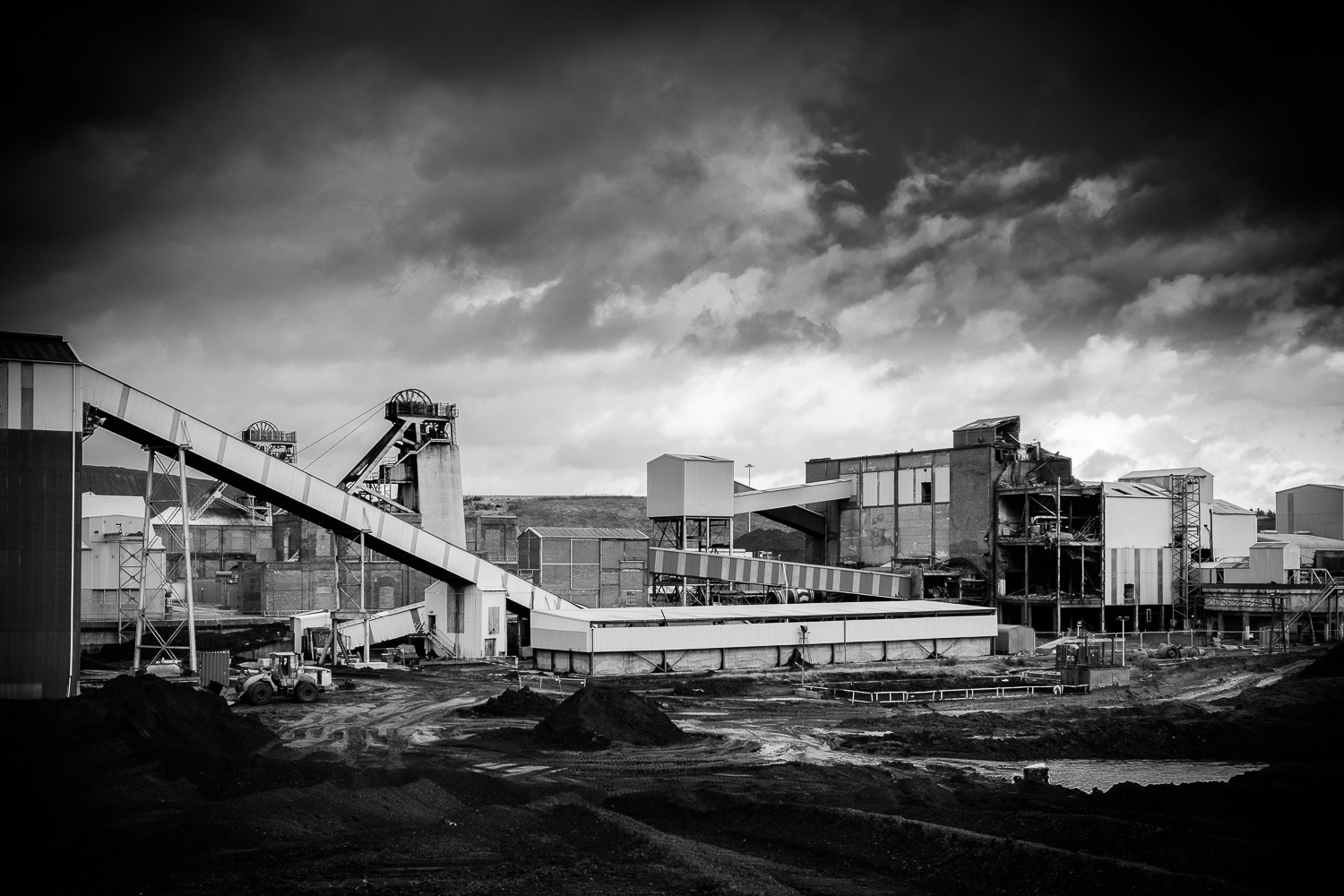
The 10th July 2015 was a landmark date in the history of Nottinghamshire. When the last shift at Thoresby Colliery finished on that day not only did it mark the end of 90 years of mining in the village of Edwinstowe but it signals the end of mining in Nottinghamshire.
The pit opened in 1925 and over the years has employed tens of thousands of local people. It was one of 46 coalmines in Nottinghamshire, which supplied more than 14 million tonnes of coal per year at their peak in the early 1960s.
The first two shafts were sunk to 690m in 1925 and subsequently deepened in the 1950s to the current pit bottom at around 900m depth.
Thoresby Colliery was the first to have fully mechanised coal production and also the first to achieve an annual saleable output of more than a million tons, it became a star performer in the British coal mining industry.
In the late 1980s it raised output to exceed 2 million tons, regularly smashing it’s production records, and the colliery became known as the Jewel in the crown of Nottinghamshire mines. A crown sits proudly on the headstocks in recognition of this achievement.
When the coal industry was nationalised in 1947 it employed a million men at 1,503 pits; prior to the miners’ strike in 1984, there were 180,000 miners at 170 pits. Today there are just two deep mines left, employing about 5,000 men, at Thoresby and Kellingley in Yorkshire. Kellingley will suffer the same fate as Thoresby and closes in the autumn.
UK Coal say market pressures have led to the closure of Thoresby Colliery. Coal generates more than a third of Britain’s electricity, but it is cheaper to import coal from countries such as Russia, South Africa and Colombia than to mine it in the UK.
For the past few months I have been recording the colliery, it’s buildings, plant and people for posterity. It was my aim to create a comprehensive record of the pit at a specific point in time immediately prior to its closure.
It was a chance conversation after giving a camera club lecture that started the ball rolling. A chap in the audience worked at Thoresby and was unfortunately in the first wave of redundancies. He asked if I would be interested in visiting the colliery to take a few pictures. It was a fantastic opportunity and I jumped at the chance. He put me in touch with the Health and Safety manager, I explained what I would like to do and we were off and running. It was at this point, after I had gained their agreement to document the colliery, that the full extent of the task dawned on me.

Starting the project
I visited the colliery on seven occasions, at different times of day, in different lighting conditions, including dawn and dusk. I planned each shoot but found that an outline plan whilst retaining a degree of flexibility to react to opportunities worked best.
At the outset I just toured the site to give me an understanding of the buildings, the machinery, the operation and the people. I took snaps to create a digital scrapbook to help me plan my approach. Essentially I was imbibing the atmosphere much as I would do when visiting a foreign destination for the first time. I wanted to get a real feeling for the place before I started the photography in earnest.
Health & Safety manager Grant was so supportive of my visits giving me more time than I could have wished for. Even coming in at 3.30am for a dawn shoot and returning to work late in the evening to get “the best of the light” didn’t diminish his enthusiasm. In fact he joked that, after watching me, he would now be able to take the best holiday snaps ever! I hope he does.

Gear used
All of the images were shot on a Fujifilm X-T1 or X-E1 camera using a selection of Fujifilm XF lenses including the 10-24, 18-55 and 55-200 zoom lenses and 14, 23, 35 and 56mm primes. I also used a Nissin i40 flash for some shots, though preferred to use natural light wherever possible.
For my portraits, the unobtrusive Fuji equipment allowed me to concentrate on building a rapport with my subjects rather than intimidate them with a large DSLR and f2.8 lens combination. Miners might be tough guy’s and supermodels they certainly are not but they seemed to relax pretty quickly in front of my Fuji lenses.


There were several challenges to overcome not least the light levels that were typically pretty low in all of the buildings. Because of the poor light I used a tripod fitted with a ball and socket head for as many shots as possible. My cameras are fitted with arca swiss type plates so that I can switch from landscape format to portrait very easily and without having to waste time readjusting the tripod.
The mix of different light sources from tungsten, to fluorescent and natural meant it was difficult to assess the ideal colour temperature. However the decision early on to convert all the images to black & white certainly helped counter that problem!
In a coal mine dust was another inevitable and unavoidable issue. As the miners told me it’s not only the dust you can see that is the problem and I was very careful when changing lenses and using two bodies certainly helped. Thankfully the in camera sensor cleaning worked well and I was pleasantly surprised at the minimum amount of dust spotting required.

Working on a project
As my photography has progressed I have found that I prefer to look at a series of images that tell a story rather than seeing individual impactful pictures. Whilst I have adopted this storytelling approach in my travel and landscape photography this project was a whole different ballgame. This wasn’t going to be a six or ten image set but a large body of work that had to be planned and created in a certain style. I found this experience fascinating, though at first it was pretty daunting. However after a couple of visits I had captured some shots I was very pleased with and the plan started to fall into place. I think the discipline required in a project such as this has helped me to improve my photography and it felt good to be succeeding in this new genre of social documentary photography.
In an attempt to capture the “feel” of the colliery, and to bring completeness to the project, I also recorded various sounds around the pit and organised a series of interviews with miners past and present. I will be producing mini AV’s including these sounds and using the miner’s comments in my presentations.


Stretch yourself
It is very easy to stick to what we know in photography and limit yourself to a particular genre. Whilst my experience as a travel photographer, where you are required to be adept at many different genres, undoubtedly helped me there were aspects of this project that were not so familiar. As a result I feel I have grown as a photographer and I would urge you to move out of your comfort zone and try something new. There will be similar opportunities in your area, seek and ye shall find!

Capturing a piece of history
As I progressed through the project I realised that I was not only taking pictures for myself but that I was actually recording a piece of history, an enduring record of a place that, in just a few months time, would be gone forever. With that came a feeling of responsibility, not only to do myself justice but also to represent the life and work of the mining community. Apart from my family photographs, this project is the most important and worthwhile piece of work that I have ever created. Whilst there is clearly interest in the work now, what will its importance be in another 10 or 20 years?


A personal perspective
This project has been a fantastic experience. It has improved my photography, taken me into a different genre and enlightened my knowledge of an otherwise mysterious industry.
It has been a pleasure to work with the team at Thoresby, without whom I would not have been able to produce this body of work. Whilst the colliery may not draw its workers from the immediate village area, as in years gone by, their camaraderie, team spirit, hard work and no nonsense attitude in this tough and uncompromising industry epitomise the best of British workers. The closure of Thoresby truly is the end of an era.


What next?
I feel it is important to showcase my images to as wide an audience as possible, especially in the local area. Therefore, after securing feature in the local and national press, I will be staging a major exhibition in Nottinghamshire and am planning to produce a book – more details to follow.
To see more Thoresby images and to keep updated on the project developments please visit my website www.chrisuptonphotography.com


 Start by passing the string through the oval handle on the bottom of the quick release plate.


 We left LA for Oregon on a Tuesday afternoon, and after a brutal sleepless 16-hour road trip, we made it to our first destination – Abiqua Falls. Fortunately our car for the trip was a 4WD Jeep, and allowed us to take the mile long off-road path to the trailhead for the falls. With tattered sneakers accompanied by a light rainfall, I ventured through Oregon’s lush landscape for my first time. The abundance of massive trees and greenery were like nothing I had ever seen before. The hike down to the river was pretty intimidating, and required you to scale down a lengthy and steep hillside that was only accessible by a rope tied to an old tree at the top. I went first, and discovered that the last hundred meters of the slippery, muddy terrain had no support rope. After my first step I went down with no control, and slid for about a hundred feet, ruining my clothes and scratching up my hands in the process. Nevertheless, we all made it down eventually and hiked alongside the river to our destination. I had never seen Abiqua Falls, so when we turned the corner that revealed it’s jaw-dropping beauty I was in awe.
 Several hours of sleep, a warm shower, and a cup of coffee later we were on the road again… this time headed towards Washington. We got up before sunrise to capture first light from the Rowena Crest. The dynamic range on the X-T1 did Rowena justice by capturing all the tones and colors of the current season. After a brief session at Rowena, we drove straight to Olympic National Park. We encountered wildlife along the way, including a bear and bison. It was my first time seeing such large animals up close, and thanks to compact size of the X-T1 I was able to take it out of my pocket in time to capture the moment. Olympic National Park had otherworldly nature-filled roads whose cinematic foregrounds looked like something out of Planet of the Apes. With the help of the XF16mmF1.4 R WR lens, I was able to capture the detail of the nature before me.


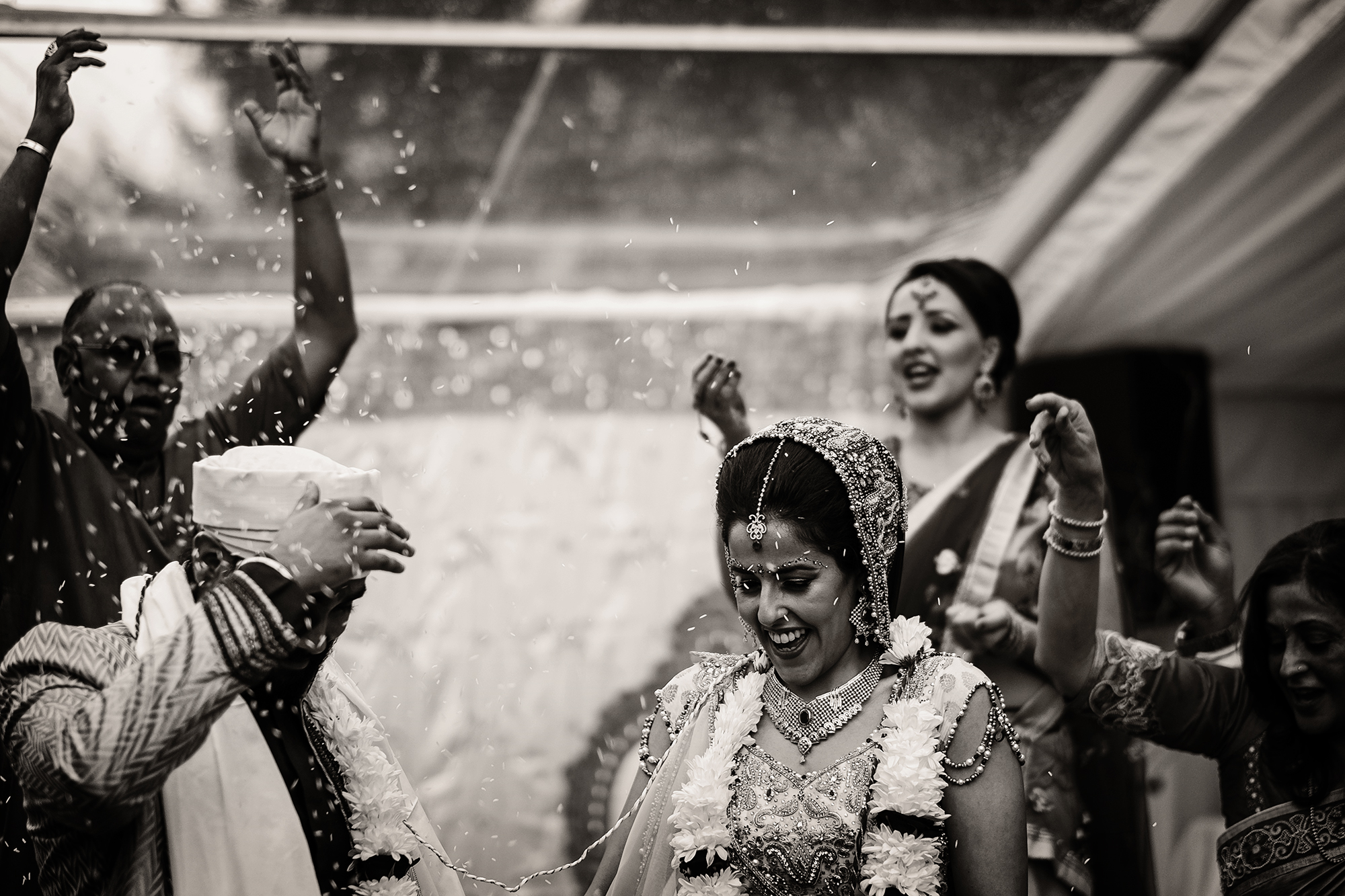


 Most wedding photographers want to be able to separate their subjects from the background at some point during the day and the amazingly fast 1.2 aperture of the 56mm (85mm full frame equivalent) allows me to do that. Even when I’m shooting fast moving subjects, such as a confetti throw, I will sometimes want to offer a luscious depth of field and there is no other lens that offers that f1.2 aperture that allows me to do that right now. This lens, along with the 23mm lenses are my goto lenses for every single wedding I shoot.

 The super fast aperture of f1.2 and the full frame equivalent of 85mm make this lens an essential part of my kit. It doesn’t matter if I’m shooting a documentary wedding, a jazz artist in a dimly lit room or a well lit portrait, the 56mm lens has a unique look and produces some of the best shallow depth of field creaminess of any lens I’ve ever used. Like all the Fuji XF lenses, the 56mm is also razor sharp and it beats the best of the high end 85mm lenses from the other big manufacturers. I haven’t tried the 90mm f2 yet, but it looks like that too will be an amazing portrait lens.
 Many photographers came to the X-Series because of this lens. Offering F1.2 at 85mm equiv. focal length in a compact package that happens to be one of the fastest focusing lenses in the range… The F1.2 effect has so many benefits, from striking portraits to being invaluable in low light conditions. The later is particularly helpful for me. In tropical rainforests you don’t often see wildlife from a far but instead stumble across it. Here the F1.2 helped to capture this baby elephant dozing, ISO1600 F1.2 1/120sec. If this were with a F2.8 lens I would have been shooting at 1/30sec, risking motion blur as I tried to contain my excitement.
 The 56mm F1.2 is my most used lens, it’s almost always the first lens I reach for on every shoot. I love the narrow depth of field and the super fast focusing. As a landscape photographer people are surprised when I say that I often shoot with the lens quite wide open, but for my style of long exposures where I’m trying to create a sense of infinite space the wide aperture looses the background nicely obscuring details I don’t need in the image.
  Click to see retailers selling the XF56mm lens


 Well, I’m married to Lisa and as we don’t have any children, it leaves us plenty of free time to enjoy stuff outside of the home. We met through our walking group as we both have a love for the outdoors and it is that which helped me discover a love for photography. Initially I started heading to the hills with mates and just enjoyed climbing hills and mountains, but over time I came to appreciate the landscape and I was ended up trying to capture more than just snapshots of our hiking activities. This then developed into a strong affinity with photography.