#healthcare

AT YOUR SERVICE – Anika Sand

Anika Sand, Application Specialist for Fujifilm Germany’s Medical Systems division, servicing hospitals in Germany, shares her experience and feelings during the Coronavirus pandemic. Due to the rapid developments of the Corona situation, we would like to point out that we conducted the interview in 2020.

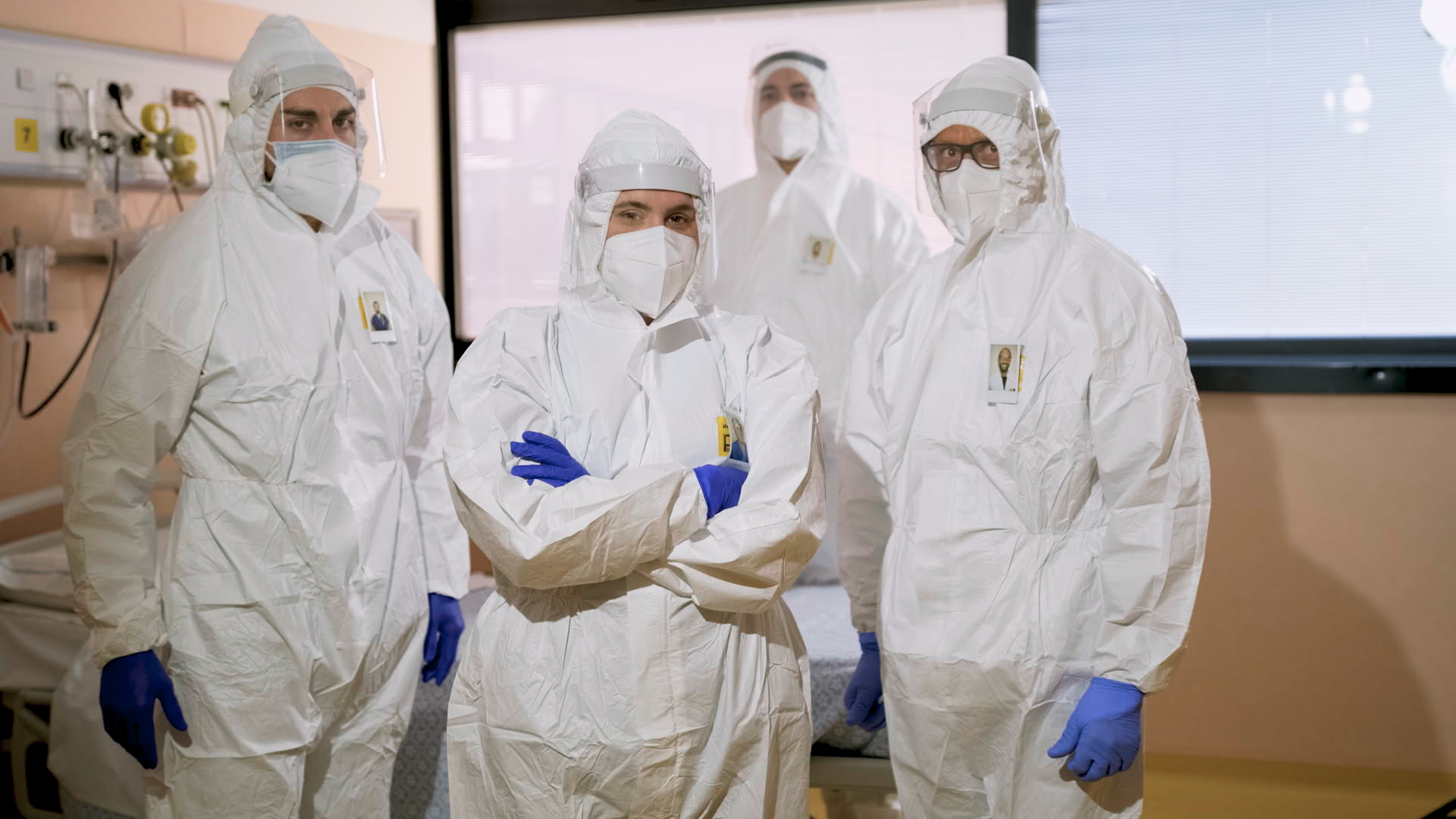
– We are at your service. During the current Coronavirus pandemic our technicians and application specialists are working on the front line alongside healthcare professionals to make sure patients can be diagnosed and treated. These are their stories. –

Fujifilm: When the Coronavirus pandemic reached Germany, what were your first thoughts?
Anika Sand: At the beginning, when Corona reached Germany, I was probably concerned about whether and how the pandemic would affect my work – not only for Fujifilm but especially for doctors, nurses and patients. The facilities, like hospitals or doctor’s practices, had to prepare for the situation within a short time. Life outside of hospitals also became more difficult for everyone.

Fujifilm: We would like to get to know you better. You are Application Specialist for Radiography for Fujifilm in Germany. Can you describe your role?
Anika Sand: My job is to look after our customers immediately after installation of our Medical Systems on site. I do the briefings with the operating staff, set up the software according to the customer’s wishes and needs. Also, I change the image processing in cooperation with the doctors, if this is desired. At Fujifilm, we work as one team, so I accompany demos to support my sales colleagues, too.

Fujifilm: What motivates you to go to work every day?
Anika Sand: I have been working for Fujifilm for almost 7 years now. Previously, I had worked as an MTA in a radiology practice and was looking for a new challenge. At Fujifilm, I never have the feeling of “stopping” due to our extensive product portfolio and the constant new developments. I look after our digital X-ray systems, mobile and portable radiography solutions, the field of mammography and our CT. Naturally, during COVID-19 we have experienced a shift in demand, especially of our mobile X-ray devices. So, the customers I look after are mixed. This can range from a radiological, gynecological or surgical practice to a university clinic. It can be very enriching to work with customers and being able to show the latest technology to them.

Fujifilm: How do you support the hospitals, doctors and nurses in the current situation?
Anika Sand: During this time, our workload has increased because appointments on site must be carefully planned and prepared. Overnight stays in hotels have also become more difficult, since the rules for protection must also be observed there. My actual job I do the same way as before. Only the “how” has changed – and it has changed a lot. The support is not much different either. Certainly you need to do certain things by phone or online, but working directly with customers usually would be the most efficient way of working – interaction is easier and more direct, you can explain and show face-to-face. I still can, and need to, go to the clinics for my work. I am responsible for radiology operation working smoothly on our devices, regardless of whether it is about the operation or the setting of the images.

“I have hoped from the start that we as society overcome this crisis and everyone can quickly get back to “normal” while learning from this experience.”


Fujifilm: What has changed on site – in hospitals and doctor’s practices – for you?
Anika Sand: I always have a facemask or face covering with me. I also bring disinfectant with me, but it is available at the customer’s sites in all departments. Even before COVID-19, the entrances to the clinics were equipped with disinfectant dispensers. It is good to experience well-managed crisis management in hospitals with all German clinics that I have worked with being well prepared. However, the uncertainty about what the future holds is there. In the meantime, however, the clinics are back in relatively normal operation, which until recently had been severely shut down. I feel safe working at home and at hospital appointments. And for sure, working with a facemask is necessary and can be lifesaving, but is a bit difficult because the air underneath gets quite thin after a lot of talking. A “regular” workday therefore can get quite exhausting.

Fujifilm: What has changed at home and at work?
Anika Sand: Not that much has changed for me. I would normally work at home. So, this is nothing new for my partner and me. At work the situation is very different though. Personal meetings and training cannot take place. Nevertheless, the team has worked out how to exchange information in the home office via regular web meetings to keep everything going as best as possible.

Fujifilm: What have you learned during your recent work in the Coronavirus pandemic?
Anika Sand: My job includes a lot of travelling; I often need to be on site with the doctors and nurses to support them as best as possible. Therefore, possibilities of travelling and overnight stays are heavily necessary to do my job. At the beginning the problem was that many hotels and all restaurants had to close and it was difficult to find something to stay overnight let alone find something to eat after a whole day of work. It was good to experience that problems can be seen as challenges and big and small ones can often be solved according to rules and thinking creatively at the same time. For example, a colleague and I simply had a socially distanced picnic at our hotel one evening. I have hoped from the start that we as society overcome this crisis and everyone can quickly get back to “normal” while learning from this experience.

To download the interview in our Whitepaper format (pdf) please have a look at our AT YOUR SERVICE homepage here.

Fujifilm Donates Anatomical Markers to Zambia

In Zambia, there is limited healthcare provision, and in particular a great need for radiology equipment, accessories and services. Brigitte Kaviani, Deputy Operations Director at Sheffield Teaching Hospitals, has been working in collaboration with Zambian radiographers since 2017.

Brigitte works closely with Sydney Mulamfu, Head of Radiology at Livingstone Central Hospital, and together they have helped educate radiographers with a library of books donated from the UK.

The response from the UK radiology community to this project has been wonderful. Both radiology staff and UK companies have donated books, markers and equipment, but there is still a considerable need for further donations. I’m very grateful to Fujifilm for their contribution, every donation makes a huge impact.”

 Brigitte Kaviani

As well as helping to advance their radiology skills,the project also trains radiographers in basic first aid, so they can support their communities in emergencies. Anatomical markers and other medical devices are in short supply in the country, and over the last few years Brigitte has sourced hundreds of markers and radiology books, and has also helped supply crucial items healthcare equipment.

Fujifilm recently donated 100 anatomical markers to the project, and Brigitte delivered them to Sydney and his students earlier this year.

“We are delighted to have been able to help in a small way with the donation of anatomical markers for Zambia. We understand the desperate need in the country for healthcare equipment, and Fujifilm will be looking at how else we can support Zambian radiographers in the future.”

Steve Leatherland, Modality Business Unit Manager at Fujifilm

International Day of Radiology

Fujifilm wants to dedicate this day to all radiologists and radiographers supporting patients during COVID-19.

On November 8, radiologists and healthcare professionals across the world celebrate the International Day of Radiology (IDoR 2020). Let’s celebrate together!

The International Day of Radiology (IDoR) is an annual event promoting the role of medical imaging in modern healthcare. It was introduced in 2012, as a common initiative of the European Society of Radiology (ESR), the Radiological Society of North America (RSNA), and the American College of Radiology (ACR). 

IDoR was launched to develop greater awareness of radiology and the vital role radiologists play in patient care. Since 2012, every year the associations chose a theme for the day, in 2019 sports imaging has been chosen as the main theme of the day. This year International Day of Radiology will be dedicated to all imaging professionals and their indispensable role in fighting the COVID-19 pandemic making a vital contribution to the diagnosis and treatment of COVID-19 patients.

But let’s see why the associations chose November 8. 

That’s the day that Wilhelm Conrad Röntgen discovered the existence of x-rays in 1895. 

Roentgen’s experiments at Würzburg focused on light phenomena and other emissions produced by discharging electrical current in “Crookes tubes”.

On November 8, 1895, Roentgen learned the fluorescence was produced by invisible rays originating from the Crookes tube he was using to examine cathode rays (later known as electrons), which punched the dark black paper wrapped around the tube. The earliest photographic plate from his experiments was a shot of his wife Bertha’s hand where her wedding ring clearly visible. After Roentgen plunged into seven weeks of meticulous planned and executed experiments to verify his observations and enhance his scientific data, on December 28, he presented his “temporary” communication, “On a New Kind of Rays,” in the Proceedings of the Würzburg Physico-Medical Society. The world and the medical society recognized very quickly the importance of Roentgen’s discovery. Only two months later the x-rays were finding their first clinical use in the US. 

His discovery allowed Roentgen was awarded the Nobel Prize in physics in 1901. When questioned what his feelings were at the moment of discovery and experiments, he simply replied: “I didn’t think, I investigated.” We would like to remember that Roentgen never sought honours or financial profits indeed he never took out any patents on X-rays, to guarantee that the world could freely serve from his work. 

Let’s confirm that 8th November is the perfect time to celebrate radiologists and a great scientist by sharing the stunning medical, scientific and artistic possibilities of medical imaging and highlighting the essential role radiologists play.

AT YOUR SERVICE – Francesco Galvani

Francesco Galvani, Medical Equipments Application Engineer, servicing hospitals in north Italy, tells his experience and feelings during the pandemic.

– We are at your service. During the current healthcare crisis our technicians are working on the front lines alongside healthcare professionals to make sure patients can be diagnosed and treated. These are their stories. This series will be updated weekly.

We are in the field every day, in contact with operators and often with patients. We are completely aware of being at risk of infection, something we think about every time we go to a hospital to carry out our tasks. Sometimes, though it is rare, we hear of a possible case of Meningitis or THX, or another disease.

Today’s risk is COVID-19. Right now, COVID-19 is the biggest threat to us all, and we face the possibility of being infected, even if not by direct contact, daily.

Of course, we follow relevant safety procedures, such as wearing masks, gloves and gowns, but only now have these “normal” procedures become fundamental. We are more careful when following these procedures in order to protect ourselves and our safety.

In some situations, such as in Alessandria where the hospital has been entirely dedicated to the Coronavirus emergency, it is easier to implement safety and security measures. The main entrance is closed; the hospital is accessible only through a secondary door. There, they asked me to identify myself. I was on the approved entry list, yet they continued to test my temperature and, as an additional measure, there was someone waiting to “escort” me to a room they had ready and prepared, ensuring that I could educate the operators safely.

When visiting a larger hospital, like Policlinico or San Raffaele, unfortunately you cannot control access across all visitors in the same way. It is not possible to have a designated escort for everyone who enters and leaves the hospital. In these larger hospitals, there are not only patients infected with COVID-19 – there are other patients there, too, with an already weakened immune system. They are the first ones we must protect; they are in the hospital to receive lifesaving treatment, not to become more unwell.

When talking with others, such as operators, doctors and health management, anxiety can begin to overwhelm you. You see the tiredness of those working 10-12 hour shifts each day, and you feel their tension; tension that stays with you even when you are home where your family is waiting for you. They are the first ones you, personally, need to protect, and this worry and way of thinking will not simply disappear on July 30 when the national emergency ends. We must protect them every day, all year round, because the risk of COVID-19 will remain, even though it will be less prominent than it is today.

On February 22, I read a headline that made the virus very real for me: “First case in Milan: 78-year-old hospitalised at San Raffaele”. I had been at that hospital just a few days before, and I had been in several departments. Of course, I could very well not have come into contact with this specific patient, but the 50/50 possibility that I could have was what I thought about the most.

As a first step, I immediately tried to understand what I needed to do. I tried to contact the emergency services at 112, who were in total chaos. In the end, I managed to speak with my family doctor. Nobody knew what to do, nobody knew anything, we were unprepared… and it was only the beginning.

AT YOUR SERVICE – Johann CORDIER

“The testimony of Johann CORDIER, Application Engineer at Fujifilm Medical France.”

— We are at your service. During the current healthcare crisis our technicians are working on the front lines alongside healthcare professionals to make sure patients can be diagnosed and treated. These are their stories. This series will be updated weekly. —

We live in a very troubled and difficult time. Difficult for everyone, but especially for all the actors who fight every day, or for people with a loved one reached by the virus!


For my part, a lot of questions. Being the father of four children, I asked myself the question: “what should I do?” I am in a risky zone, people in the neighbourhood are affected. And then one answer comes to me: my role is to help people, so I take all the usual precautions and I will help the heroes of the front, because, yes, it is a war that we are living…


My latest user training at the Nouvel Hôpital Civil de Strasbourg and Hautepierre hospital left a strong impression on me.


We delivered a radiology mobile and a Flex system, including a Nano, which is now reserved for screening patients with a suspected or confirmed diagnosis of Covid-19 and signs (dyspnea, desaturation …) necessiting hospital charge.


When I arrived on site, I was struck by the new organisation set up by the NHC in Strasbourg. The centre has been transformed. The hospital is now sectorised, with an area entirely dedicated to the care of the Covid-19 which currently includes two hundred reanimation beds.


Personally, I did not enter this sector because training on new devices is carried out outside the Covid-19 area, in a standardised space.


After the training, the Nano we worked on left for 100% use in the Covid area. The radio manipulators (technicians) who use it only access this area after following a strict procedure, in an outfit worthy of an operating room: cleaning of the hands with soap and water, then protection with a mask, over-blouses and a protective apron, over-shoes, a charlotte and gloves. Measures which take time, but which are essential for their protection and that of those around them.


The Grand-Est region, my region, was heavily impacted by Covid-19. Beyond the number of people affected by the virus, the human impact, we see that private-public relations have gone from competition to mutual aid. Some private groups have made equipment available to public hospitals, something that has never been seen before.


For my part, I am happy to participate in this fight thanks to my training for users of our equipment, the Nano mobile or the FDR Go and associated systems.


I have a strong thought for these heroes who, despite their fatigue and the risk, remain united and combative, with the sole idea of participating in mutual assistance in order to stem this horror.


I still remain worried about the teams that I leave ready to go to the front once the training is over. I think of them all the time and wish to express them all my admiration and support.

AT YOUR SERVICE – Marco Costa

“Marco Costa, Medical Equipments Application Supervisor, servicing hospitals in Milan, Italy, tells his story of facing the current healthcare crisis head-on.”

We are at your service. During the current healthcare crisis our technicians are working on the front lines alongside healthcare professionals to make sure patients can be diagnosed and treated. These are their stories. This series will be updated weekly.

First there was the focus on an area other than our core. From mammograms, attention has drastically turned to mobile x-ray systems for examinations on bedridden patients: an important product category, but so far not predominant.

Within a few days, we had to put the mammography equipment into the background, to which we devote great energy and planning every day, to devote all our efforts to an area that has become very topical, namely chest exams. I never imagined that I would have to put the chest exam back in the first place … This is because chest exam is currently the only exam that patients with COVID 19 have to undergo in order to have an assessment of the progress of related diseases, such as pneumonia.

After the first moment of surprise, a great sense of concern crept into me. I started thinking about my team of application specialists, i.e. those who have the fundamental and critical task of carrying out all the testing activities of the equipment installed at customers. For example, instruction to radiology technicians and assessment of the quality of the radiographic image.

Never as at this time, has it become of primary importance to know the procedures for accessing hospital facilities, it is essential to know in which environment you will have to operate, which PPE to wear ….

Yes… the PPE …. not that I previously underestimated them indeed, there are well-tested internal procedures but, the awareness of accessing a high-risk environment has led me to reconsider the importance of personal protective equipment. “the PPE I will wear is saving my life” This is a slightly different thought. It is a thought that on one hand reassures; on the other, it puts some tension.

I do not think to extremes, I assure you that when you enter a hospital today and later in a radiology, compulsorily following a pre-established path to try to minimize potential contagion, the tension is felt.

We then run to prepare all the possible and imaginable PPE (with the poor colleague Luca who, for his part, does his utmost to meet all needs), we become experts in the certification of the masks, we prepare all the material and pack boxes on boxes to be sent to application specialists who live far away. And of course, the collection of the material is arranged for those who will be able to pass in person.

It is a feverish activity, which we now carry out with our eyes closed. I now spend a lot of my working time contacting clients to find out how they should behave once they arrive at the hospital, which PPE they recommend to wear, which safety procedures must be followed. Then … then finally the real work begins.

Once in the hospital, we begin to educate the staff, very few people at a time, in a protected environment. Everyone wears a mask and gloves and the atmosphere becomes surreal. It is at that moment that you realize that you are carrying out an activity useful to others, to those who work on the front lines. To those who are struggling without ever giving up.

In these critical moments, also happened to me to intervene in an installation since the whole team was fully engaged in the field. It was my first experience linked to this pandemic.

I wore an FFP3 mask for 3 hours and I assure you that at the end of the surgery I was a rag, certainly also thanks to the great tension accumulated, I was having difficulty breathing. Since then I have never stopped thinking about the sanitary workers who must wear it during these gruelling work shifts these days. I was the first to experience touching this new reality with my own hands, and often during the day I asked myself if I had done everything I could to protect my colleagues.

Then when you prepare to return home in the evening, the thought goes to loved ones, my wife, my daughter and then you would like to stay in your car, in the parking lot under the house to avoid any contagion but, then take courage and try to take all necessary precautions and go ahead, continuing to give your support.”