

By Jeff Carter
In a series of articles, X-Photographer Jeff Carter will be shooting at sports events in the UK and showing how to capture great images with the Fujifilm X Series without the need for a media pass. Read More
Explore the world of Fujifilm
A series of interviews with professional and high-end amateur photographers that have made the switch to Fujifilm. Learn about all of their different photographic journies that led them to becoming official Fujifilm X-Photographers.

In a series of articles, X-Photographer Jeff Carter will be shooting at sports events in the UK and showing how to capture great images with the Fujifilm X Series without the need for a media pass. Read More
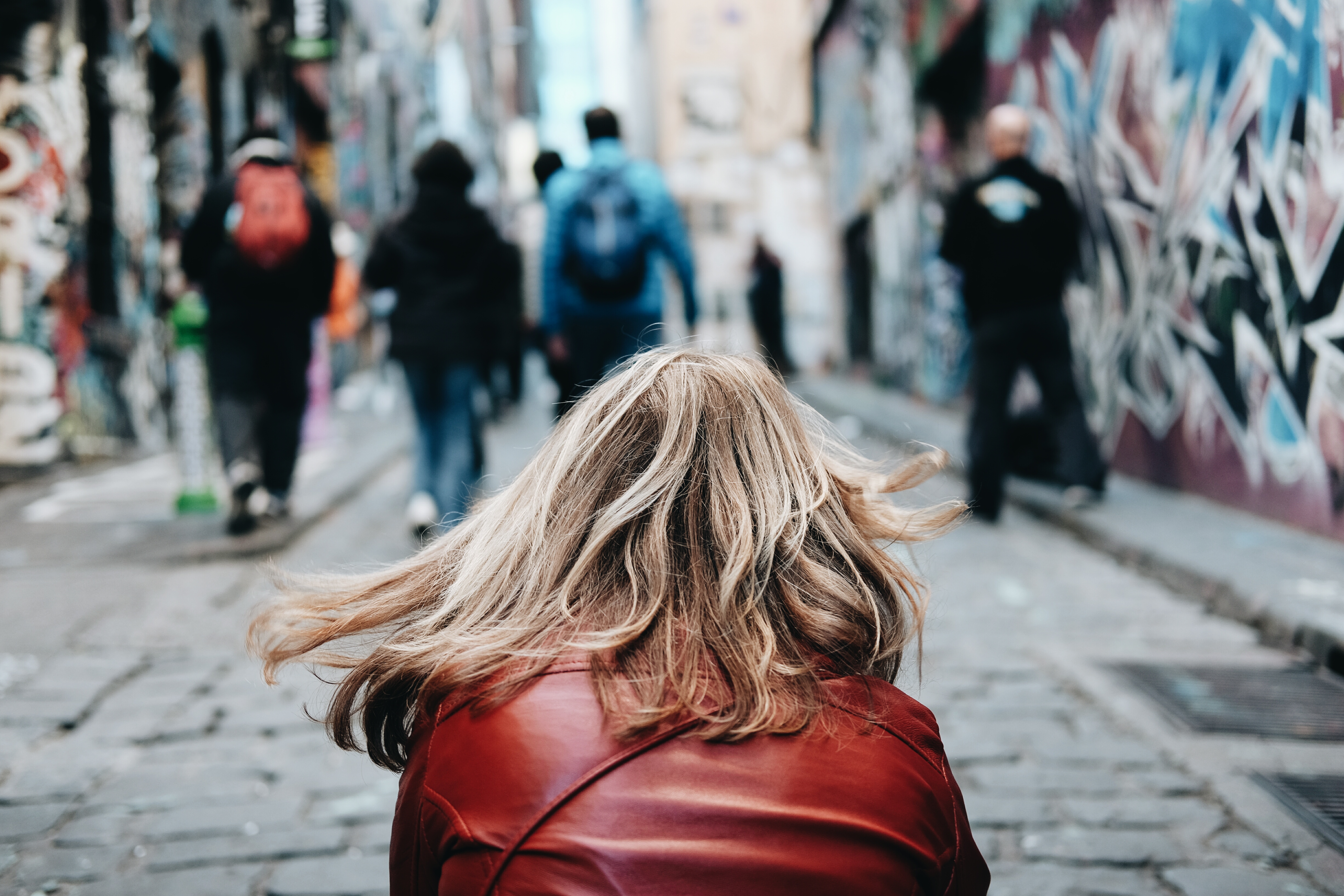

Through a photographer’s eye is the first in a series of interviews featuring Australian photographers. In each interview, we learn about the person behind the camera and how they use Fujifilm X Series cameras to photograph the world around them. Our tenth interview is with Melbourne based photographer, Joe Jongue.

Like some people, my hobbies and passion for things always change with the wind. However, photography was never on that list, even though my grandfather was a professional photographer in his time (I still have his vintage C.P. Goerz Berlin Dagor lens).
The first camera I purchased was the (then stylish) Sony Cybershot T1 back in 2001 when compact ‘happy-snaps’ were in. Fast forward to 2013 which was when my interest and passion for photography began. After briefly using a friend’s Canon 650D, I went out the next week and purchased my own, and the rest was history.
It took two years for me to identify and develop my shooting style, it was around this time when I also developed an interest in Street Photography. What sparks my creativity when I’m out shooting is my gut instinct, I go with the flow, if I feel it, then I’ll shoot it, if I only manage one keeper at the end of the day, it’s a good day.

I enjoy shooting Street Photography, anything that is candid and raw. So when I’m out and about, I carry my Fujifilm X-T20 mounted with the XF35mmF2 everywhere I go. It’s a perfect little lens when combined with the smaller body of the X-T20 and the Auto-Focus speed on it is fast enough to capture candid moments while producing tack sharp images in the process. I never leave home without it.

After my transition from DSLR to Fujifilm Mirrorless, there weren’t many support communities around, many of the group’s on Facebook posed as a dumping ground for unboxing photos of other people’s gear, there was little interaction between members of the group. So my good friend, Antonio Colaiacovo (whom I shared the journey of transitioning from DSLR to Fujifilm with), decided to start our own community group, Fujifilm X Australia Photographers Facebook Group.

I enjoy black & white photos, I’m a big fan of leading lines and will always try and incorporate these into my images as I compose for a shot. I find that having a leading line in the scene can sometimes help frame and compose the shot for you than not having one. In terms of lighting, as opposed to most photographers who will try and seek out the ‘Golden’ hour for natural lighting and avoid the harsh 12 o’clock sun, I, on the other hand, prefer this, it creates more defined shadows and can often help create leading lines in situations that would not normally allow.

Don’t be caught up in the gear, just go out and shoot. Don’t be afraid to step out of your comfort zone; chances are, you may be good in a particular genre than you may think. Join a local photography community, be open to advice and more importantly, interact with other photographers.

I first came across the Fujifilm X Series when I was searching for an alternative solution to my encumbering DSLR set up. Before making the full transition, I purchased the compact Fujifilm X30 as it had the same sensor and processor as the X-T1. I immediately fell in love with the colours and clarity of its JPEG quality; the film simulation was also a bonus; however, I was still on the fence and needed a little more convincing. About two years ago I participated in the Global 500px Photo Walk hosted by Fujifilm Australia, it was my opportunity to ask some questions around areas of concern, but more so I had the chance to try the X-T1.

The very next week I sold all my DSLR gear and made a full transition over to Fujifilm and am now fully invested. I now shoot with the X-T20, I chose this over the more popular X-T2 because of the small size and light weight body but mainly because it was almost identical to the X-T2, I was happy without the extra features offered by X-T2, and it suited my style of shooting.
One of my favourite photos was the one taken of a man walking in the middle of the tram tracks; the shot was taken on Bourke St Mall, Melbourne using the Fujifilm X30 during the busy afternoon rush hour. What makes this special is that this particular street is usually busy with pedestrians crossing from all directions while trams run up and down the street at regular intervals.

While I was framing this shot, the intention was to capture the tram tracks leading up the hill to the horizon. However, while standing in the middle of the tram tracks, I could hear a tram approaching from behind, I wanted to move out the way but my gut instinct convinced me otherwise, and that’s when I noticed a man walking into my frame. I paused a moment even though the tram behind was honking for me to move, once the man was in the centre of the frame I took the shot and moved out the way for the oncoming tram. The end result would not have been possible if I had moved and not listened to my gut instinct.
Just because you have a fast prime i.e. F1.2 doesn’t mean you must shoot wide open, each lens has a sweet spot, understanding the aperture range can mean the difference between a tack sharp image and a blurry one.

To view more of Joe’s work visit his site or visit any of his profile on Facebook or Instagram.
Editors Note: Fujifilm Australia does not endorse photographing while standing on train or tram tracks.
Other interviews in this series
Through A Photographer’s Eye: Drew Hopper
Through A Photographer’s Eye: Alamby Leung
Through a Photographer’s Eye: Ian Tan
Through a Photographer’s Eye: Dale Rogers
Through a Photographer’s Eye: Josselin Cornou
Through a Photographer’s Eye: Chris Hopkins
Through a Photographer’s Eye: Anirban Chatterjee

Through a photographer’s eye is the first in a series of interviews featuring Australian photographers. In each interview, we learn about the person behind the camera and how they use Fujifilm X Series cameras to photograph the world around them. Our ninth interview is with Sydney based photographer, Benjamin Lee.

Photography has played a huge role in my life, shifting the direction of my career and lifestyle. Just over two years ago, I was working a regular, boring office job straight out of university. I wasn’t even working in a role I went to university for. The pay was great and steady, which made it hard to break out of that comfort zone. I finally built up the courage, and just quit on a whim. I knew I had enough savings to not worry too much.
I knew I wanted to spend a good six months being willfully unemployed and so I did. I spent my mornings at cafes, days visiting galleries and hiking national parks. With all my free time spent doing fun things and going to interesting places, I wanted to learn how to take photos and document it all.
That was when I bought my first camera – the Fujifilm X-Pro1 (w/ XF35mmF1.4 & XF18mmF2). I started sharing my photos to this brand new app called Instagram, and not long after that, Instagram put me on their suggested user list. My following grew quite significantly because of that and it set me on this path to where I am today.

Fujifilm X-Pro2 with XF35mmF2 R WR – 1/550 – F2 – ISO400
The first thing I immediately noticed was how quick the autofocus was. Paired with the XF35mmF2 and the XF16-55mmF2.8, the X-Pro2 never missed a beat for the two weeks I was testing it.
[youtube https://www.youtube.com/watch?v=dHWPaOsrEr4%5D
Some other differences I liked were:
⁃ Dual SD card slots: This feature really brings the camera into the modern professional standard.
⁃ ISO performance was surpassingly good. It was comparable to some of the full frame cameras I’ve used before.
⁃ Megapixels: the extra megapixels (from 16MP to 24MP) meant I could crop heavily in post processing.
⁃ The added weather sealing is a must for me, as I shoot a lot outdoors.
⁃ The subtle button redesign on the back of the camera is great. I can mostly operate the XPro2 with one hand now that the buttons have been moved to the right side of the camera. I think it’s amazing and commendable that Fujifilm has listened to the needs and wants of its customers and made small changes to perfect an already great camera.

Fujifilm X-Pro2 with XF16-55mmF2.8 R LM WR – 1/4700 – F2.8 – ISO200
I started photography around the same time social media really started to pick up. It really played an integral role in growing my career to the point it’s at today. Instagram spurred my interest in photography. It has helped in enhancing my visibility as a photographer. From that visibility, I have met and worked with a lot of amazing people and brands.

Fujifilm X-Pro2 with XF16-55mmF2.8 R LM WR – 1/100 – F2.8 – ISO2500
Best of all, I fully control the distribution of my work and have a direct line to communicate with my audience. I didn’t really get a chance to play around with the Camera Remote App. My workflow is with RAWs, so I prefer the traditional method of editing via computer and transferring to my phone that way.
⁃ Shoot everything and as often as possible
⁃ Explore all types of photography, take note of the genre’s aesthetic of photography that really motivates you and hones in on it.
⁃ Consume and view as much photography and art as you are producing (if not more). This will really help you refine your taste and personal aesthetic.

Fujifilm X-Pro2 with XF16-55mmF2.8 R LM WR – 1/5400 – F2.8 – ISO400
This is my favourite photo that I took over the two weeks I had the X-PRO2. It was shot with the XF16-55mmF2.8 on the longer range of the lens. A few friends and I went to the city to shoot some street photography.

Fujifilm X-Pro2 with XF16-55mmF2.8 R LM WR – 1/500 – F2.8 – ISO400
We found this intersection where the sunset light was hitting just right, the buildings had strong character and the rush hour office folks were busily crossing the street trying to get home.
I’m a bit of a bokeh addict and like to blur out my subjects against interesting backdrops. I like how it adds a sense of mystery to the subject. The fast F2.8 aperture on the XF16-55mmF2.8 definitely helped with this effect.
In this particular photo, I like all the layers of the scene, from the blurry man with the hat, the fire truck & the couple, to all the layers of buildings that fill the entire frame. I like how this image has that full; big city feel – kind of like NYC.
I also really like the complimentary colours: fire truck reds, oranges and yellows too!
I love the size and discreetness of the X-Pro2 and Fujifilm systems in general. You don’t get hassled as much while taking photos out in public and can usually fly under the radar.

I would love improved battery life. I’m often shooting for long periods (both photos and videos) and the latter really seems to chew through batteries.
Another possible feature might be in body stabilisation. It has it’s pro’s and con’s but it would definitely be handy in my use cases. I’m not a fan of tripods and like to be agiler in my photography.
It would also mean that lenses could be made without IS, or possibly even used in conjunction (dual IS).
Other photographers constantly inspire me. I’m just as big as a fan of photography as I like taking photos myself so I’m continuously browsing the work of others.
Although my list of favourite photographers is constantly changing, here are my current favourites:
@benjaminhardman, @mattcherub, @donalboyd, @airpixels, @monaris_, @visualmemories_, @pat_kay, @5.12 and @nk7

Fujifilm X-Pro2 with XF16-55mmF2.8 R LM WR – 1/2500 – F2.8 – ISO200
It’s hard to beat the lure of a quality zoom lens – especially one that covers the 16-55 range. The convenience of a zoom lens brings versatility to it that allows you to be able to be flexible and react quickly to changing conditions.
If I were to pick one walk around lens out of the two, I would probably go with the XF35mmF2. The XF16-55mmF2.8 is a little heavy and large relative to the compact X-Pro2 body.

The XF35mmF2 is tiny! Coming from a larger DSLR system, using a lens that is this small is kind of mind blowing. Best of all there is no compromise with image quality, speed AND it’s weather sealed. Kind of hard to beat, when it comes to an everyday walk around / travel lens.

Fujifilm X-Pro2 with XF16-55mmF2.8 R LM WR – 1/1250 – F2.8 – ISO400
To view more of Benjamin’s work visit his site or visit any of his profile on Instagram or YouTube.
Other interviews in this series
Through A Photographer’s Eye: Drew Hopper
Through A Photographer’s Eye: Alamby Leung
Through a Photographer’s Eye: Ian Tan
Through a Photographer’s Eye: Dale Rogers
Through a Photographer’s Eye: Josselin Cornou
Through a Photographer’s Eye: Chris Hopkins
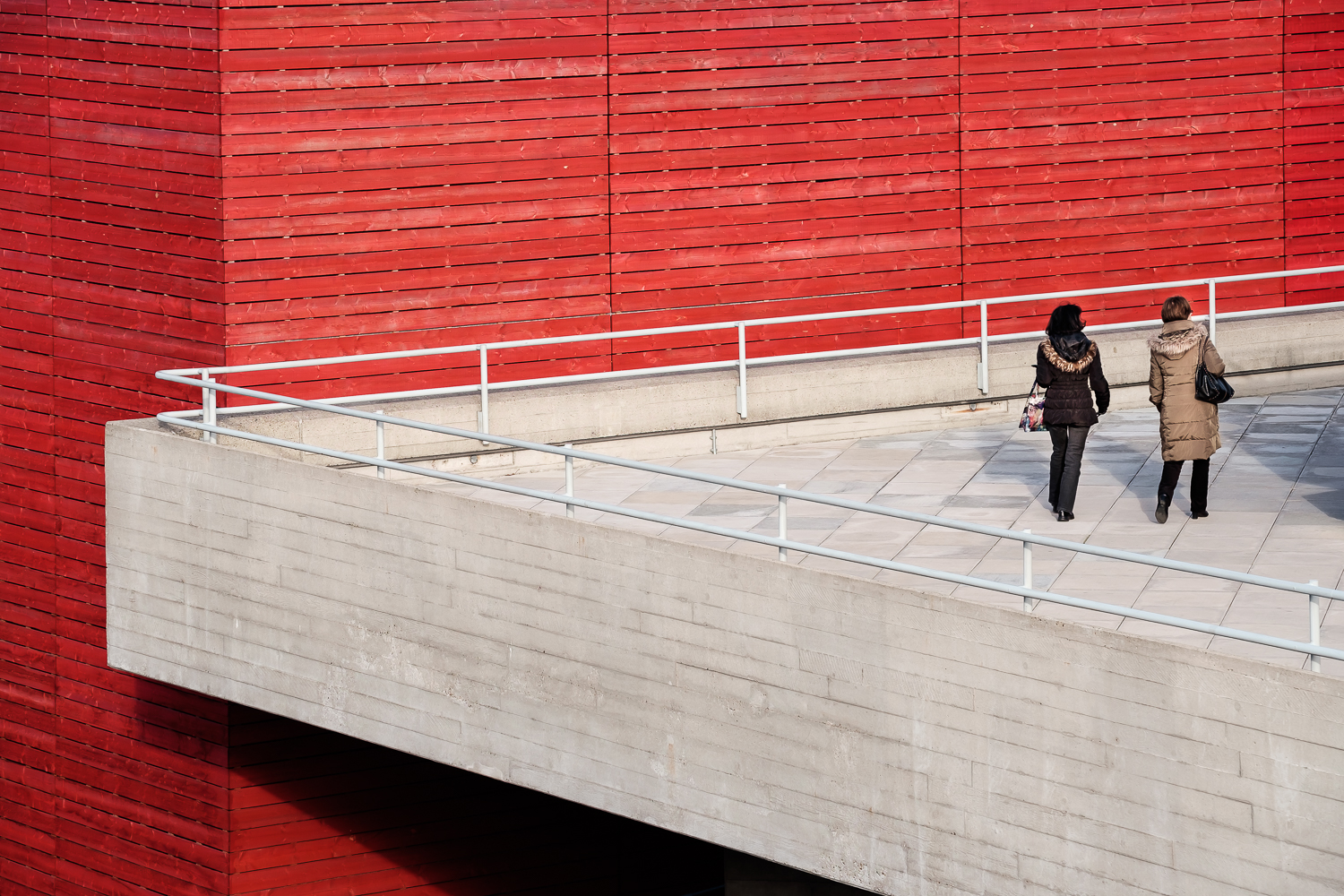


For as long as I can remember, architecture has been my interest in photography.
Before becoming a photographer, I worked as a designer. I’ve always had a great appreciation for architecture and what architects do. I love thinking about the tools in their bag when I shoot buildings. It could be a simple application of a beautiful material, a playful means of connecting two spaces; or just a way of adding natural light to a space. All of these things can influence the way people engage with a building – and that is what I try to think about when I am Read More

Through a photographer’s eye is the first in a series of interviews featuring Australian photographers. In each interview, we learn about the person behind the camera and how they use Fujifilm X Series cameras to photograph the world around them. Our eighth interview is with Sydney based photographer, Harmeet Gabha.

I got into photography in 2005 when a colleague handed me his DSLR to take some pictures at a work cruise. The sun was setting and the Sydney Harbour Bridge was in the backdrop. I took the picture and he showed me the image on the LCD. As soon as I saw that, a spark lit up in my mind and I was hooked. I wanted to capture my own images like that. Later that year I saved up and bought my first Digital Camera a Fujifilm FinePix S5000, a 6 Megapixel camera.
I started taking pictures of friends and family during my travels. The more I photographed the more I realised that the world around me is changing so rapidly. Without images, we have no documented history of our lives. Now as a father, I have so many images of my daughter that when I look back at her early years as an infant, many beautiful memories keep flooding back. The joy and the memories that photography preserves are priceless.
Being able to freeze time with your camera is what keeps me excited about pursuing my passion.

“Casa Balto, Barcelona” – Fujifilm X-T1 – XF18-135mmF3.5-4.8 – ISO 400 – F3.5 – 1/180 second
The advancement in the photography field is just astonishing and, at the same time, I see people being scared and feeling lost when they buy their first camera. I enjoy helping others when they need help and sharing what I have learned throughout my journey. I get a sense of fulfilment when I see that by helping someone I have helped them get to their next level in their own journey. All this keeps me going.
I’m using an X-T1 and XF18-135mmF3.5-5.6 lens as my primary combo for travel. The camera is absolutely fantastic and the lens is versatile for a lot of shooting situations. I can use it for wide-angle photos through to the telephoto range without having to swap the lens. I can just throw the camera over my shoulder and I go out and shoot. Also being weather resistant I don’t have to worry about the occasional shower.

“Hobbiton, New Zealand” – Fujifilm X-T1 – XF18-135mmF3.5-4.8 – ISO 400 – F6.4 – 1/2200 second
I also carry in my bag a XF23mmF1.4 which is an awesome prime lens and works beautifully indoors in low light conditions. Coupled with the X-T1 it has such brilliant performance at high ISOs, I can easily push the camera to ISO 3200 and shoot handheld. After dragging 10kg+ backpacks through airports loaded with DSLRs, batteries & lens and a hernia operation something had to change! The X-T1 was the perfect solution and a welcome change on my back.
I use Adobe Photoshop Lightroom for processing my RAW files from the X-T1. Lightroom has an easy to use interface that lets me create the final image I want. I always apply the desired camera profile like Vivid or Pro Neg. Hi to my images in Lightroom before proceeding with my edit.
I have tried using Capture One Pro, which a lot of X Series shooters use but it’s too clunky and complex to learn. I have tried using it several times but the User Interface (UI) just puts me off. Additionally, to Lightroom, I use software such as Luminar, Aurora HDR 2017, Photoshop, Google Nik Collection and currently testing On1 Photo Raw.
While shooting in Camera, I mostly shoot RAW+JPEG and I set Velvia as the Film Simulation for the JPEG. I find that the jpegs straight out of the camera are also great for sharing on social media using the WiFi feature of the camera. It’s so convenient and easy! I also enjoy editing RAW images directly on the Fujifilm X-T1.
For HDR (High Dynamic Range) photos, I just turn one mode dial and I am ready to shoot bracketed images. I will import the images for initial adjustments in Lightroom, followed by Aurora HDR 2017, which processes the 3 images to create the final HDR image.

“la sagrada familia – before” – Fujifilm X-T1 – XF18-135mmF3.5-4.8 – ISO 200 – F3.5 – 1/500 second

“la sagrada familia – after” – Fujifilm X-T1 – XF18-135mmF3.5-4.8 – ISO 200 – F3.5 – 1/500 second
So depending what I want to create, I use different tools for processing my RAW images. However, I’d say the majority of them just require Lightroom edits and I’m done.
As I mentioned earlier, my back thanks me for making the change, however, the transition from Canon DSLRs was a very pleasant surprise. I quickly adapted to the X Series system. All the major controls for image capture are at your fingertips. With the dials and buttons, it makes it easy to setup for any scene. I suppose, what I like about it most is in order to shoot you don’t have to dig into the menus or press multiple buttons to take a photo.

“Bondi Sculptures” – Fujifilm X-T1 – XF18-135mmF3.5-4.8 – ISO 200 – F8 – 2.8 seconds
The Fujifilm X-Trans sensor is brilliant; there is so much detail in the shadows that you can pull out from the RAW file. And I don’t mean just light shadows; I mean really dark almost black areas in the image can be lighted up via RAW processing. Best thing is the image quality is quite clean and noise free. On my previous camera that was not the case, shadows could not be pushed as much as the X-T1 and if you did noise would appear. However, I have to say the X-T1 doesn’t recover highlights as well as my previous camera. So I tend to underexpose my image when I have some bright spots in the image, by doing this I can be confident that shadows can be recovered easily.
Don’t be scared, just do it (as the Nike ad says). There are so many free resources available online that you will be able to learn and pick up any area of photography very quickly and easily. Google is your best friend; just type in what you are looking for and you’ll find the answer within minutes.

“la sangrada familia, Barcelona” – Fujifilm X-T1 – XF18-135mmF3.5-4.8 – ISO 800 – F3.5 – 1/50 second
I’m also focusing more on my blog (photoinsomnia.com), by creating content for people just starting out in photography. It’s a resource where they can learn some techniques quickly that will make them more confident and inspired.
I’ve heard two main misconceptions; People think that mirrorless cameras won’t produce as good quality images as a DSLR but the fact is that my X-T1 produces much better images than many DSLRs. In my opinion, on Fujifilm cameras, the colours are richer and real. The sharpness of the images is amazing even at a very shallow depth of field e.g. F1.2 or F1.4.

“Park Guel, Barcelona” – Fujifilm X-T1 – XF18-135mmF3.5-4.8 – ISO 400 – F8 – 1/400 second
The second one misconception is that the ‘battery life on mirrorless is crap’. I agree that battery life is not as long as DSLR. I get 350-400 images on full charge whereas on a DSLR you can expect 600-700 images. But people forget battery capacity is proportional to its physical size. Smaller camera, smaller battery.
I’ve even taken 600+ images out of one charge with the X-T1 when shooting a Time Lapse sequence, probably because the LCD wasn’t being used and the camera was just firing off images for 30-40mins.
Also, I’d like to point out the benefit of the Electronic View Finder compared to an optical one – “what you see is what you will get”. By having one on the X-T1 you tend to shoot less wasteful frames, you only capture exactly what you want. In a DSLR you will have more throwaway shots, as the mirror will show you one thing while your result might be totally different if you get your settings wrong. But with the X-T1, what you see is what you get, so the shutter is only pressed when you are happy with your settings and what you are seeing through the camera.
Indeed, it was exciting to see the brand new camera packed with features and improvements released in the X-T2. I attended its launch event in Sydney and had an exclusive opportunity to try out the camera before it hit the market.
It was great to see that Fujifilm was listening to its market and incorporated the feedback to improve the next camera. On the X-T2 dials, it now has a locking mechanism, the camera has a new focus lever, tripod thread position and exposure compensation making an overall improvement to the useability.

“New Plymouth” – Fujifilm X-T1 – XF18-135mmF3.5-4.8 – ISO 400 – F8 – 1/750 second
They improved the video capabilities of the camera to 4K so people wanting to film can be confident in capturing video. The one thing that still disappoints me is that Fujifilm doesn’t believe much in bracketing features as still you can only bracket -1 & +1 exposures and no more. I would love to see one of the firmware updates to just extend this range.
My dream gear would be an X-T2 with an XF18-135mm lens and an X-Pro2 with an XF23mmF1.4 lens. But for the moment I’m very happy with what I’m using. The camera delivers the results for what I do and is rock solid.

“Burning Man Sculpture, Reno, Nevarda” – Fujifilm X-T1 – XF18-135mmF3.5-4.8 – ISO 1000 – F3.5 – 1/2400 second
To view more of Harmeet’s work visit his blog or visit any of his social channels: Facebook, YouTube, Twitter or Instagram.
Other interviews in this series
Through A Photographer’s Eye: Drew Hopper
Through A Photographer’s Eye: Alamby Leung
Through a Photographer’s Eye: Ian Tan
Through a Photographer’s Eye: Dale Rogers
Through a Photographer’s Eye: Josselin Cornou


Spring is sprung in the UK and nothing signifies that more obviously than a rich carpet of bluebells under a vibrant canopy of lime green beech leaves. Walk into a forest early in the morning and the wonderful fragrant smell hits you, the scene simply begs to be photographed. So, how do you capture this beauty? Well here are a few tips to help you achieve some stunning bluebell shots.