By Tommy Simonsen – Harstad, northern Norway
I am a documentary photographer who works with animals in the natural world, and my environments are often extreme. If not remote Arctic regions, I’m in expeditions in tropical jungles or high elevations. Being able to pack light is crucial. When working on a mountain top, skiing alongside dogsleds, or walking for days, my tent and everything else I need for living in the field goes into the big pack on my back. So my camera equipment, by necessity, is in a small bag around my neck. You simply don’t get good shots from your backpack!
Equipment size and weight are critical considerations for my work – when I first packed the X-Pro2 for a three week field trip to Svalbard in March 2016, it was true love.

X-Pro2 and X-T2 in the Arctic
These are both highly anticipated sequels of already very popular cameras.
The X-Pro2 was made for street photography and similar, the X-T2 as a good all rounder. I have used the former since March 2016, and participated in the testing of the latter when Fujifilm released the pre-production models to some photographers in April 2016.
Much has been said about these cameras, through lab tests and personal tests, but most users are photographers who shoot in urban environments. I use these cameras in somewhat different surroundings: in northern Norway, with its peculiar, capricious climate, and spectacular light. Polar night and midnight sun. Here, weathersealing is tested to the max!
I am particularly impressed with the X-T2 and X-Pro2 in several dog sledding and snowmobile expeditions in the high Arctic: Spitsbergen, Svalbard, 78 degrees north. The reference temperatures from Fujifilm’s test lab don’t exactly apply here!
Here is what I’ve experienced with Fujifilm cameras in the deep freeze.

Weathersealing
Both these cameras are impeccable in all types of weather. Last week I worked with the Nordic Lynx (mountain cats) in heavy rain, without any plastic covers. All I needed handy was a dry microfiber cloth for the lens front: Wipe and shoot, wipe and shoot!
Handling
I LOVE that all the cameras’ basic adjustments are easily accessible on the top plate and with the aperture ring on the lens. No small nonsense buttons or menus to mess around with – this is crucial when working in the Arctic with thick gloves or mittens. Everything I need for the immediacy of making images is on the body: aperture, shutter, ISO and exposure compensation.
However, I did find that with the X-Pro2 turned on, I would occasionally bump the buttons on the back, especially in the cold where I wear a lot of clothing. I have unwittingly changed settings while moving around with the camera over my shoulder, which can be rather confusing when taking it up to use afterwards!
On the X-Pro2, there’s a simple solution to this: Hold the menu button down for three seconds, and you lock both the menu and buttons. Hold for three seconds to unlock. Ingenious!
On the X-T2, Fujifilm has added lockable dials which keeps my settings securely in place.
I find the top dials a bit low on the X-Pro2. Fujifilm fixed this with the X-T2 though – its dials are higher and easier to grip. This is particularly important to Arctic freaks like me who shoot with thick gloves on. Fujifilm has also put the movie, metering and other functions into a lower ring under one of the top dials.
On both cameras the focus and metering are absolutely insane! I have never experienced anything like it before. It focuses even in heavy blizzards, and works the same way when using the 1.4x converter.
Battery life
Some camera systems “shut down” in extreme cold, or are reduced functionally.
This has not happened with the X-series cameras.
The challenge however, is battery capacity. Driving at a good speed on snowmobile increases chill factor, turning minus 20 degrees C to minus 60 degrees C – THAT eats batteries!
In fully electronic cameras like these two, batteries are a challenge. Sometimes, solar charging stations are an option, but I often have to work for several days without being able to charge my batteries.
So I have batteries, many batteries. And I use them with care. Batteries to be used must be kept warm. The batteries I think I’m going to use during the day, I keep in the pockets close to my body. My winter pants are high with braces and additional pockets on the stomach, which is kept warm close to my stomach, well hidden and isolated by the sweater and jacket. This is where the rest of the expected day’s consumption of batteries are kept warm.
The batteries that I don’t intend to use that day, I keep frozen in my big backpack.
When batteries are not in use, they keep their charge when frozen. If a battery is empty in the cold, I replace it with a new one. But the used one I put in my left pocket to ‘reheat’ it. When it is heated, I can put it in the camera again, and get decent amount of power out of it. This may well be repeated two to three times before it is completely empty.

Moisture challenges in cold climates
Cold traps moisture in camera bodies and lenses. Once I leave civilization on a winter expedition, the camera bag NEVER comes into my tent or cabin. Bringing cold camera gear into warmth means that condensation will immediately cover surfaces and particularly, lens elements. Moisture that builds up inside lenses does not evaporate easily. Once the camera is back out in the cold, this moisture freezes and optics turn into ice blocks, and are unusable for the rest of the trip.
The cold is dry, and both cameras tolerate it exceptionally well. So I often put my camera bag in a waterproof sack outside the tent – securing it to something solid so it won’t blow away if there is a storm during the night – in the cold outer corridor of the cabin, cargo crates on the snowmobile or dog sled. But NEVER into the warm room.

Dust challenges
You can´t get away from this topic with a mirrorless system. And it is a challenge in the field. I’ve learned to shelter the camera from the wind when I change lenses, so it doesn’t blow straight in. I keep the housing close to my body, back against the wind with the lens down, and change fast to limit any dust entering. The best is of course to have two bodies.

Threeway tilt screen on the X-T2
Love it! Absolutely invaluable for landscape and documentary. Never has it been easier to go so low with super wide angles in the terrain!

Wifi
JPEG files that come straight out of the camera are of very high quality. Of course I shoot in RAW, but it’s okay to save JPEG simultaneously for quick use on social media when there is internet connection. The Fujifilm Camera Remote app for smartphones and the cameras’ built-in wifi is brilliantly simple to use, allowing me to post photos instantly, rather than wait weeks to get home and edit the raw files.

Lenses
When it comes to lenses, I mostly use these:
XF 10-24mm F4 (hoping for an F:2.8 option),
XF 16-55mm F2.8,
XF 50-140mm F2.8, and
XF 100-400mm F4.5-5.6.
In addition, I sometimes use a 1.4x converter.

Thoughts on the XF 100-400mm F4.5-5.6
Polar bears and landscapes are at the top my of list, so I had high expectations for the XF100-400mm. With the 1.4x converter, it gives me 600-800mm full frame equivalent focal length, something I never had previously. It was so small and light that it went in standard bag.
But what a fulfillment of expectations! The autofocus surpassed them all. I have never experienced such accurate AF before. The rapid location of the focal point with the rear thumb joystick was a pleasure, and especially important when working with animals that move and change direction quickly. The long focal length allowed me to be far enough away from the animals that they were aware of me without being disturbed.
This was especially important in the period where ring seals were born on the ice. The newborn seals can´t swim, so they are very vulnerable if the mother is scared away. I came across several that could only have been a few hours old. They were aware of my presence, but I was far enough away to not be considered a threat. A few minutes after I arrived, the seal pup lay down to drink the milk of the mother. They had accepted me, and I got close-up images from a good distance away.
Final result, print
I print a lot of my work, so I was excited to see how it the crop factor files from the X-series would compare with my older full frame files in print. I typically make prints around 50x60cm to 60x90cm, and could not see any difference between the old and new.

Build quality
Both cameras are sturdy, good looking workhorses which can withstand rough treatment in the field. One of the more serious incidents I experienced was a solid dogsled turnover going downhill on glacial moraine, where I was dragged several meters after the sled, with cameras underneath me. I thought there would be some serious damage to the cameras, but they were fine! I have slipped on ice and fallen with the cameras several times, but they tolerate A LOT of beating.
I bought my first SLR system back in 1991, and have used it continually since. But a change has come. At this point, I have had X-series equipment for a while, and have been able to test the gear under different conditions and all types of shooting.
Am I going to go back to the heavy and old-fashioned system?
Not a chance!
I know what I will bring with me on the many exciting adventures to come: Of course Fujifilm will continue with me on these journeys! ☺
To see more of Tommy Simonsen’s work, click here.


 After being awake for 30 hours, we arrived at dusk. On the way into Yosemite, we stopped off at tunnel view. It was my first glimpse of California that wasn’t being hidden away by the night. The rock faces lit up underneath a sea of endless stars. In that moment, it all felt like a dream. I was now experiencing this miraculous destination that I had experienced so many times before through someone else’s eyes. We spent an hour shooting before heading to drop off our bags and get settled in our condo. At 4:30 AM, we were off to glacier point to prepare for our first sunrise.
 I stared into the face of half dome, brilliant and gleaming in front of me. In some ways, I was taking a photo that millions of people had taken before me – but at the same time, I took pause to remember that the beauty of photography is that each moment captured is infinite and unique in its own way.
 The sun began to glow, and I was able to catch the last few stars in the sky over half dome. My X-Pro2 clicked away on a timelapse and my X-T2 shifted in my hand as I tried to find my perfect composition. I was awaiting the shot that I was planning on taking since the trip’s inception.
 I framed up a shot with a 10-stop ND and 3-stop ND Grad to get some cloud and water movement. Shooting long exposures during the day is one of my favorite things to do because it gives me some time to enjoy the scene around me. Oftentimes I get so caught up in getting the shot that I don’t “see” things for myself. The photos are the best way to relive the moment, sure. But it’s equally as important to live in the moment and enjoy your surroundings.
 As the light started to drop in the sky, I shifted into creative mode trying to make the absolute most of the light that I have left. I set up another timelapse in front of the half dome with my X-Pro2, and with my X-T2 and XF16mmF1.4 R WR attached, I began walking around finding different compositions to maximize my last few moments.
 Over the course of the next few days I experienced close to all that Yosemite and the surrounding area had to offer: Taft Point, the 7,503 ft lookout point, Tioga Pass, and the desert-laden Eastern Sierras that lie just outside of Yosemite proper. The trip was full of friendship, laughter, and best of all, amazing scenes to photograph.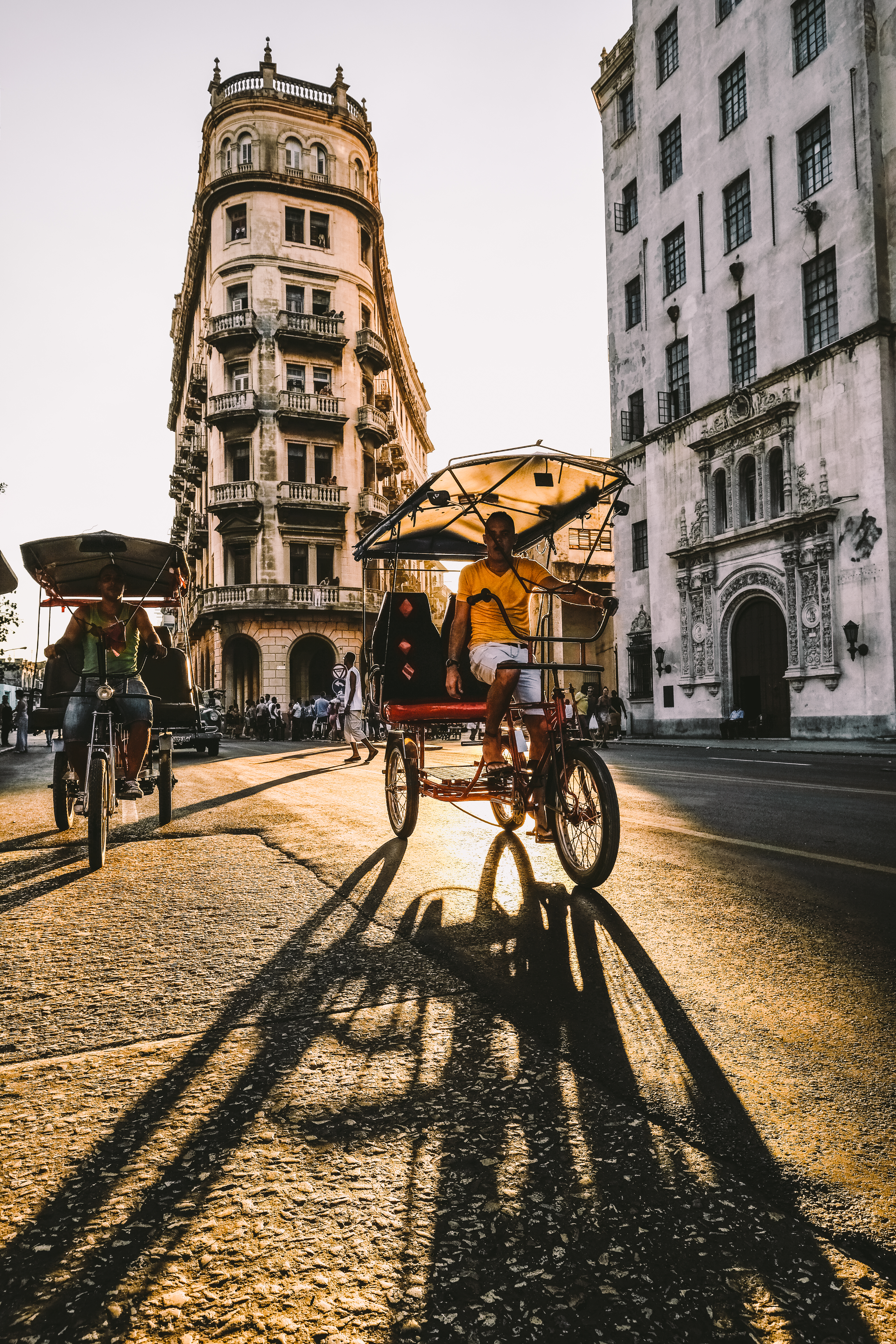
 My favorite part about Havana was the wide variety of subjects scattered throughout the city. It seemed as if every corner I turned there was something new, whether it was a Dalmatian contently sitting on a gritty front porch or a bike taxi that seemed to ride by just in time for perfect light, it seemed as if there was always something that caught my eye.
 I particularly enjoyed shooting the neighborhoods that surrounded the capitol building, Capitolio. I did just about everything in my power to capture the lifestyle of the locals with this interesting structure in the background. From persuading locals two stories above to give us permission to shoot from their balconies, to running behind cars, to playing soccer with local kids to get their approval, I took all measures to capture various perspectives of the Capitolio with fresh subjects in the foreground on each occasion. Thankfully I had a wide variety of range of FUJINON glass to pair with my X-Pro2 and X-T1; the XF55-200mmF3.5-4.8 R LM OIS and XF10-24mmF4 R OIS were my go-to lenses for these photos.
 Another one of my favorite locations in Cuba was Barrio Chino, or China Town. This area was very unique and boasted what I called the Cuban version of New York’s iconic Flat Iron building. I immediately loved this spot after catching an incredible golden hour that saw the sun light up the surrounding area of the building with a warm, glowing light that made for some of the best shots on my X-Pro2 XF10-24mmF4 combo from the trip.
 One of the most noteworthy elements of Havana are the many random puddles that form throughout alleys that provided mirror-like reflections of the colorful cityscapes, classic cars, and great city vibes. The locals would stare at me in confusion when I would stop traffic to kneel down and use the tilt-screen on the X-T1 XF10-24mmF4 combo to capture perfect angles of the glassy puddle reflections.
 As I was composing a reflection shot with my X-T1 on an overcast afternoon among a vibrant alleyway, my cousin called for me and told me I had to stop whatever I was doing and see how beautiful a baby was down the street. My first instinct was to continue to try and get my shot as that sounded a little off, but I got up and quickly walked around the block to catch the little girl and her father just before they were going to enter a home. The young dad had his daughter in his arms, and we she turned around she looked like something out of a National Geographic cover. I had never seen eyes like hers. They had a bright aqua tint of blue that could be seen from a block away. He kindly let me snap a few photographs, and I every time I looked into my electronic viewfinder of my X-Pro2 and I couldn’t believe how stunning this little girl’s features were. Cuba is full of surprises… this experience was a sure reminder of that.
 I’ve never really been an advocate of guided tours under any circumstances. Cuba is one of those destinations that only has so much information that can be found online. In order to experience and capture it properly, you can’t really have a comfort zone. You have to be willing to put yourself out there with a positive and friendly vibe and hope for the best in most instances. We were even invited into a family gathering for drinks in a broken down backyard after approaching a couple locals in hopes of entering their compound to find something interesting to shoot. I lost count of the amount of complexes, homes, and lots we entered (all after asking what seemed like owners or tenants). These were the best memories, and provided some of the best perspectives that will be extremely difficult to replicate.
 One hot afternoon the sunset was quickly approaching, and we were determined to find a rooftop vantage point to capture the moment the light brought warmth to the tattered cityscape of old Havana. After entering a building and passing by locals on each story, all with wide smiles of confusion but acceptance on their faces, we made it towards the top floor. When I looked down, there was the unique spiral staircase I had ever seen. I captured an organic image of the staircase with my X-Pro2 XF10-24mmF4 combo and we made for the roof. Unfortunately there are not very many tall buildings in Cuba; making it a bit difficult to get a great view of the sun setting on the water with the cityscape in the foreground. I completely forgot about the shot I had anticipated when several kids entered through the roof and showed us their pigeon traps, introducing us to some of their birds. I had never seen anything like this, and it really made me appreciate how a simple lifestyle brought joy to these kids. There were no iPads, no PlayStations, it was all about going out and having fun with the neighborhood kids like the old days.
 Growing up, I’ve always loved the game of soccer. I’ve played my entire life, and jumped in on just about every pick up game we came across. Towards the later end of the afternoon we decided to check out a neighborhood called Citio just outside of Havana. Apparently this neighborhood was extremely dangerous for tourists, and upon entering all eyes were on us. After passing by a few young kids playing soccer, I hopped in passed the ball around with them. The ball they had might as well have been a rag… it was completely trashed and lopsided. I offered to buy the kids a new ball, and the look on these kids’ faces was something I’ll never forget… we walked almost 2 miles looking for a store that was open. Along the way, the kids seemed to know all the other youngsters in the area, and our group grew with every few blocks we walked. When we finally found a store with someone inside, we begged the tenant to open her store for us to buy the ball for the kids. My friend Joon and I each bought them a ball that were less than $20 USD each, but it may as well have been a brand new MacBook Pro for these kids. They couldn’t believe it and were so excited to get out and play with one another. Even though we skipped shooting for a couple hours, that was one of the best memories from our trip.
 In conclusion, I highly recommend giving Cuba a visit before it becomes increasingly commercialized. Your experience in the country is up to you. I spent the majority of my time in Old Havana in hopes of capturing an unseen photo, and there are tons of interesting places to see. I was lucky enough to capture my experiences behind my FUJIFILM X Series gear, which never disappointed once. With all the impromptu moments, seconds of good light, and organic situations the X-Pro2 and X-T1 paired with a wide variety of FUJINON glass executed everything I could have asked for.

 By Naomi Butters


 From the moment we exited the airport doors of Jose Marti International, taxi drivers lined the terminal swiftly coaxing the array of people to follow them to their cars. Being able to speak Spanish has proven valuable on many occasions, and helped us find a fair deal for such a late time of the night. The 30-minute drive from the airport to our apartment in the city of Vedado felt like Havana’s version of Tokyo Drift, lead by an aggressive local cab driver in his beat up old school car. Weaving through pedestrians, alleyways, and several animals we made it to our apartment in one piece. Upon arrival the driver insisted the price was higher than he had agreed upon, introducing us to our first taste of the local Cuban hustlers. After relentless persistence from the driver, we settled for a new deal and made it up to our apartment to call it a night. As I went to bed, I couldn’t wait to explore the city of old Havana, Habana Vieja, in the morning.
 Before I visit a new destination, I always do my research to ensure that I’m well prepared, know what to expect, and plan out locations to shoot. After taking our first cab ride in an old school car, or coche viejo, to Habana Vieja, I quickly learned that Cuba is by far the most unique country I’ve ever visited. The shock factor of wandering the post-apocalyptic streets of Habana Vieja made it nearly impossible to comprehend what I was seeing. The streets were lined with colorful decaying buildings guarded by locals who spend much of their day on their front porch observing their surroundings. From stray dogs to barefoot kids running through alleyways playing soccer to the cigar-selling hustlers on every street corner, the ambiance of the city was something you have to physically experience to believe.
 The most exciting aspect of this trip was the addition of my Fujifilm X-Pro2 to my X Series arsenal. After my first day with the camera, I immediately fell in love with the system. My favorite aspect of the X-Pro2 is the aesthetic of the body. The sleek, classic design avoided the intimidation of the locals when I kindly would ask for their portrait or to enter their residence. Whether the body was accompanied by the compact FUJINON XF10-24mmF4 R OIS, XF35mmF1.4 R, or the XF55-200mmF3.5-4.8 R LM OIS, the camera always stunned the locals when they asked to see the images.
 While I did encounter a couple strict denials from potential subjects, the sketchiest moment of the trip took place when I noticed a very interesting opportunity for a photograph of a mother and her infant son. When I approached what appeared to be their home, I realized it was the gateway to an entire storage lot of bike taxis. Slowly making my way forward, I called for the attention of the mother to softly introduce myself and ask for permission to take a photo. As she shook her head no, a dog that looked like a hyena out of The Lion King on steroids emerged from the darkness and bolted towards me, snarling and foaming from the mouth. I took off, and after a few blocks I made my way back to meet with my friends, avoiding whatever plans the mutant dog had for me.
 As the day continued, we explored just about every neighborhood we hadn’t seen in the area. Thanks to my cousin’s strong sense of direction, we continuously encountered new people, hole-in-the-wall restaurants, and a wide variety of subjects throughout the day. From the reflective puddles, to the daily life of the Cubanos, to the hissing hustlers of the streets, there were endless moments to photograph. We ended the day off along the seaside Malecón street for sunset. The array of classic cars, ocean views, and fisherman lining the Malecón made it one of my favorite spots in all of Havana. I was able to document the experience in all of its glory with the help of my X-Pro2 and FUJINON XF10-24mmF4 R OIS lens. After a very eventful first day in Havana, I could not wait to experience what the city would have to offer throughout the rest of the week.


