Photographer Tim Wallace is the driving force and creative thinking behind Ambient Life. An award winning photographer his work is often described as both conceptual and dramatic.
Tim works internationally with many high clients across the globe such as Jaguar Land Rover, Mercedes and Morgan as well as shooting some of the worlds most iconic brands such as Lamborghini, Aston Martin and Ferrari in the UK and Europe to shooting Dodge, Chevrolet and Mustangs in the US.
His work has been published globally and he was recently named by as one of the UK’s most creative photographers whilst in the US Scott Kelby described Tim recently as one of the Ten most influential photographers in the World today, Tim’s view is a little more straight forward, a man who’s known for his down to earth attitude, his feet are firmly on the ground and his desire to produce creative work is one that he has been driven to from a very young age when he first picked up a camera.
“Photography is for me simply a creative passion, the ability to use light and form to
capture in a single image what I see in my own imagination”
Tim is the humble recipient of many awards over recent years including, International Commercial Advertising Photographer of the Year, UK Motor Industry Professional Car Photographer of the Year and a few months ago was awarded International Travel Photographer of the Year.
“I plan to live forever, so far so good…
I’m 40 but apparently 40 is the new 30 so things are always good and I have never felt better!, I don’t sleep much because I’m always thinking about what I can do to create something new, on a morning I often wake up excited for the day like a kid at Christmas just wanting to get out on the road and get on with it. People say I have a wicked sense of humour, not sure on that one, maybe its just a defence mechanism for the fact I’m always trying to lose weight but enjoy good food too much…!
I love the whole creative visual voodoo, the journey from A to B and the chance of arriving at C.
My work is often regarded as conceptual and dramatic and to me photography is a process, you’ll never hear me mutter ‘it’ll be fine’ as that’s simply not enough for me. Life is short and I aim to make mine worth while and interesting with work that I hope reflects this.
My goal in life is to be myself always, be creative, be true and most of all improve just a little part of peoples lives with images that both entertain and sometimes invoke the feelings that I had when I shot them. I’ve won awards and I’m always of the thought that maybe they got the wrong Tim Wallace, hey I’m grateful always but never take myself or any achievements too seriously, life’s too short and people will forget you quickly.
I jumped off a cliff in Norway a few years ago in a BASE jump, why?, well because it felt right for me to do that for myself at that time, I truly believe that anything in life is possible, work hard, be an honest person, tell the people that you love just what they mean to you as often as you can, and most of all be out there shooting because sometimes that’s where amazing things can happen.”
Project Darwin, the California Ghost Town
X-Pro1 with XF14mm
Tim may be known for his carefully crafted and beautifully lit images of prestige cars, however a recent trip to the USA saw him shooting something less glossy and more on the gritty side - an old mining town in Death Valley.
We found ourselves moving through the Valley from South to North. Death Valley has always held a fascination for me in its sheer scale and beauty and this week I shot some ‘personal work’ there, focusing on a project about the abandoned town of Darwin. 6 miles off the main road quite literally in the middle of absolutely nowhere we came across the town of Darwin sat in the base of the mountains, shrouded in dust and sand and abandoned in the sheer deafening silence that you experience only in places like Death Valley.
X-Pro1 with XF14mm f/7.1 – 1/1000 – ISO200
Darwin itself is a truly amazing place and we really didn’t know what to expect as we pulled onto the dirt track that carried us into this sleepy little abandoned area in the middle of the valley with a reported population today of under 40 even though the sign brags a few more that have since packed up and moved on away from the town.
The town was first established by American explorer Dr Darwin French in 1874 after he discovered silver ore deposits in the mountains, just south of Death Valley but the mining area is now closed off and out of limits to people with many signs warning of the dangers of open mines still being there and potential death traps to those that wander into the area. Just a year later, 700 people were found living in the town where around 20 mines were discovered – the population peaked in 1877 at several thousand people. In its heyday, Darwin was buzzing with saloon bars, miners, busy general stores and even brothels.
X-Pro1 with XF14mm f/22 – 1/80sec – ISO200
As with many ghost towns across the U.S., once the industry has died, life in the town becomes lost and soon after years just simply disappears. However in Darwin, a small community of artists and those preferring life in the wilderness, has remained in settlements further down the valley from the ‘original’ settlements. The population is made up of mainly couples and with no one under the age of 18, so no children at all exist there. There are no stores to buy anything and nowhere to stay – the nearest supermarket is well over 90 miles away and the tiny community that remains in the dust had only a local post office where residents could gather to pass the time of day and even this now is shut and abandoned forever.
X-Pro1 with XF14mm f/2.8 – 1/2900 – ISO200
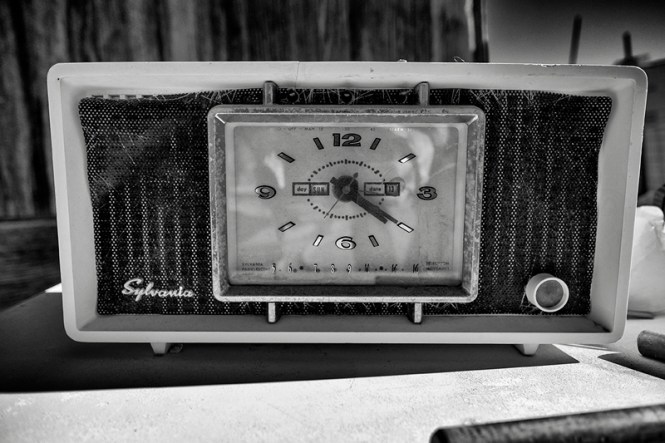
Just further down the hill we started to come across the houses of those both past and recently present, many just left abandoned and with the contents still in place, refrigerators, clocks and books still on the shelves.
We shot there for over an hour, being respectful to those that still call this dusty town home and exchanged a few hearty hello’s to those few that we met along the way walking through the small town.
Darwin is in many ways a place of both sadness and wonder and it remains sat in the middle of Death Valley and the days and nights pass like a ticking clock with no impact or change on anything that remains, a modern day time capsule sat baking in the desert sun.
X-Pro1 with XF14mm f/2.8 – 1/3500 – ISO200
Why the X-Pro1?
I¹ve heard that when you turn professional, you lose the love for photography as a hobby. I very much disagree this type of diverse personal work allows me to still enjoy shooting stuff for myself.
My tool of choice for these images was the excellent lightweight Fujifilm X-Pro1 and a 14mm lens, the 14mm is perfect for the type of off the cuff documentary shooting that I want to do and is a very impressive lens in its own right, especially when used wide open on the aperture as I often like to shoot…
X-Pro1 with XF14mm f/3.2 – 1/105 – ISO200
I love this little mighty camera it’s a favourite of mine to travel with. It¹s easy to use and the quality of what such a little camera can produce is amazing.
I enjoy using black & white I love to indulge in this style whenever I can.
More images
X-Pro1 with XF14mm
X-Pro1 with XF14mm
X-Pro1 with XF14mm
X-Pro1 with XF14mm
X-Pro1 with XF14mm
X-Pro1 with XF14mm
f/3.2 – 1/90 – ISO200
X-Pro1 with XF14mm
f/22 – 1/80sec – ISO200
More about Tim
If you would like to see more of Tim’s work you can follow on Facebook and Twitter or visit his website.
A classic camera in a classic location – see why the X-E1 and the French capital make the perfect combination
“I love the beauty and elegance in Paris: the architecture, the open spaces and the people. But it’s the small details that I like as much as the famous monuments and chateaux.”
Alastair documents Paris with a Fujifilm X-E1, which he started using last year.
“I chose the X-E1 after hours of research into mirrorless cameras. I was using a DSLR and a bridge camera previously but I haven’t touched either since getting the Fujifilm. It’s been a pleasure to use.”
13th Arrondissement
Lens: XF18-55mm F2.8-4 R LM OIS Exposure: 1/300sec at F5.6, ISO 800
This is the ground floor of a nine-storey apartment block in the 13th Arrondissement. It’s due to be demolished, but before that happens 102 street artists were given full access to do as they wished with both the interior and exterior. This was one of my first shots of the exterior of the building. I liked the combination of the three elements to the picture and the X-E1 does a great job of capturing vibrant colours. I queued for over five hours to get this shot, but it was worth it. To be surrounded by artistic creations on floors, walls and ceilings was stunning.
Métro
Lens: XF18-55mm F2.8-4 R LM OIS Exposure: 1/4sec at F8, ISO 1600
I don’t often have my camera out on the Métro as thefts are not unknown. The stations make fascinating subjects for photography though. I wanted to experiment with capturing the moving train as it pulled into the station, and I like the effect of being able to see through the train windows to the opposite platform. I can’t remember whether I intended to include the woman looking along the length of the train. I’ll claim it as good composition, but it may have been luck. The exposure is 1/4sec and it’s hand-held so I don’t know what kind of magical trickery Fujifilm have managed to incorporate into their image stabilisation. But it works!
T-Rex
Lens: XF18-55mm F2.8-4 R LM OIS Exposure: 1/1900sec at F13, ISO 200
This seven-metre, metal Tyrannosaurus Rex sculpture overlooks the Seine on the platform of the Bateaux-Mouches boating company. I’d walked past it plenty of times before but on this occasion the sky was more dramatic and the sun was offering the chance of backlighting the dinosaur. Initially I had the sculpture in silhouette but the Fujifilm RAW files give so much flexibility for changing the exposure and I prefer being able to see the amazing details in the chrome finish.
Monmartre
Lens: XF18-55mm F2.8-4 R LM OIS Exposure: 1/450sec at F4, ISO 200
Sometimes you just notice a scene and know immediately that it will make a good image. The X-E1 is great for this as you can shoot really quickly. This is in Montmartre, and I noticed the woman taking a few photos. As well as her striking red coat, I like her stance as she leans against the wall. Hopefully my photograph makes you want to know what she’s pointing her camera at, but I’ll leave that to your imagination.
City view from Sacré-Cœur
Lens: XF18-55mm F2.8-4 R LM OIS Exposure: 1/45sec at F22, ISO 1600
I really enjoy watching other residents and visitors enjoying Paris. This is the view over the city from Sacré Cœur. I took a few shots of this couple but this is my favourite, and the only one that’s pigeon-free. I like the idea of sharing the view with them. Initially I converted it to black & white since none of the colours are particularly important to the shot. Then I tried just removing some of the colour saturation so that the colours are more subtle without being distracting, and this was the end result.
The Louvre at dusk
Lens: XF18-55mm F2.8-4 R LM OIS Exposure: 20secs at F16, ISO 200
It was a clear afternoon so I decided to head to the Louvre for dusk. With the X-E1 on a small tripod, I set the ISO to 200, switched off the stabilisation on the lens and choose the aperture. The X-E1 does a great job of exposing accurately so I’m usually happy to leave the shutter speed on automatic. All my photos are shot in RAW (although the X-E1 JPEGs are also excellent), with conversion and post-processing in Lightroom 5. My processing is usually minimal; this shot was cropped slightly to better fill the frame, with some minor exposure adjustments and a light vignette applied.
It won’t be long before the natural world starts showing signs of life, which will give photographers across the globe plenty of subjects to train their cameras on.
To start, look low to the ground where bulbs will soon start to break the surface of the soil. Getting down low is the key to success and those X-series cameras with an articulated rear LCD will come in handy to help you frame up shots without having to lie on the floor.
Don’t be afraid to crop in close on snowdrops and daffodils, selecting the macro mode to ensure you focus as close as possible. If you’re shooting on a sunny day, placing your camera flat on the ground and pointing the lens upwards will deliver a ‘worm’s eye view’ of the flowers, which works particularly well with yellow crocus, tulips and daffodils set against a deep blue sky. Consider using the Velvia Film Simulation mode to boost colours, or fit a polarising filter to really saturate primary hues.
If you don’t fancy scrabbling in the dirt, birds and wildlife get a little bolder in the springtime as they start searching for mates and building nests. Use a telephoto lens like the XF55-200mm or XC50-230mm to keep a safe distance and make sure you shoot against a clear, uncluttered background such as foliage or even the sky to be sure nothing distracts from the subject. With any wildlife subject you’ll need to be patient; the best shots will come to those who wait… or those who set up feeding stations in their gardens!
Window light portraits
The low sun at this time of year is perfect for people shots indoors. Carefully choose a window – you want sunlight to bathe your subject in, not to blind them. Position your subject nice and close, then switch your camera to aperture-priority mode, using a wide aperture to throw the background out of focus.
A day in your life
If a 365 project is too daunting, perhaps you can manage 24 hours. Pick a typical day and document your life. It’s easy to do with the portable X cameras. Start with your breakfast and only put the camera down when you go to bed. Apply the usual rules though: think about your shots and compose carefully, don’t simply machine-gun it.
Striking silhouettes
Set aside the usual approach to exposing your subject and expose for the background to get a dark, striking silhouette of a person, tree or church – easily recognisable subjects work best. Switch to spot metering and take a reading from the bright background to ensure your subject is rendered as an outline.
Film fanatics
Emulate the look of yesteryear’s photos with one of the X-series Film Simulation modes. All the X-series cameras offer these magic modes; the X-Pro1 boasts a stunning selection of 10, including names you may remember from film boxes, such as Provia and Velvia. Find them in your camera’s Shooting menu or via the Q menu.
Carnival spirit
In countries around the world, Shrove Tuesday (4 March) is a day for celebration; in many, such as Germany and Italy, this means carnival, while in the UK, it’s the chance to flip pancakes. Whichever is happening near you, photograph it. For a carnival parade, try the Pop Color Advanced Filter (on the XQ1, X100S, X-M1, X20 and X10).
I started 2014 leading a workshop in Yellowstone National Park for Chris Weston‘s safari company “Magic Is” – I am now working regularly with them as a group leader and instructor.
Yellowstone in winter turned out to be an IR photographers paradise and my IR modified X-E1 with the 14mm did great service as the images below show. This camera blows me away every time I use it and there was a great deal of interest from the 12 photographers in the group – so much so that I ended up doing a full presentation on Infrared photography one evening while we were there. My X-Pro1 and the XF55-200 also did good service as shown in the two bison shots at the bottom of this post.
Also pleased to report that both Fuji cameras worked faultlessly down to temperatures as low as -30C – even the batteries held out really well.
Here’s a selection of shots from the IR modified X-E1 using the XF14mm lens:
The following 2 shots were taken on the standard X-Pro1 and converted to B&W in Silver Effex Pro2:
About Simon
Simon Weir specialises in photographing live performance (particularly classical music), contextual portraiture and nature. To see more of his work, check out his website http://www.simonweir.com/
One photographer, one Fujifilm X-series camera, a whole lot of great images
X-series cameras are perfect for street photographers. Combining light weight and portability with fantastic performance and a great range of lenses makes them the perfect combination for shooting on the move. Rob Mitchell is a commercial photographer and X-Pro1 user based in Belgium, but he took these shots on a dedicated day of street photography in the Shoreditch area of London. Along with his friends, who were also shooting with X-series cameras, Rob used the X-Pro1 along with 18mm and 35mm lenses and most of his pictures were shot from the hip in a true documentary style. Continue reading to find out why the X-Pro1 was a perfect companion for a walk around London.
MARKET STALL NEAR COVENT GARDEN
Lens: XF18mm F2 R Exposure: 1/30sec at F2, ISO 800
“This was just a passing snapshot of the market stall. With the combination of low light and large contrast range, I didn’t expect for one moment that the X-Pro1 would deliver a good shot, but it did. This was taken at ISO 800 with the 18mm lens at its widest aperture of F2. This helped me to get a fast enough shutter speed to successfully hand-hold the shot, and the X-Trans sensor took care of the rest. A truly impressive result with digital noise virtually non-existent.”
MIND THE GAP
X-Pro1 – Lens: XF35mm F1.4 R Exposure: 1/900sec at F1.4, ISO 400
“Anyone who has travelled on the London Underground will know that the ‘Mind the Gap’ slogan is everywhere. I don’t remember the exact station that it was taken, but it was on the way from Epping to Liverpool Street. This was a real shot from the hip, which the X-Pro1 is perfect at. The train pulled into the station and as the doors opened, I saw the opportunity to grab this image. Using the rear LCD, auto exposure and rapid focusing, I was able to compose and get this perfectly exposed image before the doors closed again. I don’t think I would have had the time to capture this with a DSLR.”
MAN ON PHONE
X-Pro1 – Lens: XF18mm F2 R Exposure: 1/500sec at F2, ISO 400
“The X-Pro1 is very subtle in use, a DSLR is just too imposing and I simply wouldn’t have been able to get this shot. As I walked past this man in Shoreditch, I had the camera hanging over my shoulder, so I just held it in position and fired off this image without lifting it to my eye or looking through the viewfinder. Although the man is looking at me, I’m pretty sure he didn’t know he was having his picture taken. With the 18mm, you can easily approximate the focusing point and with such a large depth-of-field I could shoot at F2 and still be confident that almost all of the image would stay in sharp focus.”
THE ORANGE BUFFALO
X-Pro1 – Lens: XF18mm F2 R Exposure: 1/210sec at F2, ISO 400
“Taken at the Truman Brewery car park in Shoreditch, this is a sort of mismatch of the US and London. An Airstream caravan, Chevy truck and Buffalo Wings stuck in a rather hip area of town with just the sole client. The four picnic tables would suggest it gets busy there – not at that moment though. What I’ve noticed with the X-series is that I experiment more; I feel less constrained and if I only have a 18mm lens on the camera I just work around that. I could say it’s almost like going back to the roots of innocent experimentation and the discovery of photography.”
PUSHCHAIR, ELDER STREET
X-Pro1 – Lens: XF18mm F2 R Exposure: 1/14sec at F2, ISO 200
“Typically anonymous flats are made up of a pattern of window-door-window-door. I spotted this pushchair in front of one and thought that it broke up the pattern to give a glimpse into the lives of the people who live there. I love the Fujifilm image quality – the fact that I still own and use my old Fujifilm S3 Pro is testament to that fact. The X-Trans sensor in the X-Pro1 certainly hasn’t lost any of the quality of colour accuracy of that older DSLR – I’ve already used it on a couple of commercial projects.”
COFFEE SHOP WINDOW
X-Pro1 – Lens: XF35mm F1.4 R Exposure: 1/550sec at F1.4, ISO 200
“This was shot from inside a coffee shop, overlooking Pancras road – I deliberately wanted to get an obscured portrait of someone sitting outside, complete with an iconic London symbol in the background. The X-Pro1’s metering and sensor have combined to get a great result here. With the large shadow area in the foreground, I expected the camera to overexpose the main subject, but it’s dealt with the contrast well and got detail in both the dark and light areas.”
—
About Robert
Robert Mitchell is a British commercial photographer based in Belgium. To see more of his work you can follow him on Twitter and Facebook or follow his blog.
Christmas may be over, but there are still plenty of subjects and techniques to keep you and your X-series camera busy.
Winter wonderland
The days may be shorter and the temperatures lower, but there’s no denying that the winter months are a very photogenic time of year. Hopefully, we’ll get a good fall of snow over the next few weeks, which means great photos are to be had.
Like any time of year, taking good pictures in winter does involve some planning. If snow is forecast overnight, it could be worth an early start the following morning. If you’re lucky, it will be bright and sunny and you’ll get shots of the landscape before the snow starts to melt or gets covered in footprints. With this in mind, be sure to check the weather forecast the night before.
Make sure you charge up your batteries too, as cold weather can reduce battery performance. Likewise, we’d advise you to leave your camera (minus the battery) by the front door – this tends to be the coldest part of the house and makes it less likely for your gear to mist up due to a change in temperature when you get outside. Buying an extra battery would be a good idea, especially if you plan to be out and about for a while, plus be sure to pack a warm drink for yourself, in addition to making sure you have plenty of warm clothing. Oh, and make sure you put the battery back in the camera before you leave!
Once you’ve set foot outdoors, there will be plenty of photo opportunities to capture – these images above should give you some pointers. As well as going for the obvious landscape shots, look for more abstract images as well as close-up and detail pictures.
Most X-series cameras offer a preset Snow program mode, which should be your first port of call if you want to get great results quickly. To take more control, use exposure compensation to make sure the white snow comes out white. Select +1 in overcast conditions and +2 in sunny conditions to avoid underexposure.
While we’re sure you’ll make every effort to keep snow and moisture away from your X-series camera while you’re out, if it does get dropped in the white stuff or picks up moisture, place it in a plastic bag with a few sachets of silica gel when you get home. Put them in a warm (not hot) place for a day or two and it should clear up.
Shoot a 365 project
Lots of photographers traditionally start a 365 project at this time of year. The premise is simple: take one picture a day for a whole year. It sounds simple enough, but it will give both you and your photography a real challenge. To add extra spice, you could insist on using just one feature, lens or function on your X-series camera!
Fun of the fair
Funfairs spring up in towns during the festive period and you can use them to create eye-catching long exposure images. You’ll need a solid tripod and a low ISO (100 or 200), then select a long shutter speed of around four seconds and fire away. Alternatively, try your camera’s Night Portrait exposure mode and get a low light portrait.
Feathered friends
In colder weather, food becomes more scarce for birds. Attract them to your garden by offering a regular supply of nuts, suet balls and fruit. They’ll keep coming back once they know food is on tap, giving you the chance to photograph them. The XF55-200mm or XC50-230mm lens would be perfect to get in close.
Church interiors
Interiors of churches and cathedrals provide a plethora of photo opportunities. Head to one on an overcast day to avoid strong contrast between light and dark areas and try a range of shots including majestic wide-angle images. Set your X-series camera’s Dynamic Range to DR400 to maximise highlight and shadow detail.
Creative candles
Warm up those winter shots with a candle. Whether on their own or in groups they make perfect subjects. Combined with a face, they make great portraits, too. Increase the ISO on your X-series camera to avoid the flash firing, which will spoil the effect of the ambient light. Leave the white-balance on Auto to retain a warming glow.




 X-series cameras are perfect for street photographers. Combining light weight and portability with fantastic performance and a great range of lenses makes them the perfect combination for shooting on the move. Rob Mitchell is a commercial photographer and X-Pro1 user based in Belgium, but he took these shots on a dedicated day of street photography in the Shoreditch area of London. Along with his friends, who were also shooting with X-series cameras, Rob used the X-Pro1 along with 18mm and 35mm lenses and most of his pictures were shot from the hip in a true documentary style. Continue reading to find out why the X-Pro1 was a perfect companion for a walk around London.


