Photographer Tim Wallace is the driving force and creative thinking behind Ambient Life. An award winning photographer his work is often described as both conceptual and dramatic.
Tim works internationally with many high clients across the globe such as Jaguar Land Rover, Mercedes and Morgan as well as shooting some of the worlds most iconic brands such as Lamborghini, Aston Martin and Ferrari in the UK and Europe to shooting Dodge, Chevrolet and Mustangs in the US.
His work has been published globally and he was recently named by as one of the UK’s most creative photographers whilst in the US Scott Kelby described Tim recently as one of the Ten most influential photographers in the World today, Tim’s view is a little more straight forward, a man who’s known for his down to earth attitude, his feet are firmly on the ground and his desire to produce creative work is one that he has been driven to from a very young age when he first picked up a camera.
“Photography is for me simply a creative passion, the ability to use light and form to
capture in a single image what I see in my own imagination”
Tim is the humble recipient of many awards over recent years including, International Commercial Advertising Photographer of the Year, UK Motor Industry Professional Car Photographer of the Year and a few months ago was awarded International Travel Photographer of the Year.
“I plan to live forever, so far so good…
I’m 40 but apparently 40 is the new 30 so things are always good and I have never felt better!, I don’t sleep much because I’m always thinking about what I can do to create something new, on a morning I often wake up excited for the day like a kid at Christmas just wanting to get out on the road and get on with it. People say I have a wicked sense of humour, not sure on that one, maybe its just a defence mechanism for the fact I’m always trying to lose weight but enjoy good food too much…!
I love the whole creative visual voodoo, the journey from A to B and the chance of arriving at C.
My work is often regarded as conceptual and dramatic and to me photography is a process, you’ll never hear me mutter ‘it’ll be fine’ as that’s simply not enough for me. Life is short and I aim to make mine worth while and interesting with work that I hope reflects this.
My goal in life is to be myself always, be creative, be true and most of all improve just a little part of peoples lives with images that both entertain and sometimes invoke the feelings that I had when I shot them. I’ve won awards and I’m always of the thought that maybe they got the wrong Tim Wallace, hey I’m grateful always but never take myself or any achievements too seriously, life’s too short and people will forget you quickly.
I jumped off a cliff in Norway a few years ago in a BASE jump, why?, well because it felt right for me to do that for myself at that time, I truly believe that anything in life is possible, work hard, be an honest person, tell the people that you love just what they mean to you as often as you can, and most of all be out there shooting because sometimes that’s where amazing things can happen.”
Project Darwin, the California Ghost Town
X-Pro1 with XF14mm
Tim may be known for his carefully crafted and beautifully lit images of prestige cars, however a recent trip to the USA saw him shooting something less glossy and more on the gritty side - an old mining town in Death Valley.
We found ourselves moving through the Valley from South to North. Death Valley has always held a fascination for me in its sheer scale and beauty and this week I shot some ‘personal work’ there, focusing on a project about the abandoned town of Darwin. 6 miles off the main road quite literally in the middle of absolutely nowhere we came across the town of Darwin sat in the base of the mountains, shrouded in dust and sand and abandoned in the sheer deafening silence that you experience only in places like Death Valley.
X-Pro1 with XF14mm f/7.1 – 1/1000 – ISO200
Darwin itself is a truly amazing place and we really didn’t know what to expect as we pulled onto the dirt track that carried us into this sleepy little abandoned area in the middle of the valley with a reported population today of under 40 even though the sign brags a few more that have since packed up and moved on away from the town.
The town was first established by American explorer Dr Darwin French in 1874 after he discovered silver ore deposits in the mountains, just south of Death Valley but the mining area is now closed off and out of limits to people with many signs warning of the dangers of open mines still being there and potential death traps to those that wander into the area. Just a year later, 700 people were found living in the town where around 20 mines were discovered – the population peaked in 1877 at several thousand people. In its heyday, Darwin was buzzing with saloon bars, miners, busy general stores and even brothels.
X-Pro1 with XF14mm f/22 – 1/80sec – ISO200
As with many ghost towns across the U.S., once the industry has died, life in the town becomes lost and soon after years just simply disappears. However in Darwin, a small community of artists and those preferring life in the wilderness, has remained in settlements further down the valley from the ‘original’ settlements. The population is made up of mainly couples and with no one under the age of 18, so no children at all exist there. There are no stores to buy anything and nowhere to stay – the nearest supermarket is well over 90 miles away and the tiny community that remains in the dust had only a local post office where residents could gather to pass the time of day and even this now is shut and abandoned forever.
X-Pro1 with XF14mm f/2.8 – 1/2900 – ISO200
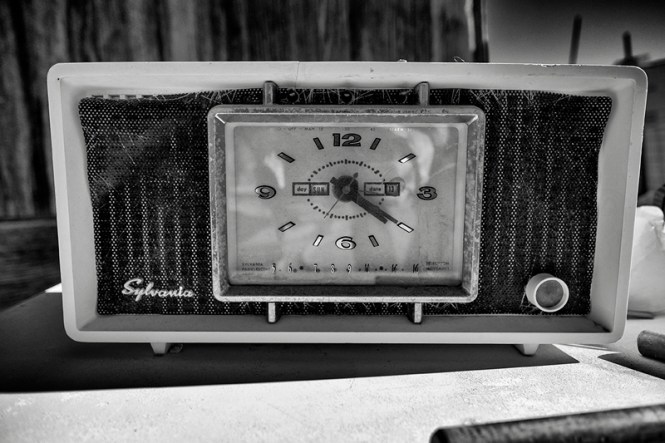
Just further down the hill we started to come across the houses of those both past and recently present, many just left abandoned and with the contents still in place, refrigerators, clocks and books still on the shelves.
We shot there for over an hour, being respectful to those that still call this dusty town home and exchanged a few hearty hello’s to those few that we met along the way walking through the small town.
Darwin is in many ways a place of both sadness and wonder and it remains sat in the middle of Death Valley and the days and nights pass like a ticking clock with no impact or change on anything that remains, a modern day time capsule sat baking in the desert sun.
X-Pro1 with XF14mm f/2.8 – 1/3500 – ISO200
Why the X-Pro1?
I¹ve heard that when you turn professional, you lose the love for photography as a hobby. I very much disagree this type of diverse personal work allows me to still enjoy shooting stuff for myself.
My tool of choice for these images was the excellent lightweight Fujifilm X-Pro1 and a 14mm lens, the 14mm is perfect for the type of off the cuff documentary shooting that I want to do and is a very impressive lens in its own right, especially when used wide open on the aperture as I often like to shoot…
X-Pro1 with XF14mm f/3.2 – 1/105 – ISO200
I love this little mighty camera it’s a favourite of mine to travel with. It¹s easy to use and the quality of what such a little camera can produce is amazing.
I enjoy using black & white I love to indulge in this style whenever I can.
More images
X-Pro1 with XF14mm
X-Pro1 with XF14mm
X-Pro1 with XF14mm
X-Pro1 with XF14mm
X-Pro1 with XF14mm
X-Pro1 with XF14mm
f/3.2 – 1/90 – ISO200
X-Pro1 with XF14mm
f/22 – 1/80sec – ISO200
More about Tim
If you would like to see more of Tim’s work you can follow on Facebook and Twitter or visit his website.
A classic camera in a classic location – see why the X-E1 and the French capital make the perfect combination
“I love the beauty and elegance in Paris: the architecture, the open spaces and the people. But it’s the small details that I like as much as the famous monuments and chateaux.”
Alastair documents Paris with a Fujifilm X-E1, which he started using last year.
“I chose the X-E1 after hours of research into mirrorless cameras. I was using a DSLR and a bridge camera previously but I haven’t touched either since getting the Fujifilm. It’s been a pleasure to use.”
13th Arrondissement
Lens: XF18-55mm F2.8-4 R LM OIS Exposure: 1/300sec at F5.6, ISO 800
This is the ground floor of a nine-storey apartment block in the 13th Arrondissement. It’s due to be demolished, but before that happens 102 street artists were given full access to do as they wished with both the interior and exterior. This was one of my first shots of the exterior of the building. I liked the combination of the three elements to the picture and the X-E1 does a great job of capturing vibrant colours. I queued for over five hours to get this shot, but it was worth it. To be surrounded by artistic creations on floors, walls and ceilings was stunning.
Métro
Lens: XF18-55mm F2.8-4 R LM OIS Exposure: 1/4sec at F8, ISO 1600
I don’t often have my camera out on the Métro as thefts are not unknown. The stations make fascinating subjects for photography though. I wanted to experiment with capturing the moving train as it pulled into the station, and I like the effect of being able to see through the train windows to the opposite platform. I can’t remember whether I intended to include the woman looking along the length of the train. I’ll claim it as good composition, but it may have been luck. The exposure is 1/4sec and it’s hand-held so I don’t know what kind of magical trickery Fujifilm have managed to incorporate into their image stabilisation. But it works!
T-Rex
Lens: XF18-55mm F2.8-4 R LM OIS Exposure: 1/1900sec at F13, ISO 200
This seven-metre, metal Tyrannosaurus Rex sculpture overlooks the Seine on the platform of the Bateaux-Mouches boating company. I’d walked past it plenty of times before but on this occasion the sky was more dramatic and the sun was offering the chance of backlighting the dinosaur. Initially I had the sculpture in silhouette but the Fujifilm RAW files give so much flexibility for changing the exposure and I prefer being able to see the amazing details in the chrome finish.
Monmartre
Lens: XF18-55mm F2.8-4 R LM OIS Exposure: 1/450sec at F4, ISO 200
Sometimes you just notice a scene and know immediately that it will make a good image. The X-E1 is great for this as you can shoot really quickly. This is in Montmartre, and I noticed the woman taking a few photos. As well as her striking red coat, I like her stance as she leans against the wall. Hopefully my photograph makes you want to know what she’s pointing her camera at, but I’ll leave that to your imagination.
City view from Sacré-Cœur
Lens: XF18-55mm F2.8-4 R LM OIS Exposure: 1/45sec at F22, ISO 1600
I really enjoy watching other residents and visitors enjoying Paris. This is the view over the city from Sacré Cœur. I took a few shots of this couple but this is my favourite, and the only one that’s pigeon-free. I like the idea of sharing the view with them. Initially I converted it to black & white since none of the colours are particularly important to the shot. Then I tried just removing some of the colour saturation so that the colours are more subtle without being distracting, and this was the end result.
The Louvre at dusk
Lens: XF18-55mm F2.8-4 R LM OIS Exposure: 20secs at F16, ISO 200
It was a clear afternoon so I decided to head to the Louvre for dusk. With the X-E1 on a small tripod, I set the ISO to 200, switched off the stabilisation on the lens and choose the aperture. The X-E1 does a great job of exposing accurately so I’m usually happy to leave the shutter speed on automatic. All my photos are shot in RAW (although the X-E1 JPEGs are also excellent), with conversion and post-processing in Lightroom 5. My processing is usually minimal; this shot was cropped slightly to better fill the frame, with some minor exposure adjustments and a light vignette applied.
During a recent trip to Japan, Pro Photographer Jim Marks was able to test out the new XF56mm lens on on Fujifilm X-T1. Here’s a few example shots.
All shots here are straight out of camera JPEG images that have been resized and nothing else.
1/114 sec; f/1.2; ISO 4001/160 sec; f/1.2; ISO 4001/64 sec; f/1.2; ISO 8001/64 sec; f/1.2; ISO 12501/160 sec; f/1.2; ISO 4001/200 sec; f/1.2; ISO 4001/200 sec; f/1.2; ISO 400