Be Inspired

A collection of inspirational blog posts that will give you some great new ideas and cause you to pick up your camera and go out shooting

Sports Photography as a Spectator – Mountain Bike Racing

By Jeff Carter

In a series of articles X Photographer Jeff Carter will be shooting at sports events in the UK and showing how to capture great images with the Fujifilm X Series without the need for a media pass.


Sports Photography as a Spectator – Mountain Bike Racing

So far in this series I have attended seven sports events which I have shot at some point in my 25 year career as a sports photographer but for part 8 of the ‘Sports Photography as a Spectator’ features I attended the Scottish X Country (SXC) Mountain Bike Racing Series event at Dalbeattie, a sport that is a first for me.

INTRODUCING THE SCOTTISH X COUNTRY MOUNTAIN BIKE SERIES

The Scottish Cross Country (SXC) Mountain Bike Series offers everything from Taster events for novice mountain bikers to full on Elite racing, and everything in between. The series of six events across Scotland on some of the most challenging mountain bike courses in the UK.

The event I attended in Dalbeattie in Dumfries and Galloway took part on the forest trails just south of the town. The SXC event attracted a large entry of riders of all ages from under 12s to veterans, with the top riders in the Elite category also taking part to build up their points for the national titles.

Races are run over a predetermined number of laps depending on the class. The Under 12’s race took place on a shorter course over two laps, while the Elite riders did five laps over the full course.

[youtube=https://www.youtube.com/watch?v=zH0zutLxKgE]


BE PREPARED – What to Take

This is Mountain Bike Racing and takes place on forest trails that can offer some rough terrain, so dress accordingly. Also check the weather forecast before traveling and take wet weather gear for yourself and your photo gear if necessary.

As you are out in the forest take food and water as it can be a long day. While there is catering in the start finish area, it can be a long walk back if you are out on the far point of the course.

This is the first event in this series of features where I didn’t need the XF100-400mm f4.5/5.6 zoom as I was able to stand right next to the course. The long focal length was not required for the most part and under the trees the light was quite low so the f5.6 maximum aperture on the long lens would’ve forced me to raise the ISO to the top end of the range on the FUJIFILM X-T2.

For Mountain Bike Racing the XF50-140mm f2.8 is the best choice as you can fill the frame with the long end of the zoom while keeping the ISO lower in the challenging light conditions thanks to the f2.8 maximum aperture. I also had the 1.4x converter in my bag which I did use on a couple of occasions to give the lens a bit more pulling power. However, on the whole, I just needed the standard zoom range on the lens.

I also used the XF16-55mm f2.8 and XF10-24mm f4 zooms to capture the action around the course.


GET IN POSITION

You can stand right next to the course and there are no barriers apart from around the start/finish area. Remember mountain bikes are fairly quiet, so if you are walking on the course make sure you keep an eye and ear open for oncoming competitors.

As this was a sport I had never shot before, I arrived early and walked the course, noting down where the best positions were for shooting. Look for water splashes and jumps, which will make your images more interesting.

Also don’t just shoot from eye level, get down low or up high if possible to vary the angle. Another good position is to go off the course and shoot through the trees. A long exposure of a rider with the trunks or branches of the trees can produce a different composition.


SHOOTING THE ACTION

Mountain Bike Racing is not as fast as motorised sport but the riders can move quickly. It is good to inject a sense of speed into some of your images by dropping the shutter speed down to 1/60s or lower using the panning technique.

A fast shutter speed of between 1/250 and 1/1000s is necessary to freeze the action, especially for jumps and water splashes.

The X-T2’s AF system has no problem in tracking the competitors easily but with trees and other obstacles on the course the autofocus can get confused and lose the lock. I always set both of my X-T2s to ‘boost’ to improve the reaction time and the AF-C custom setting is set to Ignore Obstacles (set 2).

For this event I used single point AF and focused on the riders face or upperbody.

Be careful when shooting riders under the trees with a bright background. The final image could be under exposured because of the backlighting confusing the metering if you use matrix or centre weighted. If you are using programme, aperture or shutter priority modes I recommend using spot metering and dialing in the necessary exposure compensation to get the right exposure for the competitor.

For metering I used the centre weighted setting most of the time to see the exposure in the viewfinder. I shoot in manual exposure mode, with the shutter speed dial set to T and the rear command dial used to adjust the shutter speed. I also set the ISO dial to ‘A’ and use the front command dial to select the required ISO.

With the aperture ring adjusted by my left hand, I can adjust all three elements to get the correct exposure without taking my eye from the viewfinder.


FLASH GUNS

There were no restrictions on the use of flash at the SXC event but I chose not to use my EF-X500 flashgun just in case it distracted any of the competitors. If you want to use flash at a mountain bike race I recommend you check with the event organisers beforehand.


CHOOSING AN EVENT

There are six events in the SXC Mountain Bike Racing series and there are other series all around the UK. For more information on the Scottish series visit the SXC website and for the national scene visit the British Cycling website for more information on mountain bike racing and other forms of two wheel sport.


CAMERA AND LENSES

• Fujifilm X-T2 with battery grip
• Telephoto Zoom – XF 50-140mm f2.8 + 1.4x converter when needed. A good alternative lens in the 55-200mm f3.5/4.8 or the XF100-400mm.
• Standard zoom (16-55mm f2.8 or 18-55mm / 18-135mm) for wide action shots and portrait images.
• 10-24mm f4 wide angle zoom lens can also be useful a different perspective of the action.

Find out more about the X Series cameras and Fujinon Lenses.


CAMERA SETTINGS

• Shutter dial set to ’T’ (and locked). Shutter speed selected on rear command dial
• Optical Image Stabilisation (OIS) on.
• Metering set to Center Weighted, with Spot selected when the lighting conditions proved to be challenging under the trees.
• Autofocus – AF-C with camera set to ‘boost’ to improve reaction time.
• AF custom setting on Set 2 (Ignore Obstacles)
• AF Mode – Single Point
• Drive set to CH (8 or 11 fps)
• Action freezing images – 1/250s to 1/1000s with aperture wide open. Adjust ISO accordingly.
• Panning images – 1/125s to 1/30s will inject lots of movement in the image. Choose a suitable aperture and drop the ISO down to 100/200.
• People shots – Autofocus to AF-S and use wide aperture to isolate the subject from the background when using telephoto lenses.


PREPARING FOR MOUNTAIN BIKE RACING

• Check the weather forecast and dress accordingly.
• Take covers for your cameras. The X-T2 / X-Pro2 / X-T1 and the majority of Fujinon lenses might be weather resistant but I always cover the equipment when not in use. It is not just water, Mountain Bike Racing courses can be very muddy.
• Food and drink. There are usually facilities at an event but the courses are big and are in some rough terrain, so a snack and a bottle of water is recommended.


SAFETY FIRST

• You are standing right next to the course so keep your eyes and ears open at all times.
• Stay behind the marked areas in the start/finish area.
• Obey the instructions of the officials.


MORE INFORMATION

Scottish X Country Mountain Bike Racing: www.sxc.org.uk
British Cycling: www.britishcycling.org.uk


JEFF CARTER

X-Photographer: fujifilm-x.com/photographers/jeff-carter/
Website: www.macleanphotographic.co.uk
Blog: www.fujifilmXadventure.com
Instagram: www.instagram.com/maclean_photo/
Facebook: www.facebook.com/macleanphotographic
Flickr: www.flickr.com/photos/macleancomms/
Vimeo: www.vimeo.com/fujixadventure

Take A Different View: Fashion Photography Re-imagined

By Alexander Bather

I was always one of those people who would count down the minutes until it turned 5:30pm, but now I watch the clock counting down the minutes until my next photography assignment.
I enjoy the uncertainty of the job, as it could be anywhere in the world, photographing any subject and may have some unusual requirements thrown in for good measure. What is certain however, is that I will get to meet and create art with some interesting characters. Read More

Photographers, We’re Storytellers – 10 Days in Japan [Part One]

By Chris Weston

When I first became interested in wildlife photography, I harboured a deep fascination with Japan. I used to study the work of some of the great Japanese nature photographers – Michio Hoshino, Mitsuaki Iwago, Nobuyuki Kobayashi – and found, in their images, a hidden depth, an elusive something that I could only describe as “soul”. I also noticed many of my early photographic heroes, photographers such as Art Wolfe and Jim Brandenburg, as well as my favourite artist, Monet, had been inspired by immersion in Japanese culture. Read More

Take A Different View: Capturing the Everyday Life as a Street Photographer

By Matt Hart

Take a Different View

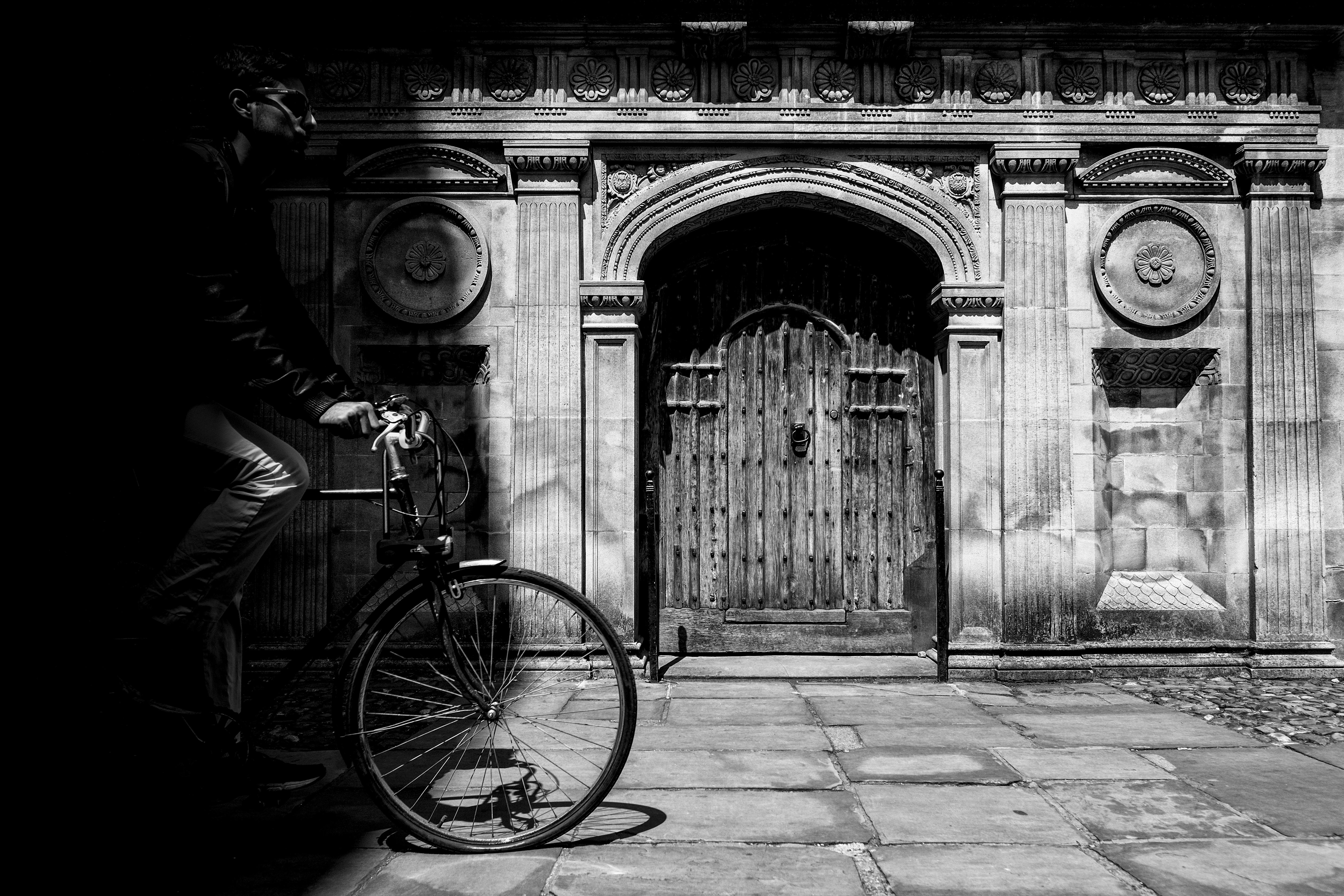
I spend most of my days teaching people how to see the streets with fresh eyes. Helping photographers to see the world around them through a lens in a more unique way. I spend my free time exploring the streets of our cities looking for a different view of the world around us and trying to find something unique or different.

Street photography is not just taking photos of people in the street. There is so much more to it than that, and the FUJIFILM X-Pro2 helps me to carry out my work in a much more unobtrusive way.

The trinity of a great street shot is Light, Composition and Moment, but add to that emotional impact and a great subject and you have a killer shot.

Creating an image without the use of Photoshop, just looking to find something different and exciting is very addictive. You don’t find it every day but when you do it’s just a magical moment you want to share.

I am constantly on the lookout for great light. We know photography is all about great light so I tend to spend my time hunting down locations with the perfect light quality and shape. Some areas and cities are laid out to allow light to hit the streets and create great shapes but some hide the light most of the day with narrow streets all facing the wrong direction.

With street photography, it’s hard to compose an image immediately but you can look for an amazing street or area with good lighting and wait for an interesting subject to come in to the frame. You should never get caught up with the look or style of a subject. It’s better to look for right light and scene and start the composition process, keeping an eye out for how people look in the light and shadows as they come in to the frame. With practice, you know what shapes and styles to look for in the subjects around you.

The decisive moment is a rare thing, but you can improve your chances by looking for the obvious. If you stand next to great light someone will walk in to it, if you stand next to a puddle someone will walk in it or jump over it. Just make sure a car does not drive through it and soak you!

A great subject, as I have said, is not always what you think. It’s all about the shape, the context and the look. After all photography is all about communication so you need to be able to find a subject that communicates to your or your viewer.

We would all love to be able to get emotional impact in to our images and this is the hardest part of all. People do not display emotion in public as much as they used to, so looking for a kiss or a smile is quite a rare thing in some cities or towns. It does not have to be a happy emotion, it could be fear, horror or fright. Anything that creates some form of emotion in the viewer. Remember, though, everyone is different so try and treat people how you would like to be treated yourselves.

I am a candid street photographer and like to shoot the scene when the subject is unaware. The rangefinder style of the X-Pro2 helps me enormously with this task. I am a right eye shooter so it’s great to be able to shoot with both eyes open. With the camera only covering a small portion of my face, it means not having my nose squashed in to the rear screen!

Quite a few people prefer the Optical Viewfinder in the X-Pro2 but I really prefer to use the Electronic Viewfinder with the histogram and the level switched on in the menu. I prefer to keep both eyes on what is going on around me and shoot from the hip most of the time. When I do use the viewfinder, I want very fast feedback of the scene. I want to know the camera is focused level and the exposure is correct. The X-Pro2 is a nice oblong shape which means that, at a glance, you can check the camera is straight without having to hold it to the eye. I do this by just looking along its edges and lining it up with straight edges on buildings. If you can’t find a straight edge turn on the electronic level and use the rear screen to level the shot.

I set the X-Pro2 up to make my life easy out on the streets and use the Auto ISO setting and, in Auto ISO 1, I set my camera to Default Sensitivity 200 max and 6400 min sensitivity. I set the Shutter Speed to 1/320 secs or above most of the year. This gives me the exposure I need for a sharp image without having to mess about with the camera all the time.

If I do need to make any changes with the exposure triangle on the outside of the camera I can just up the shutter speed using the exposure dials on the top of the camera, or close or open the aperture at will with the aperture ring around the lens (available on most XF lenses). I normally shoot between f4-f8 in the summer and f1.4-f4 in the winter in the UK.

I use single servo centre point focusing to shoot anything standing still and continues focus to shoot anything moving mostly with evaluative metering. Sometimes, in awkward light, I will switch to spot metering and just adjust with exposure compensation dial.

I shoot mainly with the wonderful set of Fujifilm F2 lenses; the XF23mmF2, XF35mmF2 and XF50mmF2 all fit nicely in a little pouch in my bag. I still love the XF90mmF2 and the XF16mmF1.4 but over the last few weeks I have just wanted to carry less in my bag.

I have shot most cities in the UK now so I know what lenses work for each city so tend to pack what I need.

I only shoot street with prime lenses and tend to go out with two camera bodies – a wide lens on one body and a telephoto lens on the other. This enables me to capture something right under my nose or on the other side of the street without having to run around like a mad thing. Once you get used to a prime you can move and shoot so much faster and capture the shot you were after, instead of wasting time trying to frame your subject by zooming.

Sometimes we see the same things repeatedly but it’s how we shoot it that makes the difference. When the everyday becomes the norm, we need to break out of the crowd and start to look at things in a different way. You can walk the same street for 10 years and the next time you turn the corner there it is a great big puddle!

Sometimes you have to wait a long time to get an image that is different and sometimes it happens 10 times in a day. I walked up and down my local railway station bridge looking at the nice yellow handrails for over 10 years before the light and subject position was good enough to lift my camera to my eye to take the shot.

Keeping your eyes open and looking all around you at all times if key. As long as your camera is set up and ready, you should be able to capture most moments.

It’s all about learning to see and taking your time; being in the right place at the right time.

There is nothing more relaxing than a day out with your camera in one of our great cities. Spending an afternoon looking for something different among the chaos, the hustle and bustle, whilst enjoying good coffee with your friends as you try to capture a different view.


More from Matt Hart

Website: http://www.matthewhartphotography.com/

Blog: https://matthewhartphotography.wordpress.com/

Facebook: https://www.facebook.com/matthewhartphotography/

Twitter: https://twitter.com/matt6t6

Instagram: https://www.instagram.com/matt6t6/


More about FUJIFILM X-Pro2

Taking performance to new heights, the FUJIFILM X-Pro2 offers the world’s only Hybrid Multi Viewfinder and features a brand new 24MP X-Trans III sensor.

The FUJIFILM X-Pro2 boasts a Hybrid Viewfinder capable of instantly switching between optical and electronic finders, plus an updated image sensor and processor, which dramatically improve image quality. By combining these features with the ultra-high image quality of FUJINON X-Mount lenses and the color reproduction technology accumulated through more than 80 years as a photographic film manufacturer, the FUJIFILM X-Pro2 delivers the best ever results from an X-series camera.


[youtube=https://www.youtube.com/watch?v=AHFdXA4Y6lI]

Exploring Lake Como with the X-T2

By Darren Brogan

Headshot-DarrenBrogan

Darren is a keen traveler and photography enthusiast from the town of Dunfermline in Fife, Scotland. For Darren, photography has always been a bit of a hobby and is closely intertwined with his passion for travel. As often as he can, Darren likes to get out and explore the world around him. Whether he is hiking the rural highlands of Scotland or roaming the sprawling cities of Asia, he will undoubtedly have his camera at his side. The goal of his photography has always been to visually document his adventures and to share them with others in attempt to inspire. Instagram is his preferred platform to share his work and to engage with fellow travelers from around the world, you can follow him at instagram.com/poetic_mouse.

He has been shooting with the Fujifilm X Series since late 2015.


Read More