Guest Blogger

Product photography with the X-A2

3

By LAURA HARVEY

Photos are super-important for anyone selling online – our customers aren’t able to pick up our products. They can’t get a feel for our cards, prints or mugs as they would in a traditional bricks and mortar shop.


Although we have stockists in the real world, we also sell our products online via our own website, as well as on marketplaces such as notonthehighstreet.com and etsy. These are ultra-competitive marketplaces, with a lot of products all shouting for attention. Type ‘birthday cards’ into etsy and you get 184,757 (and counting) results.

Having an eye-catching design and an appealing price can only take you so far. You need strong SEO and, just as importantly, professional-looking product shots.

This isn’t only important for catching a customer’s eye, but also for getting the attention of the people running these sites, who will promote products with superior photography.

That’s why we love using the X-A2.

I had been using an old DSLR, which did a job for us, but was a bit of a pain for my partner Jack, who has very little camera experience (he claims to have taken GCSE Photography many years ago, but you’d never know) to use on a day-to-day basis.

The X-A2 is far more intuitive, operating more like the compacts he’s used to from family holidays and so on.

Having a camera we can both use makes taking product shots – and promotional photos for our social media posts – a breeze.

We work from home, in a spare room converted into a store room for all our cards, packaging material, mug press, printers, blank mugs… you get the picture. Oh and this room also doubles as our photo studio. This means that when we need to photograph our products, we have to do a quick transformation of our designated packing area into a mini photo studio. The quicker we can do this, the better. So being able to stick the X-A2 on to our tripod and shoot away is a real bonus.

Of course, we’re not just limited to the studio and with the X-A2 being so lightweight and compact, it has joined us on our travels this summer, including a long-awaited visit to Wimbledon (on the hottest day of the year, no less) which meant I was able to get some great photos that I will treasure forever.


In a nutshell, here are our 10 favourite things about the X-A2

Image quality.

What can we say? When we want a bright, sharp image to show off our colourful designs the X-A2 does not let us down. This gives our customers the closest experience possible to actually picking up the products in their own hands.

1

Reduced noise at a low ISO.

I knew that the photos I had taken with my DSLR had more noise on them than I’d like, even at ISO 100, but it wasn’t until I blew up an old image and one taken on the X-A2 side by side that I noticed just how grainy the old photos were in comparison. When your main selling tool is a product shot, quality is everything and could make a huge difference to the overall appearance of our online shop.

Selfies.

You can flip the screen over the top of the camera body and take a mean selfie (Jack particularly likes this feature. Boys…)

Exposure preview.

Being able to preview the exposure before shooting is really time-saving. Our studio doesn’t always have the best light, it’s natural and changes in seconds. With the X-A2 I can keep adjusting and previewing the exposure quickly and easily, which saves heaps of time.

Liveview.

The liveview screen is ultra clear, exceptionally responsive and tiltable. I hadn’t really fully appreciated the point of an tiltable liveview screen until I started using the X-A2. Our studio space-cum-photography studio is pretty pokey, with stacks of cards, boxes of envelopes and postage tubes all coming in and out all the time. Being able to tilt the screen rather than stand back and crouch down makes photography a pleasure rather than a chore.

IMG_0141

It ain’t heavy.

How can a camera packed with so much clever stuff be so lightweight? It must have come from the future. Going back to the DSLR after using this is like trying to pick up a Rottweiler when you’re used to a Pomeranian.

Hip to be square.

The square format mode is a big bonus for us. The standard photo format on our website and notonthehighstreet.com is square, so this not only saves us time in cropping, but also helps us to shoot specifically with these websites in mind. Seeing the crop in camera first, rather than having to imagine a square crop from a landscape or portrait image is a huge benefit for us.

Battery life.

We kicked the heck out of the battery, really going to town on what we thought would be real energy-sapping sessions of lengthy liveview use, but the X-A2 just kept on keeping on.

Wireless transfer.

Being able to zap the files straight over from the X-A2 to our computer, tablet or phone not only makes us feel a bit like Tom Cruise in Minority Report, but saves time and, teamed up with the square format, makes Instagram a doddle.

It looks cool.

Well, it does, doesn’t it?


2

After a few weeks of launching new products – and mainly studio-based work, we’re keen to get the X-A2 out on the road to get some great new content for our blog. Watch this space…


Laura Harvey is the founder and designer at Paper Plane

Paperplanedesigns.co.uk | Facebook | Twitter | Instagram


Learn more and buy now

X-A2_Front_Right_Silver16-50mm_FlashClick here to find retailers selling the Fujifilm X-A2

The Ugandan gorillas and chimpanzees

by Peter Delaney

Bio

11830097_1148874931796385_1664940048_n

In 2001, I made a decision to quit a career in finance to pursue my dream of travelling Africa in a 4×4 Landcruiser. The sheer size and magnitude of this continent was overwhelming. I travelled the forests of Bwindi to the peaks of Kilimanjaro, to the shores of Lake Malawi and the red dunes of the Kalahari. I have spent many months in the African wilderness looking for that unique photograph to showcase the rich variety of wildlife and beautiful landscape that Africa has to offer.

Africa has become the new chapter in my life and I have dedicated the last 15 years photographing this diverse continent.

My dedication to the craft has been rewarded with publications in the National Geographic, Deutsche Geo and many others. My photographs have won numerous awards including the prestigious BBC Wildlife Photographer of The Year in 2011 & 2013.

Photography has become my life, it maybe a cliché, but it’s true. I live and breathe photography. No matter where I am, “my minds eye” is making photographs. It has taught me to see the world in a different light, and for that, I am so grateful.

Recent assignment and what I was hoping to capture

In June, I spent a week on assignment for a client who asked me to photograph Ugandas Gorillas and Chimpanzees. The brief was to photograph the impact of conservation tourism on local communities and the Wildlife. It was a fantastic opportunity to photograph Mountain Gorillas, whose numbers are less than 1000 worldwide, and Chimpanzees whose numbers are under increasing threat from habitat lost due to logging and oil drilling.

chimpanzee-wild-rainforest-14

When I photograph my subjects there are few things on my mind. First and foremost is the well being of my subjects, I never want them to feel threatened that they may enter a “fight or flight” scenario. The other is that I photograph my subjects aesthetically, so that my photographs resonate with the viewer.

fishing-boat-lake-victoria-3

On assignments there are always opportunities to photograph different subjects, on my photography wish list I have always wanted to photograph Fishermen casting nets from old wooden boats.
On this trip I had an hour waiting for our transport to a nearby island. It was a surreal morning with huge storm clouds approaching over calm waters. Local fishermen were fishing close by. I had one chance to get the photograph that I always wanted. I am glad to say I succeeded.

What kit did I take why?

Since 2007, up until last year, all my work was photographed with pro DSLR body.

To be honest, I was never truly happy with this bulky equipment, I would often come back from trips and be dissatisfied with the lack of sharpness and detail. This was mainly due to vibrations from the mirror and shutter.

chimpanzee-wild-rainforest-5

I have been monitoring the mirrorless platform intensely over the last few years. When Fujifilm brought out the X-T1 and a lens roadmap, I got in contact with Fujifilm South Africa. I had a wonderful meeting with their team and I was convinced by their passion, commitment and dedication not just to the products, but to the Fujifilm community too. The support I have received from Fujifim has been amazing and I’m so excited about the release of the upcoming “big lens” from Fujifilm. I am sure it will live up to my expectations.

On this trip I packed the following gear:

  • 2 x Fujifilm X-T1’s
  • XF18-55mm
  • XF50-140mm
  • Laptop
  • Hard drives
  • SD cards
  • Spare batteries & chargers
chimpanzee-wild-rainforest-11

I knew photographing the Mountain Gorillas and Chimpanzees was not just going to be a challenge physically for me, but also to push my Fujifilm equipment to the limits.
I have to admit, I was a little bit apprehensive but I needn’t have been. I cannot emphasise enough how well the X-T1 and the 50-140mm coped with low light, high contrast and wet, humid conditions. It performed beautifully.

mountain-gorilla-rainforest-2

Carrying these cameras and lenses around for hours while trekking the Chimpanzees and Gorillas I never once felt tired, or that my equipment was too heavy and cumbersome as it use to be in the past with my old DSLR.

chimpanzee-wild-rainforest-7

Since I was working for a client, knowing whether the trip was a success or not was down to their reaction. I found my client to be ecstatic with the results, and so was I.

This trip put to bed any lingering thoughts I had about making the switch to Fujifilm “exclusively”. I love my Fujifilm equipment and I love being part of the Fujifilm family as Fujifilm’s X-shooter in South Africa.

chimpanzee-wild-rainforest-9

General tips

First and foremost, enjoy your Photography.

Secondly, no matter how good you think you are as a photographer, you can always be better, never stop learning.

Thirdly, respect your subject, be ethical in your approach and remember your reputation is everything.

chimpanzee-wild-rainforest-6

What’s next for me ?

I’m just back from a self imposed year off as I became a father for the first time. And I am now slowly weening myself off fatherhood and getting back out into the field.

Because I love to travel and explore, I am planning trips to Asia, Europe and of course my beloved Africa. I have further work booked with clients who love giving me challenging briefs. I am hoping to work with Fujifilm South Africa next year coinciding with the release of their “big lens”. I love sharing my stories and passion for my photography so I will be giving short presentations both locally and internationally.

Website
Blog
Facebook
Twitter
Instagram
Email – delaneypeter@icloud.com

A journey to Marrakesh

9. DSCF5376 mercato medina - sitoby Jesper Storgaard Jensen

About me

Jesper Storgaard Jensen bwI’m Danish, born in 1964, and have been living in Rome since 1997. I have always loved writing and at a certain point, after my arrival in Rome, I started to collaborate with magazines producing travel articles. It was from this that the Danish Daily wanted to publish a travel article of mine from an Italian island. Unfortunately the PR-photos were of a too poor quality. In other words, I had to do the photos myself. This is when I purchased my first ever 5-mega-pixel camera. That was back in 2003, and since then, my interest in photography has been steadily increasing. I had been working for the Danish Embassy in Rome for ten years, but in 2009 I took the jump to become a full time freelance journalist and photographer shooting travel, culture, food & wine and interviews. Everything with my own imagery.

The journey to Marrakesh

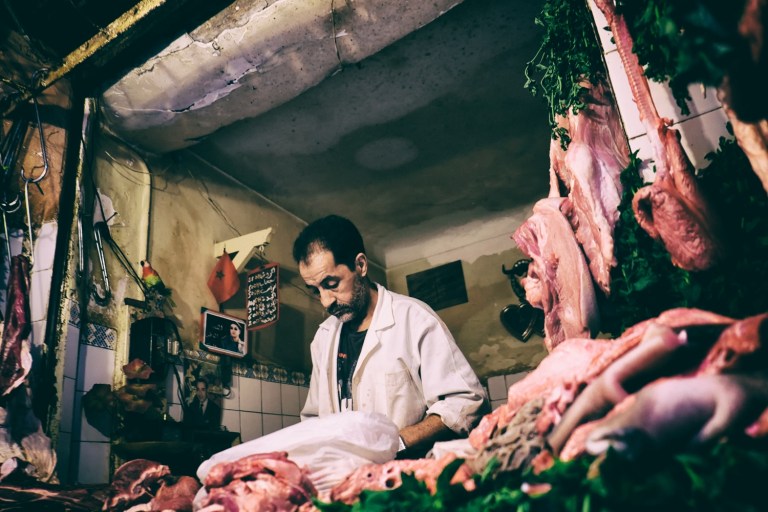
We – a total of eight persons – were doing a 7 day on-the-road-trip round Morocco, two days of which were spent in Marrakesh. As I needed to travel light, I packed only my Fuji gear – Fuji X-E2, the 18-55mm kit lens and the 35 mm lens for portraits & food. I must say that I find this a excellent combination and the overall weight is significantly reduced compared to DSLR gear.

7. DSCF5387 medina - sito

Travelling in a country with a completely different culture to my own I wanted to play it safe. So I asked most people if I could take their photo, especially regarding portraits, which I guess is quite obvious. There were occasions where some scenes were too good to miss, and in these circumstances I fired from the hip, looking elsewhere.

6. DSCF5536 Amir Marrakech - sito

5. DSCF5591 street portrait marrakech sito

8. DSCF5345 pink all over - sito

Generally speaking, Marrakesh is a very photogenic location. There are so many varied situations, so wonderfully exotic, with such incredible faces, emotions, the colours, the textures. Everything seems to be calling you to be immortalized.

3. DSCF5470 butcher marrakech - medina

11. DSCF5408 medina nr. 2 - sito

2. DSCF5480 man with hat - sito

1. DSCF5566 medina - sito

Future projects

Aside from my daily work, I like to have detailed, lengthy photographic projects and I’ll soon be leaving Rome for my summer holidays. I’ll be driving through the south of Italy to the island of Pantelleria, south of Sicily. During that month of holiday I’m planning on doing a project called “People I met”, taking portraits of people I’d casually meet during that month. On a long term basis, I’m working on a project where I’ll be photographing different kinds of Roman artisans in their working environments. This project will be continuing into 2016.

Contact

Web
Instagram
500 px
Picfair

The Kushti Wrestlers

By Danny Fernandez

At some point during 2013 it dawned on me that I hadn’t had an adventure for a number of years. Bored with my job and in the need of a change, I began looking at voluntary positions in India. A year later I boarded a flight to Delhi with high hopes of adventure, new experiences and great photo opportunities. Luckily, all of these wishes were granted.

6 weeks of my time were spent volunteering in a small village called Nagwa, just outside the intense city of Varanasi. My job was to teach young people from the local area how to use cameras. The students of the charity (named ‘Fairmail’) then take photos which are in turn made into greeting cards, and sold throughout the world. The students receive money from sales, which pays for their education/health/housing costs etc.

During my time teaching there, I became good friends with the students. One student had previously mentioned that his brother takes part in Kushti, an ancient tradition of Indian wrestling which still thrives in Varanasi.

He told me that we could go to the the temple where they train to meet and possibly photograph the wrestlers. I was super excited at this prospect as if it happened, it would allow me a glimpse into the mostly unseen world of Kushti wrestling.

We arrived to the temple a little before 7am and were met with some suspicious eyes from the wrestlers (foreigners are not normally allowed into the training grounds, especially those with cameras). My student spoke to the wrestlers while myself and a few other students (each with their cameras) held back. I was nervous and felt out of place, especially as I had brought a small lighting kit with me (which I imagined made the wrestlers think I was shooting for professional/commercial reasons).  After a few minutes one of the wrestlers came over and my student introduced us; he told us that it was ok for us to take photos and I was incredibly relieved. I felt like a National Geographic photographer on his first assignment, with feelings of intimidation and self doubt. Was I ready for this? What if I screwed it up?

Kushti wrestlers Danny Fernandez Photography landscape (2)

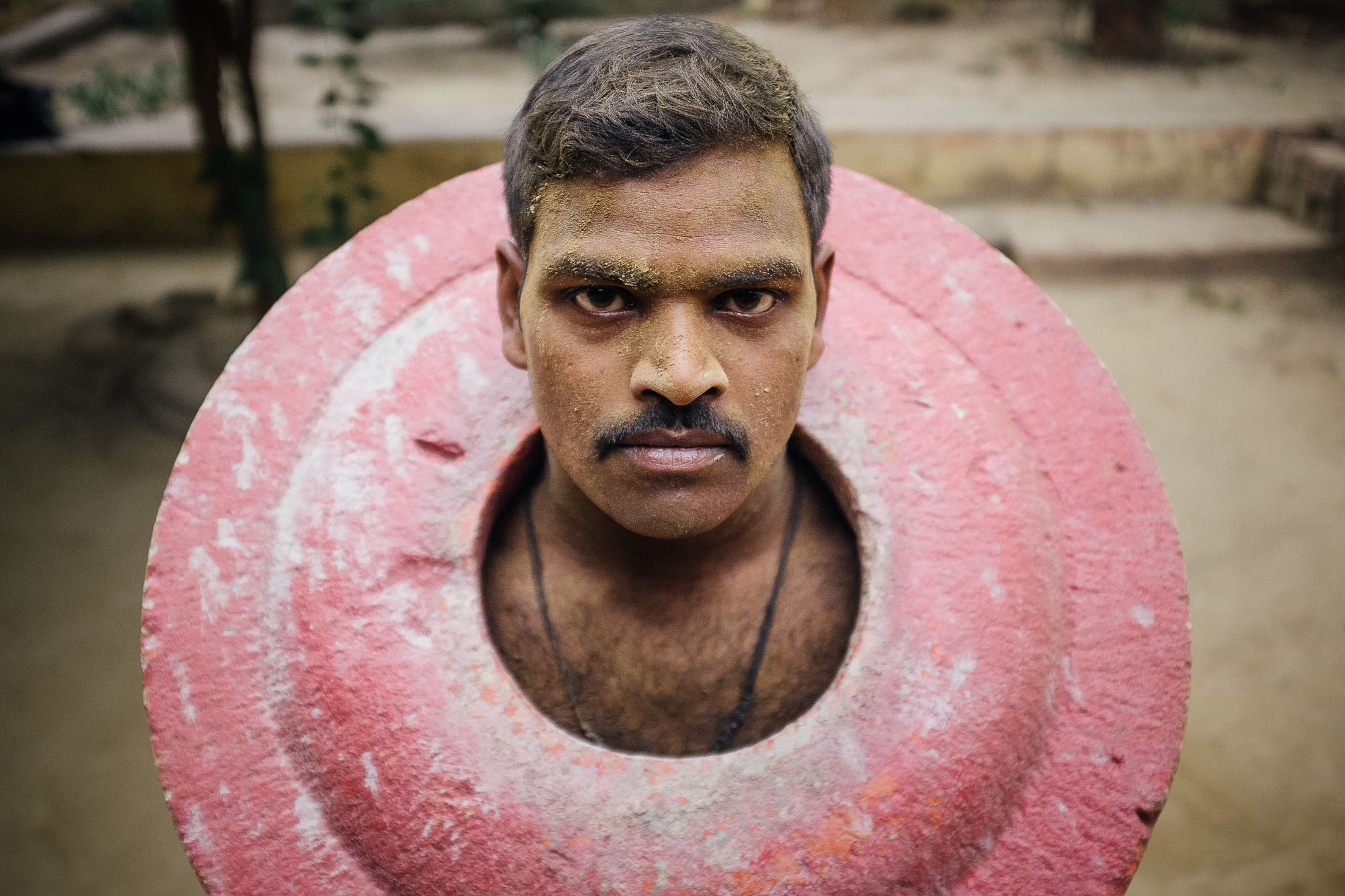
The training grounds were basic, but very serene. The ring reminded me of a temple, and there was a beautiful tree in the middle of the grounds. The various weights and equipment were made in traditional, and primitive, ways. Examples included solid wooden bats which are swung around your head, and a 50kg circular weight which you wear around your neck.

Kushti wrestlers Danny Fernandez Photography (9)

Kushti wrestlers Danny Fernandez Photography landscape (16)

The training began with the wrestlers entering the ring to pray. I couldn’t understand the words, but the feeling transcended language barriers. As with many other moments in Varanasi, there was a momentary sense of peace. These moments always took me by surprise, as Varanasi is the most chaotic place I have ever experienced. It was refreshing to see religion and tradition still deeply rooted in a land that often idealises the West.

My work began slowly, taking a more documentary style approach, allowing the wrestlers to get used to me being there. I kept a distance and began documenting their training and their gym. After a while (and after I put down my camera and began training with the wrestlers), they welcomed me to come closer to photograph them.

Kushti wrestlers Danny Fernandez Photography landscape (14)

Kushti wrestlers Danny Fernandez Photography landscape (8)

Despite my initial intimidation, the wrestlers were very friendly, and after they had warmed up to the camera, I felt like they began to show off. At times I had different wrestlers asking me to take photos of them as them attempted heavier weights and more difficult exercises. You could tell that they were proud to be continuing the Kushti tradition, and wanted it to be recorded.

Kushti wrestlers Danny Fernandez Photography (11)

Kushti wrestlers Danny Fernandez Photography landscape (6)

Kushti wrestlers Danny Fernandez Photography (15)

There are two things that I think helped me in this situation – firstly, I was a volunteer, working with the local youth, so they knew my intentions were pure. Secondly, I had been growing an awesome Indian style moustache that they all found hilarious (this actually helped me out in many situations during my travel!).

The highlight for me was when the wrestling began. Usually witnessing a fight makes me feel uneasy, but when I watched Kushti, I could appreciate the skill and dedication of their art. Perhaps it was the beauty of the surroundings, or the inner peace that seemed to radiate from the wrestlers, but I sensed absolutely no aggression on a personal level between the wrestlers. They seemed like a band of brothers.

Kushti wrestlers Danny Fernandez Photography landscape (4)

Kushti wrestlers Danny Fernandez Photography landscape (10)

Towards the end of the training when I was taking group shots, they insisted that I was included in the photos. The also insisted that I took my top off so that we were all the same. I felt like they had accepted me; somebody who has lead a completely different, and completely privileged life in comparison to theirs, but at that moment when we shirtless, bare footed and stripped of our normal identity, we were equal.

Kushti wrestlers Danny Fernandez Photography landscape (12)

In total I was lucky enough to spend 2 mornings with the wrestlers, and I felt extremely privileged to have seen this beautiful art form in action.

Upon leaving Varanasi, I regrettably didn’t have time to visit the wrestlers to say good bye, but I left my student with prints which they gave to the wrestlers. Apparently they loved them.

ALL IMAGES SHOT ON THE FUJIFILM X100S

– – – – – – –

To see more of Danny’s work, please visit his website at www.dannyfernandez.co.uk or follow him on Instagram at @dannyfernandez1984


Thoresby. The end of an era

By Chris Upton

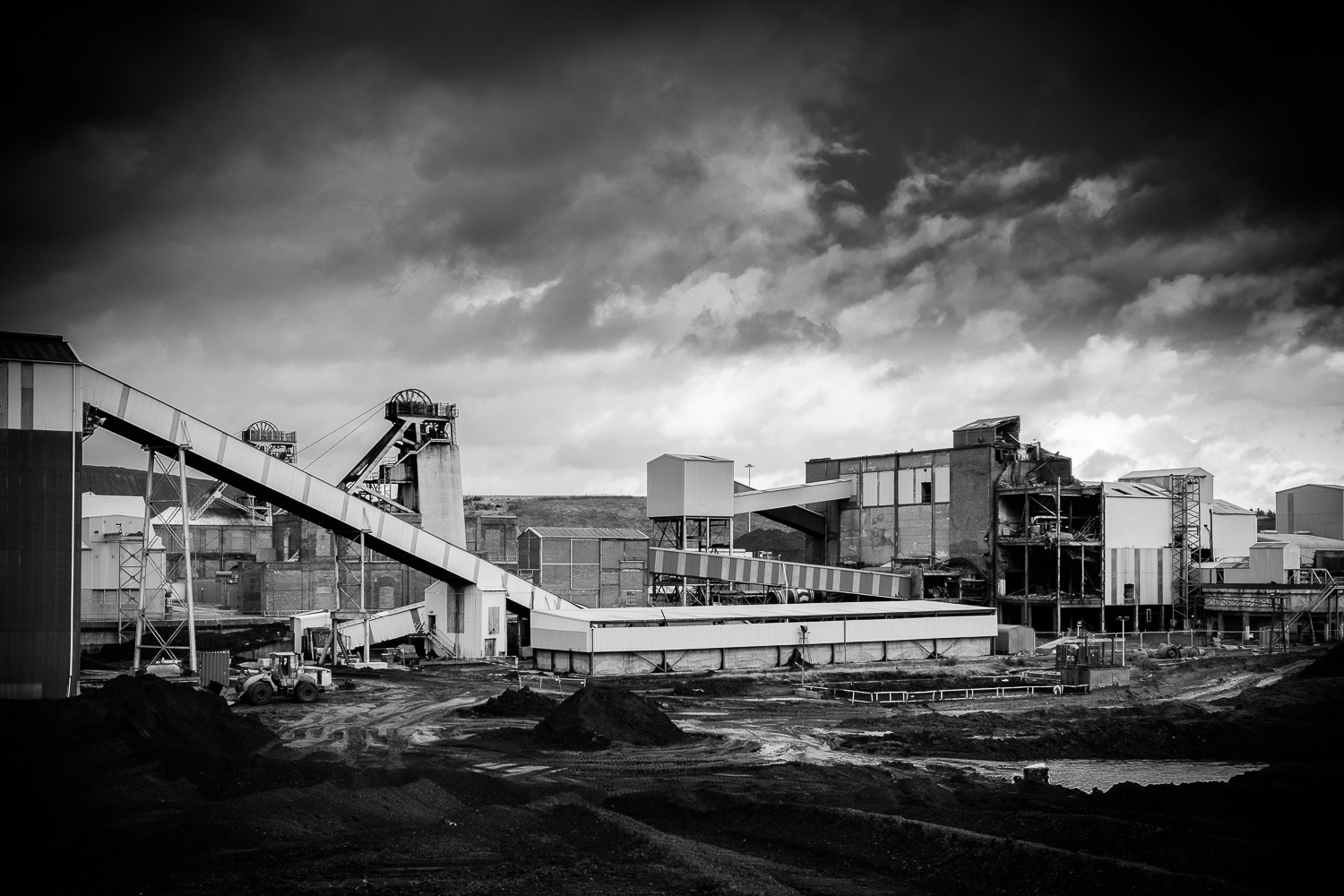
personThe 10th July 2015 was a landmark date in the history of Nottinghamshire. When the last shift at Thoresby Colliery finished on that day not only did it mark the end of 90 years of mining in the village of Edwinstowe but it signals the end of mining in Nottinghamshire.

The pit opened in 1925 and over the years has employed tens of thousands of local people. It was one of 46 coalmines in Nottinghamshire, which supplied more than 14 million tonnes of coal per year at their peak in the early 1960s.

The first two shafts were sunk to 690m in 1925 and subsequently deepened in the 1950s to the current pit bottom at around 900m depth.

Thoresby Colliery was the first to have fully mechanised coal production and also the first to achieve an annual saleable output of more than a million tons, it became a star performer in the British coal mining industry.

In the late 1980s it raised output to exceed 2 million tons, regularly smashing it’s production records, and the colliery became known as the Jewel in the crown of Nottinghamshire mines. A crown sits proudly on the headstocks in recognition of this achievement.

When the coal industry was nationalised in 1947 it employed a million men at 1,503 pits; prior to the miners’ strike in 1984, there were 180,000 miners at 170 pits. Today there are just two deep mines left, employing about 5,000 men, at Thoresby and Kellingley in Yorkshire. Kellingley will suffer the same fate as Thoresby and closes in the autumn.

UK Coal say market pressures have led to the closure of Thoresby Colliery. Coal generates more than a third of Britain’s electricity, but it is cheaper to import coal from countries such as Russia, South Africa and Colombia than to mine it in the UK.

For the past few months I have been recording the colliery, it’s buildings, plant and people for posterity. It was my aim to create a comprehensive record of the pit at a specific point in time immediately prior to its closure.

It was a chance conversation after giving a camera club lecture that started the ball rolling. A chap in the audience worked at Thoresby and was unfortunately in the first wave of redundancies. He asked if I would be interested in visiting the colliery to take a few pictures. It was a fantastic opportunity and I jumped at the chance. He put me in touch with the Health and Safety manager, I explained what I would like to do and we were off and running. It was at this point, after I had gained their agreement to document the colliery, that the full extent of the task dawned on me.

Starting the project

I visited the colliery on seven occasions, at different times of day, in different lighting conditions, including dawn and dusk. I planned each shoot but found that an outline plan whilst retaining a degree of flexibility to react to opportunities worked best.

At the outset I just toured the site to give me an understanding of the buildings, the machinery, the operation and the people. I took snaps to create a digital scrapbook to help me plan my approach. Essentially I was imbibing the atmosphere much as I would do when visiting a foreign destination for the first time. I wanted to get a real feeling for the place before I started the photography in earnest.

Health & Safety manager Grant was so supportive of my visits giving me more time than I could have wished for.  Even coming in at 3.30am for a dawn shoot and returning to work late in the evening to get “the best of the light” didn’t diminish his enthusiasm. In fact he joked that, after watching me, he would now be able to take the best holiday snaps ever! I hope he does.

20150617_thoresby_0049-Pano

Gear used

All of the images were shot on a Fujifilm X-T1 or X-E1 camera using a selection of Fujifilm XF lenses including the 10-24, 18-55 and 55-200 zoom lenses and 14, 23, 35 and 56mm primes. I also used a Nissin i40 flash for some shots, though preferred to use natural light wherever possible.

For my portraits, the unobtrusive Fuji equipment allowed me to concentrate on building a rapport with my subjects rather than intimidate them with a large DSLR and f2.8 lens combination. Miners might be tough guy’s and supermodels they certainly are not but they seemed to relax pretty quickly in front of my Fuji lenses.

20150701_thoresby_0111

20150319_thoresby_0288-Edit-2

There were several challenges to overcome not least the light levels that were typically pretty low in all of the buildings. Because of the poor light I used a tripod fitted with a ball and socket head for as many shots as possible. My cameras are fitted with arca swiss type plates so that I can switch from landscape format to portrait very easily and without having to waste time readjusting the tripod.

The mix of different light sources from tungsten, to fluorescent and natural meant it was difficult to assess the ideal colour temperature. However the decision early on to convert all the images to black & white certainly helped counter that problem!

In a coal mine dust was another inevitable and unavoidable issue. As the miners told me it’s not only the dust you can see that is the problem and I was very careful when changing lenses and using two bodies certainly helped. Thankfully the in camera sensor cleaning worked well and I was pleasantly surprised at the minimum amount of dust spotting required.

20150422_thoresby_0189-HDR-Edit

Working on a project

As my photography has progressed I have found that I prefer to look at a series of images that tell a story rather than seeing individual impactful pictures. Whilst I have adopted this storytelling approach in my travel and landscape photography this project was a whole different ballgame. This wasn’t going to be a six or ten image set but a large body of work that had to be planned and created in a certain style. I found this experience fascinating, though at first it was pretty daunting. However after a couple of visits I had captured some shots I was very pleased with and the plan started to fall into place. I think the discipline required in a project such as this has helped me to improve my photography and it felt good to be succeeding in this new genre of social documentary photography.

In an attempt to capture the “feel” of the colliery, and to bring completeness to the project, I also recorded various sounds around the pit and organised a series of interviews with miners past and present. I will be producing mini AV’s including these sounds and using the miner’s comments in my presentations.

20150115_thoresby_0097-Edit

20150115_thoresby_0006-Edit

Stretch yourself

It is very easy to stick to what we know in photography and limit yourself to a particular genre. Whilst my experience as a travel photographer, where you are required to be adept at many different genres, undoubtedly helped me there were aspects of this project that were not so familiar. As a result I feel I have grown as a photographer and I would urge you to move out of your comfort zone and try something new. There will be similar opportunities in your area, seek and ye shall find!

20140723_thoresby_0046-Edit

Capturing a piece of history

As I progressed through the project I realised that I was not only taking pictures for myself but that I was actually recording a piece of history, an enduring record of a place that, in just a few months time, would be gone forever. With that came a feeling of responsibility, not only to do myself justice but also to represent the life and work of the mining community. Apart from my family photographs, this project is the most important and worthwhile piece of work that I have ever created. Whilst there is clearly interest in the work now, what will its importance be in another 10 or 20 years?

20150115_thoresby_0052-Edit

A personal perspective

This project has been a fantastic experience. It has improved my photography, taken me into a different genre and enlightened my knowledge of an otherwise mysterious industry.

It has been a pleasure to work with the team at Thoresby, without whom I would not have been able to produce this body of work. Whilst the colliery may not draw its workers from the immediate village area, as in years gone by, their camaraderie, team spirit, hard work and no nonsense attitude in this tough and uncompromising industry epitomise the best of British workers. The closure of Thoresby truly is the end of an era.

20150513_thoresby_0257

20150513_thoresby_0267

What next?

I feel it is important to showcase my images to as wide an audience as possible, especially in the local area. Therefore, after securing feature in the local and national press, I will be staging a major exhibition in Nottinghamshire and am planning to produce a book – more details to follow.

To see more Thoresby images and to keep updated on the project developments please visit my website  www.chrisuptonphotography.com

20150422_thoresby_0301-Edit-3


Desert Road Trip – California and Nevada

by Ian Boys

I’m a people photographer normally – portraits, the odd wedding and so on. But on this trip I decided I’d give landscape photography my first serious attempt ever, after 25 years of shooting. Of course, I’d taken landscapes before when I happened to come across something that looked good but this was different: I’d make sure I got to the right place at the right time for the best light even if it meant sleeping (or failing to sleep!) in the car.

Before I went I researched my route using Flickr and Google maps. The latter was especially helpful not just for seeing if a mountain would be lit at dawn or dusk but also to see what other images had been taken nearby. This pointed me towards quite a few fascinating sights that I would never have come across otherwise. In the very bottom right hand corner of a Google maps screen is a double up arrow that reveals scenes you may not otherwise have considered.

A08

Dear reader – I even bought a tripod. Many of you will wonder what the big deal is but it went so against my usual style of shooting that it felt like a jet pilot shopping for a submarine. But as it turned out it proved invaluable.

One last act of preparation – I looked at the absolutely stellar landscape work shown on the fredmiranda.com landscape forum and learned about things like focus stacking and night photography, things I vaguely knew about only in theory. One night before I left I went out and practised the techniques, with terrible results. But that’s how I learn.

Why the Desert?

In 1993 I worked in Somalia during the war there and travelled and lived in the northern desert communities. I fell in love with the open spaces, the peace of the evenings and the huge skies. Since then I’ve visited other deserts, notably on the India-Pakistan border and Arizona. I like the open road, the small communities and the sense that in the desert everyone can just be themselves. It is the polar opposite to the metropolitan posing of modern cities. In England I live in a small village on the doorstep of the Peak District National Park. Manchester is very close but I rarely visit.

I wanted to shoot the road, the space, the ghost towns, the mountains and the night skies, with a detour to Yosemite. There are so many fantastic wilderness parks on the Nevada/California border that going to LA or San Francisco was never an option. One tip though – when they say don’t walk in parts of Death Valley after 10 am they mean it! I once walked out at night and got back to the car at 0845 and it was already so hot. Those pictures of graves aren’t put there for your amusement.

A05

Kit List

For the last several years I have travelled only with a Fujifilm x100 series camera – Hong Kong, New York, Volgograd, Sri Lanka and elsewhere. The x100 series are superb, not only because of the results but also because of their size and weight. But this time I’d need a bit more choice in lenses.

I decided to take the X-T1 and the 14, 23 and 56mm lenses. These are widely recognised as the best primes available (although the new 16 may have usurped the 14, I don’t know for sure yet). The 23mm would be my standard landscape lens, the 56mm would give me the extra reach one sometimes needs to isolate part of the scene and the 14mm would be perfect for night sky photography as it allows a 25 second exposure under the “600 rule” that governs whether stars are rendered as points or streaks.

The 18-55mm was under consideration but although it’s good, these other lenses are fantastic. The difference does really show.

I also took my new Manfrotto 055 tripod, 4 batteries and a remote cable release as well as a charger that allowed the batteries to be recharged while driving. Definitely a bonus for this kind of trip. I also took a big LED video light that allowed me to get set up in the moonless desert night and sometimes to light paint foreground rocks. Backlit dials and controls would be nice but are probably impractical in a small camera.

Technical Notes

Although I shot everything in JPG+RAW, all the final images except the night shots were actually from the in camera JPG’s. I used the Astia setting for all of them – it helped keep the set coherent and provides great colours without the overblown look that Velvia brings. In particular Astia renders skies very well, better (to my taste at least) than any of the other settings.

A15

In general, I shot in Aperture Priority and used the Exposure Compensation Dial to give me the look I wanted. For some shots, especially those shot in the evening or at night I used manual exposure. One morning I rode the shutter dial all the way from 2 minutes to ¼ second as the sun rose over a freezing mountain lake. I was inside an aluminium shelter bag loving every minute of it as the light changed. The shots were terrible, as you’d expect from someone who has never done that kind of shot before. As I say, I’m not a landscape photographer but I’m so glad I saw it.

Some things did work better than expected though. Focus stacking involves sticking your camera on a tripod (weird!) and gradually changing focus so that over the course of a dozen shots or so you have focussed on all parts of the shot. You then combine them automatically (or manually, for the masochists) in Photoshop. The 14mm is absolutely perfect for this as the manual focus “pull clutch” allows you to gradually work the focus through the scene at an optimum aperture for sharpness of f5.6. In combination with the tilt screen and focus peaking (Red High for me) of the X-T1 it really couldn’t be easier, certainly much easier than with the optical viewfinder of a standard DSLR. Because it was a new technique for me, I also took a “safety shot” at f11 in case the intricacies of the procedure were beyond me but actually it is simple and the results were very much better than with the single high depth of field shot. It doesn’t matter how many times you read about it, doing it in the field is the best way to learn it. Here is a focus-stacked shot from Death Valley:

A06

Another technique that worked well was ultra high resolution patchwork shooting with the 56mm, where I’d take perhaps 20 shots of a scene in rows and columns and stitch them together afterwards. I’m not really sure what I’d need a 200 megapixel file for but it’s nice to know it works really well and that you can zoom in one the tiniest detail from miles away. One day I’m sure I’ll find a use for it and now that I’ve done it, it’s a technique in my arsenal. Sometimes though it was more practical to use the sweep panorama feature. In this particular shot I tried both techniques (a 4 shot manual blend and the in-camera panorama) and the in camera stitch was smoother, although lower resolution. At 6400 pixels across, it still has plenty enough for me.

A13

Night photography was fantastic in the desert: there are few lights to begin with and in Death Valley those that exist must be shielded from the sky. This was my first ever attempt at a Milky Way shot (thank you Youtube!) and as laughable as it might be to the more experienced night shooters, I’m rather pleased with it.

A02

Notes on individual shots

This shot was actually taken on Aperture Priority from the driver’s seat with -2 stops exposure compensation dialled in. I was using the 23mm at iso 1600. The extraordinary EVF of the X-T1 let me ensure that there was still some light visible on the ground while at the same time allowing me to make sure the highlights weren’t blowing out. The high dynamic range of the X-T1 kept it all together.

A09

This is a stitch of two horizontal shots taken at Mono Lake. There’s not a stack more to say about it except that a single 14mm shot would have looked quite different. Modern tools make this kind of stitching quite easy, even for a landscape novice and the methods are a simple search away.

A26

This was a ten second shot of my hire car. I had stopped for a sunset but frankly I’ve seen better. I did like the way the car looked though and with the interior light on and a long enough exposure to lighten the sky and ensure passing traffic left pleasing trails and illumination I think the shot works. It was also shot with my 56mm lens, perhaps an odd choice but something I’ll bear in mind to try again next time. I love that lens.

A19

Here’s a very different kind of car shot, a quick snapshot as I crossed the street. This old Mustang matched the sky and worked well with the yellow lines. It is (clearly) a quick grab shot – I was on my way to get a burger after several hours shooting one searingly hot morning – but it is a testament to how quickly the X-T1 will react if necessary. It starts up quickly, focuses quickly and fires without shutter lag. That’s what I want in a camera.

A24

OK, two last shots before I’m told to knock it off! Nevada’s an odd place. But I’d never have found either of these without doing some research before I went.

A20

A27

So in summary – every camera is a compromise. But the X-T1 offers high quality, superb lenses, light weight and bulk, accurate focus, exposure and white balance, a tilting LCD that is way more useful than I thought and a very high chance of getting the right photo on the first shot thanks to the excellent EVF with its exposure preview, focus peaking, colour rendition and other features. I use it for all my more serious work, together with the x100T. But the X-Pro 1 still has a piece of my heart.

You can see more of Ian’s images on his Flickr page here.