Month: November 2015

Why I love: the Fujinon XF56mmF1.2 lens

Our X-Photographer “Why I love” XF lens series continues with our super sharp, super fast aperture prime lens, the FUJINON XF56mm F1.2 R.

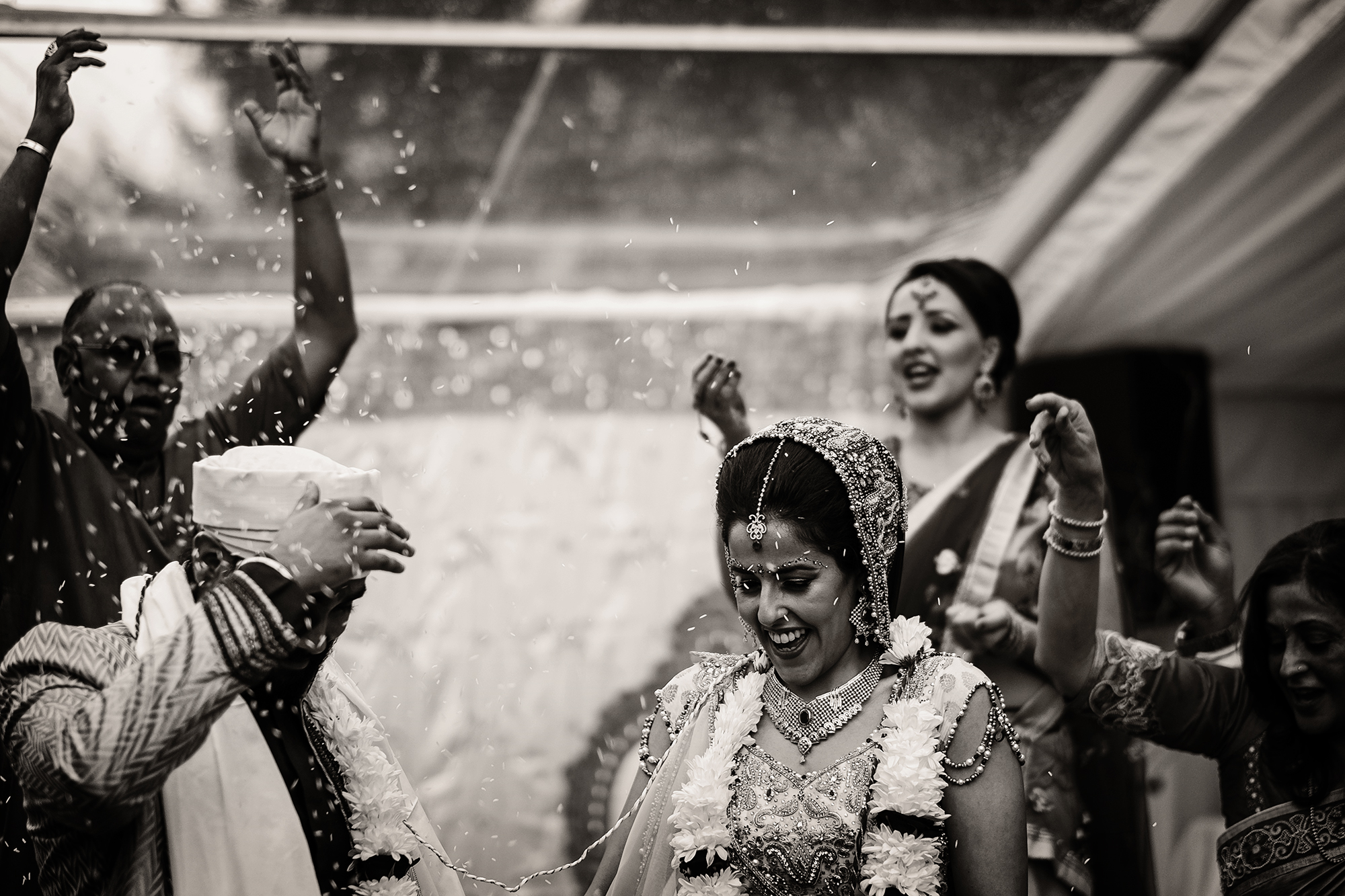
Kevin Mullins – Reportage Weddings

quote-left
Most wedding photographers want to be able to separate their subjects from the background at some point during the day and the amazingly fast 1.2 aperture of the 56mm (85mm full frame equivalent) allows me to do that. Even when I’m shooting fast moving subjects, such as a confetti throw, I will sometimes want to offer a luscious depth of field and there is no other lens that offers that f1.2 aperture that allows me to do that right now. This lens, along with the 23mm lenses are my goto lenses for every single wedding I shoot.quote-right

Click here to see more of Kevin’s work


 Derek Clark – Portraits

quote-left
The super fast aperture of f1.2 and the full frame equivalent of 85mm make this lens an essential part of my kit. It doesn’t matter if I’m shooting a documentary wedding, a jazz artist in a dimly lit room or a well lit portrait, the 56mm lens has a unique look and produces some of the best shallow depth of field creaminess of any lens I’ve ever used. Like all the Fuji XF lenses, the 56mm is also razor sharp and it beats the best of the high end 85mm lenses from the other big manufacturers. I haven’t tried the 90mm f2 yet, but it looks like that too will be an amazing portrait lens.quote-right

Click here to see more of Derek’s work


Ben Cherry – Environmental Photojournalism

quote-left
Many photographers came to the X-Series because of this lens. Offering F1.2 at 85mm equiv. focal length in a compact package that happens to be one of the fastest focusing lenses in the range… The F1.2 effect has so many benefits, from striking portraits to being invaluable in low light conditions. The later is particularly helpful for me. In tropical rainforests you don’t often see wildlife from a far but instead stumble across it. Here the F1.2 helped to capture this baby elephant dozing, ISO1600 F1.2 1/120sec. If this were with a F2.8 lens I would have been shooting at 1/30sec, risking motion blur as I tried to contain my excitement.quote-right

Click here to see more of Ben’s work


Paul Sanders – Landscape

quote-left
The 56mm F1.2 is my most used lens, it’s almost always the first lens I reach for on every shoot. I love the narrow depth of field and the super fast focusing. As a landscape photographer people are surprised when I say that I often shoot with the lens quite wide open, but for my style of long exposures where I’m trying to create a sense of infinite space the wide aperture looses the background nicely obscuring details I don’t need in the image. quote-right

Click here to see more of Paul’s work


Lens_56mm_Black_FrontClick to see retailers selling the XF56mm lens

Lightning Photography 101

BY BEN CHERRY
Ben Cherry Lightning-4
Witnessing a lightning storm can be frightening, but it can also be energising, certainly to photographers. The thrill of capturing lightning in a frame is like nectar to a photographer’s calling. Before we get consumed by this exciting subject it is important to remember that lightning storms can be extremely dangerous so please take suitable precautions when around a lightning storm; photographing lightning is great but it is not worth putting yourself in danger.

Lightning occurs all around the world, at different frequencies and strengths. I’ve been lucky enough experience a good few lightning storms, with my most memorable occurring in the tropics. But this isn’t to say that you can’t get great lightning shots wherever you are, all you need is some knowhow and then the lightning! Here is a brief 101 of lightning photography to get you started.

“It’s all about the light”

Like a flashgun, lightning is over in but a moment, and like flash if it is the predominant (or only) light source then it acts rather like its own shutter speed.
When using a flash at night for example, you might set the power output of the flash and then move to the camera settings. Generally speaking you turn the shutter speed to the maximum flash sync speed and then use ISO & aperture settings to compensate for the power of the flash. If it is too bright you increase the aperture and/or drop the ISO, if it is too dark then you do the opposite; much the same applies to lightning photography.
The intensity of the light from lightning is affected by two things:
The first is the power of the lightning: if it is a particularly large strike then if you’re set up for some previous strikes that weren’t as powerful, it’s more than likely the lightning will have blown out your highlights in the image.

The second thing to affect the light intensity is the distance between you and the lightning itself. Generally, lightning storms are large storm clouds which means that the lightning can be very close by one moment and then many miles away the next. These fluctuations in light can’t really be predicted but it is something to be aware of, and even to account for by increasing your aperture by a stop more than required to save your highlights.

Ben Cherry Lightning-3

Composition 

Lightning is spectacular by itself but sometimes a scene can be made all the more special by being aware of your surroundings and looking for things that could add to the moment.
If you’re lucky enough to have something of interest in the foreground then see if you can add this to the electric scene. If there is still some ambient light around then you should be able to illuminate the foreground via your long exposure. If not, then illuminate using a torch or flash. This simple addition to the frame can help to better portray the scene. However bear in mind that you want to photograph as much of the lightning as possible so a sky-dominant frame will help to ensure this.
Ben Cherry Lightning-9

Intervalometer

Built into many of the X-Series cameras, an intervalometer allows you take a set number of photos with pre-determined intervals between each shot, this is set by the photographer and can be between 1 second to 24 hours. This is very helpful for lightning photography as you can set the camera to take a series of 30 second exposures (or less if this is overexposed) and sooner or later you’ll capture a lightning strike within one of those frames.
Ben Cherry Lightning-7

Be patient 

The curse of photographing lightning is you can never guarantee where or when it will strike so you should always be prepared to wait a while for a good shot!  At the same time though, be aware of where the storm is moving to and adjust your composition if it is moving out of frame.
Ben Cherry Lightning-5

Shoot RAW

This really can make all the difference! Because the exposure changes so frequently due to the intensity of the lightning, you cannot always achieve the perfect exposure 100% of the time. A RAW file records so much information compared to a JPEG that you can recover many more files which have the highlights blown out according to the histogram.

Daytime

If you come across a lightning storm during the daytime my method is to set up the aperture and ISO to the most light-demanding settings possible (e.g. F22 ISO 200) and then simply use the intervalometer to repeat the suitable shutter speed. It can produce some interesting results.
Ben Cherry Lightning
Let us know if you’ve caught any lightning photos using the hashtag #fujilightning
Ben Cherry Lightning-2

Ben CherryA little about Ben – Ben is an environmental photojournalist, zoologist and Fujifilm X-Photographer. His passion is showing the beauty and fragility of the natural world. Find more of his work at:

Backpacking India with Danny Fernandez

By Danny Fernandez
Varanasi blog (25 of 56)
During the first half of 2014, I decided to pack my bags, say goodbye to what I knew as ‘life’ and spend 3 months traveling around Northern India. This blog is to share my journey with you. All my images were shot on the FUJIFILM X100S and processed in Lightroom.

Varanasi, or ‘the holy city of India‘ sits on the banks of the river Ganges, in Uttar Pradesh. Varanasi (or Banaras) is known for being the most spiritual part of India, and this is reflected by the amount of devotees attending various religious ceremonies every day. Some Hindus believe that death at Varanasi brings salvation. It became my home for 6 weeks, and this is my experience of it.

Varanasi blog (47 of 56)

My entire trip was somewhat based around a 6 week stay volunteering in Varanasi. Allow me to backtrack for a moment and explain:

A year before arriving in India I was going through a bit of a rough time, and decided that I needed something to focus on; something new, exciting and adventurous. It had been 5 years since I had last strapped on my backpack and been for a ‘big trip’. As I had always wanted to visit India, and always wanted to volunteer, I began googling ‘volunteering in India’. After getting over the shock of the extortionate price asked by many charities to volunteer, I added in the keyword ‘Free’ to my Google search. After reading through a few posts, I found an article titled ‘top 1o places to volunteer for free, in India’ (or something along those lines). At last I found a company called Fairmail. In a nutshell, Fairmail works with children from disadvantaged backgrounds, trains them in photography, encourages them to explore their creativity and take photos which are in turn made into greeting cards and sold worldwide. The children receive a percentage of the sales, which pays for their education, housing, medical etc.

I applied to become a volunteer there, and joined the 12 month waiting list.

Fast forward 12 months and I step off an 18 hr train journey tired and hungry (I had forgotten to bring snacks so had bought some spicy bombay mix which served me as lunch, dinner and breakfast).

I was met by Dhiraj, a former student and one of the managers of Fairmail Varanasi. As we were driving to my guesthouse, the first thing which hit me was the apparent lack of any kind of road rules. I had felt the same way when I first arrived in Delhi, but this was next level when it came to driving. The roads were a mess of rickshaws, excrement, bikes, potholes and goats.

It took quite a few days to adapt to the pace of Varanasi. I remember constantly being on edge as I walked around during the first few days, as at any one time you could: Get charged by a cow/get run down by a car, motorbike or rickshaw. This was mixed with the constant loud noise of the traffic,  the ceaseless bombardment of flies, and the heat (which reached a scorching 47°C while I was there. Let that settle in for a moment. Forty seven degrees). Varanasi is not the place to go and relax.

Varanasi blog (51 of 56)

I’m aware that I may be sounding negative, but for all the stresses and difficulties faced, there were many moments of beauty.

The city sits on the banks of the ‘holy river’ – the Ganga. Each morning devotees awake early to bathe in the river and each night, Aarti is performed, where priests perform music while burning incense in front of the eyes of hundreds of followers. It is truly a beautiful sight.

Varanasi blog (23 of 56)

Varanasi blog (26 of 56)

Varanasi blog (9 of 56)

varanasi extra (1 of 1)

The first 3 weeks of my stay were spent in a guest house in Assi Ghat (Ghats are essentially temples, which line the Ganges river). During my last 3 weeks, I decided to move into the Fairmail office, in Nagwa (a village to the south of the Ghats). My experience here was great, as it allowed me to glimpse into the lives of those living in this area. As I was living in the office, I was also able to spend much more time with my students of Fairmail.

Varanasi extra sadhu (1 of 1)

varanasi extra1 (4 of 10)

Varanasi blog (52 of 56)

varanasi extra1 (2 of 10)

Varanasi blog (2 of 56)
Varanasi blog (6 of 56)

Varanasi blog (4 of 56)

Varanasi blog (19 of 56)

Varanasi blog (16 of 56)

Varanasi blog (21 of 56)

Varanasi blog (28 of 56)

Varanasi blog (6 of 7)

Varanasi blog (34 of 56)

Varanasi blog (37 of 56)

Varanasi blog (38 of 56)

Varanasi blog (53 of 56)

varanasi extra1 (3 of 10)

My experience volunteering at Fairmail was also excellent. Alongside other volunteers, we taught the students lots of useful tips for taking better photos. One thing which I contributed was the use of flash photography in their work.

Varanasi blog (5 of 7)

The locals rightfully say “Full power, 24 hours”. Truer words have never been spoken.

Varanasi blog (4 of 7)

Varanasi blog (3 of 7)

Varanasi blog (1 of 7)

Varanasi blog (55 of 56)

Varanasi blog (54 of 56)

Varanasi blog (50 of 56)

Varanasi blog (43 of 56)

Varanasi blog (40 of 56)

Varanasi blog (41 of 56)

Varanasi blog (39 of 56)

Varanasi blog (33 of 56)

Varanasi blog (36 of 56)

Varanasi blog (12 of 56)

Varanasi blog (7 of 56)

Varanasi blog (3 of 56)

varanasi extra1 (10 of 10)

varanasi extra1 (9 of 10)

varanasi extra1 (8 of 10)

varanasi extra1 (1 of 10)

I highly recommend a visit to Varanasi for anyone visiting India. Be prepared for a total bombardment of all your senses, but once you adapt to the pace of life, you might learn to love it.

See more of my work here.


Is the Fujifilm X system ready for motorsport?

Recently we were lucky enough to spend some time with four professional motorsport photographers at the 6 Hours of Fuji event at the Fuji Speedway in Japan. All four of these guys have been shooting with Fujifilm X series cameras and lenses as their main systems for a varying number of years so we asked them about their experiences.

If you are thinking about making the switch and are not sure if the system is ready yet, check out these videos below!


John Rourke from the UK

https://www.youtube.com/watch?v=RQnOHDRyfck


Dirk Bogaerts from Belgium

https://www.youtube.com/watch?v=n-RoHpI5xz4


Andrew Hall from Australia

https://www.youtube.com/watch?v=lzpj_vEJpqY


Jeff Carter from the UK