Month: October 2015

Iceland, a most curious island – Part 2

Part 2 of Danny Fernandez’ Icelandic adventure; it will inspire, teach and make you want to visit this beautiful country. If you missed part one, read it here.


By Danny Fernandez

The Highlights

The overall highlight (sorry if this is cheating) was the nature itself. The country is very varied in what it has to offer, and the scenery changes dramatically. You could start the day in rolling green hills, cross the icy snout of a glacier and pass moss covered lava fields in the space of a few hours. There are so many waterfalls, ranging from mighty to tiny. At one moment my girlfriend and I counted 25 waterfalls on the mountain facing us. I would consider it a good day if I saw just one waterfall, but on some days we probably saw more than 100.
Iceland Fuji blog Danny Fernandez Photography (2 of 35)
Iceland Fuji blog Danny Fernandez Photography (22 of 35)
Iceland Fuji blog Danny Fernandez Photography (17 of 35)
Iceland Fuji blog Danny Fernandez Photography (24 of 35)
Iceland Fuji blog Danny Fernandez Photography (11 of 35)
Iceland Fuji blog Danny Fernandez Photography (28 of 35)
Iceland Fuji blog Danny Fernandez Photography (33 of 35)

I kinda of fell in love with the Icelandic horses. They are such beautiful creatures. They all seem to be very tame and friendly. At almost every chance, I would stop the car to get photos of them. I was desperate to get beautiful backlit photos during the golden hour, but unfortunately, that opportunity never arose.

There is no more sagacious animal than the Icelandic horse. He is stopped by neither snow, nor storm, nor impassable roads, nor rocks, glaciers, or anything. He is courageous, sober, and surefooted. He never makes a false step, never shies. If there is a river or fjord to cross (and we shall meet with many) you will see him plunge in at once, just as if he were amphibious, and gain the opposite bank.
— Jules Verne, A Journey to the Center of the Earth

Iceland Fuji blog Danny Fernandez Photography (3 of 35)
Iceland Fuji blog Danny Fernandez Photography (4 of 35)
Iceland Fuji blog Danny Fernandez Photography (5 of 35)

Due to the geothermal activity, there are many natural hot springs and pools. We visited Seljavallalaug (one of the oldest outdoor pools in Iceland, built is 1923), which was spectacular. The pool is set in a picturesque valley next to a river. It takes a short trek to arrive there, but it is definitely worth visiting. Prepare to bathe in algae filled water as the pool is cleaned just once each summer.

Iceland Fuji blog Danny Fernandez Photography (9 of 35)
Iceland Fuji blog Danny Fernandez Photography (10 of 35)

On the second night of the trip, we were fortunate enough to witness the northern lights in Vik. This was an incredible experience. As I had only seen photos/time lapses of northern lights, I was surprised at how they move and dance across the sky. At times they were like the final whisps of a flame, in an attempt to stay alive, at other times they appeared to explode in the sky, spreading in all directions. The last scene of the spectacle looked like ten people flashing torches on the clouds, illuminating them as if the gods were having a party.

Iceland Fuji blog Danny Fernandez Photography (12 of 35)

Skógafoss is one of the biggest waterfallls in Iceland (being 25m wide and 60m tall). We visited early in the morning and there was a rainbow fixed at the base of the waterfall. There is a walk which you can do to the top, which is well worth it. However, I thought the most impressive views were from the base.

Iceland Fuji blog Danny Fernandez Photography (14 of 35)

About 9km from Skógafoss is a wreckage of an US Navy airplane which crashed in November 1973 (fortunately no one died). The remains of the plane can be found on Sólheimasandur black sand beach. Arriving to the location was a little difficult (without a 4×4) and we had to walk a few kms across a barren landscape to get there. We were blessed with sunny weather and really enjoyed exploring the wreckage (you can go inside it, which is a little eerie).

Iceland Fuji blog Danny Fernandez Photography (16 of 35)

Jökulsárlón is a glacial lake where huge chunks of ice break off the Breiðamerkurjökull glacier and enter the Atlantic ocean. This place was phenomenal. We arrived just before sunset, and watched the sky turn red (contrasting the deep blues of the ice) as a thick mist rolled over the glacier and onto the lake. There were seals swimming in the water.

Iceland Fuji blog Danny Fernandez Photography (18 of 35)

A short walk from Jökulsárlón is an area known as ‘Icy Beach’, which is where the lake actually meets the Atlantic. The lake and the ocean push huge lumps of ice around and many of them get washed up on the black volcanic sand. We spent a night and the following morning here and the icy sculptures are forever changing shape and being replaced.

Iceland Fuji blog Danny Fernandez Photography (19 of 35)
Iceland Fuji blog Danny Fernandez Photography (20 of 35)

I love the Eastern Fjords and we spent 2 days driving along them. The fjords are so vast, beautiful and peaceful. I think these were extra special to me as I had never seen a Fjord before. There is one town called Seyðisfjörður (population 665) which I particularly loved. It seems to have a strong artistic community there, with some galleries, public sculptures and beautiful walks. It’s the kind of place that makes me want to rent my flat out and spend a summer there.

Iceland Fuji blog Danny Fernandez Photography (37)
Iceland Fuji blog Danny Fernandez Photography (26 of 35)

We went whale watching in Húsavík, an extremely pretty fishing town. There are many species of whales and dolphin which visit the bay, and we were fortunate enough to have a humpback whale swimming around and under our boat for around 15 minutes. It was the closest I’ve ever been to a whale and was a very memorable experience (freezing cold though!).

Iceland Fuji blog Danny Fernandez Photography (29 of 35)
Iceland Fuji blog Danny Fernandez Photography (30 of 35)
Iceland Fuji blog Danny Fernandez Photography (31 of 35)

Akureyri is Iceland’s second largest urban area as is located in the North of the island. When we drove into the city we were taken aback by seeing so many cars and people. We had come from days of driving through almost unpopulated landscapes and passing perhaps 10/20 people a day, to a city with traffic (albeit not much).

Our trip began and ended in Reykjavik. We spent out first and final 4 days there. Reykjavik is a very nice city, and we particularly enjoyed the many cute cafes. We didn’t experience the nightlife which is it renowned for, but heard it’s very good. I was really impressed by Harpa, a beautiful mirrored concert hall, and Hallgrimskirkja, a modernistic cathedral in centre of the city. We also enjoyed walking along the old fishing harbour and exploring the beautiful botanical gardens (with a nice little cafe in the middle of the gardens).

Iceland Fuji blog Danny Fernandez Photography (1 of 35)

Other general observations.

The country is extremely sparsely populated. According to Wiki ‘it has a population of 329,100 and an area of 103,000 km2 (40,000 sq mi), making it the most sparsely populated country in Europe.’ Bearing in mind that more than two-thirds of the population live in Reykjavik, when you leave the capital city, it’s gets very, very lonely.

Iceland Fuji blog Danny Fernandez Photography (13 of 35)

I got the impression that nature seems to be the highest priority. It appears as if no river were diverted, or mountainside cut into, in order to accommodate humans. There seems to be a harmonious balance of humans living alongside the beautiful virgin nature of the country.

Iceland Fuji blog Danny Fernandez Photography (32 of 35)

Being a witness to the untouched landscapes of Iceland was a unique experience: being able to see what the world may once have been like, before humans came and messed things up.

Iceland seems to be a good model for other countries:

‘Consistently rated the most peaceable of all countries in the world by the Global Peace Index, Iceland has reduced its military expenditure to zero, has no armed forces, and has reduced the inequality gap between rich and poor.’ -Scilla Elworthy

The Icelandic people are very jolly and most of their surnames end in ‘son’.

The names of places are mostly unpronounceable.“Eyjafjallajökull”. ‘Nuff said.

There are sheep everywhere (there are many more sheep than people). They often run across the road so you have to be very careful as you drive.

No one uses cash. In fact I only saw cash twice in 16 days. You can pay for everything by card.

Because of the lack of people, it was great to get out of the car and observe the silence.

Iceland Fuji blog Danny Fernandez Photography (7 of 35)

Driving along, you can see many huge boulders that have fallen down the sides of mountains. These things can be huge – easily large enough to smash through a house or destroy a car.

Everything is very expensive (at least compared to Barcelona, where I live).

They eat all parts of animals (the least appetising being boiled sheep’s head and ram’s testicles). In Iceland, I was happy to be a vegetarian.

They have their own type of yoghurt (but it’s not actually a yoghurt) called Skyr, and it’s delicious.

There were many more obese people that I expected (which could be explained by their love of hotdogs and coca-cola). I didn’t see any vikings.

They seem to like good coffee and have many cute cafes with good cakes (at least in the cities).
Iceland Fuji blog Danny Fernandez Photography (15 of 35)
Iceland Fuji blog Danny Fernandez Photography (6 of 35)
Iceland Fuji blog Danny Fernandez Photography (8 of 35)
Iceland Fuji blog Danny Fernandez Photography (23 of 35)
Iceland Fuji blog Danny Fernandez Photography (27 of 35)

What’s next?

On the way back from Iceland we had to stop over for a few hours in Oslo. Flying over Norway made me want to visit! The older I get, the more I realise my love for nature (perhaps as I’ve always lived in cities). I love forests and lakes and Norway seems to be full of them. I definitely want to experience the northern lights again, and they can be seen there.

Reflections on the trip.

I couldn’t give a higher recommendation than to visit Iceland, and think everyone should see it in their lives. It is unlike anywhere I have ever seen, and the beauty of the place is breathtaking. We were extremely lucky with the weather (it was sunny most days of our trip) and this made a huge difference to our experience. I would recommend visiting in the summer, but I imagine it would be equally as beautiful (but in a different way) during the winter (plus you would see the northern lights in the winter). It is an expensive trip, but it’s one which I will never, ever forget.


To see more images from Danny’s trip to Iceland, please click here.

Iceland, a most curious island – Part 1

By Danny Fernandez

I could not help observing with interest the mineralogical curiosities which lay about me as in a vast museum, and I constructed for myself a complete geological account of Iceland, [a] most curious island.
— Jules Verne, A Journey to the Center of the Earth


Iceland; a place which I had never considered visiting before, became the destination of my most recent, and most beautiful venture.

Why Iceland?

The reason I had never considered visiting Iceland was due to a lack of knowledge of this magnificent country. The name ‘Iceland’ conjured images of Björk, vikings and ash clouds. However, around 1 year before the trip, my girlfriend (who had been to Iceland 6 years ago) suggested that we visit. As I began looking at google images of Iceland, I soon realised that there would definitely be much more to see than Björk, vikings, and volcanoes (I acknowledged that the likelihood of seeing the first two were slim.) I reacted to the image search by quietly saying colourful profanities under my breath. It was at that point that my mind was made up, and soon after our flights had been booked.

Our ideas for exploring the island changed throughout the year leading up to our departure. Limited to time (15 days) and budget, we quickly decided that we wanted to explore at our own pace and freedom, so any type of tour was out of the question. Our original plan was to cycle and camp around the island (thank god we changed our minds. It would have been an incredible, but incredibly challenging experience.) We then decided that a car+tent combination would be better, but after hearing stories of gale-force, tent-destroying winds, plus the expectation of a lot of rain, we finally decided to rent a camper van. For our needs, the camper van (from KuKu Campers) was perfect; giving us our own freedom and shelter, and being able to wake up and travel at a moments notice. Our camper was modest (more like a builders van with a mattress in the back) but it did the job perfectly!

In preparation for this trip, I had decided to prioritise our own travel experiences above those of photography. This wasn’t, after all, a dedicated photography tour of Iceland, but instead (probably) a once-in-a-lifetime trip. I like to remember special moments as myself being in the moment, and not just being a witness to the moment through a viewfinder. Also, I’ll be the first to admit that I’m not a landscape photographer, and there is no way I could compete with the thousands of awe inspiring images of Iceland, so once I had taken the pressure off myself of trying to get the best images of Iceland, I was left to enjoy the journey for what is was; an exceptionally breathtaking one.

That being said, I did try to plan as much as I could, and some resources which I found invaluable were: The lonely planet (my ‘go to’ for guide books), an ebook called ‘Photo guide to Iceland’ by Hawk and Finn (http://www.icelandontheweb.com/articles-on-iceland/travel-info/photo-guide-to-iceland) and The Photographers Ephemeris (a website and app which allows you to view the sunrise/sunset time and direction from any point in the world. I bought the app so that I could use it on my iPad without internet connection.)

The gear

Iceland Fuji blog Danny Fernandez Photography (36)

I spent a long time (as always) deliberating what camera equipment to bring. Having a van meant that I didn’t have too worry (as much as normal) about travelling lightly. I wanted to have as much versatility as possible. I decided to bring:

X-T1 + grip.
XF14 prime.
XF10-24.
XF16-55.
XF55-140. (the zooms were generously on loan from the friendly guys at Fuji Spain).
X100S (I kind of saw the X100s as my ‘personal documentary’ camera while the X-T1 was the workhorse. It would also serve as a backup if I dropped the X-T1 in a volcano).
Haida 10 stop ND filter (plus step up rings so I could use it on all lenses).
Manfrotto BeFree tripod.
A remote timer (for exposures longer than 30 seconds).
A bunch of batteries (along with car charger).
And my MacBook Pro/Hard drive (so I could add photos to Lightroom/Backup on the road).
All of this was packed inside a Billingham Hadley Pro bag (which holds all the essentials plus fits on as cabin baggage on the plane).

Other important items included a Moka pot with damn good coffee, a notepad, and a miniature dancing hula girl. All the essentials.

The experiences

I’m a road trip newbie (Iceland being my second; my first was in New Zealand several years ago), but picking up our van instantly reminded me of the huge sense of freedom that comes with road tripping. The van was to become our carriage, our kitchen, our restaurant, and our penthouse for the next 11 days.
Iceland Fuji blog Danny Fernandez Photography (35 of 35)
Iceland Fuji blog Danny Fernandez Photography (21 of 35)
Iceland Fuji blog Danny Fernandez Photography (34 of 35)

With a fully loaded iPad and tank of petrol, we hit the road with an electrical level of excitement. The industrial area surrounding the car pickup location quickly opened up into a wide expanse of green mountains. I couldn’t stop smiling at the landscapes and was amazed at how ‘big, open and beautiful’ everything was. My girlfriend looked at me, and with a soft laugh said “This is just the tip of the iceberg”. And she was certainly right, as what we saw during those first 30 minutes (although incredible) paled in comparison to what we would see during the following weeks.

Doing a road trip in Iceland is very easy, as there is one ‘ring road’ that goes around the circumference of the island. The recommended time to do the ring road was about 7 – 10 days. We had 11 to do the ring road so were sweet. This also gave us time to deviate from the ring road and explore as much as we could. Our first decision was in which direction to drive. We decided to drive anti-clockwise as by the time we were on driving the northern stretch, there would be a higher chance of seeing the northern lights (a lifelong wish of ours). On average, I would say we spent between 3 – 6 hours a day driving/stopping to take photos.

If you’re thinking of doing a trip around Iceland, I would strongly recommend a camper van (if on a budget), or renting a 4×4 and staying in accommodation (if you don’t mind splashing out). Having a 4×4 would have been a big advantage for taking photographs as you are able access many places which you are unable to in a van. But saying that, the ring road (accessible by all vehicles) leads you to an uncountable number of stunning places.

This was our route:

Roadtrip-route

Reflecting on the trip, it is very difficult to put the experience into words. I hope that my photos can somewhat evoke the sense of natural beauty and magnificence in you (the reader) that Iceland did on me. I will do my best to share some experiences.


TO BE CONTINUED..

Check out part two where Danny takes you right into the heart of Iceland and shows what it really has to offer..

Iceland Fuji blog Danny Fernandez Photography (14 of 35)


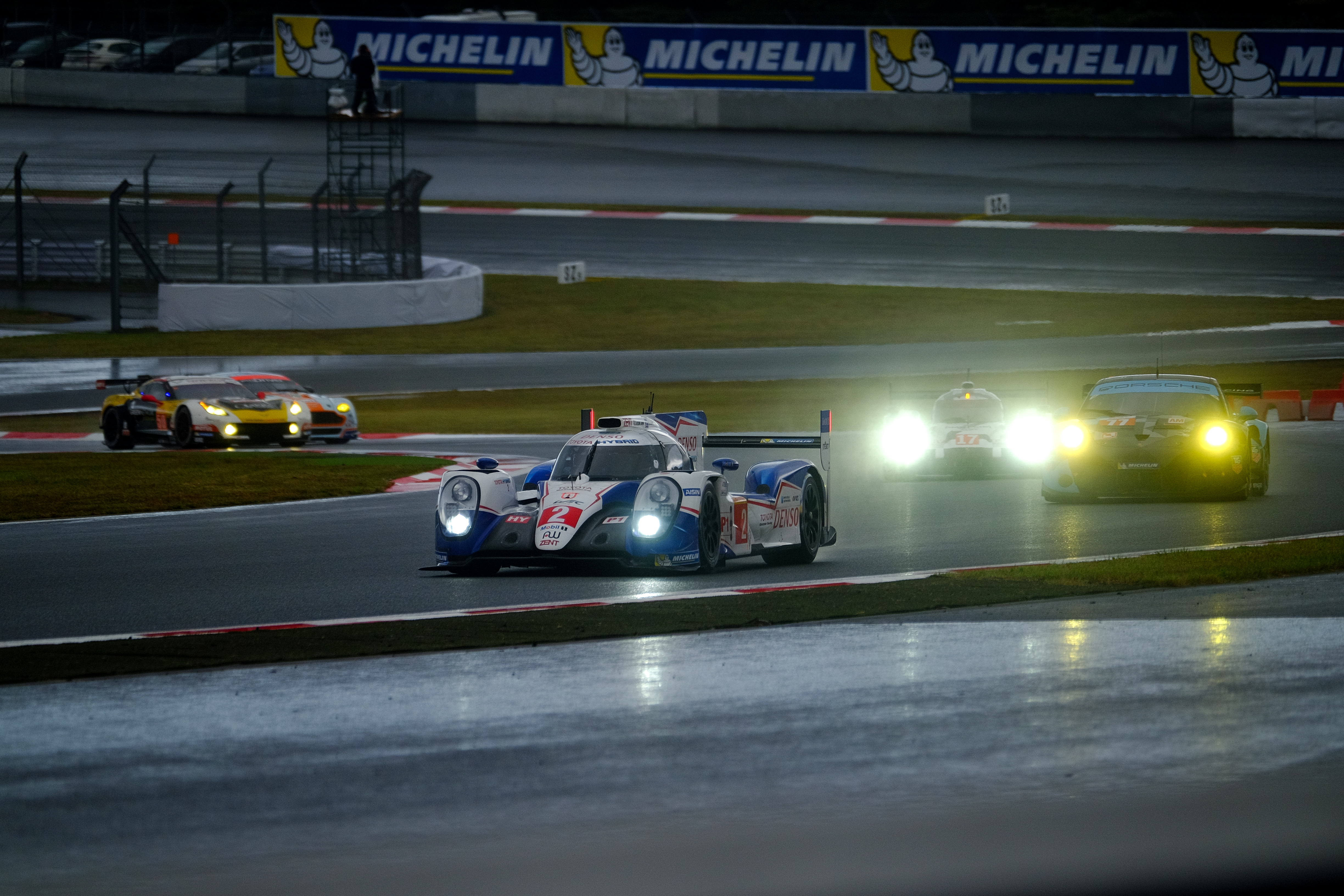
The new Fuji lenses put to the test at the Fuji Speedway in the foothills of Mount Fuji

I was recently in Japan to take part in a marketing meeting, which in itself was nice, but by coincidence, the weekend I was there was also the FIA WEC 6 Hours of Fuji race at the Fuji Speedway and I had tickets!

It seemed as good a place as any to try out the new XF1.4X TC Teleconverter for Fujifilm X Mount lenses, and also the cheeky little XF35mmF2 WR compact lens.

We were there on the Saturday filming some Fuji Guys content (to be released soon) but on the Sunday, the actual race day, I was given the freedom to simply enjoy the race and do some shooting for myself.

The XF1.4X TC

This obviously got the most use since I was at a motorsport event. Here’s a selection of OOC JPGs. I’ve not uploaded the full res versions because they were taken on a pre-production version of the lens and I wouldn’t want to do it an injustice, but it’s clear even from these “resized by WordPress” images that the quality is there.

I spent most of my time shooting with the “Zone Mode” Autofocus. I’ve used it before with mixed results but I found that here it was working amazingly, despite the spray from the wet roads.

Sometimes I was tempted to shoot Manual Focus and know that I’ll be getting the cars as they come through, but I stuck with Zone and the hit rate was amazing – especially since I’m not a professional myself.

Here’s a sequence of OOC JPGs that demonstrate the Zone AF working under some pretty touch conditions. This Ferrari was really moving!

The adaptor itself makes little to no difference to the size and weight of the camera, and I can’t notice any noticeable difference in image quality compared to using the lens without it.

The XF35mmF2

I took both of these shots from trackside within a hairpin. When I switched from the XF50-140mm + TC to the XF35mmF2 I felt like I was about to throw the camera because it was so light. I know the same can be said for most of our lenses compared to what I had previously, but this lens really is small and light. Both using “Zone Mode” Autofocus.

There was a bit of light rain when I took these shots so the Weather Resistance was a nice addition.

Conclusion

All in all I’m really impressed with the new additions to the lens lineup and I’m certainly glad that I got the opportunity to test them out in this amazing location.

I’ll sign off with a couple of “Lightroomed” versions of my creations, including a few from the pit walk before the race started. I hope you enjoy and you can see more on my instagram.

Click here to learn more about the XF1.4X TC WR
Click here to learn more about the XF35mmF2 R WR

Maria from Chio Photography shares her tips to take better pictures

ChioAs a freelance photographer I have had to learn marketing, accounts, admin and many other skills that are required to run a business and I think other freelancers and small businesses should consider photography as one of the main skills required to enhance their business’ professional look. If you are a business owner, think about how you are coming across to your customers, your images are your first impression.

A professional look isn’t that difficult to achieve. There are plenty of tutorials online and a wide range of cameras to suit everyone with any level of photography skills, so there is no excuse to having poor quality images to represent your business.

A couple of weeks ago I was asked to teach some workshops to young entrepreneurs on easy professional photography. I brought the Fujifilm X-A2 with me to show them how there is no need for big and expensive cameras that can be difficult to understand to achieve that professional look. The X-A2 is easy to operate and it is the perfect choice for those looking for professional results without complications. It is also ideal for on-the-go shoots thanks to its size and weight. One of my favourite features is the wireless file transfer, I love that I can instantly transfer any photo on to my phone and upload it straight to my Instagram; very handy for those interested in Social Media (who isn’t?).

So, with the X-A2 in one hand and a bunch of props in the other I was ready to show my students how to easily achieve professional looking images. Do you want to know how? Here we go:

Background

Many people don’t pay attention to what is behind the subject they are photographing. It is very important! It makes most of the picture. Your background can enhance or shrink your subject. Make sure there are no distractions, and if you can’t avoid them, then use your aperture to blur them out and focus in your subject.

An easy way of creating a DIY background for small objects or product photography is using wrapping paper. The good thing about this technique is that you can pick from the simplest and classic white background to any other print that you can find in the shop that will go well with the theme.

1

2

Lighting

No one wants a photo that is too dark or too light to see anything. Having your camera in automatic is a save way of making sure your photo is going to be acceptable. I have always thought that using the preset profiles in cameras are nothing to be ashamed of, after all camera makers are great experts and will not adjust the presets to something that wouldn’t work.

On the other hand, if you have knowledge of aperture and shutter speed (and even if you don’t, just experiment!) don’t be afraid of switching to manual and adding a personal touch by playing with light. Sometimes breaking the rules and accidents make the most amazing pictures.

I personally like to use harsh lighting in my favour, for example, on those rare super sunny days where there are no clouds (that we are sometimes lucky enough to experience in the UK!) or in a situation where I have the light source opposite to me and not behind me, I like to create high contrast dramatic images.

3

4

Composition

Find the best composition to enhance your subject. No one looks their best at every angle. Again, background and lighting affects the whole of the final image, and the angle where you are shooting from can change these two factors. You need to find the perfect combination. If your subject is surrounded by colour and contrast, the viewer might be distracted when looking at the image, crop distractions from the background. Also find the angle with the best lighting, if you want a dramatic effect, maybe shoot against the light source, if you want a softer and smoother effect, make sure the light is not directly behind the camera. Last but not least, if your subject has a more appealing side, then make sure you are shooting the right side!

5

6

These are my 3 easy points to achieve professional looking images. Now go on and try it! Don’t forget to let me know how it goes.


For more of Maria’s work

ChioFacebook
Instagram
G+
Pintrest
Twitter

Getting started with flash

Off cameraw360_6415757_tutorialbannerfordotmailerSo how do you get on with using flash? If you’re like 90% of the world’s photographers the answer to that will be ‘pretty badly’. You’re never quite sure what it’s up to, never feel fully in control of what’s going on and are never completely happy with the results you get. And that’s a shame because, when you come to think about it, flash is the most controllable light source you have at your disposal. You can fire it when you want, put out lots of power (or very little) and you can even shape or colour the light. Just imagine what brilliant landscape photographers we’d all be if we had the same amount of control over daylight! So, flash isn’t the bad news that many photographers consider it to be, it’s simply a question of learning the functions you have at your disposal and how to bend them to your creative will.  

No doubt, after the rousing words of my opening paragraph you’ll be wanting to get to grips with multiple flash set ups right from the off. But that’s a little like competing in the 100m at the Olympics before you can walk. Let’s ease you in more gently by giving you an overview of the flash features you have at your disposal on a Fujifilm X-series camera and when you might press them into service. In this particular case, I’m heading to the Flash Set-Up menu on an X-T10.

Within that menu you’ll find the Flash Mode option, which gives you five choices: Forced Flash, Slow Synchro, 2nd Curtain Sync, Commander and Suppressed Flash. The last option is perhaps the most obvious; selecting Suppressed Flash means the flash won’t fire even if it’s popped up ready for action, nor will a hot-shoe flash fire if it’s attached to the camera and switched on. But seeing as this a guide to firing the flash, we best move on.

Forced Flash is the polar opposite of Suppressed Flash. As long as the integral unit is flipped up or a hot-shoe flash is attached and switched on, the flash will fire on every shot, irrespective of how bright the light in the scene is. This may sound a little odd, but you’re actually most likely to use this mode in bright daylight for a technique called fill-in flash. This is where you ‘fill-in’ shadows – typically in a portrait – with a low powered burst of flash, which is achieved by combining Forced Flash and the Flash Compensation mode. Take a look at the two shots above. The one on the left is taken without flash. It’s OK, but the subject’s face is in shadow. By using Forced Flash and -1 Flash Compensation, we got a lower powered burst of flash that filled in the shadowy area and put a nice catchlight in our subject’s eyes.

Slow sync

Next on the menu is Slow Synchro, which is used to add a touch of dynamism to action images or to shoot portraits in low light conditions. Selecting this function and a slower shutter speed produces the sort of image you see above on action shots. Panning the camera during the exposure introduces the blur, but then the burst of flash momentarily freezes the subject so you get this look. The shutter speed doesn’t have to be too slow – the shot above was taken at 1/8sec, but it adds an extra dimension to your shots.

Equally, using Slow Synchro can help capture more ambient light in low light conditions. Take a straight shot with flash at night and you’ll end up with a shot like the one below left – rather dull. Use Slow Synchro and the longer exposure ensures the background appears while the flash illuminates your subject perfectly. In this case you’ll need to keep both the camera and the subject still – we’d recommend a tripod and a head brace. Ok, maybe just the tripod.

Note: It’s worth noting that Slow Synchro is only available on the menu in aperture-priority and program exposure modes. If you want to combine a slow shutter speed in shutter-priority or manual modes you still can – just switch to Forced Flash and select the shutter speed you require.

2nd Curtain Sync is another one for those who want to make movement look natural and, much like Slow Synchro is a question of combining a burst of flash with a longer shutter speed. The ‘curtain’ part of the equation refers to the camera’s shutter curtain. In any given exposure, the first curtain begins the exposure, the second curtain ends it. Typically, when you’re using flash, the flash is fired at the start of the exposure – when the first curtain moves. But switching to 2nd Curtain Sync, the flash fires at the end of the exposure. This is largely irrelevant if the exposure is a fraction of a second. But it’s important with a longer exposure. Take a look at the two shots below. For the shot on the left, the flash has fired at the start of the exposure and then the car has moved to create the blurred light effect. The trouble is, it looks as though the car has reversed. It didn’t, it moved forwards. By selecting 2nd Curtain Sync, the flash fires at the end of the exposure after the car has moved, so you get a more natural-looking effect with the blurred lights.

Note: When using 2nd Curtain Sync with a built in or hot-shoe flashgun, two bursts of flash will fire. The first at the beginning of the exposure, is purely designed for the camera to get an exposure assessment and does not effect the actual exposure. The second flash, at the end of the exposure, is the one that actually illuminates the subject.

Finally, we have the Commander mode, where you can use the camera’s integral flash to fire a second flash away from the camera. This is used for more creative on-location effects, like the one below. It’s simple enough to do and produces professional looking results.

Off camera

So that’s the top line when it comes to shooting flash. Hopefully, this top-line introduction has armed you with enough information to start getting to grips with the flash modes you have available. But we’ll be going into more detail on each of these techniques in subsequent blogs over the next few weeks.

“Why I love the Fujinon XF50-140mm F2.8 R LM OIS WR lens”

Welcome to the first “Why I love” XF lens series. Find out why the X-Photographers love our fast, long telephoto zoom, the FUJINON XF50-140mm F2.8 R LM OIS WR.

 Wayne Johns – Fashion & Beauty

A Beauty Photo shoot, with photographer Wayne Johns, for an advertising campaign.

quote-left
When Fuji released this lens (75-210mm DSLR Equivalent), my intrigue questioned whether this would be an equal to the 70-200mm F2.8L series I had used on my DSLR; would the optics be as good? After trying it I could only describe the results in 2 words ‘Blown away’; the image quality was absolutely outstanding. I use this lens a lot in the studio for its narrower angle of view and the compression it applies to the depth of my images. The focusing & sharpness of this lens, even when hand held is amazing!… I had no need to question this lens, it more than equaled my DSLR equivalent and it’s much lighter too.
It’s obviously a little bigger than the other Fujinon lenses, but who cares when it delivers truly incredible results like it does.quote-right

Click here to see more of Wayne’s work


Kerry Hendry – Fine Art Equestrian

quote-left
I’ve shot on Fuji for almost two years now, but it was the release of the 50-140mm lens that really sealed the deal for me. Shooting fast equestrian sports needs a fast, longer lens – whether you are looking to capture pin sharp action pictures, or deliberately looking to include creative movement with interesting bokeh.

Even in low light the wide aperture, teamed with the brilliant OIS means I can still hand hold at slower shutter speeds. Also, shooting horses, whether on the polo field or out in the wild, means one thing – rain and mud! The X-T1 body with the 50-140mm gives me a robust weather sealed system I can take anywhere.quote-right

Click here to see more of Kerry’s work


 Derek Clark – Documentary & Music

quote-left
I shoot prime lenses most of the time, but as my primes top out at 56mm (85mm in old money), I often need the reach and speed of the 50-140mm f2.8 for music photography (especially for stage work). With a full frame equivalent of 75-210mm, this is the the classic workhorse zoom that has the beautiful look of a full frame 70-200mm f2.8. Put it together with the 16-55mm f2.8 and you have the ultimate fast twin lens zoom setup that can cover just about any type of event. The OIS is essential on a lens of this size and it does an amazing job, even allowing me to shoot handheld at 1/15th sec while zoomed all the way in.quote-right

Click here to see more of Derek’s work


Ben Cherry – Environmental Photojournalism

quote-left
This is strapped to the front of one of my X-T1s at all times. Sharp, fast and built to withstand some strong abuse, the XF50-140mm is designed for those who need a lens to rely on and not to let them down. With beautiful bokeh and tack sharp wide open, this F2.8 zoom has such a useful focal range that it is in the kit bag of nearly all working X-Photographers. The autofocus is able to track moving animals and it has turned out to be the game changer for many of my recent wildlife encounters. quote-right

Click here to see more of Ben’s work


Matt Hart – Events

quote-left
I love to shoot prime lenses but at events and festivals you just cant get close enough to your subjects due to the crowed density, so the next best lens to a fast prime is a fast Zoom and the 50-140mm lens is just stunning. I have used top of the range glass from all the other big names when I used to use DSLR’s but nothing compares to the sharpness of this 75-210mm equivalent. What makes it even better is I can shoot with this lens all day and still not have shoulder and neck ache. It gives me beautiful out of focus areas, pin sharp subjects and the image stabilisation comes in to its own when the light drops.
quote-right

Click here to see more of Matt’s work


Paul Sanders – Landscapes

quote-left
The XF50-140 is a real workhorse of a lens and without doubt, a lens I am loathed to leave behind.

The incredible optics deliver superb definition and contrast throughout the entire aperture range. But for me it is not the technical specifications that make this lens worthy of the plaudits it receives across the web and throughout the photographic world.

It is the fact that in a cluttered world, I can isolate my subjects, drawing attention to them by shooting with the aperture wide open, deliver exceptional details, stunning candid portraits and most of all dramatic landscapes that have impact & power over the grace of a wide-angled image.

Shooting landscapes with a telephoto  lens is a different discipline but it is one worth persevering with & utilising every mm of focal length this stunning lens offers you.

It’s ideal for shooting panoramas and the tripod mount gives it an incredibly stable base for shooting long exposures without a hint of camera shake – but for those who only shoot hand held the image stabilisation is second to none.

In short, if you want to add one zoom lens to your bag, this is the one – it is worth every penny and will never let you down.
quote-right

Click here to see more of Paul’s work


Dave Kai-Piper – Portraiture

quote-left
When this lens was created there was nothing else much like it in the range. And to date, it is still the finest long lens in the line up. Tack sharp from 50mm to 140mm – this constant f2.8 lens is fast enough & stabilised enough for you to think less and shoot more. Combined with the most recent updates leaves this lens as one of the most reliable lenses – regardless of genre or type of photography.

It’s packed full of all the latest and greatest Fujifilm tech, such as nano Gi coating, LMO (corrects for diffraction), HT­EBC Coating (ensuring ghosting and flare are controlled), five ED lens elements, one Super ED lens, 23 glass elements in 16 groups and then seven rounded aperture blades to create a smooth, circular bokeh. It has a massive 5.0 stop stabilisation too. Internal barrel movements combined with large rubber grips give this lens a wonderful sense of balance whilst also feeling very natural to hold.

In short, this lens is one of the most vital items in my kit bag alongside the 56mm APD & 16-55mm lens. The real world interpretation of the technology being used in this lens is simply that it does what you would expect it to as a working professional photographer. Combine this with the focus tracking in the X-T1 and you can confidentially take on any genre of photography. Whether it be a fashion catwalk, motorsports or even wildlife photography knowing you can get the shots you are looking for, every time.
quote-right

Click here to see more of Dave’s work


pic_header_18d326_03_06d1a6a828Click here to see retailers selling the XF50-140mm lens